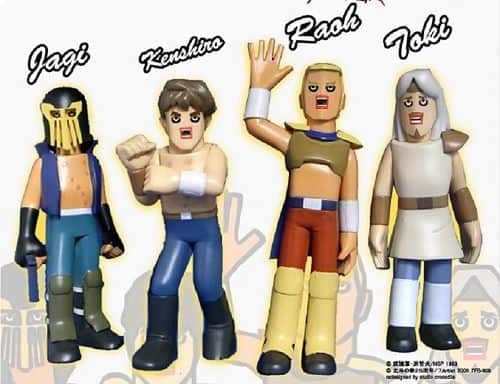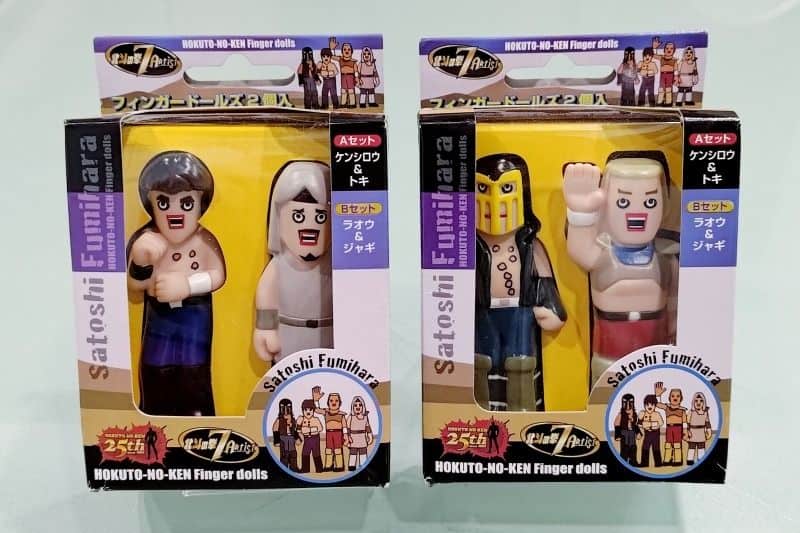



The 7Artist project, launched in 2008 for the 25th anniversary of Hokuto no Ken, is built on a brilliant idea: entrusting the four Hokuto brothers to seven artists with vastly different creative universes, and seeing what each one does with them. A constellation of styles gathered around the work of Tetsuo Hara, like a cross-tribute. While some reinterpretations delve into horror or cyberpunk, Fumihara Satoshi‘s (文原聡) takes the opposite path, one of softness and humor.
Details
Fumihara Satoshi, the creator of THE GOLDEN EGGS
Born in 1975 in Tateyama (Chiba Prefecture), Fumihara Satoshi is an animation director, designer and creator. A graduate of Chuo University, he founded his studio crocodile in 2007. He owes his fame to The World of GOLDEN EGGS, a CGI series with a “toon” rendering style that received a Good Design Award in 2008, as well as the advertising parody Teinenpi Shoujo Haiji produced for Nissan. His style is immediately recognizable: characters with big round eyes and square mouths, with offbeat humor. He has also collaborated with Disney, and designed Dappee, the mascot of his hometown.
The four brothers, pop version
For Hokuto no Ken, Fumihara applies his signature touch to the four Hokuto brothers. Kenshiro, Raoh, Toki and Jagi take on stylized silhouettes with simple lines and offbeat charm, faithful to the aesthetic of THE GOLDEN EGGS. Modest in format but carefully crafted, each figurine measures approximately 8 cm, the smallest size in the entire 7Artist project. Molded in painted PVC with a base, they were released by Dive in 2008.
With their softened silhouettes and graphic spirit, these figurines embody a tender and stylized reinterpretation, where the manga’s violence gives way to the roundness of the line. An unexpected counterpoint in the Hokuto no Ken universe.