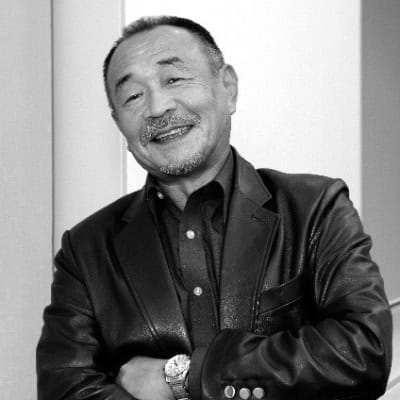
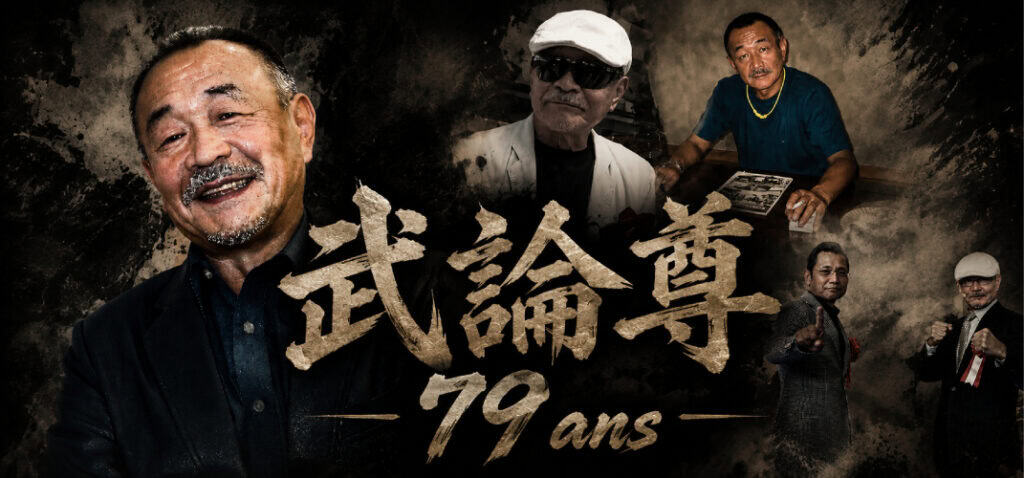
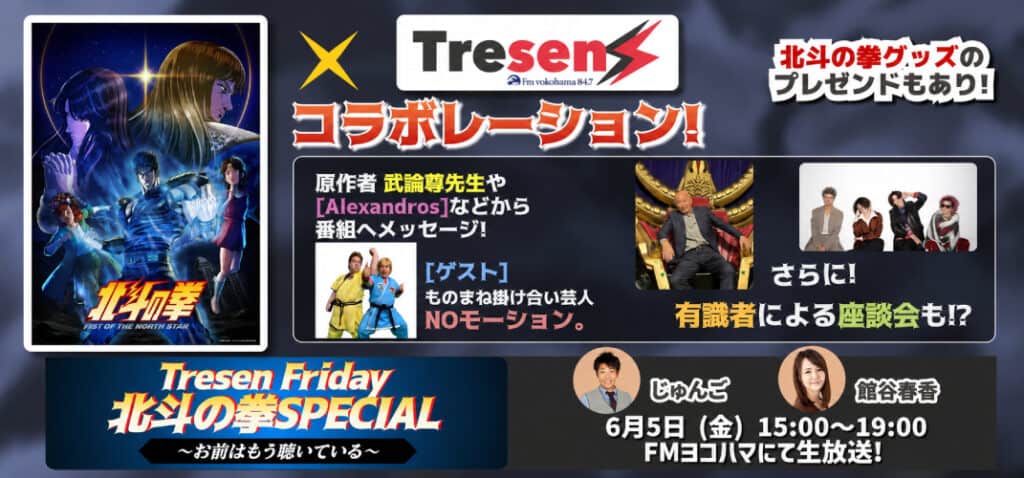
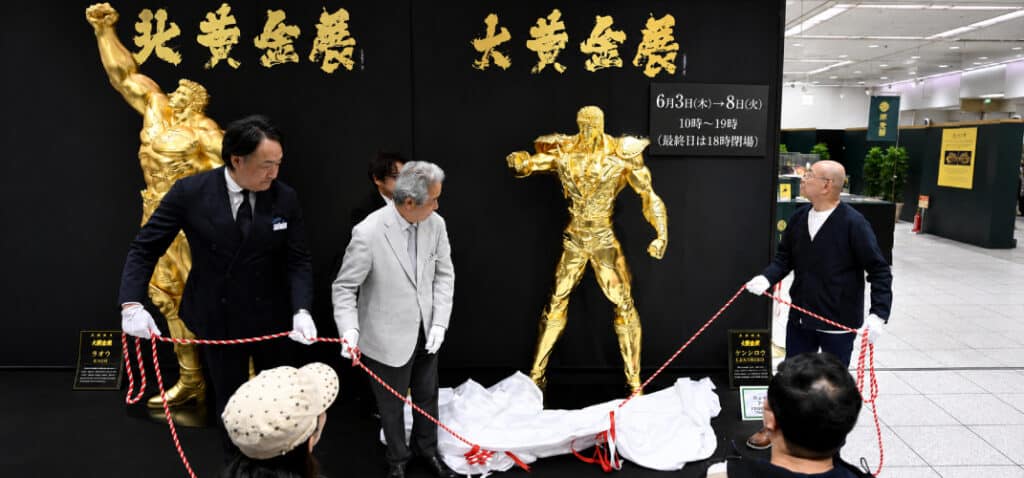
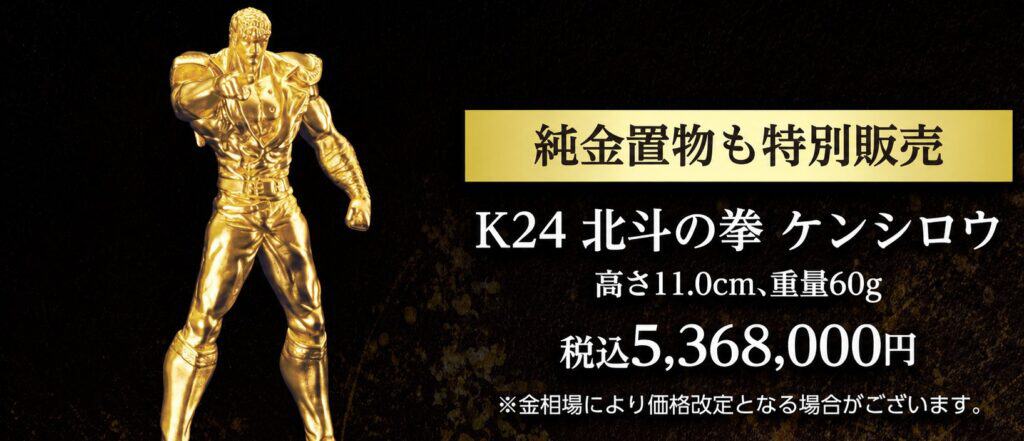
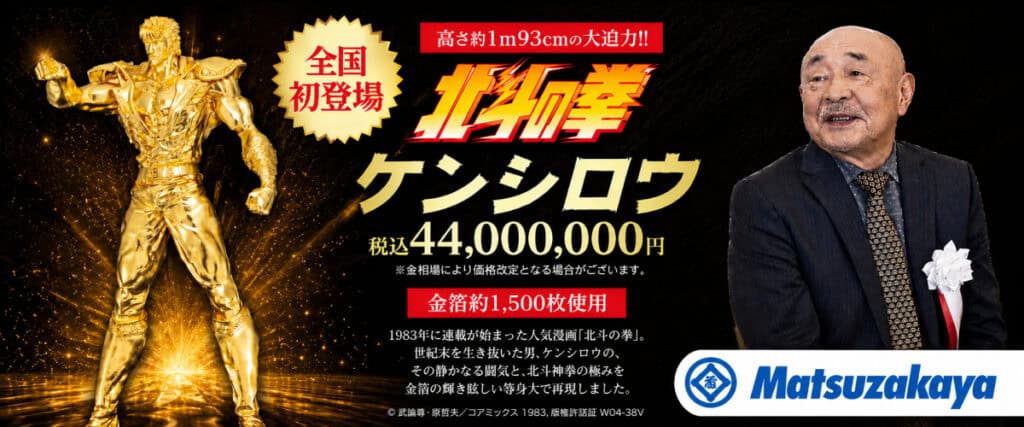
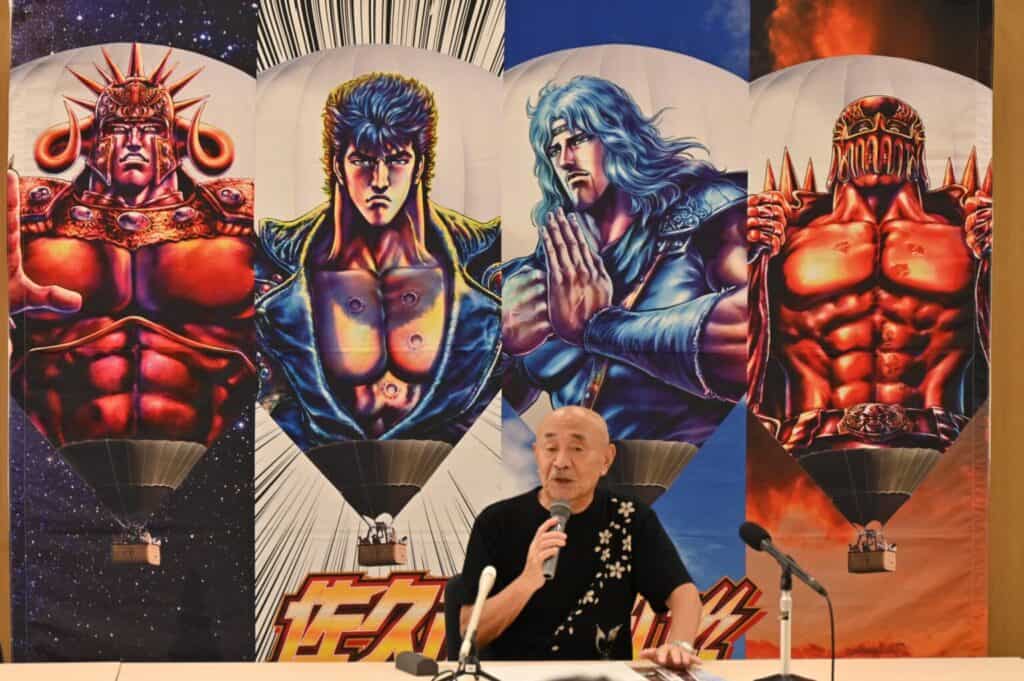
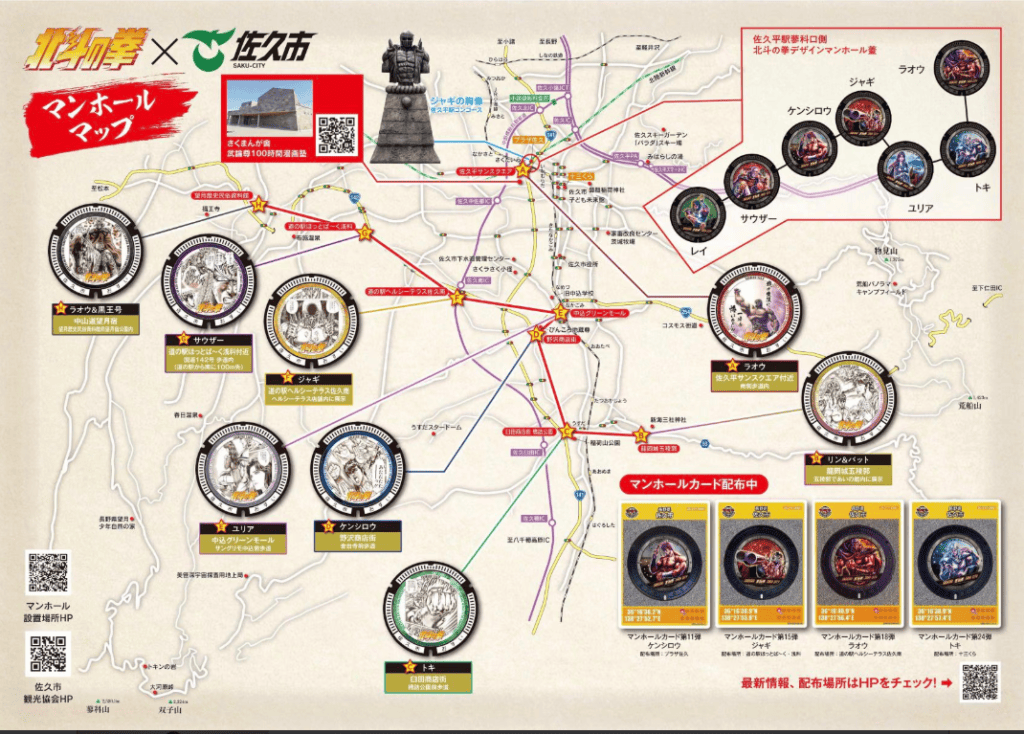
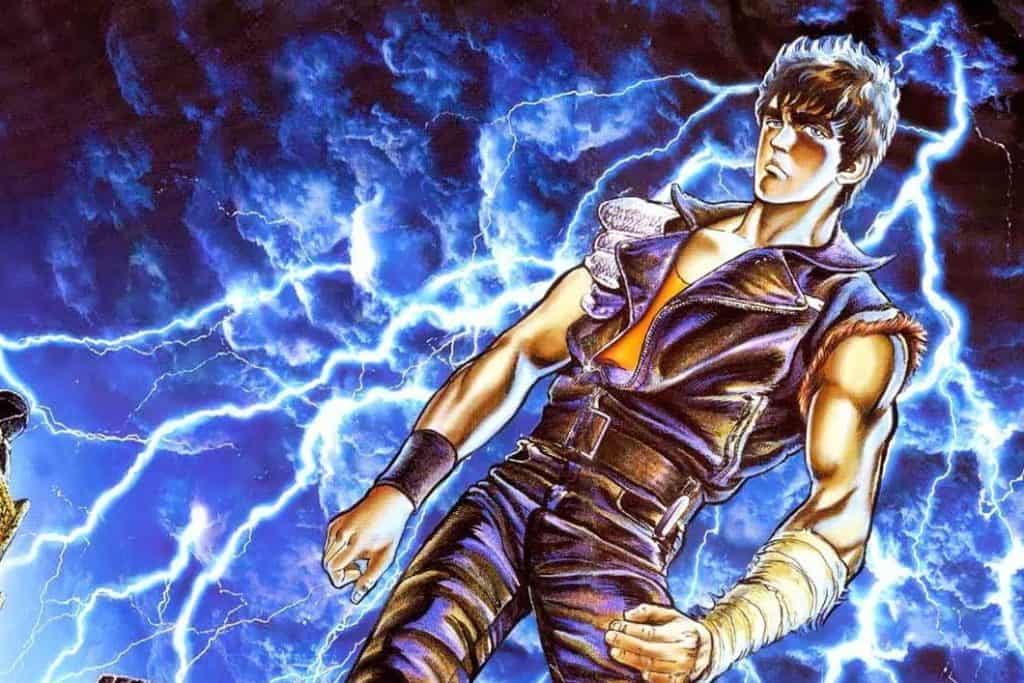
Buronson (武論尊), whose real name is Yoshiyuki Okamura (岡村善行), born on June 16, 1947 in Nagano Prefecture, is a Japanese manga scriptwriter. He is the author of Hokuto no Ken, Doberuman Deka and Sanctuary. He publishes under two names, Buronson at Shueisha and Shō Fumimura (史村翔) elsewhere, and has produced over one hundred titles in fifty years.[1]
A poor childhood in Shinshu
He was born on June 16, 1947 in the Minamisaku district, Nagano prefecture, in an area now incorporated into the city of Saku.[2] He himself places his childhood in the village of Kishino, surrounded by Tateshina, Yatsugatake, and Asama, while Japanese sources place it in the neighboring town of Nozawa.[3]
He was the youngest of six children in a farming family. The farm had five tan of rice paddies, roughly five thousand square meters. He sums up the family's condition in one word: poverty. The children earned their lunch money by delivering newspapers, one thousand yen per month for all six, of which five hundred went to him. He specifies that this was not a side job for pocket money but work to survive.[1]
The memory he keeps of his father comes down to a single scene. His father drank at home. When there was neither sake nor money left, he would hand the empty bottle to the youngest of his children and send him to the shopkeeper. The shopkeeper, too embarrassed to send a child back empty-handed, would pour a bit of shōchū, close the cap, and sigh a few words of sympathy. His father died when Buronson was in sixth grade of elementary school. The eldest son took over the farm, the situation did not improve, and the burden on their mother grew heavier.[1]
One film left a mark on him during this period, Trumpet Shōnen by Hideo Sekigawa, released in 1955. It tells the story of a boy whose trumpet is smashed by an alcoholic father. Buronson sees it as the origin of his fondness for stories that make people cry.[1]
Seven years in the Air Force
Upon finishing middle school, he decides to enlist in the Self-Defense Forces. The reason is straightforward: to escape poverty and leave the countryside. In Nagano, he takes a unified entrance exam for all three branches of the military, with roughly twenty candidates per seat, and becomes an air cadet at Kumagaya base in Saitama. Out of around a hundred cadets in his class, about twenty drop out in the first year alone.[1]
Four years after enlisting, upon completing his training, he is promoted to the rank of third-class non-commissioned officer. He is assigned to the detached base on Mount Sefuri in Saga Prefecture, where he monitors and analyzes unidentified aircraft.[1]
On March 31, 1970, he is on radar duty when nine members of the Red Army faction hijack the Japan Airlines aircraft known as Yodo-go and demand to be flown to Pyongyang. He takes part in the surveillance mission. He leaves the military after seven years of service.[1]
Tokyo, the drift and Motomiya
He moved to Tokyo with his savings and enrolled in a computer school run by the Fuji-Sankei group, having sensed the coming computer age after handling radar. He squandered everything going out with his former comrades and was expelled for being unable to pay the second semester. He then lived off odd jobs, mahjong, pachinko and betting on races.[1]
In November 1970, he was working as a temp in a warehouse in Ichigaya. On the day of the Mishima incident, he went outside and discovered the crowd, the police cars and the ambulances. He recognized Shintarō Ishihara talking with police officers at the entrance. He added that he had considered joining the Shield Society, and wondered what his membership number would have been.[1]
Hiroshi Motomiya had been in his class in the Air Force and had left the service after a year and a half. Having become a hit author at Weekly Shōnen Jump, he called out to Buronson in 1971 and offered him to come help, as he was shorthanded. Buronson moved into the offices of Motomiya Pro in Shinkoiwa, in charge of paper-based research. He was mainly useful for organizing the studio's outings, which earned him the nickname of banquet chief.[1]
It was there that he crossed paths with editor Shigeo Nishimura, whom he accompanied on his bar rounds when Motomiya dodged them. Nishimura was initially wary of him, the shady guy Motomiya had brought back from the military, but then grew attached to him and told him to try writing. Buronson suspects the maneuver was aimed as much at keeping him away from Motomiya, a prized author for Shueisha, as at uncovering a talent.[1]
Nishimura also ordered him to read Les Frères Karamazov, on the grounds that everything a scriptwriter needs can be found in it. Buronson bought the paperback edition and gave up partway through. He was not a reader, and the Russian names, transcribed in katakana across entire lines, would not stick in his mind. He assumes in hindsight that Nishimura was not trying to teach him a technique, but to make him look at the world from a different angle.[1]
The two names
The nickname comes from his resemblance to Charles Bronson, which he himself claimed. He loved Adieu l'ami, released in 1968, and sought the approval of those around him. The diminutive Bū-chan became common in the industry, and from there came 武論尊.[1]
The second name was born out of an editorial constraint. Working for Kōdansha, he needed a different pseudonym. An editor rearranged the letters of his real name, OKAMURA YOSHIYUKI, to form Fumimura. Buronson notes with a laugh that he was often told this name did not suit him.[1]
Early career and Doberuman Deka
He made his debut in 1972 with Gorō-kun Tōjō, a short story drawn by Yō Hasebe and published in Weekly Shōnen Jump. That same year, Minami Saori Monogatari, with art by Takeru Sankō, recounted the youth of singer Saori Minami. It was this second title that convinced the editorial team, and led the following year to his first serialization.[1]
His first collaboration with Shinji Hiramatsu dates back to 1974, on a short baseball story. Hiramatsu was nineteen years old and had come from the countryside of Okayama.[1]
Doberuman Deka was serialized in Weekly Shōnen Jump from 1975 to 1979 and became the work that established his reputation. The editorial team wanted a vigilante series in the vein of Hissatsu Shiokinin. Buronson pushed for the violent, no-nonsense cop inspired by Dirty Harry and his 44 Magnum. The hero, Kanō Jōji, belongs to the special crimes division of the metropolitan police, rides a Harley-Davidson, and escapes from a psychiatric hospital in the first chapter.[1]
This first chapter triggered a protest from an association, which objected to the portrayal of a mentally ill person as a criminal. During the meeting, attended by editor Hiroki Gotō, Hiramatsu, and Nishimura, a middle-aged woman attacked Buronson over his level of education, throwing in his face that he had only completed middle school. He stayed silent. He recounts that this discrimination based on academic credentials, coming from the very people who were denouncing discrimination, left him speechless.[1]
In 1976, he traveled to Okinawa with Gotō and Hiramatsu, an overnight round trip, shortly after the reversion. The journey produced a chapter in the first volume and confronted the two men with American military installations, drugs, and violence.[1]
The success brought him sudden royalties. His annual income rose to roughly ten million yen, even though he was living in a six-tatami apartment with no bathroom. He began drinking and going out regularly with editors, and his language changed. Akio Chiba, younger brother of Tetsuya Chiba, who had taken a liking to him and fed him during his days of poverty, told him very seriously one day that he had become pathetic lately. Buronson says he felt as though ice-cold water had been poured over his head, and drew a lasting lesson in humility from the experience.[1]
In the autumn of 1979, as the series entered its fourth year, Nishimura, who had become editor-in-chief, took him to a fugu restaurant in Jinbōchō. Buronson felt relief rather than shock and was the one to say the word "end" himself. The final scene is an explicit homage to Ashita no Joe, for which he called Tetsuya Chiba to obtain his permission.[1]
Hokuto no Ken
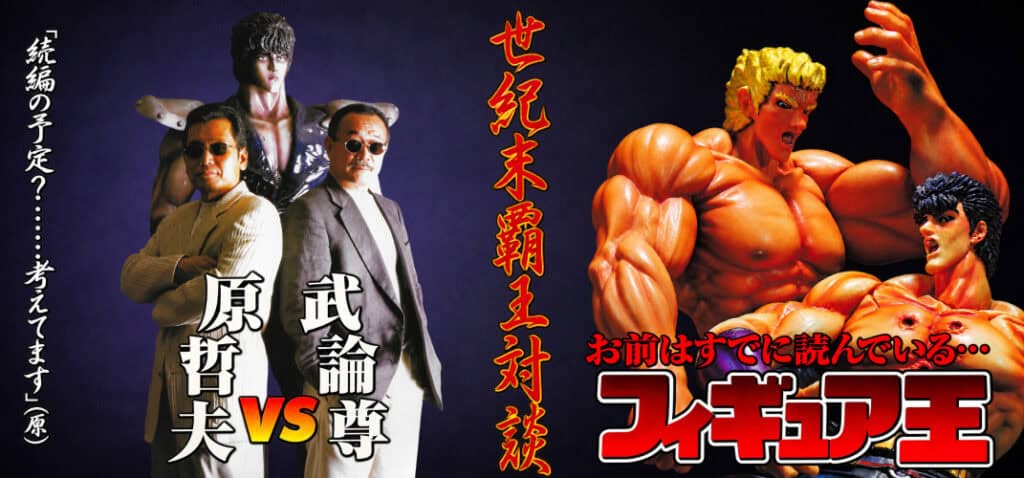
The Weekly Shōnen Jump editorial staff struggled to find a scriptwriter to pair with Tetsuo Hara after the success of his two one-shots. Nishimura consulted his subordinate Nobuhiko Horie, who replied that he wanted to ask Buronson. It was therefore not a default choice. Horie was also the editor who had failed to get Hara's first series off the ground, and this new attempt was his chance at redemption.[1]
Horie asked him to commit for three years. Buronson accepted. There was no contract. Three months separated the commission from the first chapter, theme and characters included, which he described as an extraordinary pace. The series debuted in the September 26, 1983 issue, with a forty-six-page first chapter placed as the magazine's opening feature.[1]
The first chapter was disappointing. Horie felt that the second chapter would be decisive. He read the script in front of Buronson, in silence, then asked for a rewrite. The published version shows an old man, Misumi, who spent six months gathering precious rice seeds, brings them back to the village, and is slaughtered. When Horie read that passage, he smiled. The series reached second place in the reader survey as early as this second chapter, took first place by the fifth, and held the top spot for two and a half years.[1]
The idea of striking a vital point to make the body explode came from Horie, who found it in an oriental medicine book noting that excessive pressure on a beneficial point can harm the body. Buronson understood that the goal was to lighten Hara's drawing workload. The death cries, on the other hand, were Hara's improvisations, absent from the scripts.[1]
During the five years of serialization, the two men had almost no direct contact; everything went through the editor. At the end of the agreed-upon three years, Buronson begged Horie to stop and cried while making his plea. Horie replied that he had no authority to decide, that Nishimura had ordered him never to let the series end. The series would last five years.[1]
When asked about his favorite character, he answered Jagi. Third of the four brothers, unable to defeat the eldest, the second, or the youngest. Buronson, himself the last of six children, says he feels a strange closeness to this character who never gives up despite his misfortune of birth.[1]
Raoh's final line is his. He explains that it came to him naturally because he felt he had given everything during the agreed-upon three years, and that he thought at the time he would conclude the work with that character. He adds, with irony, that he refuses to have that line used as his epitaph.[1]
Sanctuary and the Ikegami years
His first encounter with Ryōichi Ikegami was a 1979 one-shot, Kizuato, published in Big Comic. The duo only formed a lasting partnership in 1990, at the editorial team's request, with Sanctuary, in Big Comic Superior.[1]
In 1992, four years after the end of Hokuto no Ken and while Sanctuary was still ongoing, he asked for the first time in his career for a break in the middle of serialization, something that was simply not done at the time. He cited fifteen years in the profession at a breakneck pace, a marriage and children he had never taken care of, mental exhaustion, and problematic alcohol consumption. He specified that he had not lost the ability to write, but that he needed to flush out what had built up inside him over the years. Ryōichi Ikegami replied that he would rest too and not to worry. Buronson took refuge for about a year at an acquaintance's horse farm in Hokkaidō, without television, without newspapers or manga magazines, tending to horses and mowing grass. From this stay was born Pappa Kapā.[1]
Then came Strain followed by Odyssey with the same artist, and HEAT -Shakunetsu-, which takes place in Shinjuku Kabukichō. Buronson described this last series as a return to his working-class roots after a Sanctuary where he felt too tense. It earned him in 2002 the forty-seventh Shōgakukan Manga Award, in the seinen and general category.[1][4]
In 2001, he reunited with Tetsuo Hara on Souten no Ken, a prequel to Hokuto no Ken launched in the inaugural issue of Weekly Comic Bunch. The colophon of the tankobon credits him with supervision.[5]
The Hundred-Hour Manga School
In 2018, he opened in Saku, his hometown, the Buronson Hundred-Hour Manga School. The origin of the project is simple: his local classmates kept telling him over drinks that he should do something for Saku, and he eventually said it out loud.[1]
The courses are free. Charging young candidates with no resources would, in his view, amount to promising them a result, and he claims no foolproof method. Asked about sharing his experience in this way, he replies that an old ramen shop can give anyone who asks the recipe for its broth without that being enough to make a restaurant thrive. The free tuition brings no leniency; students submit assignments, and the school is aimed at those who want to become professionals. The pace is twenty sessions per year. One hundred and twenty-seven people have completed the program since its opening, of whom thirty have made their professional debut in commercial media, a figure as of December 2025.[1]
The instructors are active professionals, leading mangaka and magazine editors-in-chief. Gōshō Aoyama and Mitsuru Adachi have visited, as well as director Hideaki Anno, who gave a special lecture on Neon Genesis Evangelion in 2024. Buronson does not interfere with the course content.[1]
He situates his initiative as a continuation of the Gekiga Sonjuku, the paid school that Kazuo Koike founded in 1977 to train a generation of authors. The project had drawn sharp criticism toward Koike, with some accusing him of arming his future competitors and others seeing in teaching the refuge of authors who no longer create. Koike persisted, and his first class included Rumiko Takahashi. Tetsuo Hara and Keisuke Itagaki also came out of it. Buronson sees this as proof that experience can be passed on without producing copies.[1]
Asked about the students who progress, he never speaks of talent. Those who advance are, in his view, those who refuse to believe they have arrived. A limited artist who is aware of his shortcomings will keep evolving, while one who considers himself accomplished stops learning.[1]
In 2024, he financed with his own funds the construction of the Saku Manga-sha, near Sakudaira Station. The ground floor is a free exhibition space; the upper floor houses the classrooms.[1]
He also donated four hundred million yen to the city of Saku on July 20, 2017, a sum that made it possible to create a non-repayable scholarship fund, operational from 2018 onward, then an additional four hundred million in 2022 to sustain the program.[4] The reason is explicit. Having joined the Self-Defense Forces at fifteen, he had not had access to higher education for financial reasons, and he saw children around him in the same situation. He rejects the word philanthropist and says that what he does is nothing extraordinary.[1]
For fiscal year 2020, he received the fourth Saitō Takao Prize, in the special prize category. The foundation, established in 2017 for the fiftieth anniversary of Golgo 13, ordinarily rewards works produced by separating writing and art. That year, due to the epidemic, it exceptionally recognized a person rather than a work, selecting an author who had made a lasting contribution to manga creation through division of labor. Saitō Production justified the choice on two grounds: the body of his career and the training of young authors that he finances with his own funds.[6]
Major works
Under the name Buronson
Gorō-kun Tōjō (1972, art Yō Hasebe) / Crime Sweeper (1973, art Gorō Sakasai) / Pink Punch Miyabi (1974, art Gorō Sakasai) / Doberuman Deka (1975-1979, art Shinji Hiramatsu) / Hokuto no Ken (1983-1988, art Tetsuo Hara) / Ōrō (1989, art Kentaro Miura) / Ōrō-den (1990, art Kentaro Miura) / Japan (1992, art Kentaro Miura) / Pappa Kapā (1992-1994, art Tobio Mizuno) / Souten no Ken (2001-2010, supervision, art Tetsuo Hara) / DOG LAW (2008-2009, art Atsushi Kamijō) / Too BEAT (2021-2023, art Shirō Yoshida)
Under the name Shō Fumimura
Kyūgō-den (1973, art Shigeyuki Masumoto, Tetsumi Moriya and Hisashi Daitō) / Phantom Muhō (1978-1984, art Kaoru Shintani) / OH! Takarazuka (1980-1983, art Shinji Ono) / Astronauts (1984-1986, art Hajime Oki) / Sanctuary (1990-1995, art Ryōichi Ikegami) / Odyssey (1995-1996, art Ryōichi Ikegami) / Strain (1996-1998, art Ryōichi Ikegami) / HEAT -Shakunetsu- (1998-2004, art Ryōichi Ikegami) / BEGIN (2016-2020, art Ryōichi Ikegami)
Illustrated novel
Hokuto no Ken : Jubaku no Machi (1996, illustrations Tetsuo Hara)
Essay
Dépeindre le mal et le mensonge (悪と嘘を描く), Shogakukan Shinsho no. 507, April 2026
Sources
- ↑ Buronson, 悪と嘘を描く 武論尊の漫画原作私論 (Depicting Evil and Lies), Shogakukan Shinsho n°507, April 6, 2026, interviews and editing by Dairin Kakehata.
- ↑ Buronson, Comic Natalie, accessed August 18, 2026.
- ↑ Author profile and chronological section of the same work.
- ↑ Buronson, Japanese Wikipedia, and Mangapedia, accessed August 18, 2026.
- ↑ Colophon of the first volume of Souten no Ken, Shinchosha, October 15, 2001.
- ↑ Press release from Manga Night and award page, Saitō Production website, accessed August 19, 2026.