

Details
- Title
- Hokuto no Ken: Jubaku no Machi (北斗の拳 -呪縛の街-)
- Type
- Roman
- Author(s)
- Buronson (texte), Tetsuo Hara (illustrations)
- Publisher
- Shueisha
- Release date
- 18 December 1996
Gallery
 6View all images
Hokuto no Ken : Jubaku no Machi
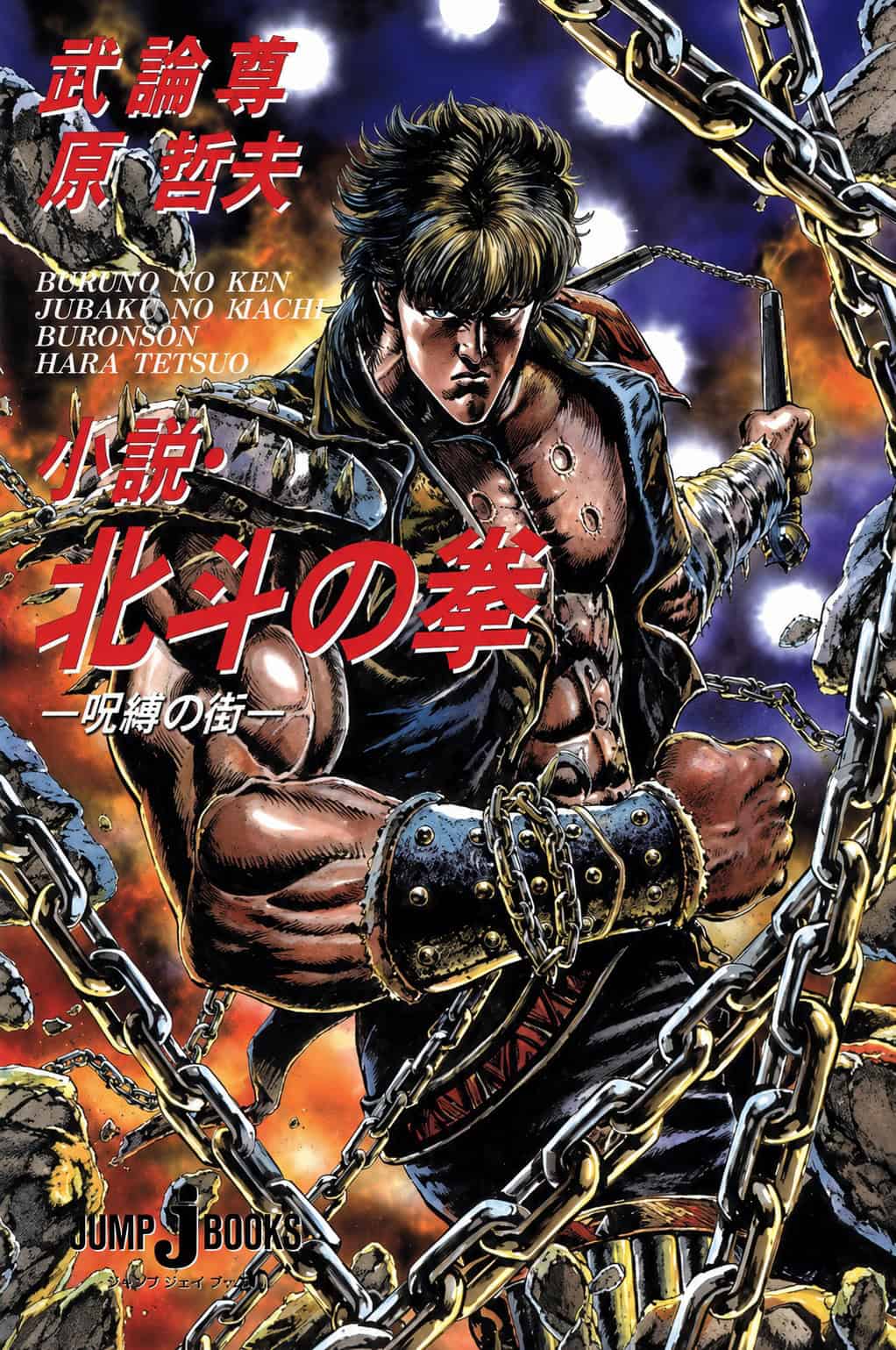
Hokuto no Ken : Jubaku no Machi (北斗の拳 -呪縛の街-) is an illustrated novel written by Buronson and illustrated by Tetsuo Hara, published in Japan on December 18, 1996 by Shueisha in the Jump J Books collection. A direct sequel and narrative conclusion to the Hokuto no Ken manga, this 226-page text punctuated with black-and-white illustrations and full-page color illustrations extends the adventures of Kenshiro in the post-apocalyptic world. The novel was adapted in 2003-2004 into a trilogy of OAVs titled Shin Hokuto no Ken.
Synopsis
Humanity has survived despite the collapse of civilization. The last nuclear conflict has scarred the earth and poisoned the water, plunging the world into chaos. Sanga, the Lord of Lastland, rules as a tyrant over his desert enclave by controlling the sources of drinking water and fanatizing the population around a false god. When he learns of the existence of a young woman whose fingers heal ailments and wounds...
A sequel to the Hokuto no Ken manga
Following his encounter with Tobi, an information dealer he saved from an ambush, Kenshiro meets Sara. The young woman heals ailments and injuries through mere fingertip contact, a technique that reminds the successor of Hokuto Shinken of his brother Toki's methods. Sanga, who maintains his power through the illusion of a false god named Doha, sees in the Miracle Worker an opportunity to tighten his tyranny. He orders her abduction.
Kenshiro then chooses to enter Lastland to free the people from the lie and tear Sara from her fate. Alongside Tobi, he attends the grand ceremony introducing the new god. It is at this moment that Tobi recognizes, beneath the guise of the false god Doha, the face of Bista, his younger brother who had disappeared several years earlier. The confrontation with Sanga is brutal and brief. The tyrant collapses, but Bista comes out of it severely injured.
To save him, Kenshiro must leave Lastland and cross the Clifflands, a territory rumored to be haunted by bloodthirsty demons. These demons are in reality disciples of the Hokumon no Ken, an ancestral school with secret ties to Hokuto Shinken. At the end of the battle he wages against them, Kenshiro discovers what these sentinels have been striving to conceal for generations, and once again perceives the burden weighing on the heirs of Hokuto.
During his absence, a mysterious man named Seiji arrives in Lastland. Himself a disciple of the Hokumon no Ken and Sanga's hidden son, he has come to settle scores. Upon his return, Kenshiro discovers a city torn apart by a holy war between the followers of the god Doha and Seiji's forces. At the head of the rebellion, it is no longer Tobi the information dealer, but Tobi the self-proclaimed high priest, who has seized his brother Bista's cult to found his own divine order. When Kenshiro refuses to endorse his methods, he is taken prisoner.
Meanwhile, Seiji decides to stem the tide of violence by killing Tobi and reclaiming Bista, hoping to restore some semblance of order to Lastland. Kenshiro manages to escape from his prison and finds Tobi in his death throes, who ultimately succumbs to his wounds. All that remains is the final confrontation between the heir of Hokuto Shinken and the disciple of Hokumon. The fight is short-lived, and while Kenshiro's blows are not fatal, Seiji himself chooses to end his own life, unable to bear the atrocities he has committed. His death restores peace to Lastland. Kenshiro sets off again, alone, carrying as always the heavy burden of being the heir of Hokuto Shinken.
A rarity of the Hokuto no Ken canon
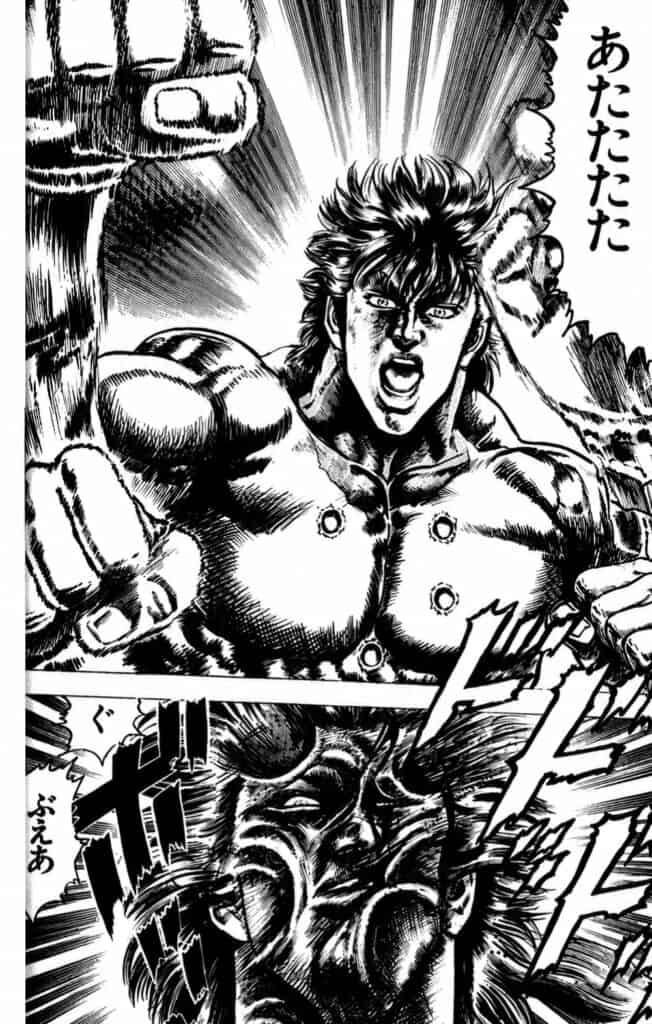
Jubaku no Machi is the sole official attempt to extend the Hokuto no Ken narrative in novel form. Eight years after the manga's conclusion in the Weekly Shonen Jump in 1988, Buronson and Tetsuo Hara return together to explore Kenshiro's destiny in a format unprecedented for the franchise. Buronson's narrative text is punctuated with black-and-white illustrations and full-page color artwork by Hara, which retain all the dynamic energy of the manga artist's linework.
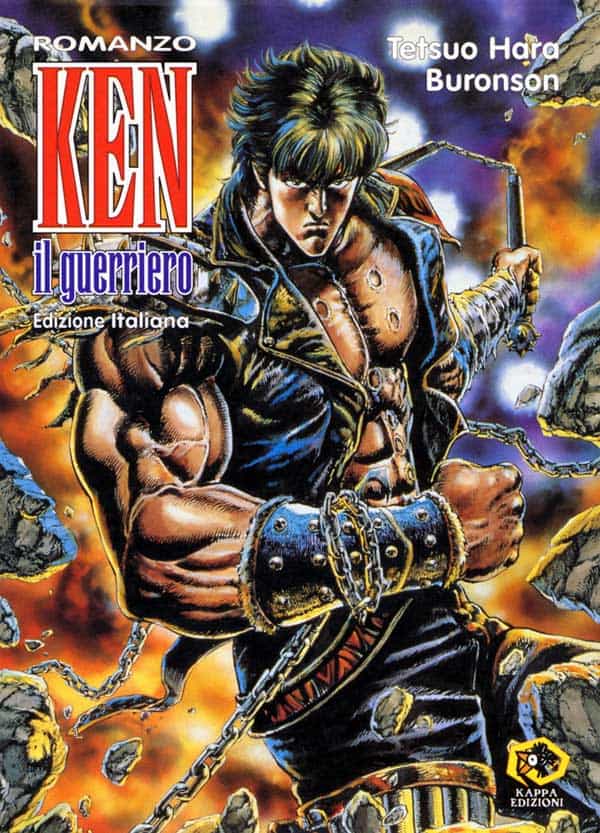
Beyond its narrative interest, the novel stands today as one of the least accessible works in the Hokuto no Ken canon. Never reprinted since its publication by Shueisha in 1996, it survives only through its original copies, now sought after on the Japanese second-hand market. The only official foreign translation is the Italian edition published by Kappa Edizioni in 1999 under the title Ken il guerriero - Romanzo, in the Mangazine collection. No French edition has ever been released, nor has an English translation.
In 2003, Tetsuo Hara and Buronson revisited Jubaku no Machi to bring it to the screen as a trilogy of OAVs produced notably by Coamix, OB Planning and SEGA. This adaptation, titled Shin Hokuto no Ken, marked the franchise's return to animation after fifteen years of absence and foreshadowed the major relaunch that would follow with the Shin Kyuseishu Densetsu saga. For French-speaking fans, these three OAVs are today the primary point of access to the Jubaku no Machi storyline, as the novel itself remains virtually unknown in the region.
Éditions
The novel was published in Japan on December 18, 1996 by Shueisha in the Jump J Books collection. Comprising 226 pages illustrated by Tetsuo Hara, it bears the ISBN 4-08-703054-7. It has not been reissued in Japan since this first publication.
An Italian edition was published in 1999 by Kappa Edizioni in the Mangazine collection. It was at the time the first novel based on a hit manga to be published in Italy, paving the way for other literary adaptations such as that of City Hunter.
No French or English edition has ever been released to date. The novel is now only available through the second-hand market.