

Details
- Original title
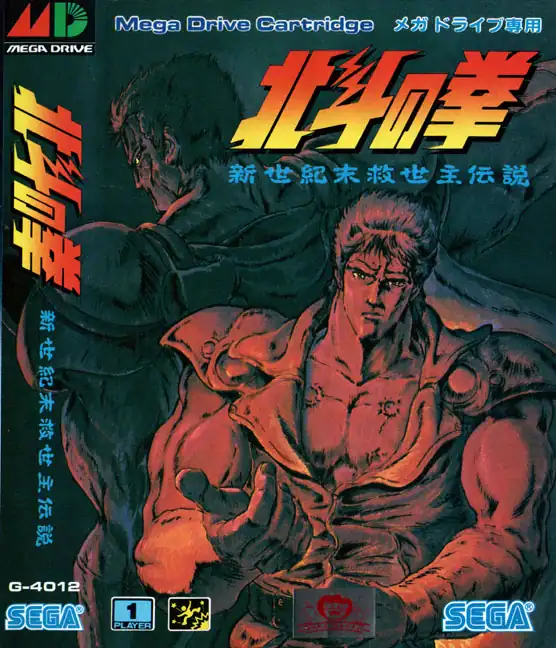
- 北斗の拳 新世紀末救世主伝説
- Western title
- Last Battle (Western release)
- Genre
- Action / Beat'em all
- Publisher
- Sega
- Developer
- Sega
- Release date
- July 1, 1989
- Platforms
- Mega DriveWii (Console virtuelle) 9 September 2008
- Int'l release
- Last Battle: Legend of the Final Hero: 1989 (US Genesis launch title); Commodore 64 and Amiga versions by Elite in Europe, 1991
Affiliate link. As Amazon Associates, we earn from qualifying purchases.
Hokuto no Ken: Shin Seikimatsu Kyūseishu Densetsu (北斗の拳 新世紀末救世主伝説)
Gameplay
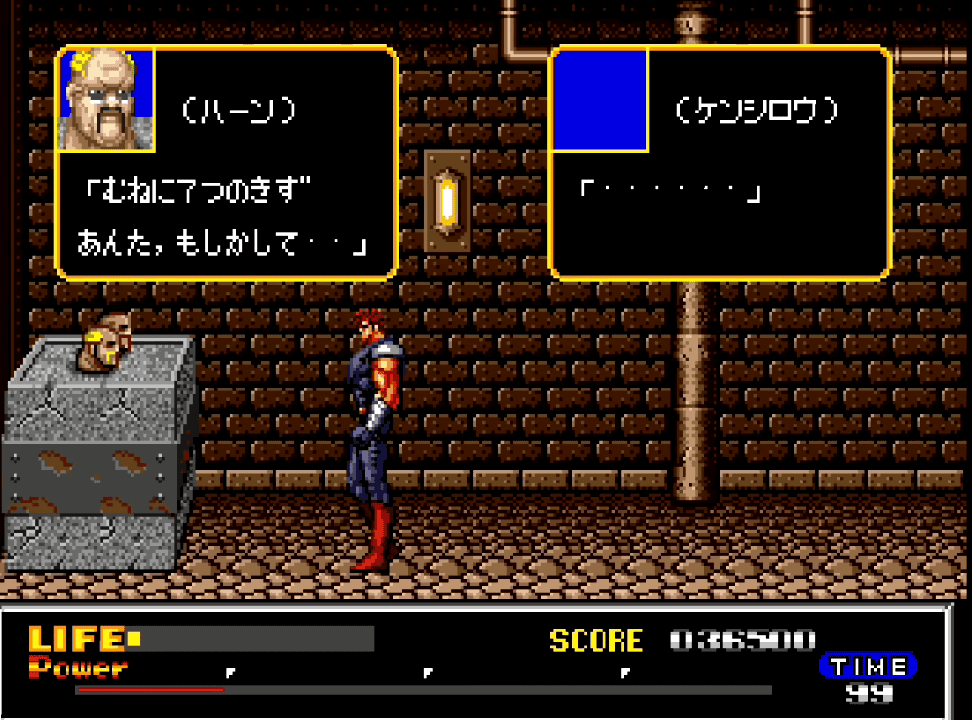
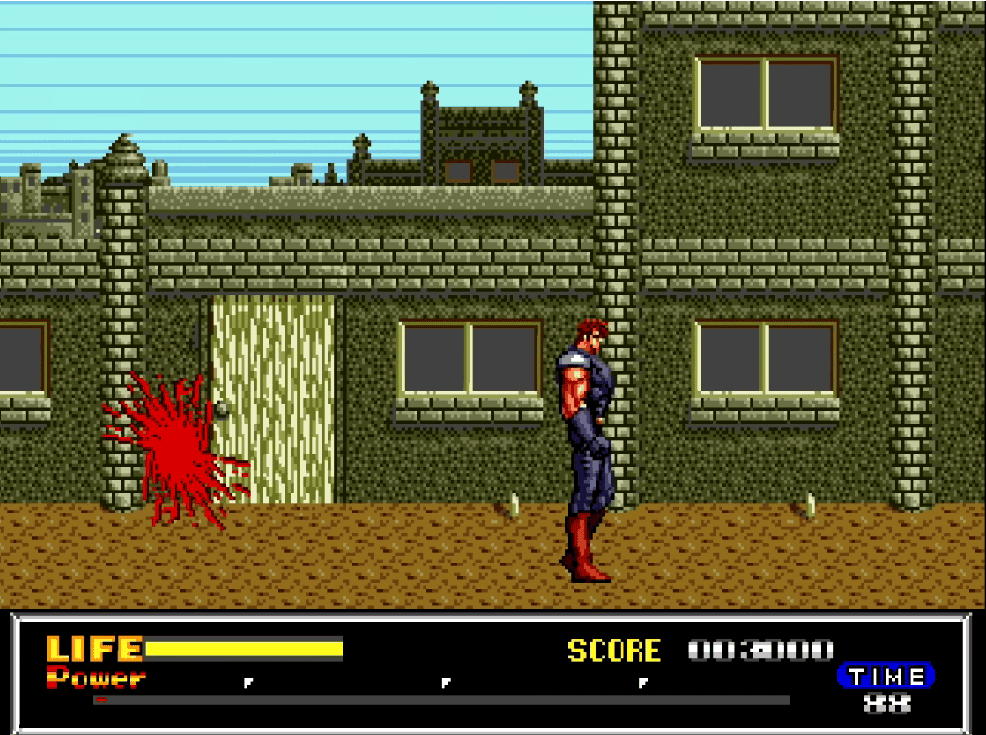
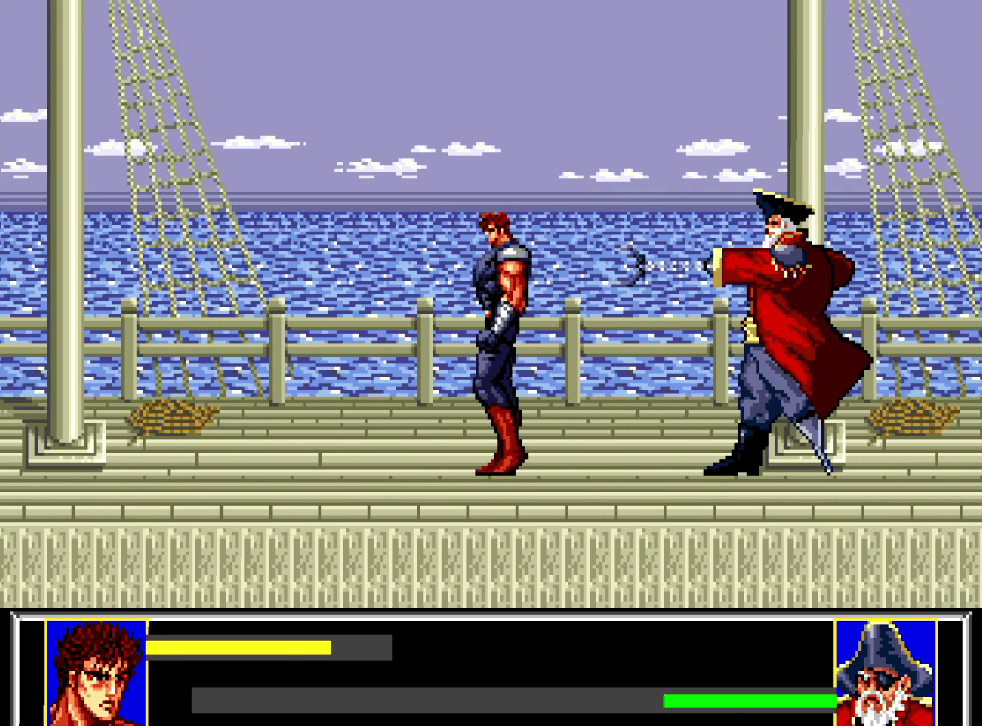
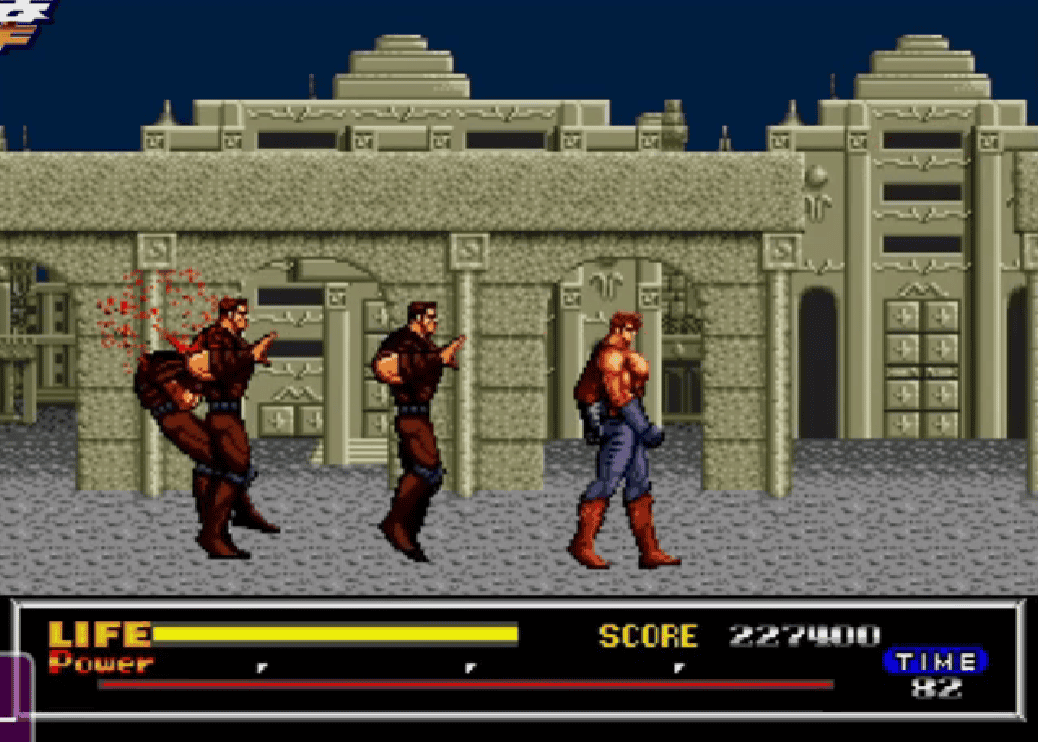
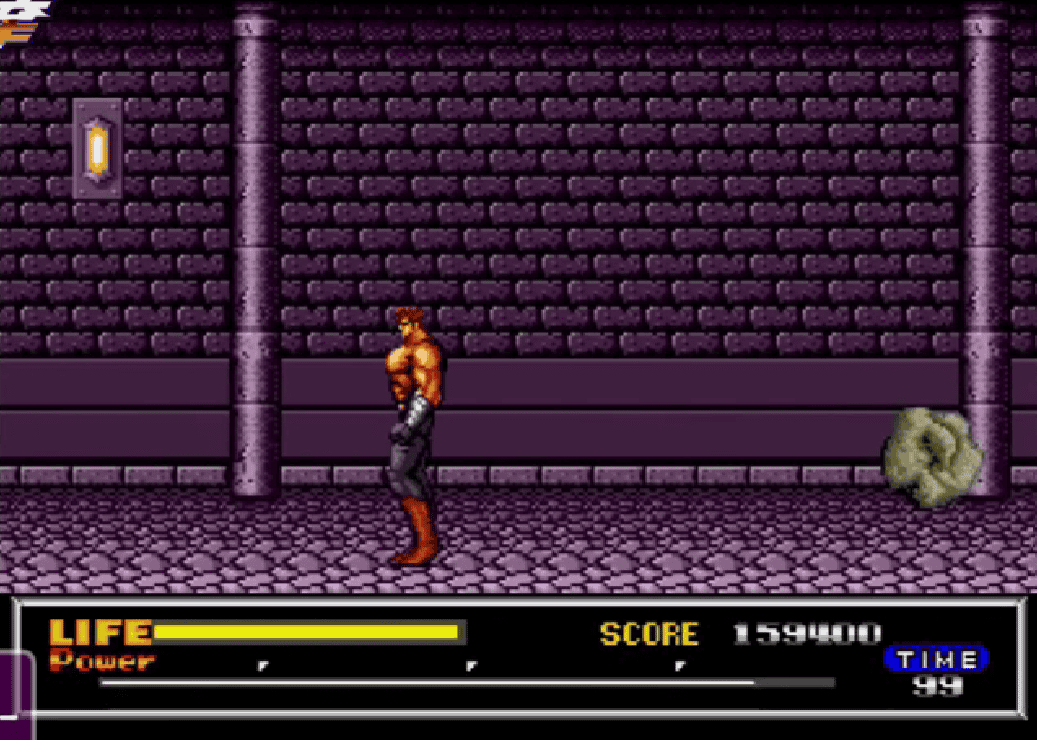
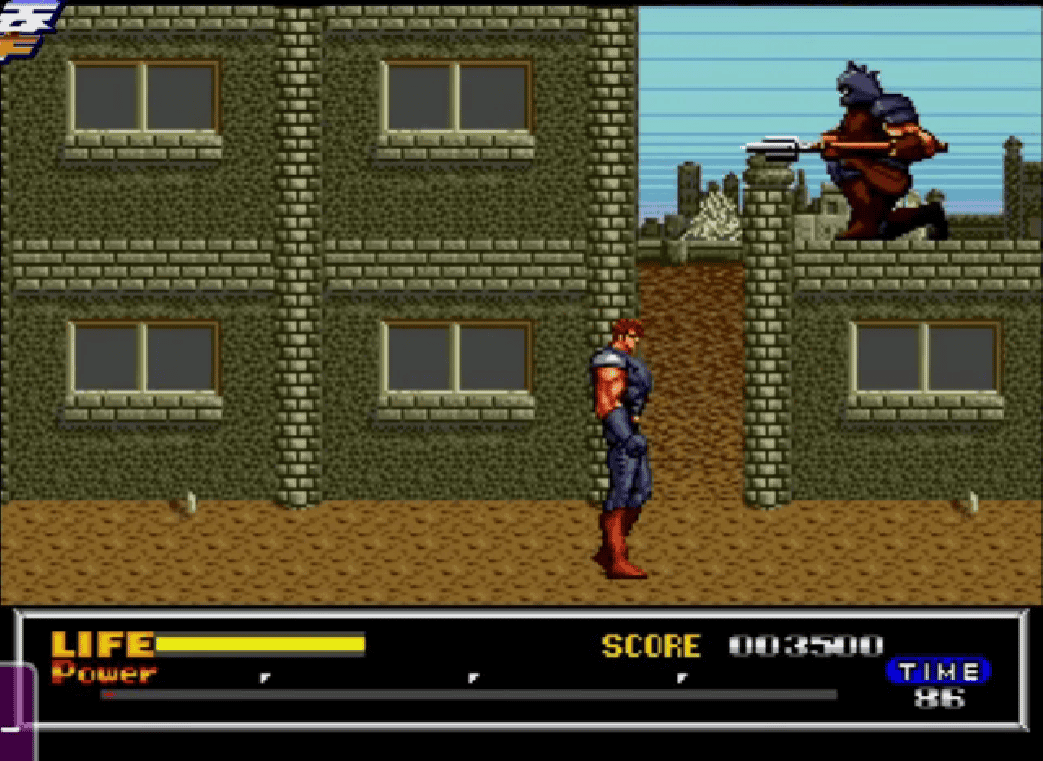
The game blends two types of sequences: side-scrolling combat levels where Kenshiro fights wave after wave of enemies until reaching a boss, and maze sections riddled with traps where the correct route must be memorized. A map allows the player to choose a path between stages, and some must be completed in a specific order to finish a chapter. As in previous games, defeating enemies tears Kenshiro’s jacket and powers him up, turning his strikes into rapid-fire barrages. Dialogues with encountered characters increase the hero’s resistance. Health does not regenerate automatically between stages, making health point management crucial and giving the game a reputation for being difficult.
Of note
Like the Mark III game before it, this title was exported without the Hokuto no Ken license, under the title Last Battle: Legend of the Final Hero. But where Black Belt had entirely redesigned its characters, the transformation here is much more superficial: the sprites remain those of Kenshiro, and only the names change. The hero becomes Aarzak, and the three Rasho (Kaioh, Hyoh and Han) are renamed Garokk, Gross and Gromm.
The international version also tones down the original violence: in the Japanese version, enemies explode and blood splatters, while the Western version simply sends them flying backward, with the blood recolored to blue or green. Last Battle was one of the six launch titles for the Mega Drive (Genesis) in North America, which earned it a certain notoriety despite a reputation as a poorly made game.
The Japanese version was sold for 6,000 yen and was re-released on the Wii’s Virtual Console in 2008. In Europe, the studio Elite produced Commodore 64 and Amiga adaptations in 1991.