

Details
- Original title
- 北斗の拳
- Western title
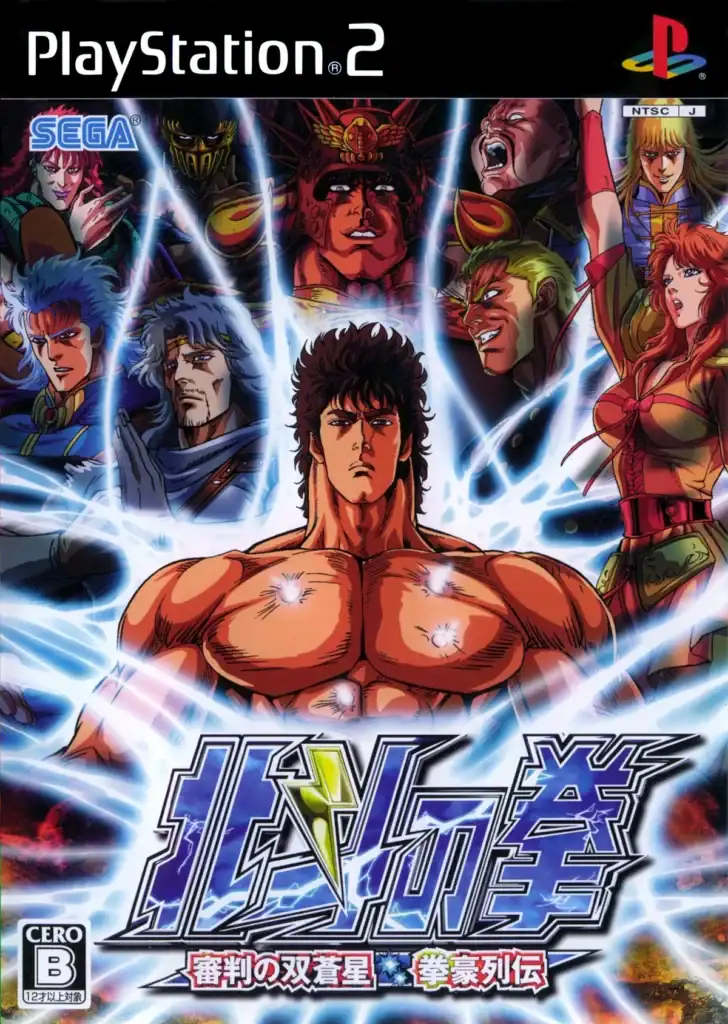
- Hokuto no Ken: Shinpan no Sōsōsei Kentōki (version PS2)
- Genre
- 2D Fighting
- Publisher
- Sega
- Developer
- Arc System Works
- Release date
- December 6, 2005
- Platforms
- Arcade (Atomiswave)PlayStation 2 29 March 2007
Affiliate link. As Amazon Associates, we earn from qualifying purchases.
Hokuto no Ken (Arc System Works) (北斗の拳)
Game System
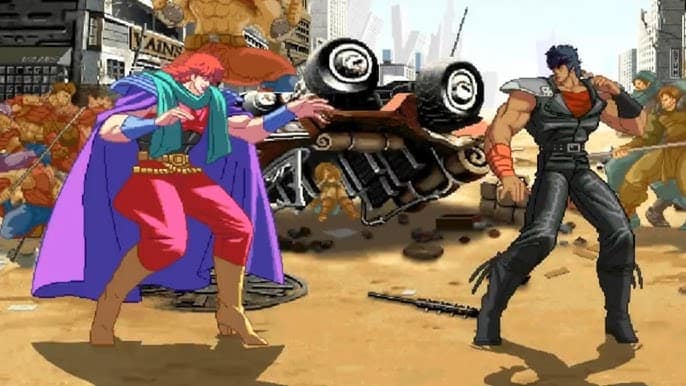
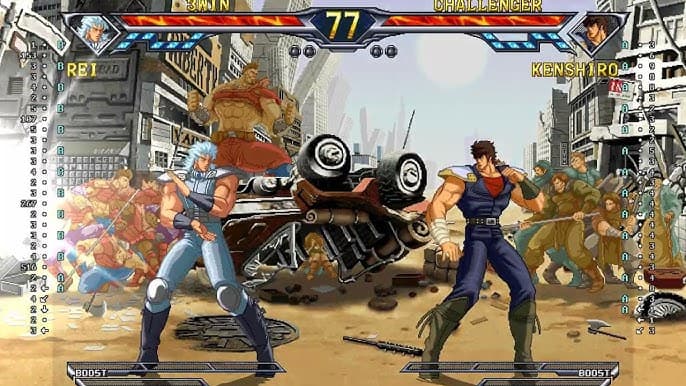
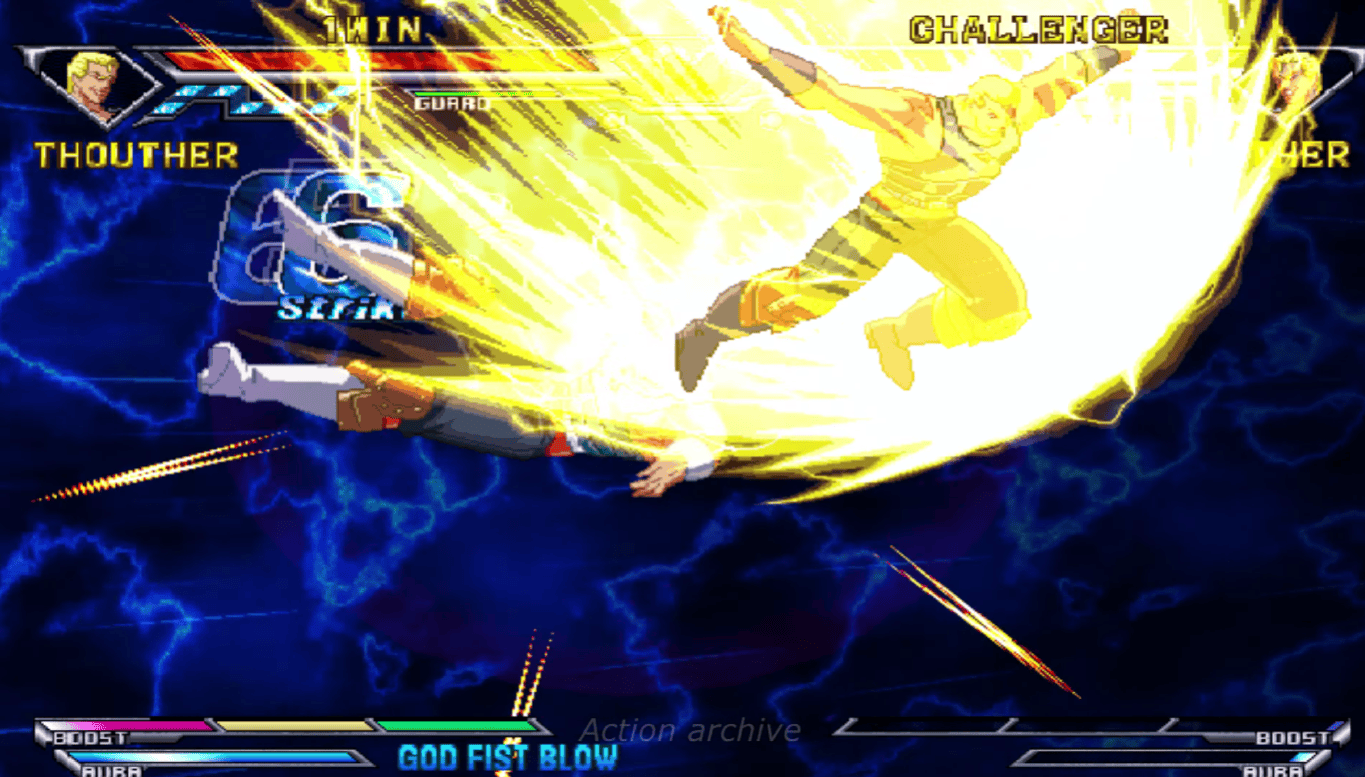
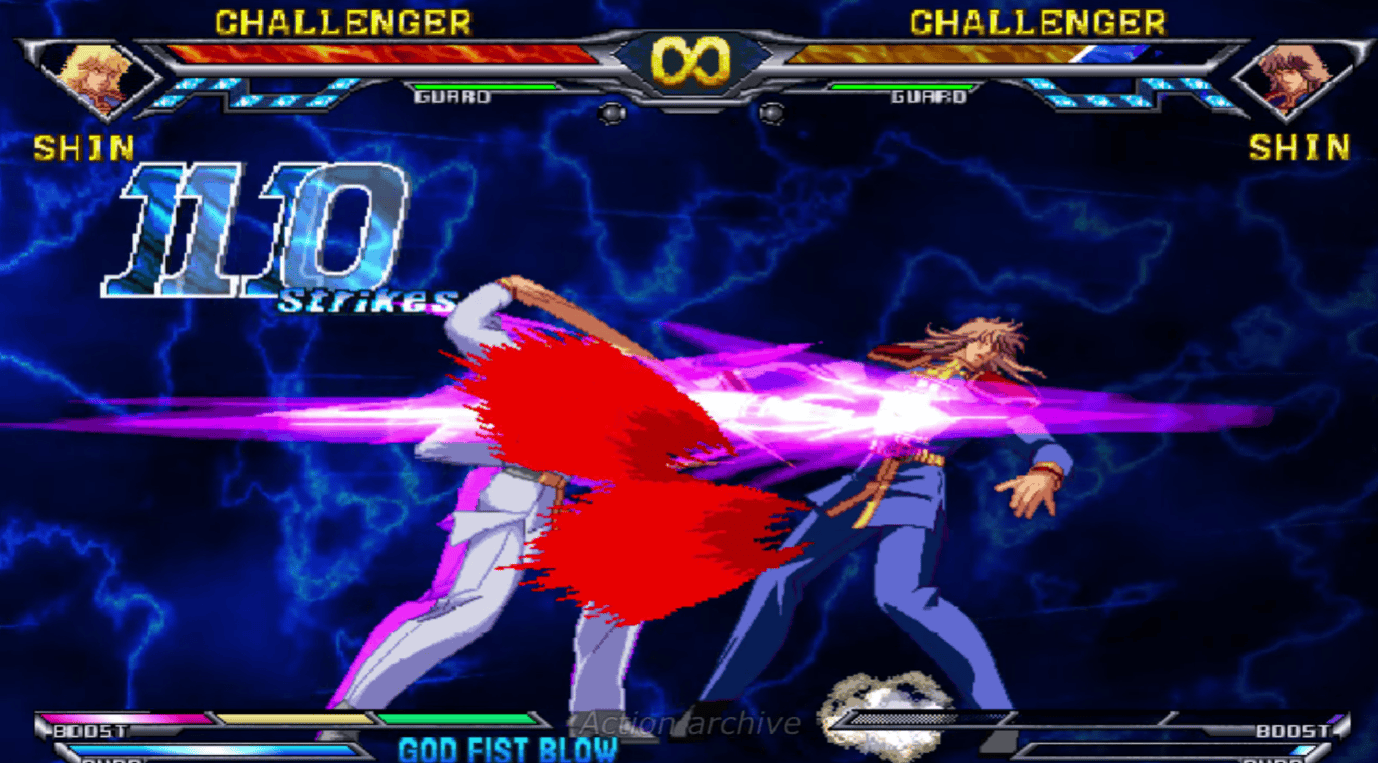
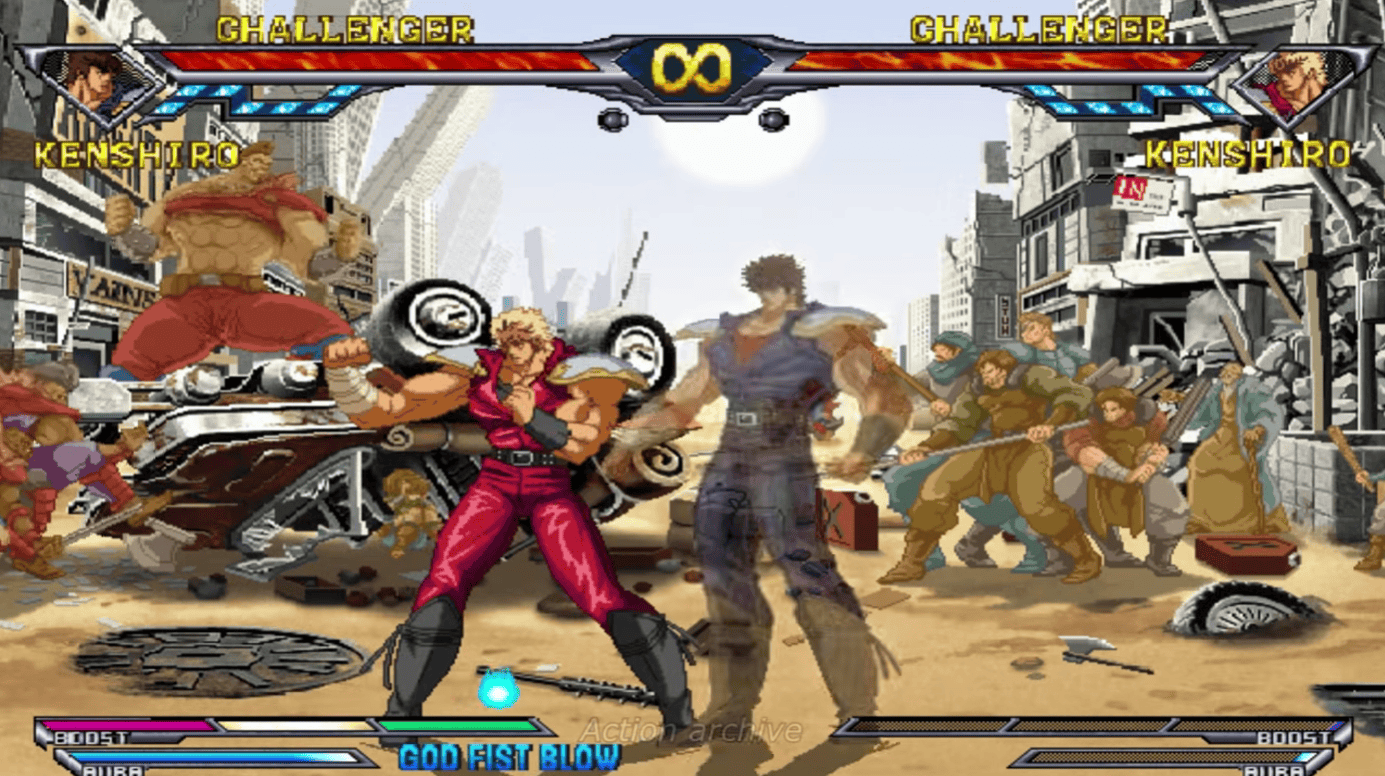
This game is built around a mechanic unique to the franchise: beneath the health bar lies a gauge representing the seven stars of Hokuto. By hitting the opponent with certain techniques, you remove stars from them, and once all stars are depleted, the Death Star appears above them. Landing a fatal blow (ichigeki) at that point instantly knocks them down regardless of their remaining health, accompanied by the series’ iconic “you are already dead” line. The system also features a Boost gauge that allows players to cancel moves and chain combos of extraordinary length. It is this generosity, combined with extreme imbalances between characters, that forged the game’s reputation.
Of Note
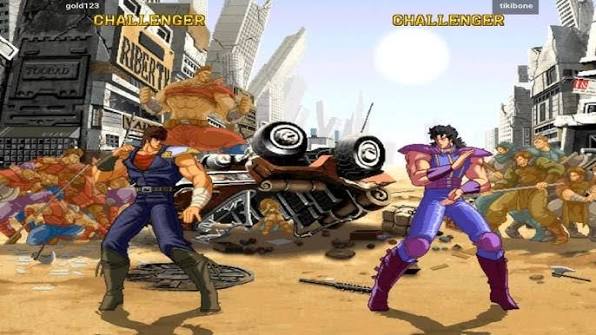
Developed by Arc System Works and published by Sega (the project having originally been launched under Sammy before the merger), this title is arguably the most famous video game adaptation of the franchise. Its highly unstable balancing, far from being a drawback, turned it into a cult favorite within the competitive scene, with near-infinite combos and characters that are either overpowered like Toki or, conversely, extremely weak. The game gave rise to the expression “end-of-the-world balancing” in the fighting game community’s jargon. A PlayStation 2 version was released in 2007 under the title Shinpan no Sōsōsei Kentōki, featuring home-exclusive modes (story, survival, training) and a playable “Ken Oh” version of Raoh.
Twenty years after its arcade release, the game received unexpected recognition: it was selected among the twelve titles featured in the main tournament at EVO Japan 2026, the world’s biggest fighting game event, where it was played on original Atomiswave cabinets. This recognition is entirely owed to the competitive community, which ultimately demonstrated that this supposedly unbalanced game actually harbored genuine strategic depth.