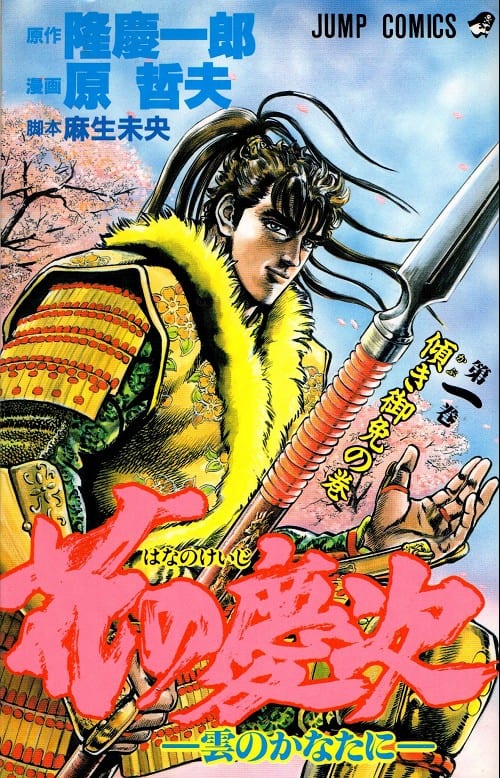
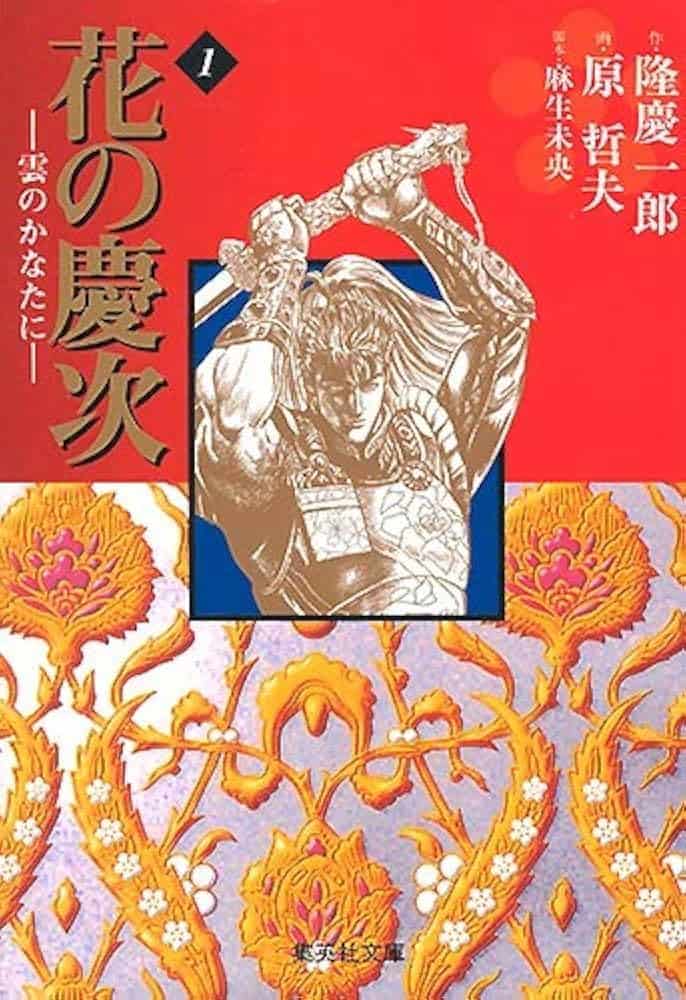
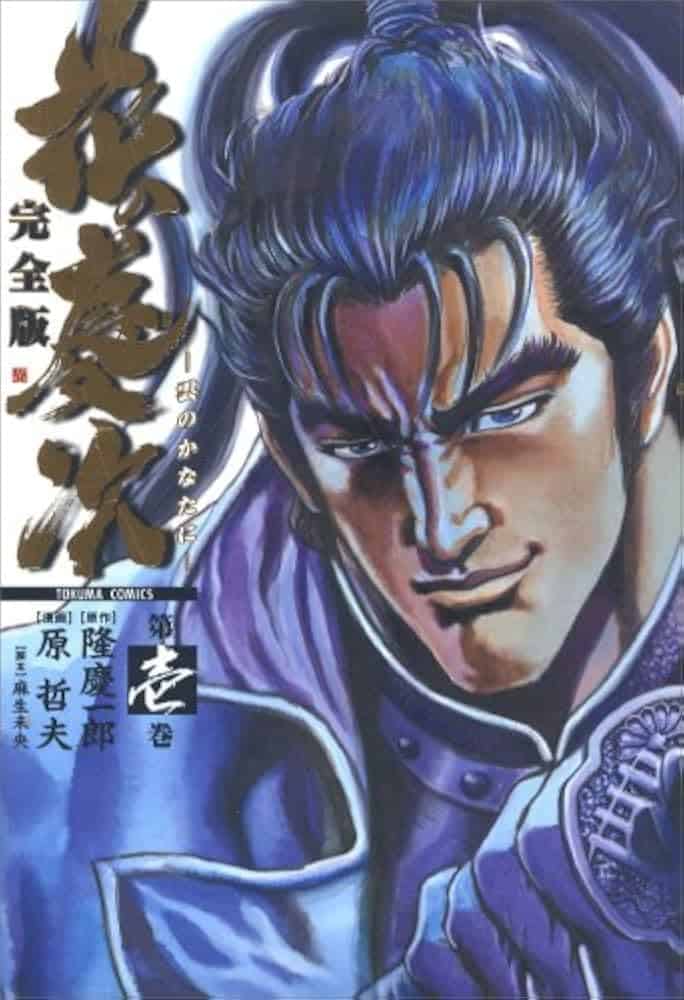
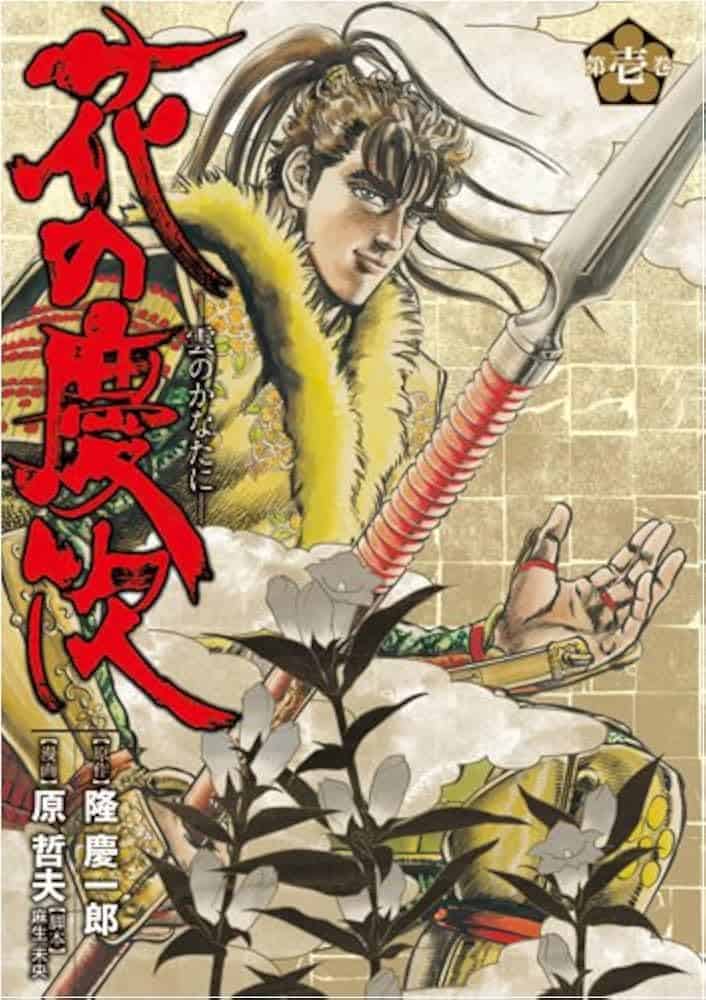
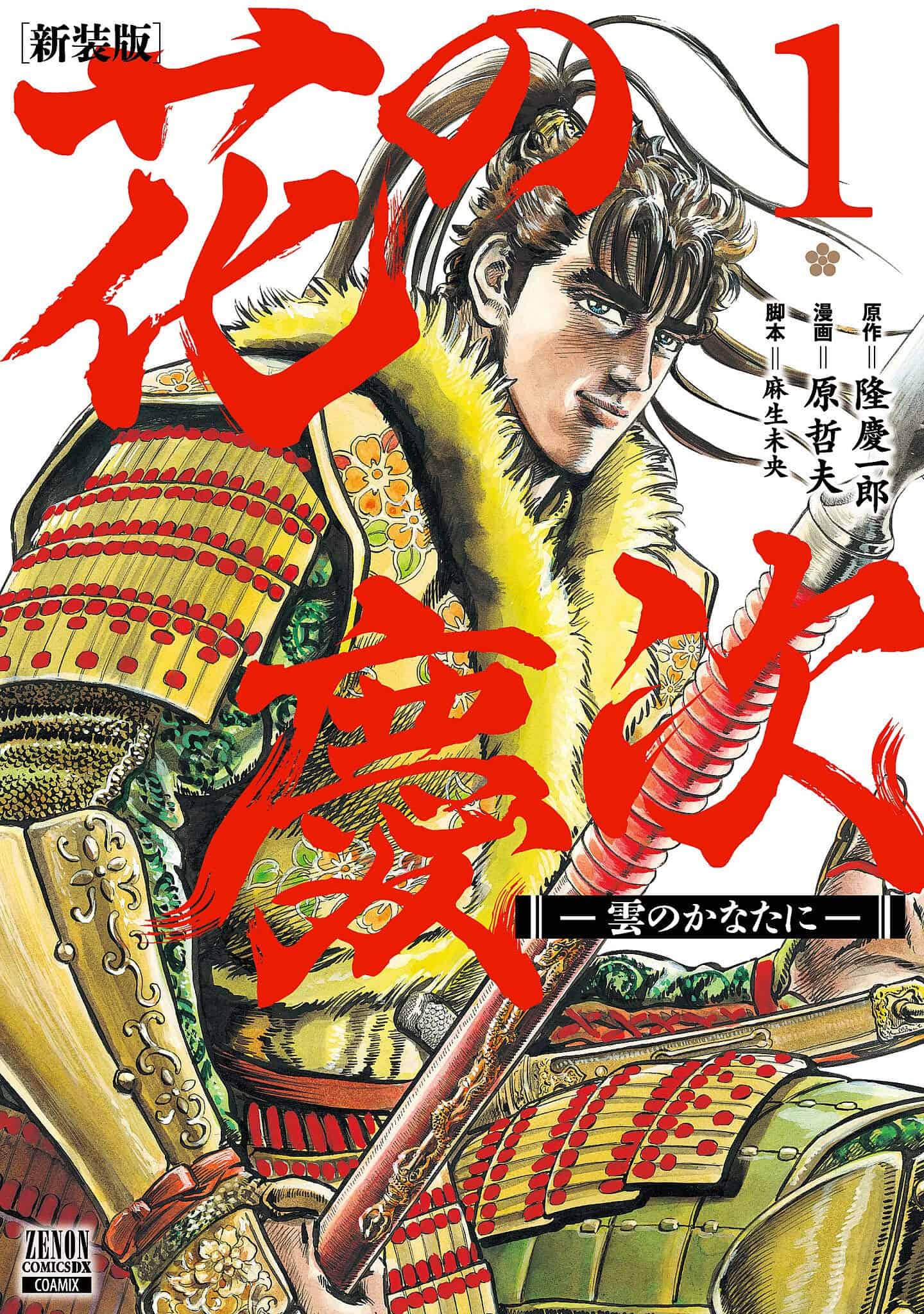
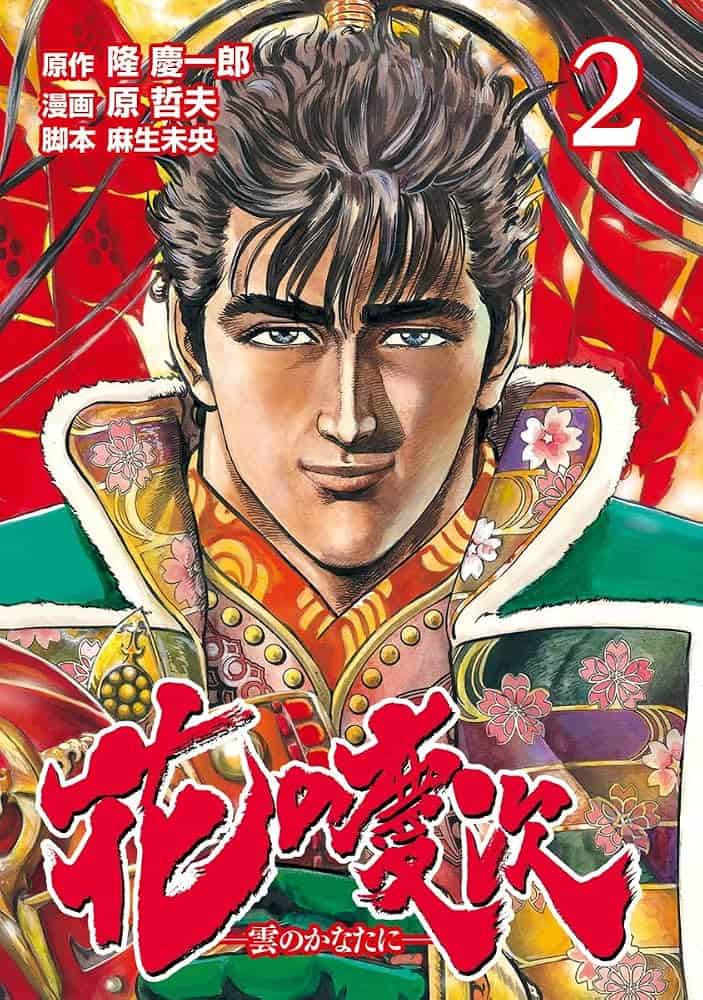
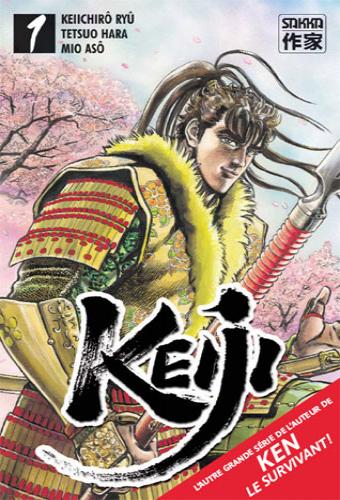
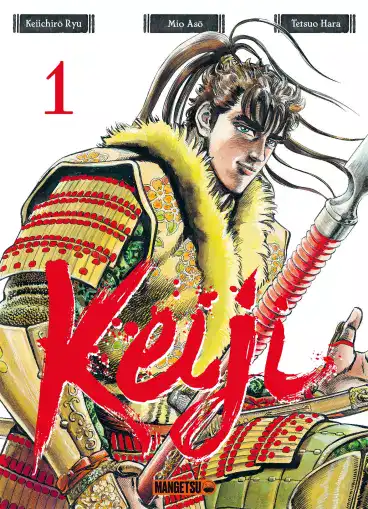
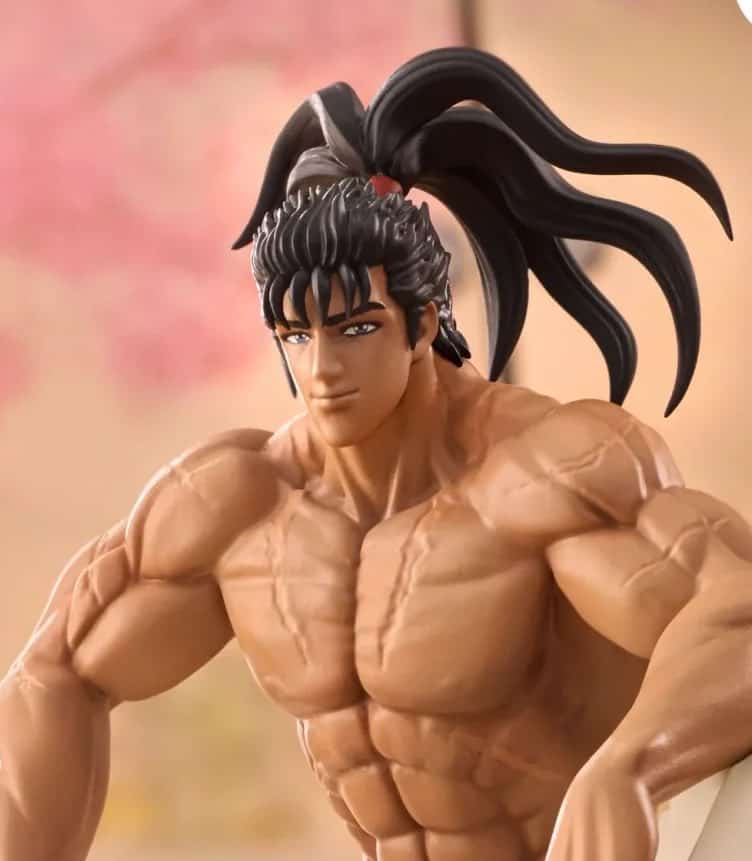
Hana no Keiji -Kumo no kanata ni- (花の慶次 ―雲のかなたに―) is a historical manga by Tetsuo Hara, serialized in Shueisha's Weekly Shonen Jump from 1990 to 1993 and collected in eighteen volumes. Hara handled the art based on a story by Mio Aso, adapted from the novel Ichimuan Furyuki by Keiichiro Ryu. The mangaka's first major historical epic after Hokuto no Ken, the work follows Maeda Keiji, a free-spirited and flamboyant warrior of the Sengoku era.
Synopsis
In this late Sengoku period, as Japan is being reshaped around the great unifiers, there lives a man who refuses to bow before any power. Maeda Keiji is a kabukimono, a magnificent eccentric who places freedom and the beauty of the act above all else, to the point of openly defying the powerful.
Leaving the guardianship of his uncle Maeda Toshiie, Keiji takes to the road on his faithful stallion Matsukaze. Throughout his wanderings, he crosses paths with the major figures of his time, from Toyotomi Hideyoshi to Date Masamune, and forges an unwavering friendship with the strategist Naoe Kanetsugu. Between duels, battles and encounters, the portrait emerges of a man determined to live by his own rules.
From a novel to a Jump classic
Hana no Keiji adapts the novel Ichimuan Furyuki by Keiichiro Ryu, published in 1988, which rescued the historical figure of Maeda Keiji from obscurity, turning him into a celebration of freedom and the art of living. Hara discovered the text while seeking, after Hokuto no Ken, to reinvent himself through historical narrative, a genre that the Weekly Shonen Jump considered unpromising at the time.
A standalone chapter appeared in issue 50 of the Weekly Shonen Jump in 1989 to gauge public reception. The response being favorable, the series launched in issue 13 of 1990 and continued through issue 33 of 1993. The title and its calligraphy were the work of Keiichiro Ryu himself, shortly before his passing. While it never topped the magazine's popularity rankings during its serialization, the work subsequently acquired the status of a classic, reinforced by its numerous reprints.
Style and legacy
Hana no Keiji marks an evolution in Tetsuo Hara's art style after Hokuto no Ken, with more fluid lines, lighter hatching, and a pursuit of more direct expressiveness, in service of a refined aesthetic where cherry trees, kimonos and armor contrast with the violence of the battles. In Japan, the popular image of Maeda Keiji today owes much to the version Hara created. The series has been adapted into several pachinko machines starting in 2007, which durably revived its popularity, and the franchise remains very active, notably with the sequel Maeda Keiji Kabuki Tabi serialized in Monthly Comic Zenon and several spin-offs.
The spin-offs
The Hana no Keiji franchise has given rise to several derivative series, written based on the universe created by Tetsuo Hara and Nobuhiko Horie, but entrusted to other mangaka for the artwork.
The Gifudodo trilogy: Naoe Kanetsugu shifts the focus to Keiji's friend, the strategist Naoe Kanetsugu. The first installment, Tsukigatari, drawn by Takeharu Takemura, has an aging Keiji recount the true story of his friend, faithful to the ideal of justice. Its sequel, Sakegatari, by the same artist, revisits the era of Hana no Keiji and the Sado campaign alongside the two companions. The final installment, Hanagatari, taken over on art by Masato Deguchi, leads all these destinies toward the Battle of Sekigahara.
Maeda Keiji Kabuki Tabi, also drawn by Masato Deguchi, follows Keiji himself: one year after Sekigahara, the eternal eccentric leaves Kyoto for Kyushu, in search of the last vestiges of the Sengoku era.