

Details
- Title
- Hokuto no Ken : Le Film (北斗の拳 世紀末救世主伝説)
- Type
- Films animés
- Author(s)
- Buronson (scénario), Tetsuo Hara (dessin)
- Studio
- Toei Animation
- Publisher
- Toei (JP), AB Vidéo (FR), Discotek Media (US)
- Broadcaster
- Cinéma (sortie en salle)
- Release date
- 8 March 1986
Gallery
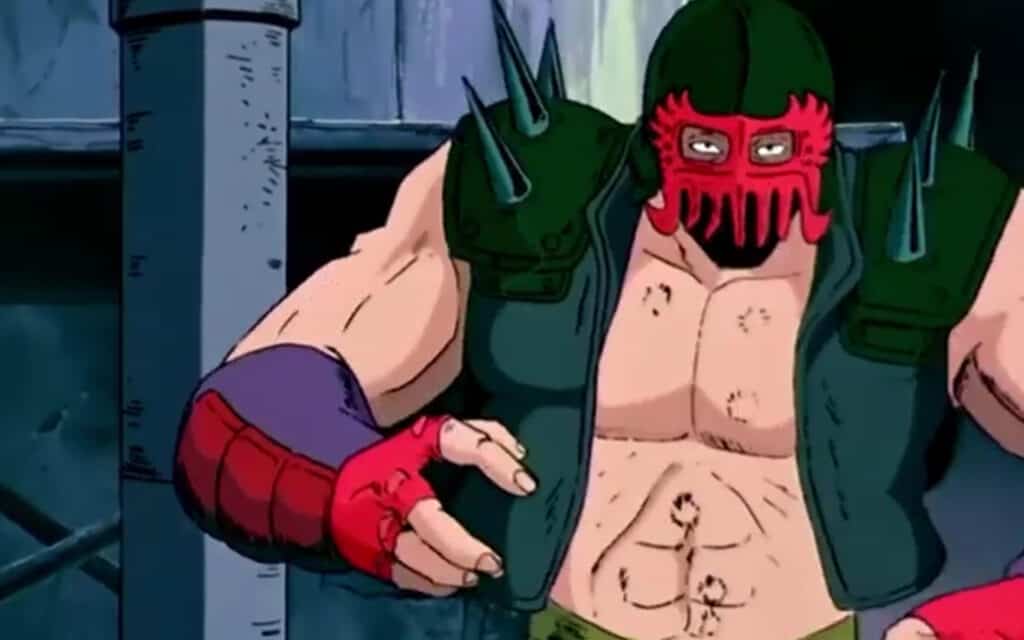 6View all images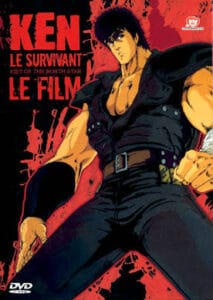
Hokuto no Ken : Le Film (1986)
Released in Japan on March 8, 1986, Hokuto no Ken: The Movie (北斗の拳 世紀末救世主伝説, Seikimatsu Kyūseishu Densetsu) is a theatrical adaptation of the manga by Buronson and Tetsuo Hara, produced by Toei Animation alongside the TV series, which was still airing at the time. Directed by Toyoo Ashida, the film offers a condensed and significantly more violent retelling of the first seventy-two chapters of the manga, up to the first confrontation between Kenshirō and Raoh. With 1.8 billion yen in box office revenue, it established itself as one of the major Japanese animated productions of 1986.
Synopsis
In 199X, the Earth has been ravaged by a nuclear holocaust. The seas have dried up, the land has cracked apart to form nothing but a vast desert. The human race has not completely disappeared. The rare survivors have organized themselves into gangs and fight for their survival, with the weakest reduced to the status of slaves.
The greatest schools of martial arts, such as Hokuto Shinken and Nantō Seiken, are the only ones capable of restoring some semblance of order. But ambition drives some to seek domination over this world of chaos. Such is the case of Raoh, who proclaims himself "Ken-Ō" (the King of Fists) and seeks to impose his rule through violence and terror. Only one man is capable of defeating him: Kenshirō, the legitimate successor of Hokuto Shinken. Left for dead by Shin, a master of Nantō, and marked with seven scars, he sets out in search of his fiancée Yuria, who was taken by that same Shin during their confrontation.
A muscular retelling of the manga
The film follows the narrative foundations of the TV series (from the encounter with Zeed to the first battle against Raoh) but takes several liberties. Some iconic characters such as Toki and Mamiya are completely absent. Raoh personally kidnaps Yuria and has her imprisoned at Cassandra. It is Jagi, not the Kibas, who holds Rei's sister captive. The story should thus be seen as an alternative vision of the series, one that fully embraces its approach of condensation and free reinterpretation.
On the technical side, Toei Animation benefits from a much more comfortable budget than for the television series. The animation gains in fluidity, the backgrounds beautifully capture the post-apocalyptic atmosphere, and the character design is entrusted to Masami Suda, who was already in charge of the character design on the TV series. On the soundtrack side, two tracks would leave a lasting mark on the franchise: Purple Eyes and Heart of Madness, which have become inseparable from Hokuto no Ken culture.
Public success and Buronson's controversy
Upon its release, the film was acclaimed by critics and audiences alike, totaling 1.8 billion yen in box office revenue. But this success was not shared by everyone; indeed, Buronson, the manga's scriptwriter, called certain passages "deplorable" due to violence he deemed excessive, a surprising comment coming from the author of a work whose manga itself is anything but watered down. Over the decades, however, this film would establish itself as the favorite animated adaptation among a large portion of fans, who see it as the best transposition of the Hokuto no Ken spirit ever made.
A work marked by censorship
Several particularly violent scenes in the film were toned down as early as the original Japanese version, generally through the application of a reddish tint or a rainbow blur effect. To this day, no fully uncensored version of the film has ever been officially released. Only the 1993 Italian VHS published by Granata Press contained some previously unseen scenes, such as the one where Shin carves the seven scars into Kenshirō's chest.
In 2018, American publisher Discotek Media leveraged the discoveries of the Kineko Video collective to incorporate the known uncensored fragments into its Blu-ray edition. This edition remains the most complete version available to date.
Two endings, two versions
The film actually exists in two distinct versions. The original ending, shown in theaters in Japan and used for international releases (United States, France), shows Raoh about to deliver the final blow to a fallen Kenshirō, before Rin intervenes to stop the fight. The alternative ending, animated specifically for the 1988 Japanese VHS release and reused on Laserdisc in 1995, features a draw between the two brothers, also interrupted by Rin. Only the 2008 Japanese collector DVD edition (first pressing only) and the 2018 Discotek Blu-ray include both endings. In France, AB Vidéo never saw fit to include the second ending in its collector edition.
Tribute to Masami Suda (1943-2021)
It is impossible to discuss the 1986 film without paying tribute to Masami Suda, the character designer and animation director, who passed away on August 1st, 2021 at the age of 77. Born in 1943 in Saitama, he began his career at Tatsunoko Productions on series such as Mach Go Go Go and Gatchaman before joining Toei Animation. On Hokuto no Ken, his artistic touch defined all of Toei's productions: the 152 episodes of the two television series (1984-1988) and this 1986 film. His ability to adapt Tetsuo Hara's highly detailed designs for animation, layering shadows rather than simplifying the linework, gives the work its distinctive visual density.
His dedication to the franchise never wavered. Beyond Hokuto no Ken, his career spanned the history of Japanese animation: Slam Dunk, Dr Slump, Yo-Kai Watch, Lupin III, and more than a hundred other series. Co-founder of the JAniCA association (Japan Animation Creators Association), he also visited France several times for festivals such as Japan Expo. His artistic style remains inseparable from the image fans have of Kenshirō, Raoh, and Shin.
Cast and staff
Main cast
| Kenshirō | Akira Kamiya (神谷明) |
|---|---|
| Raoh | Kenji Utsumi (内海賢二) |
| Shin | Toshio Furukawa (古川登志夫) |
| Rei | Kaneto Shiozawa (塩沢兼人) |
| Jagi | Chikao Ohtsuka (大塚周夫) |
| Yuria | Yuriko Yamamoto (山本百合子) |
| Airi | Arisa Andō (安藤有里沙) |
| Lin | Tomiko Suzuki (鈴木富子) |
| Bat | Mie Suzuki (鈴木みえ) |
| Ryūken | Junji Chiba (千葉順二) |
Staff
| Original work | Buronson, Tetsuo Hara |
|---|---|
| Direction | Toyoo Ashida (芦田豊雄) |
| Screenplay | Susumu Takaku (高久進) |
| Executive producer | Chiaki Imada (今田智憲) |
| Character design | Masami Suda (須田正己) |
| Animation direction | Masami Suda (須田正己) |
| Art direction | Motoyuki Tanaka, Shiko Tanaka |
| Music | Katsuhisa Hattori (服部克久) |
| Studio | Toei Animation |
Éditions
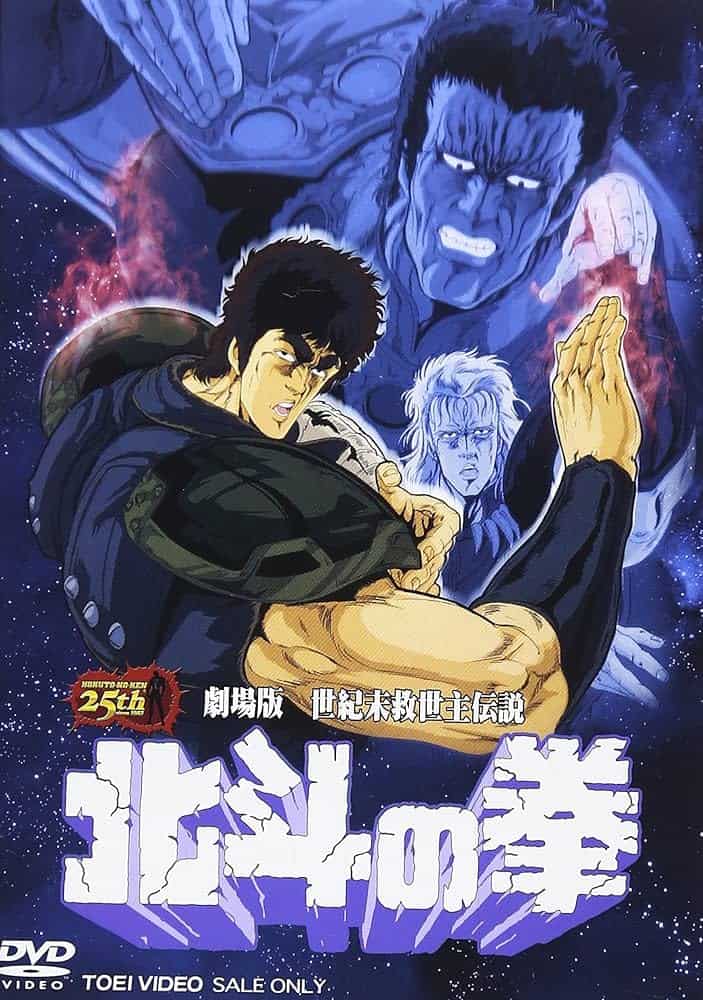
The film long existed only on VHS and Laserdisc in Japan before receiving a proper remastered DVD edition on November 21, 2008 from Toei (3,899 ¥). This Japanese edition presents the film in a remastered version with trailer, beta-trailer, and booklet, and offers in its first pressing the theatrical ending in addition to the VHS ending.
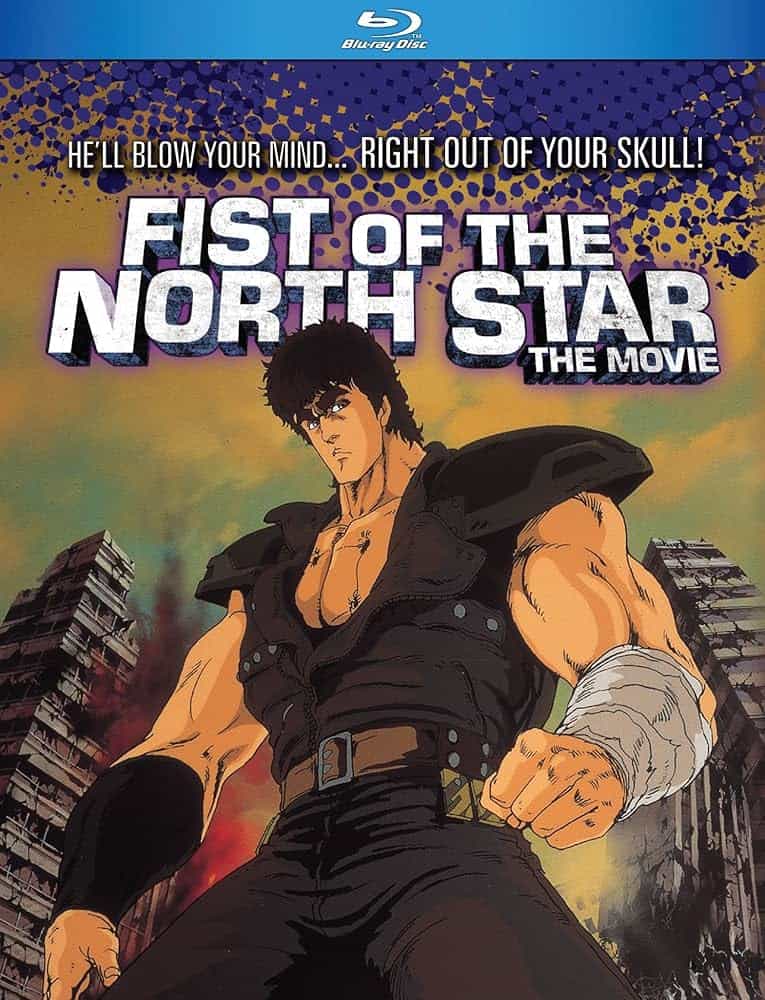
In the United States, Discotek Media released a Blu-ray edition in 2018 that stands as the most complete to date. Both endings of the film are included, and several uncensored scenes were reconstructed from sources recovered by the Kineko Video collective.
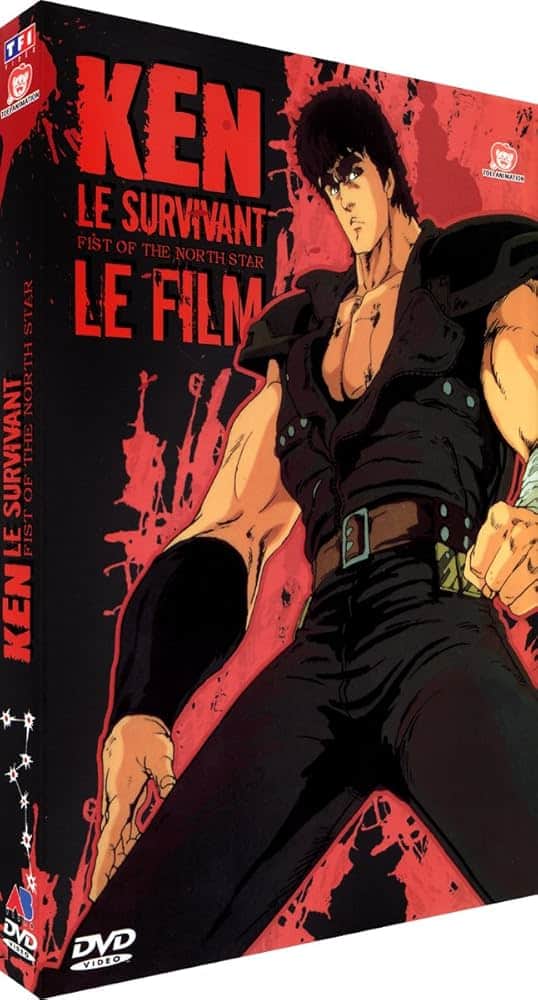
In France, the film went through several DVD editions from AB Vidéo under the title "Ken le Survivant": a first standard edition in 2002, a 2004 reissue (different cover), then a remastered collector's edition on April 10, 2008 (20 €) accompanied by a booklet. No official Blu-ray edition has been released in France to date.