

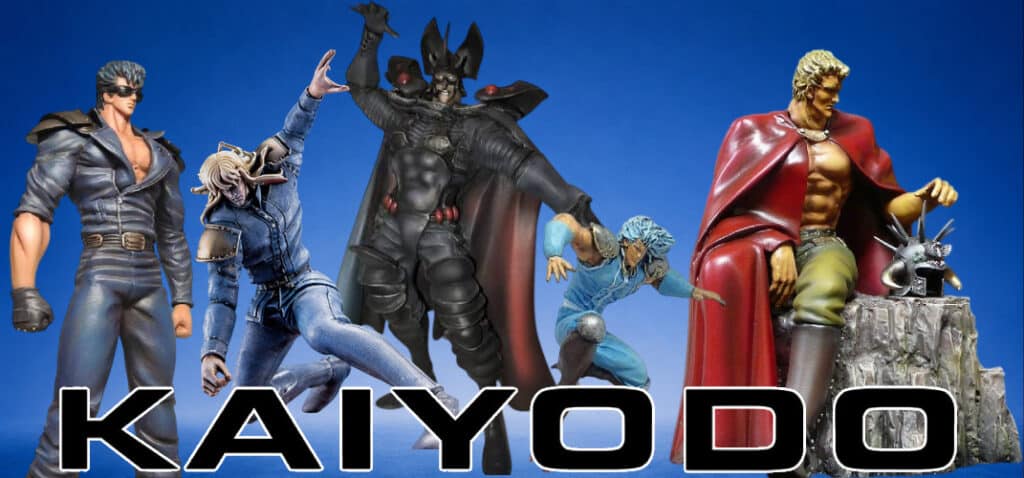
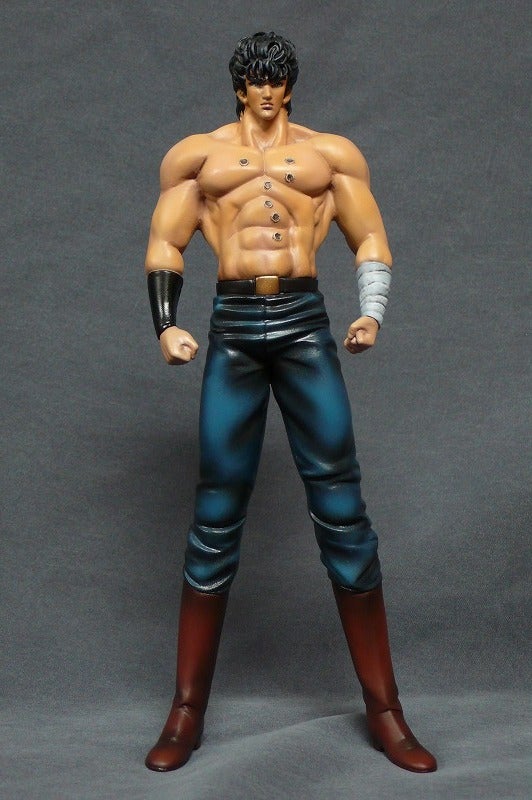
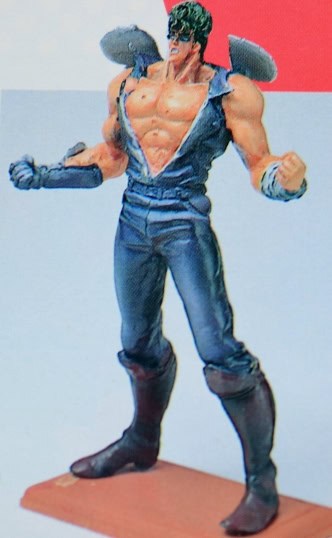
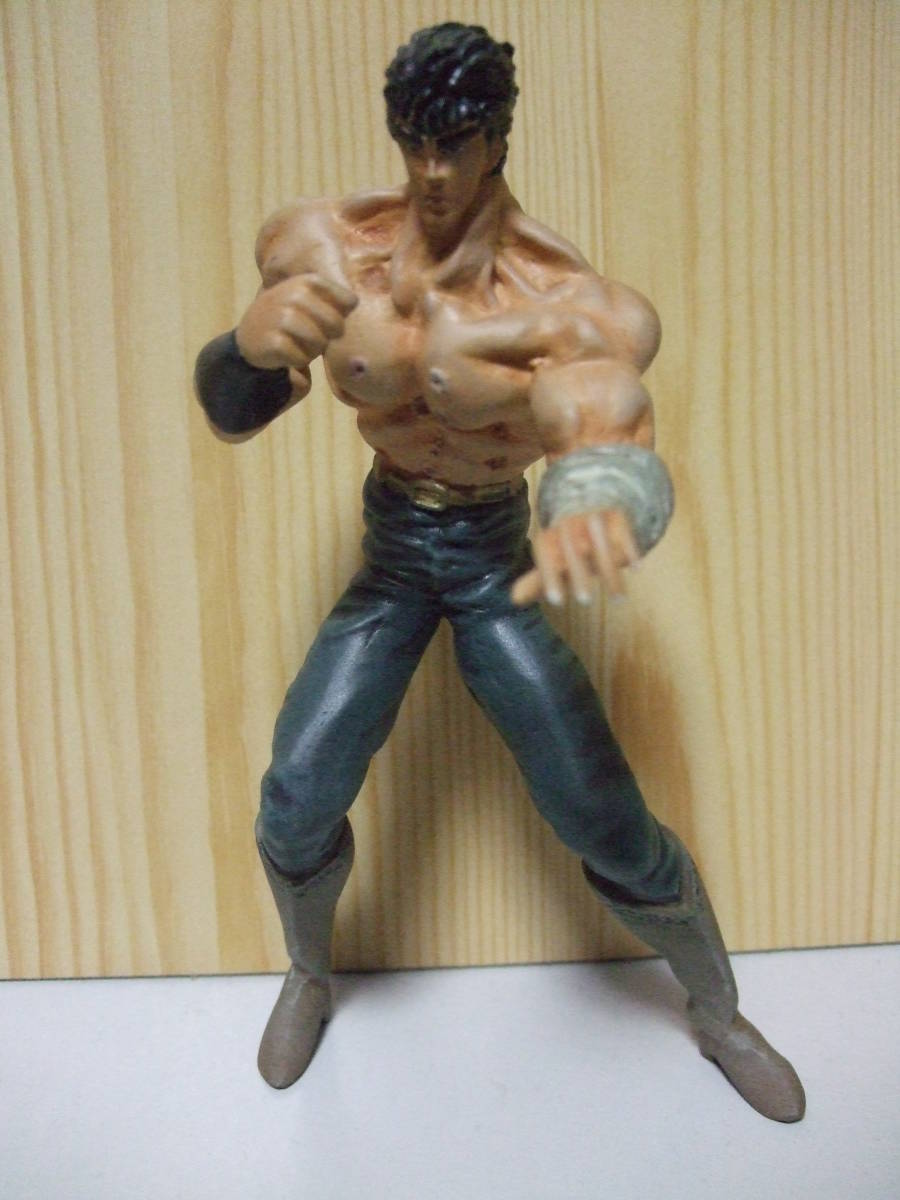
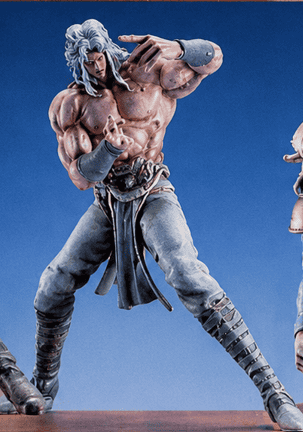
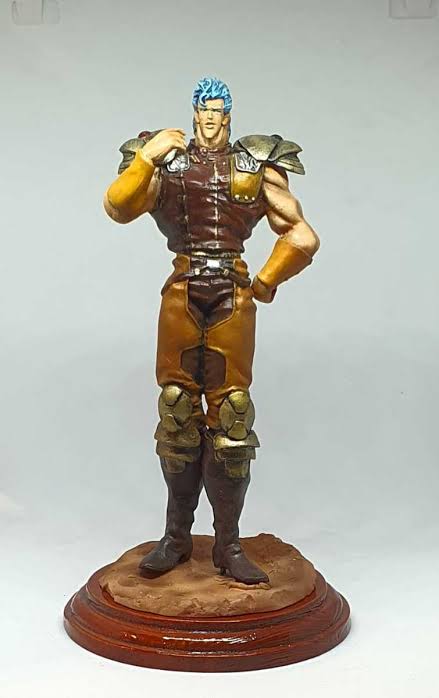
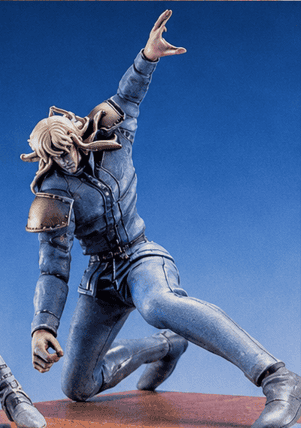
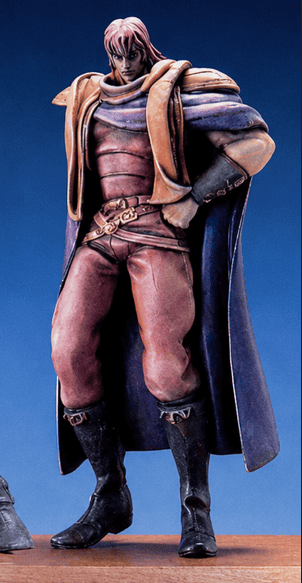
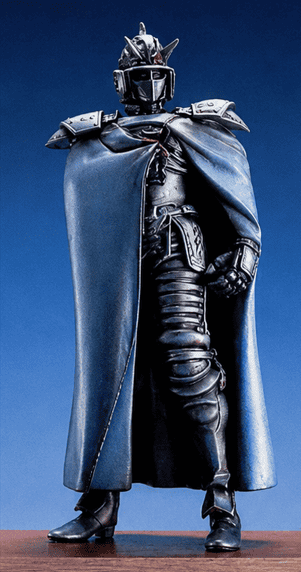
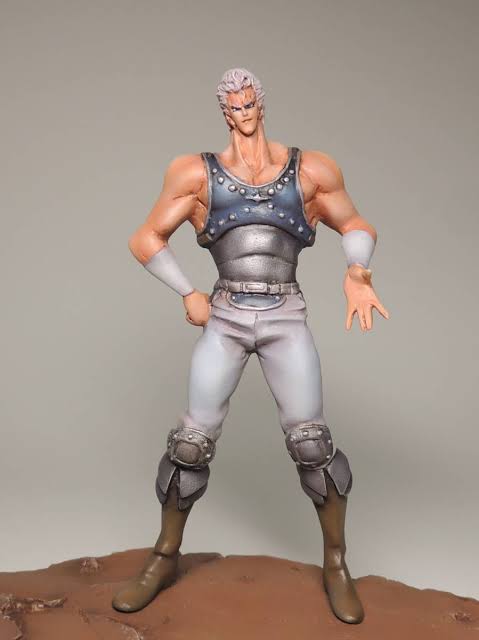
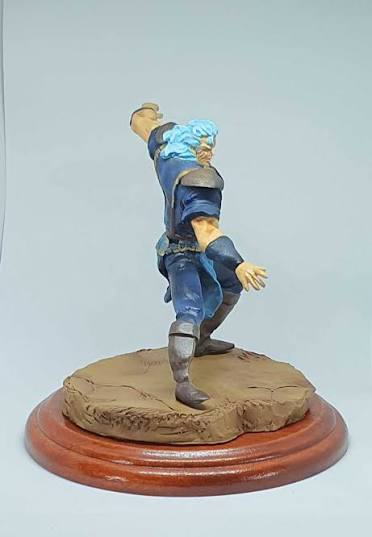
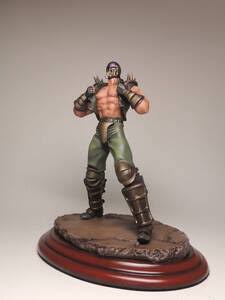
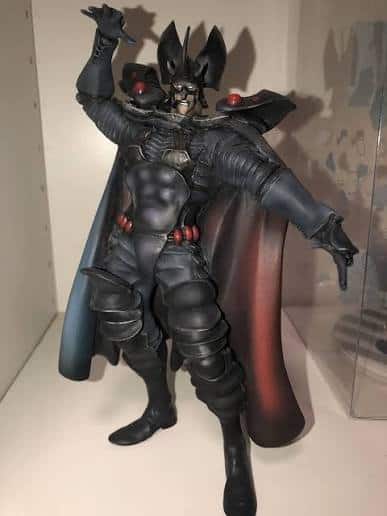
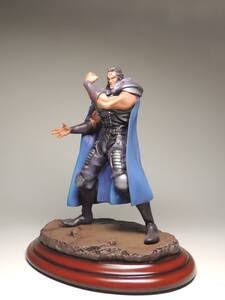
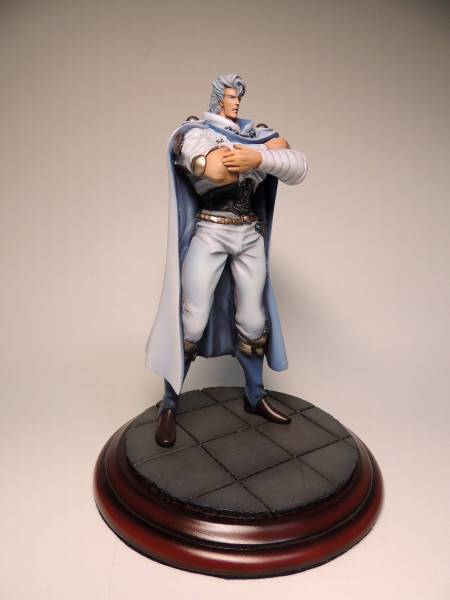
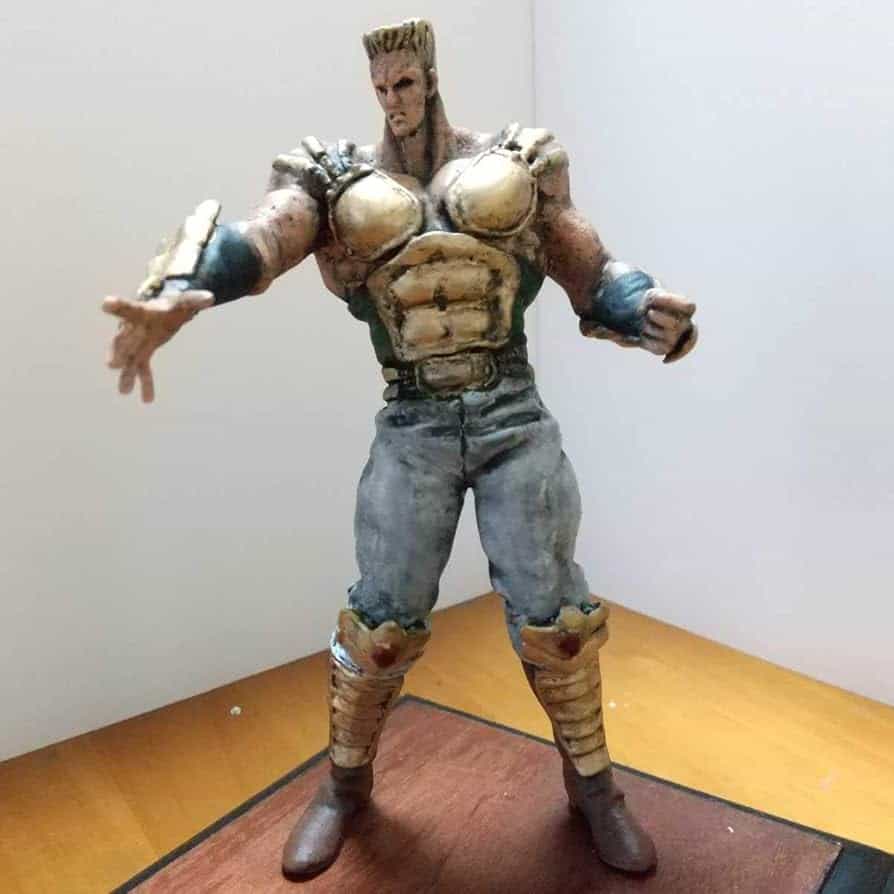
In the mid-1990s, before the XEBEC era and its action figures came along, Kaiyodo devoted a whole range of resin garage kits to Hokuto no Ken, many of which bore the signature of Katayama Hiroshi. These were kits to assemble and paint yourself, which Kaiyodo presented on their boxes as works of art, with the mention “Plastic Art by Hiroshi Katayama” printed in black on cream.
Details
The 1/15 set and its figures
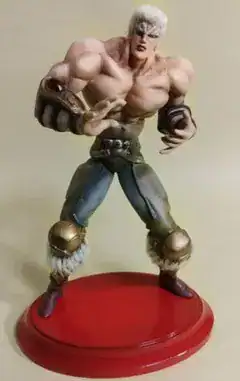
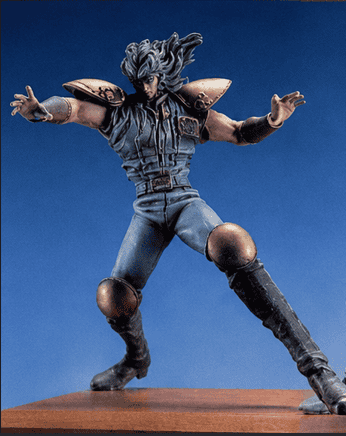
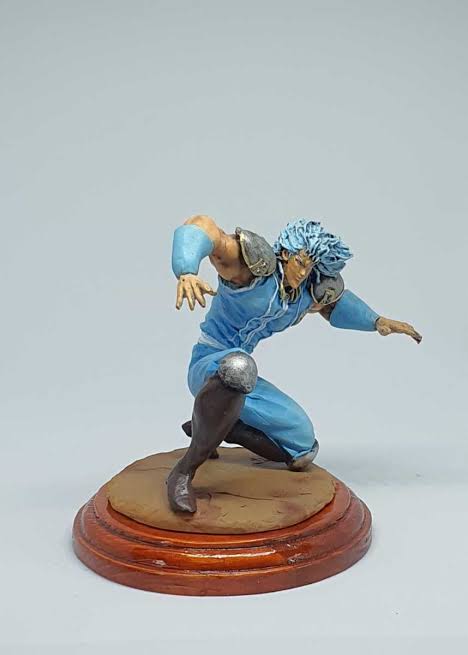
Part of the range comes in 1/15 scale, in box sets bringing together several characters. A first set gathers Kenshiro, Rei, Toki, Yuria, Shin and Yuda, the latter transliterated “JUDAS” on the box, in a period romanization. Other sets round out the cast, notably including Souther, Amiba and Shu. Each figure measures around ten centimeters.
The 1/12 line and its arc-based versions
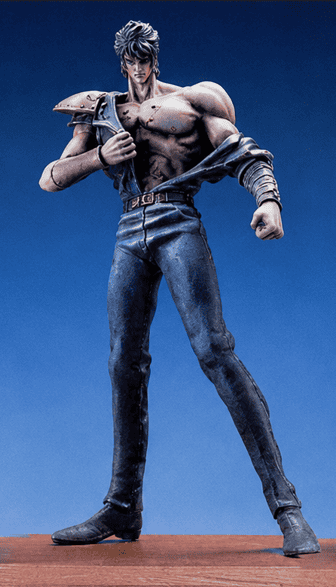
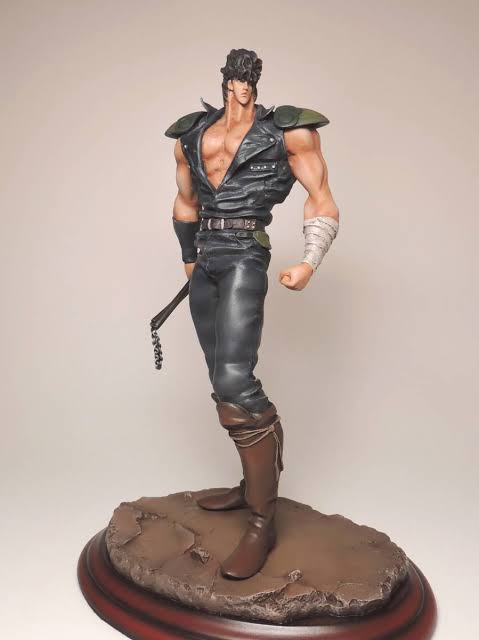
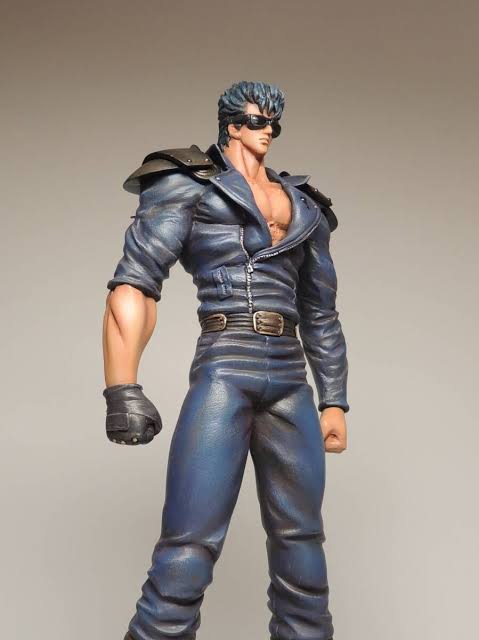
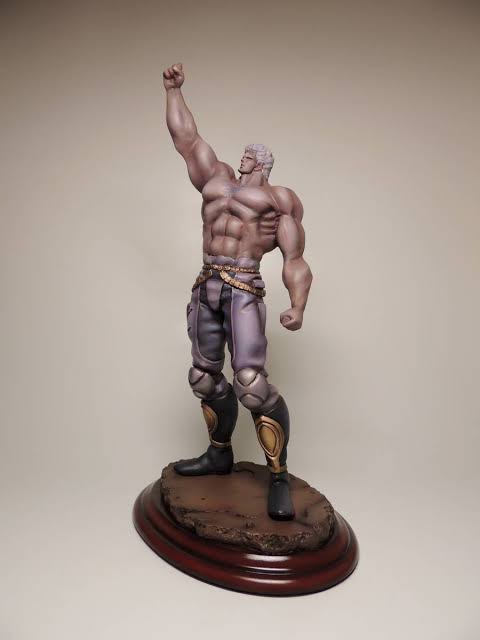
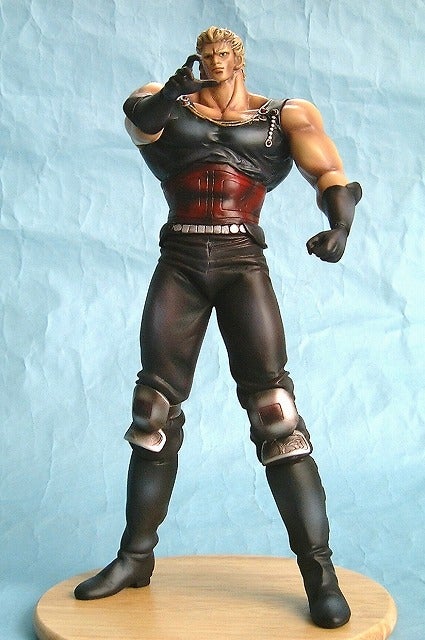
The heart of the collection is the 1/12 resin line, with compact boxes featuring salmon-colored labels. Its uniqueness lies in its arc-based versions: Kenshiro exists in a Shura-hen version, with black leather outfit, silver shoulder pads and sunglasses, as seen in the Land of Shura, and in a Tentei-hen version, late-series looks that almost no other manufacturer has ever tackled. Around him, we find a cast rarely seen in figure form: Kaioh, Ryuga, Hyoh, Jagi, Falco, Shin, Shu, not to mention the great classics.
Raoh and Kokuoh and the Kyukyoku Raoh
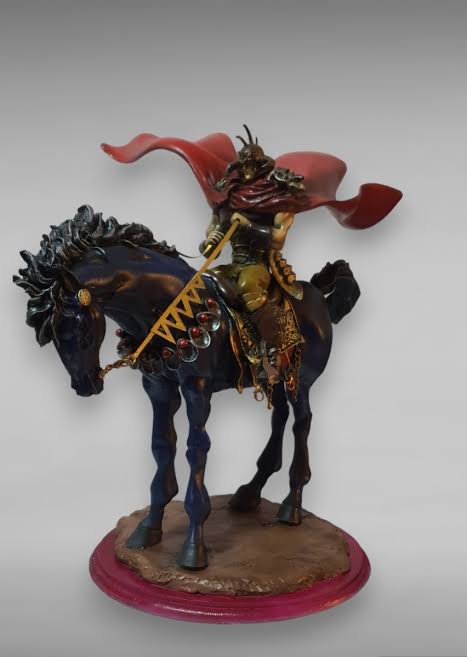
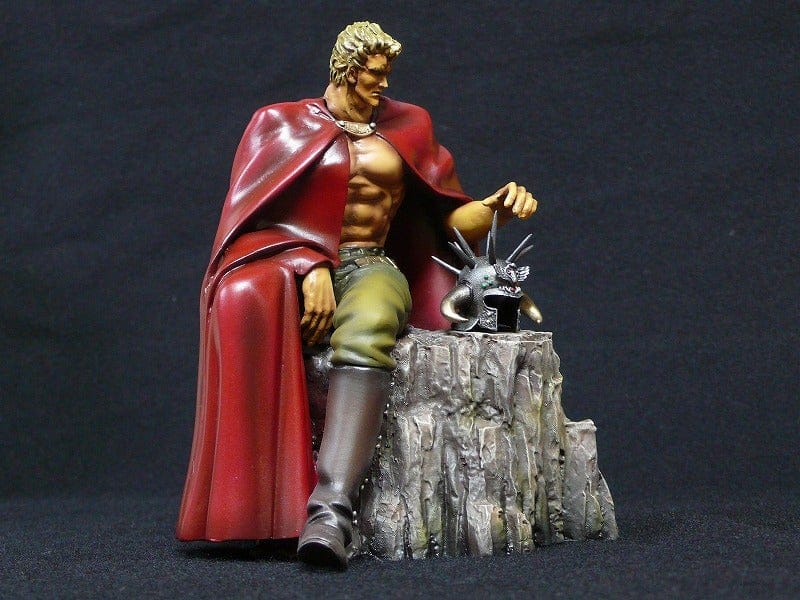
Two pieces dominate the range, both dedicated to Raoh. The first shows him mounted on his rearing steed Kokuoh, cape blowing in the wind, a Raoh & Kokuoh-Go in 1/12 that makes Katayama the first to immortalize the sovereign on horseback, well before the 200X set from 2006 and SpiceSeed’s wooden version. The second, the Kyukyoku Raoh, the “ultimate Raoh,” depicts him seated on his stone throne, helmet resting beside him, in a stripped-down cream box with no visuals whatsoever, reduced to its typography alone, the showpiece of the collection.
Finding them today
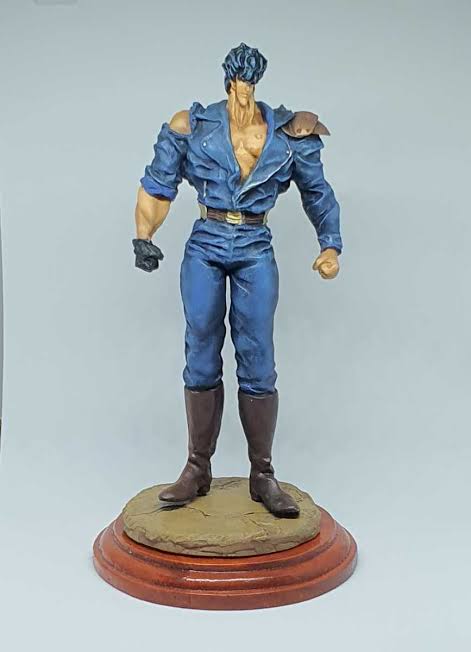
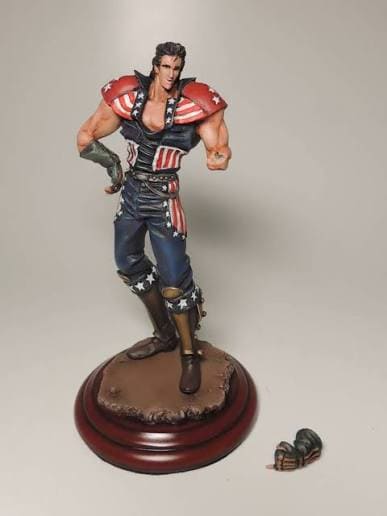
These resin kits circulate on Yahoo Auctions, Mercari and at Suruga-ya, most often in unassembled form, sometimes as amateur builds of varying quality. The exact catalog remains difficult to establish with certainty, as the range spanned multiple scales and multiple releases, and this list does not claim to be exhaustive. It is worth noting that since these kits frequently circulate as pieces reworked by modelers, a trained eye is needed to distinguish an original Kaiyodo from customs.