

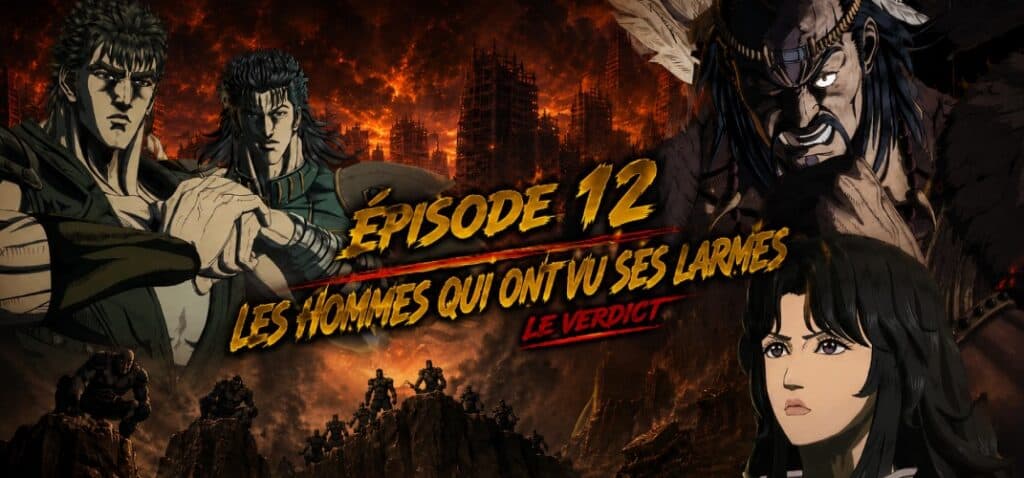
Episode 12 of the Hokuto no Ken – Fist of the North Star 2026 anime, titled “The Men Who Saw Her Tears”, has been available since Friday, June 12 on Prime Video. After the tragedy that strikes Mamiya’s village, Kenshiro and Rei unite their fists for the first time. Here is our verdict.
Episode Synopsis
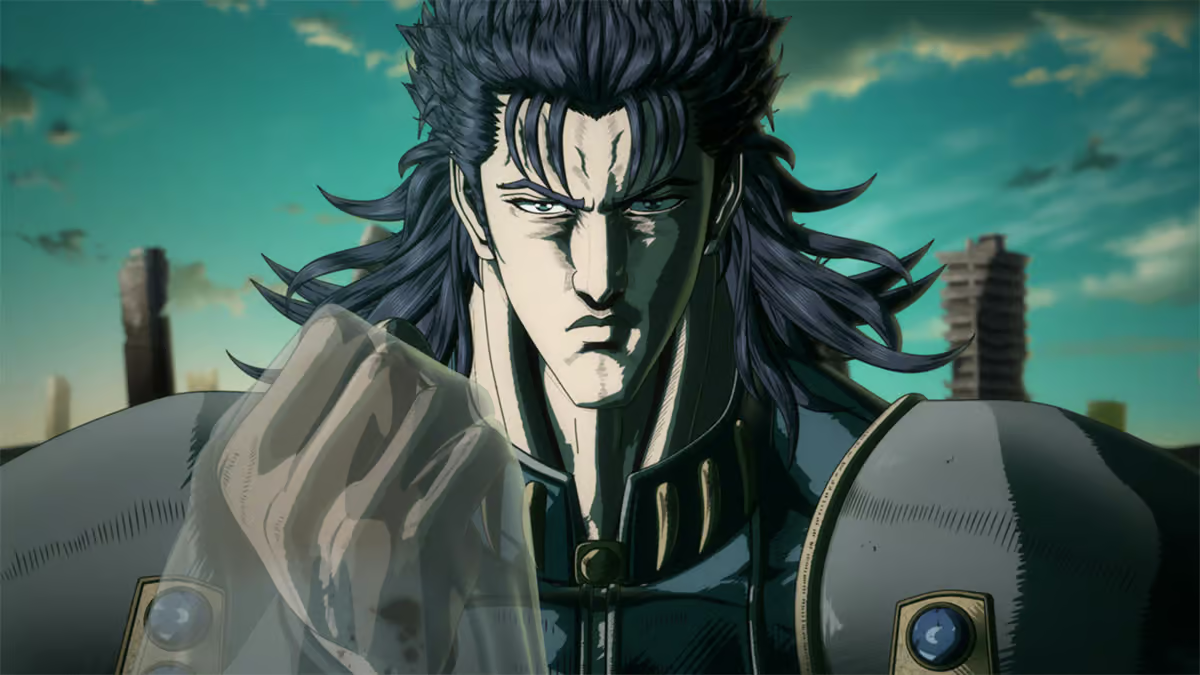
Kou loses his life at the hands of the Kiba clan. Mamiya, as the village leader, maintains a dignified and firm demeanor in front of everyone. But away from prying eyes, alone, she silently sheds tears over the death of her young brother Kou. Witnesses to this hidden grief, Kenshiro and Rei set off in pursuit of the Kiba clan, who have taken Kou’s personal belongings… The fists of the two men of Hokuto and Nanto are about to explode!!
Episode Staff and Cast
Episode 12 retains the same team as the two previous episodes: Inukai Kazuhiko on screenplay and Ogasawara Kazuma on direction, accompanied by the same storyboard team. A continuity that carries on throughout this segment of the Rei arc.
- Screenplay: Inukai Kazuhiko
- Storyboard: Maeda Hiroshi, Ogasawara Kazuma, Itō Hiroki, Kanayama Yoshinari
- Direction: Ogasawara Kazuma
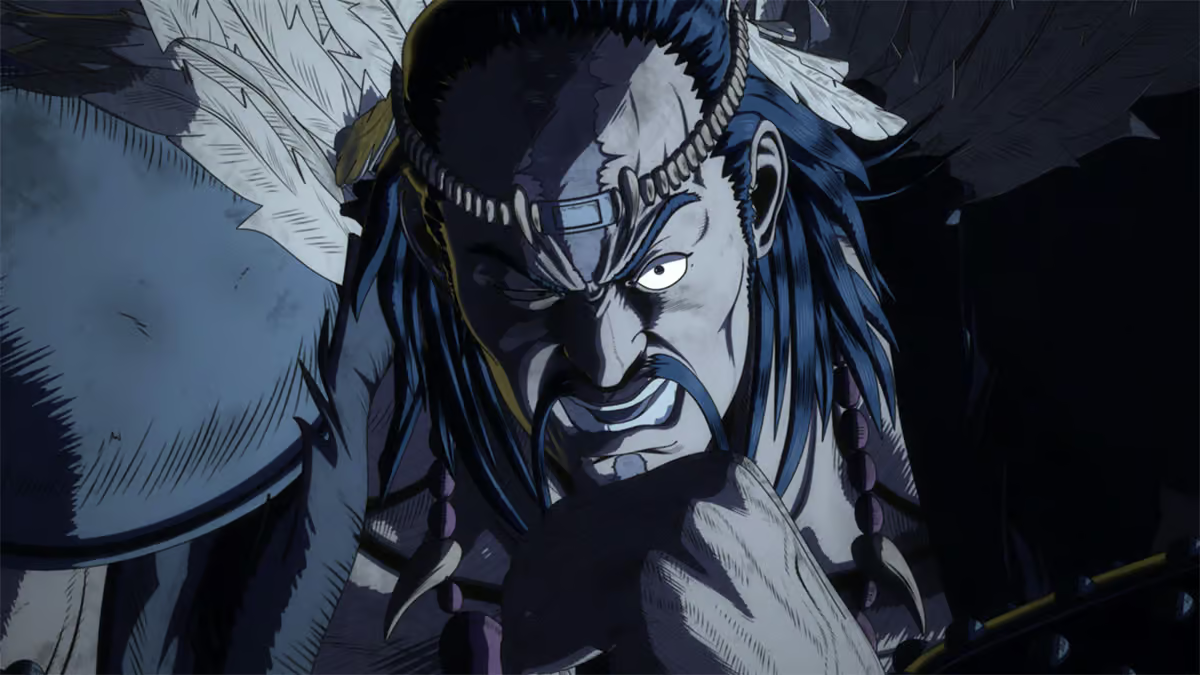
The episode introduces the voice of Kiba Daiō, the leader of the Kiba clan, portrayed by Ichijō Kazuya. We detail this voice actor and his official comment in our dedicated article: Hokuto no Ken 2026: the cast of episode 12.
Hokuto and Nanto United
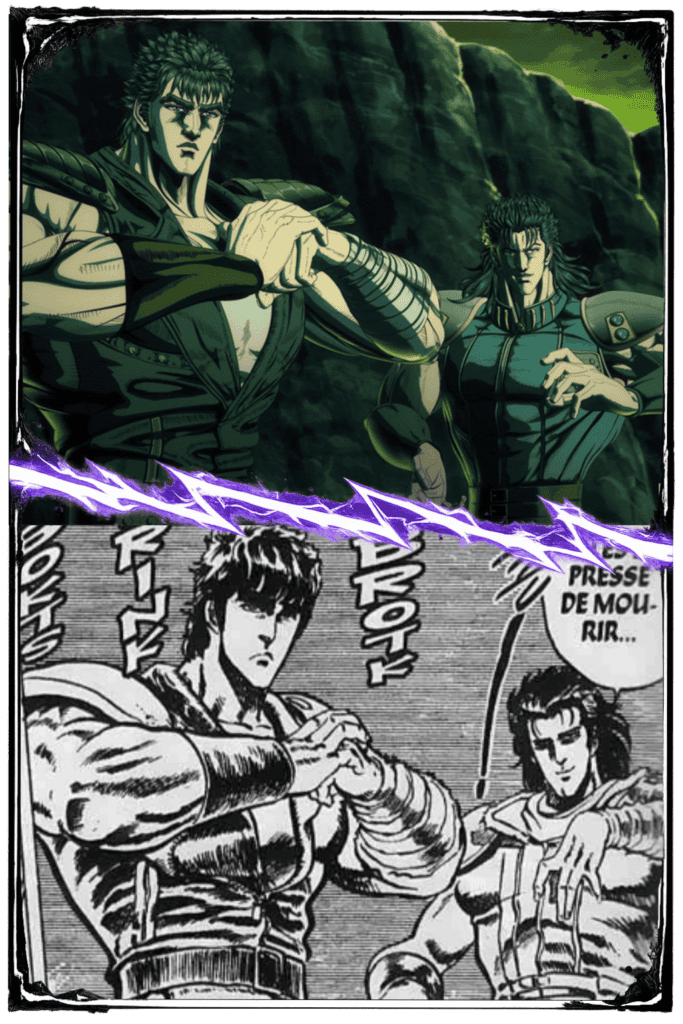
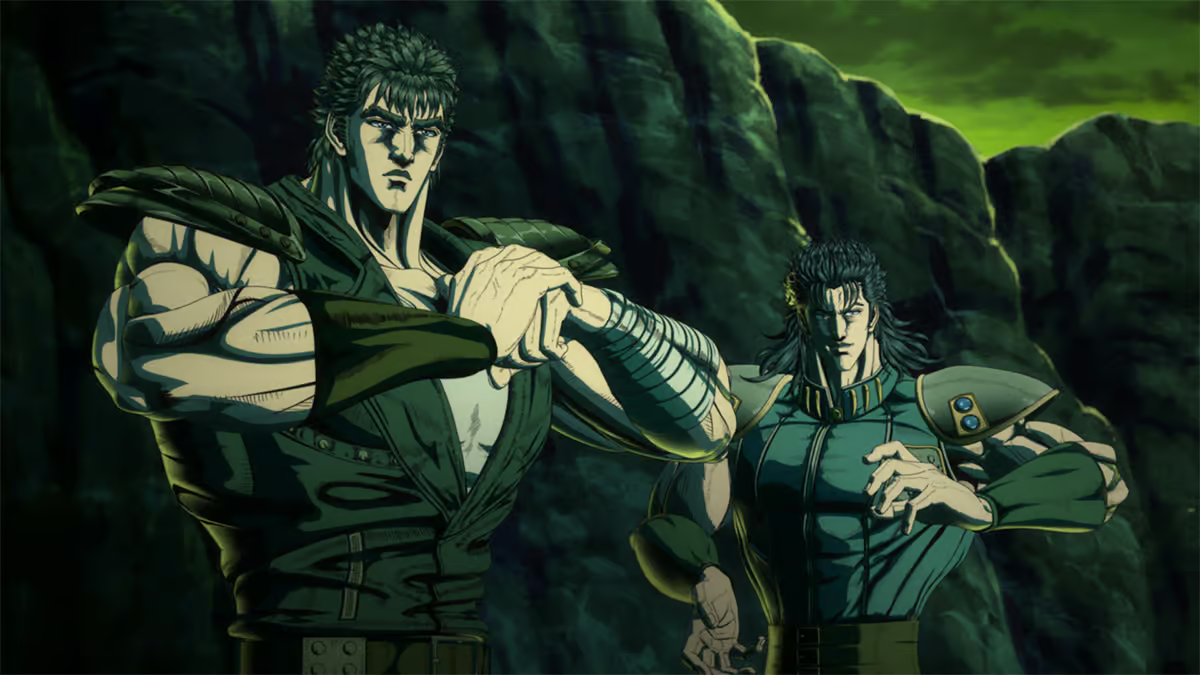
This episode marks a highly anticipated moment in the arc, with the first true alliance between Kenshiro and Rei. United by a shared sense of justice in the face of the Kiba clan’s cruelty, the master of Hokuto Shinken and the master of Nanto Suichō Ken join their fists for the first time. Two schools, two styles that appear to be polar opposites, finding common ground here in the defense of the innocent and the punishment of the oppressors.
Our Verdict
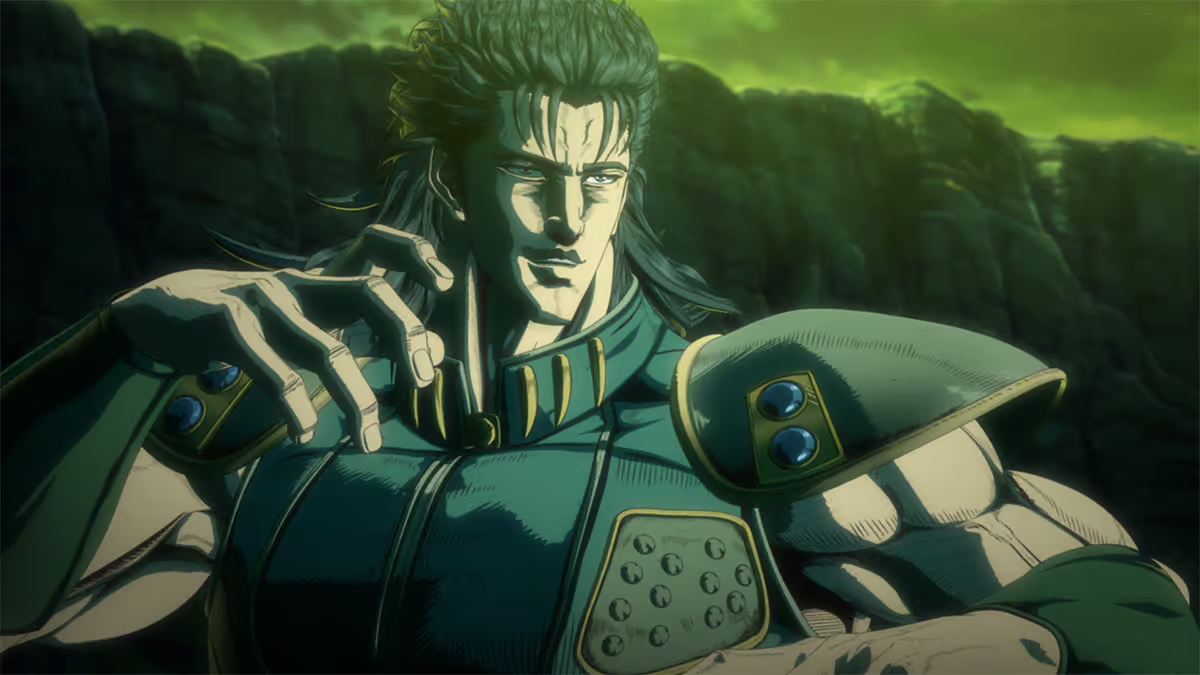
Let’s start with the frustrating part: from the very first minutes, a greenish filter settles over the image and barely leaves it throughout the first scene. Generally speaking, the color and lighting choices in this series elude us, and this episode multiplies the incomprehensible shifts in tone. This is all the more frustrating because, in terms of animation and CGI, the episode gets back on solid footing : the previous episode now looks like a fluke. This is really the core criticism we have leveled at this adaptation from the start, its visual inconsistency.
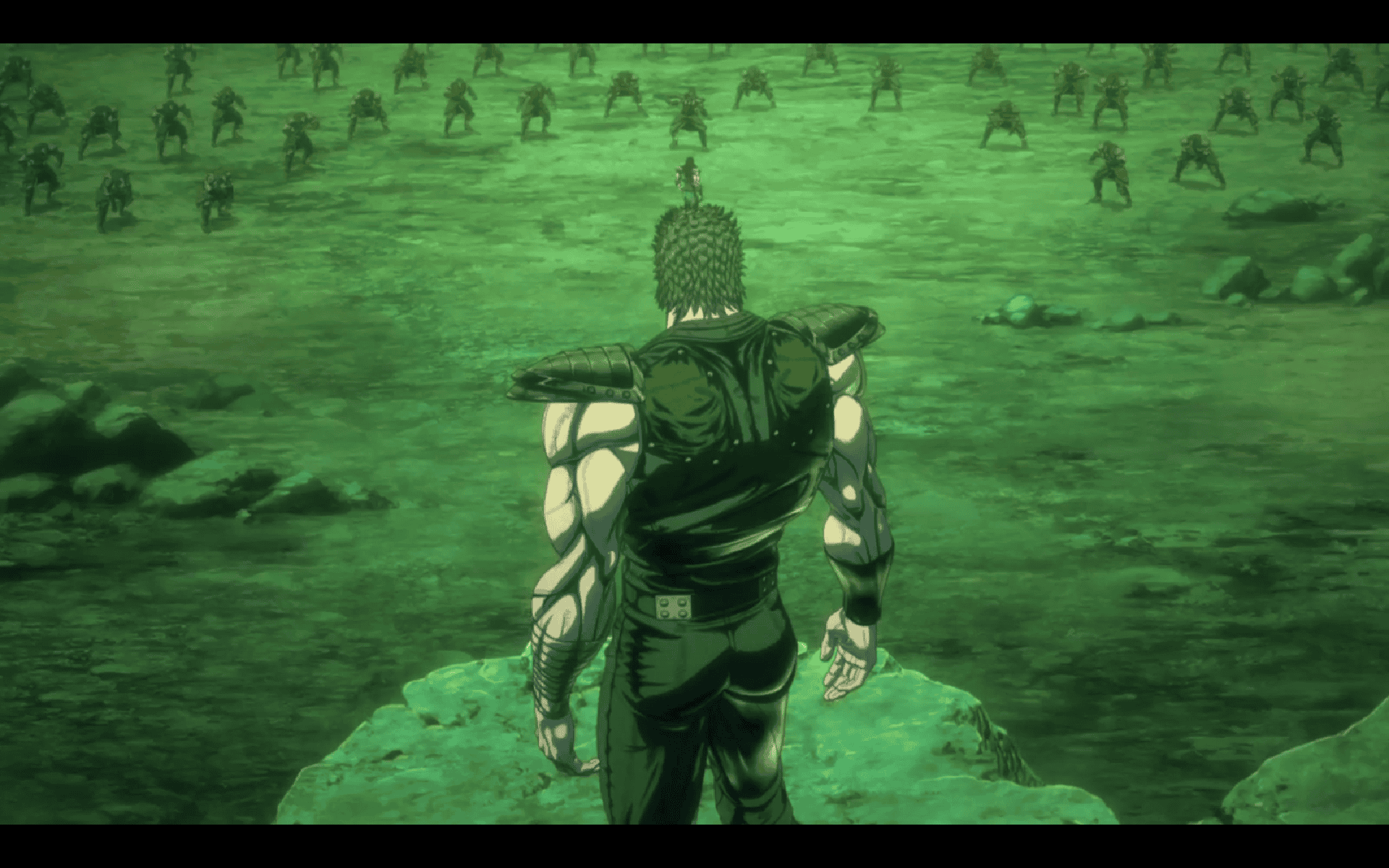
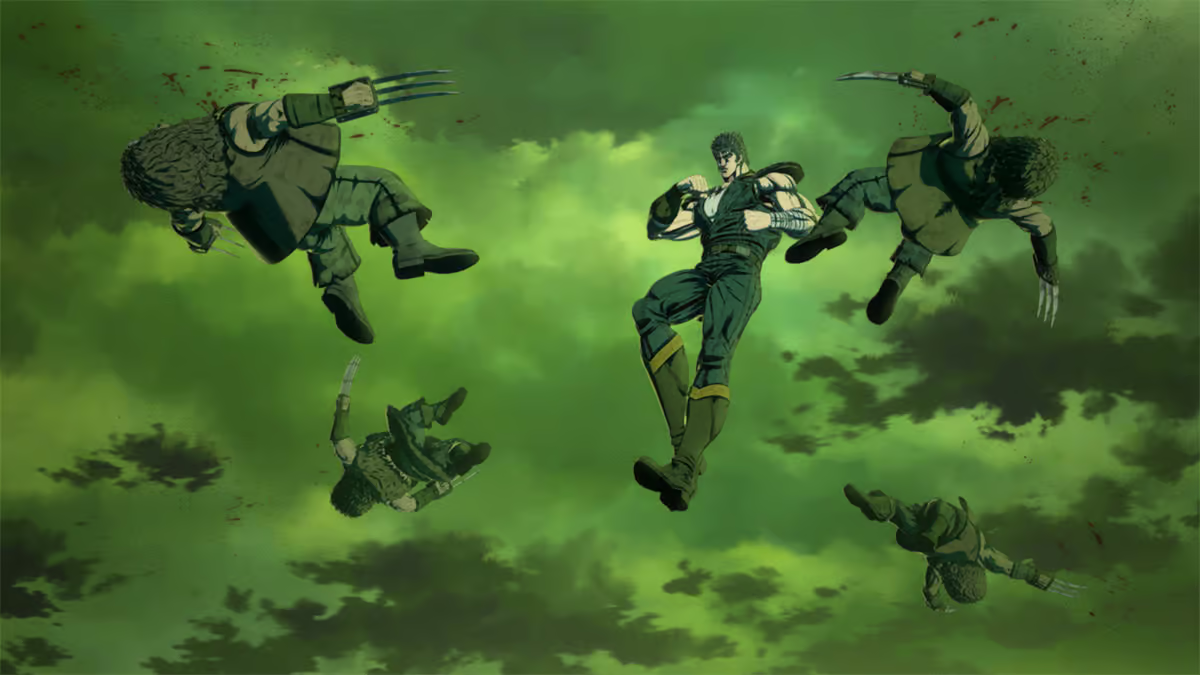
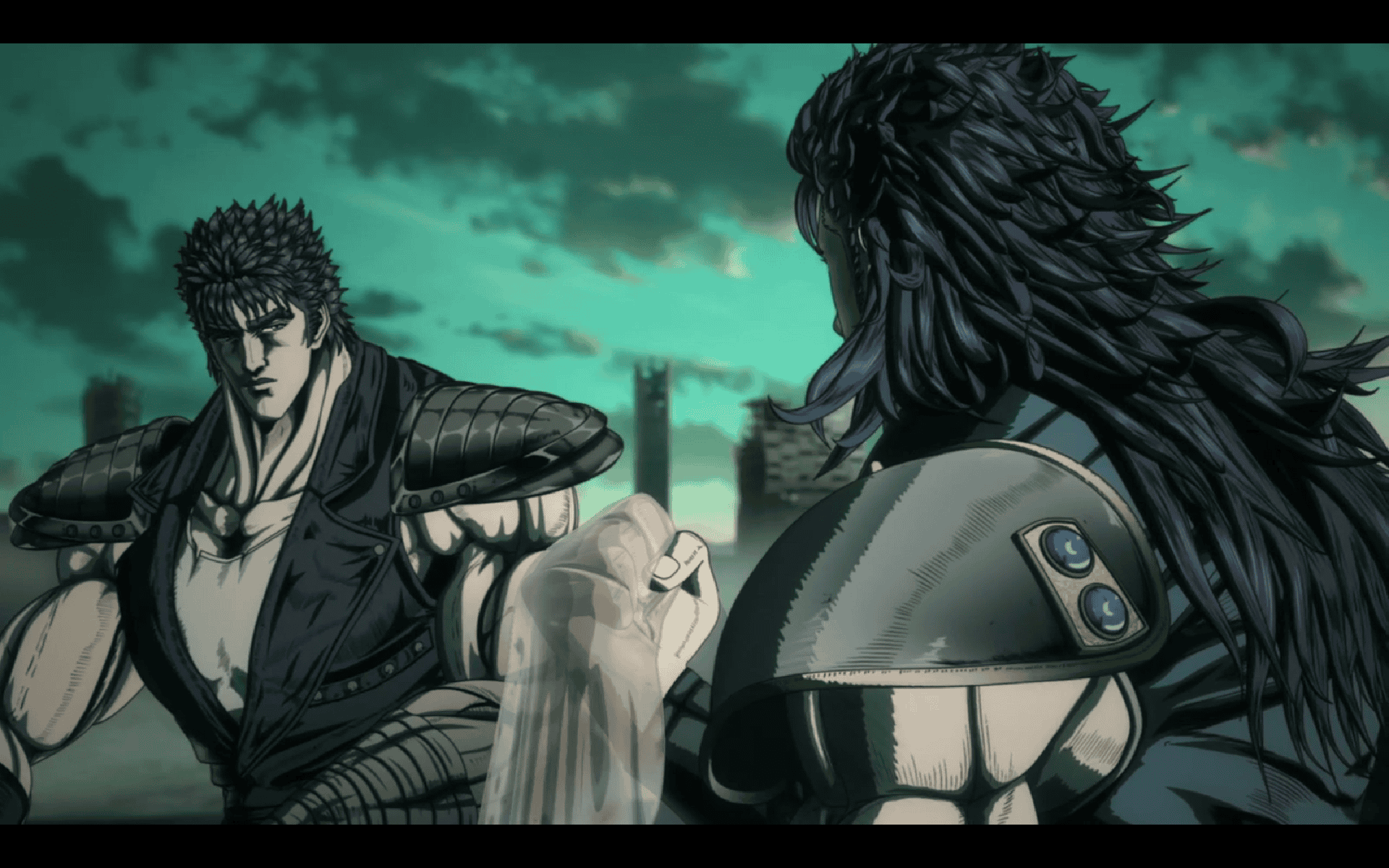
The episode opens in the best possible way, however. Rei facing the Fang clan is very well-crafted animation, a superbly rendered character, and a seiyū, Nakamura Yūichi, who breathes incredible charisma into him. The scene is dynamic, Kenshiro’s arrival is well orchestrated, and the ensuing confrontation is of the same caliber, even if it ends quickly, as the Fang are no match for the two heroes. Seeing this alliance of the masters of Nanto and Hokuto again is a real pleasure, and nostalgia surely plays a part.
The exchange that follows between Kenshiro and Rei, where the latter explains why he is searching for the man with seven scars, is an intense scene. The music is always on point, and Nakamura Yūichi’s performance once again stands out for its precision and conviction.
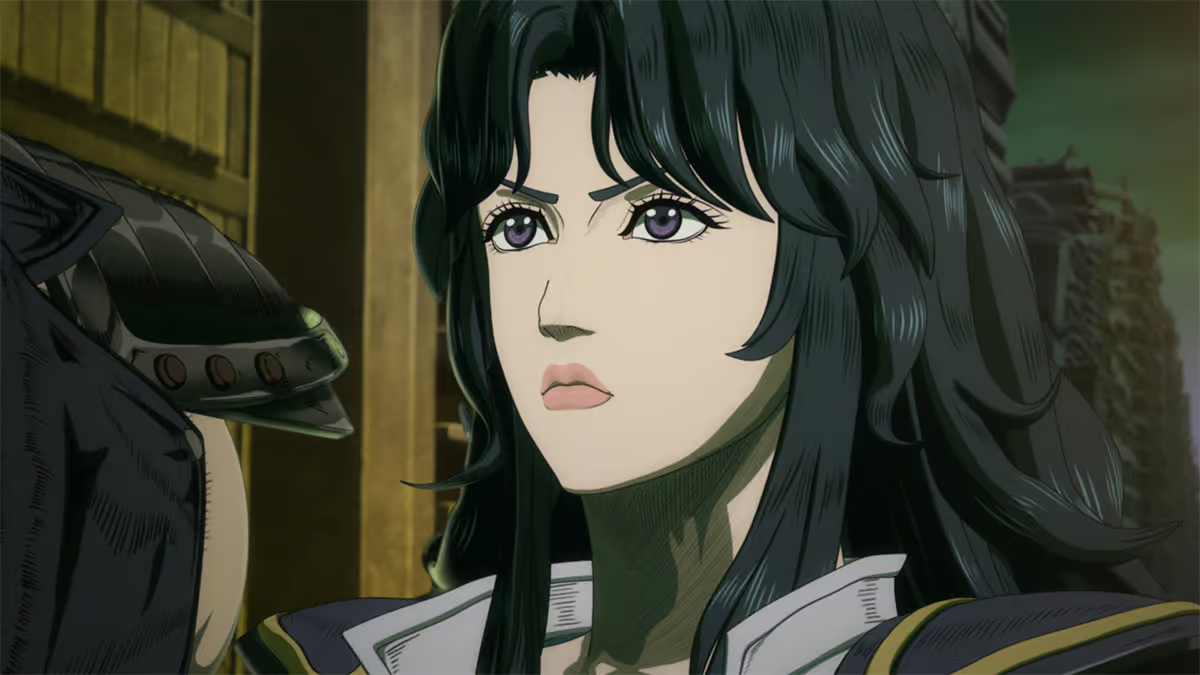
Kou’s cremation should have been another powerful moment in the episode. Unfortunately, it is ruined by sloppy character design : the villagers, including Mamiya, are very poorly rendered, and the village chief barely looks like anything recognizable. In our opinion, this is one of the ugliest passages since the start of the series, and Mamiya’s character design as a whole fails to convince us. All the dramatic power this scene should carry simply evaporates.
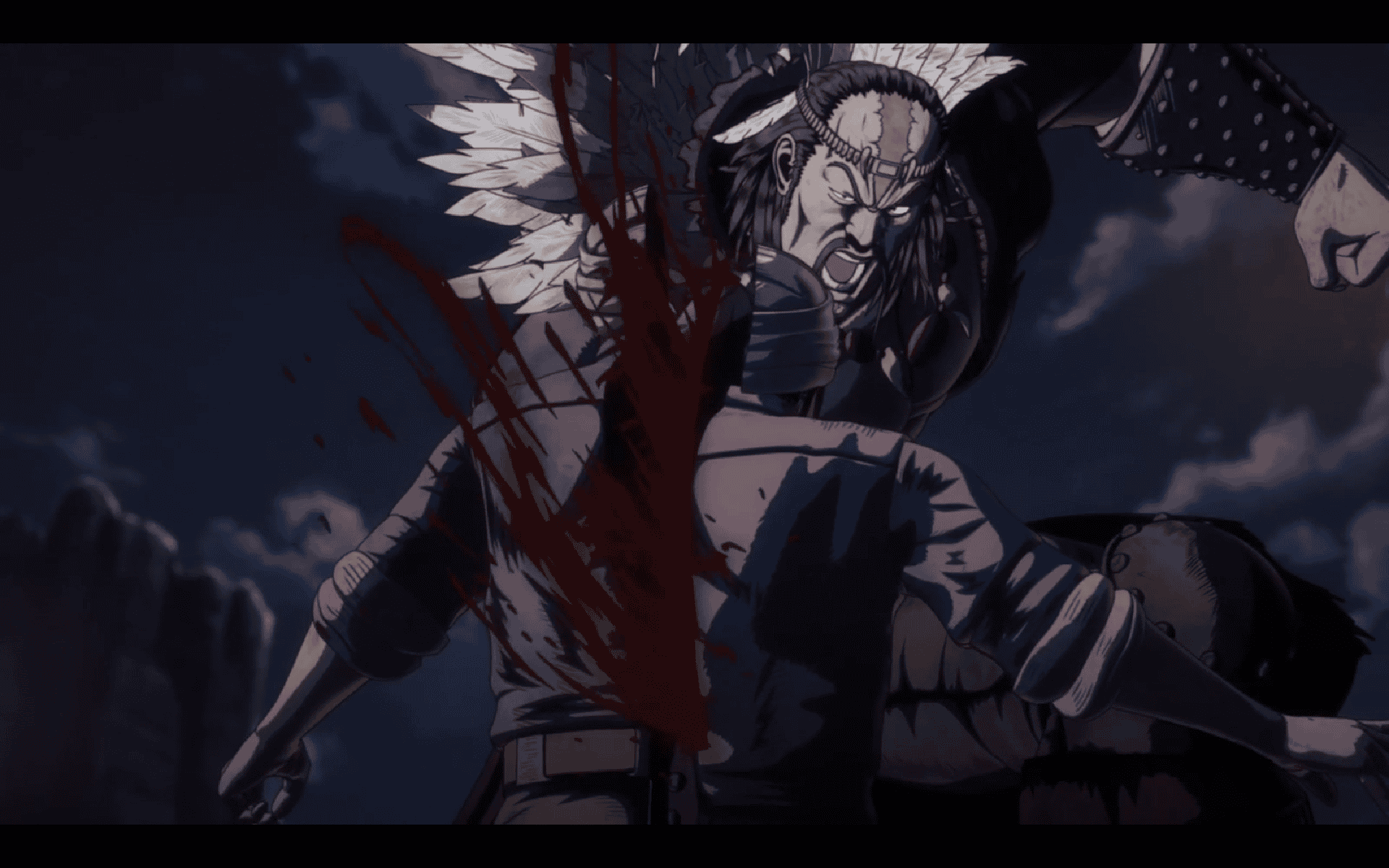
The contrast is all the more jarring with Kiba Daiō’s entrance, which is very well done. The colossus exudes real power, his massive size is well conveyed, and the 2D passage accompanying his entrance works wonderfully. This is precisely where the problem lies, though: Kiba Daiō looks excellent in 2D, but his CGI face is far less convincing, and the juxtaposition of the two is painful. It should be noted with relief, however, that the production has abandoned the red-eye gimmick reminiscent of Cyclops from the X-Men seen at the end of the previous episode. This iconic character’s entrance is, overall, very successful.
The exchange between Rei and Mamiya, where she explains that she has given up being a woman to become a warrior, is powerful and lays the groundwork for their relationship well. The final stretch of the episode then belongs to Kiba Daiō: the scene where he retrieves Airi from her jailer is very well done in terms of design, and the headbutt that shatters the latter’s skull delivers tremendous impact. As for the final scene, where the Fang leader exposes Airi under the spotlights for Rei to see, it is iconic and successful, both in its design and its intensity. Airi’s character design is also a success. The conclusion is well set up: we eagerly await the next episode.
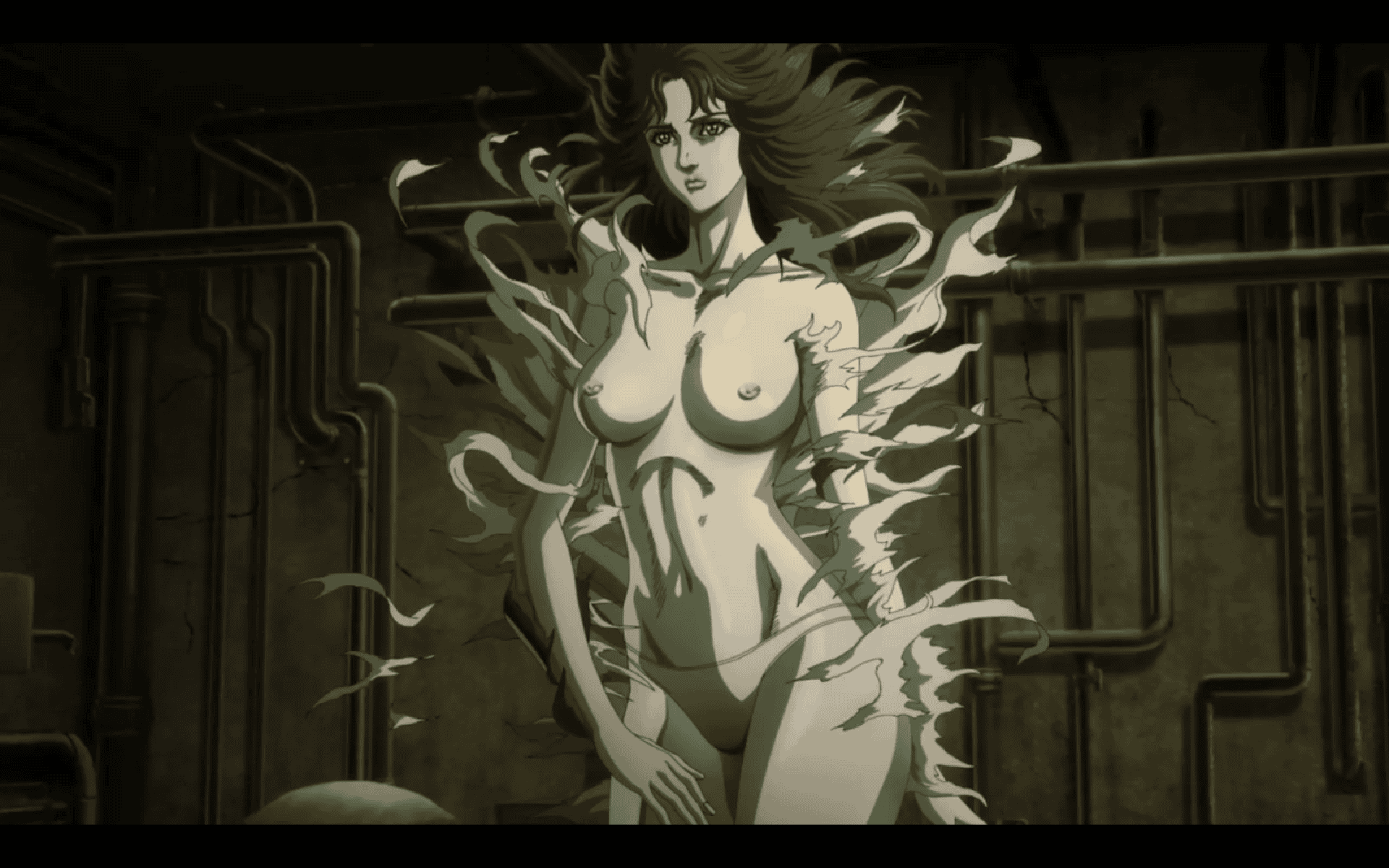
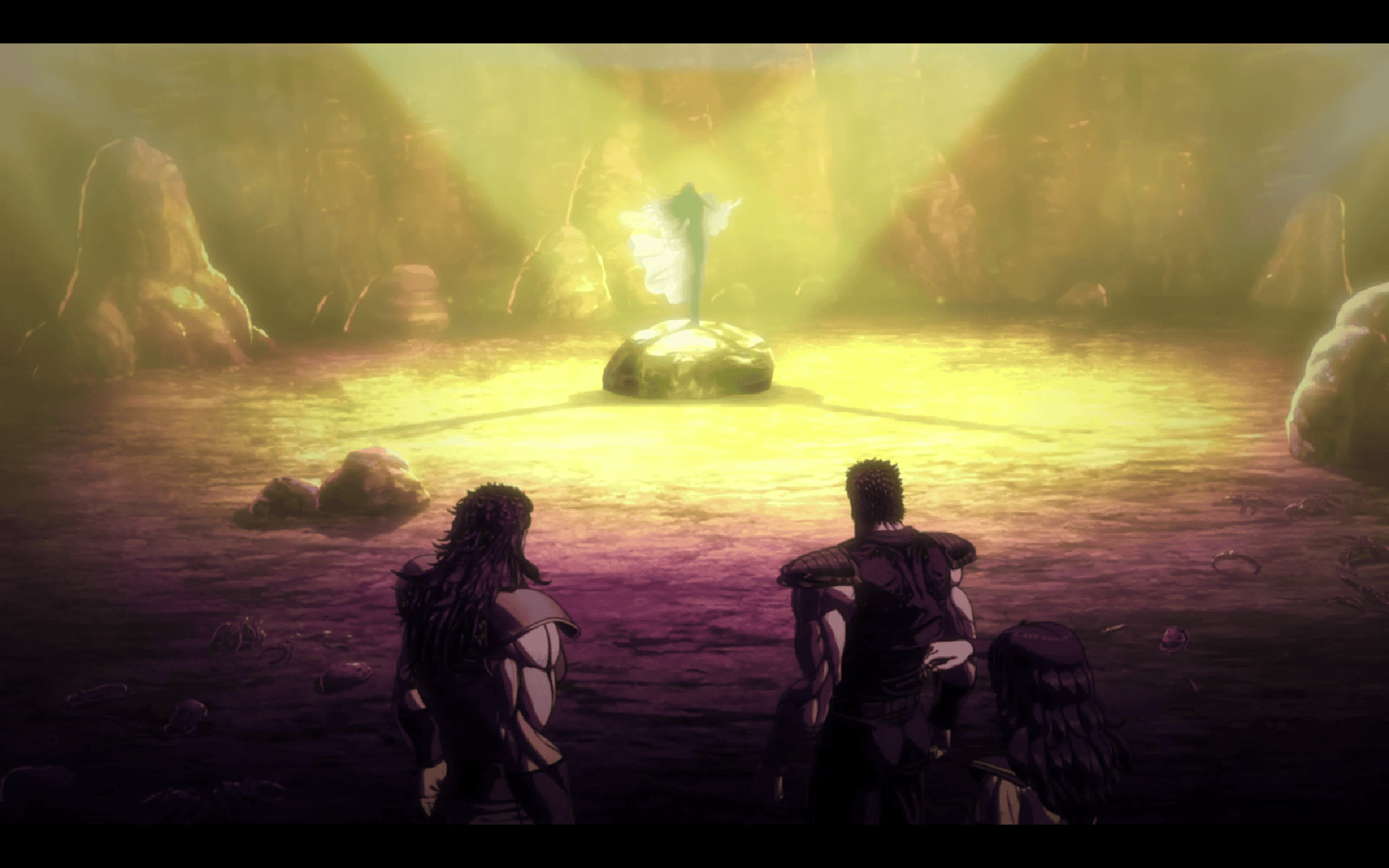
All in all, a good episode, carried by the Kenshiro-Rei alliance, a striking entrance for Kiba Daiō, and an iconic finale, but still weighed down by those inexplicable color choices and a two-speed character design, brilliant for the warriors, lacking for the secondary characters.
Watch the Episode on Prime Video
Episode 12 “The Men Who Saw the Tears” is available for streaming on Prime Video, with Japanese audio and subtitles as well as a dubbed version.