Shin Kyuseishu Densetsu Hokuto no Ken Raoh Den Junai no Shō
Shin Kyuseishu Densetsu Hokuto no Ken Raoh Den Junai no Shō, known in France under the title Hokuto no Ken : L'Ère de Raoh, is a Japanese animated film directed by Imamura Takahiro, produced by North Stars Pictures and animated by TMS Entertainment. Released in Japanese theaters through the Toho network on March 11, 2006, it opens the Shin Kyuseishu Densetsu (Legend of the True Savior) pentalogy, a reinterpretation of the manga by Tetsuo Hara and Buronson supervised by its authors.
Synopsis
In the world ravaged by nuclear war, Raoh proclaims himself Ken-oh, the King of Fists, and imposes his order by force at the head of his army. At his side stand two companions who, like him, came from the land of the Shura: his strategist Souga and Souga's sister, Reina, an accomplished horsewoman who commands his personal guard and harbors a silent love for him. Meanwhile, Kenshiro, successor of Hokuto Shinken, stands against Souther, the Holy Emperor of Nanto, who enslaves children to build his mausoleum, the Holy Cross. Defeated once by an opponent whose body seems impervious to the secret pressure points of Hokuto, Kenshiro rises again alongside Shu, the blind hero of the resistance, while Raoh observes this duel that will decide the future of the world.
The Shin Kyuseishu Densetsu project
On March 1, 2005, the company North Stars Pictures, founded by publisher Nobuhiko Horie together with Tetsuo Hara and Buronson, announced an unprecedented project: a new animated Hokuto no Ken saga in five installments, alternating theatrical films and OAVs, each centered on a pillar of the story: Raoh, Yuria, Toki and Kenshiro. Independent from the 1980s anime, this reimagining went back to the original work to retell it according to the authors' vision and develop the unexplored areas that had been left aside at the time.
During the project's presentation to the press in 2005, Nobuhiko Horie compared this undertaking to the Star Wars saga, where the pentalogy would correspond to an "episode 4" of the great legend of Hokuto, with Souten no Ken, then being published in the Weekly Comic Bunch, constituting "episode 3," the transmission of the school to Japan being "episode 2," and its birth during the era of the Three Kingdoms being "episode 1," which North Stars Pictures hoped to bring to the screen subsequently. Buronson for his part emphasized that the Hokuto no Ken seen on screen up to that point had remained distant from the original work, and that this new adaptation should on the contrary stay closer to it.
Production
Direction was entrusted to Imamura Takahiro, with a screenplay co-written by Nobuhiko Horie, Kamo Yoshinobu and Manabe Katsuhiko. The character design team brought together Araki Shingo, Kagawa Hisashi and Sato Chiharu, under the animation direction of Sato Masaki, with Hirano Toshiki as action director. The film revisits the Holy Emperor arc by also telling it from Raoh's side, enriched with two original characters, Souga and Reina.
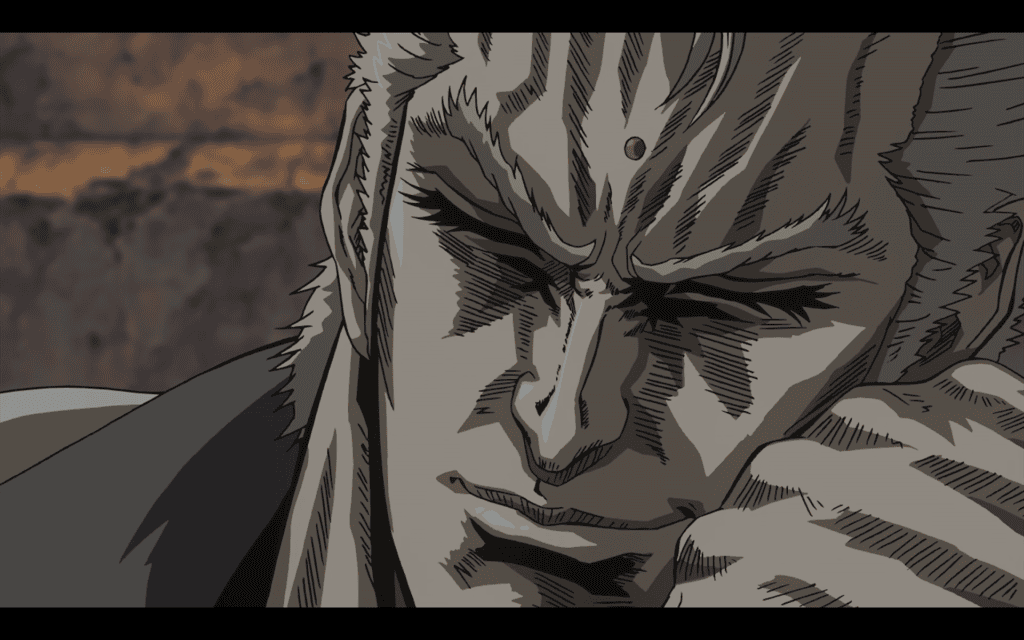
For Reina, the production called upon Hojo Tsukasa, the creator of City Hunter and a long-time colleague of Tetsuo Hara since the Weekly Shonen Jump days, credited in the opening titles under "special production cooperation" for the character's design. Imamura Takahiro explained that he wanted to give Kenshiro the eyes of an assassin, that he asked Reina's voice actress to adopt an attitude halfway between Rin and Yuria, and that he had entirely rethought Raoh's facial expressions with the new artists, presented as the film's main draw.
A cast from the world of cinema
Breaking with the iconic voices of the television series, the cast assigns the lead roles to acclaimed actors: Abe Hiroshi lends his voice to Kenshiro, Ukaji Takashi to Raoh, and Shibasaki Ko to Reina, for whom she also provides the opening narration. Alongside them, the production brings together seasoned seiyu, including Otsuka Akio as Souther, Otsuka Hochu as Shu, Horiuchi Kenyu as Toki, Ishizuka Unsho as Souga, and Sakamoto Maaya as Rin.
Rated PG-12 in Japan due to the violence of certain scenes, the film reached eighth place at the box office during its opening weekend and ended its theatrical run with 500 million yen in revenue. The Japanese DVD edition includes a director's cut enhanced with over 500 reworked shots, for which Ukaji Takashi re-recorded the entirety of the role of Raoh.
The music
The original soundtrack is composed by Kajiura Yuki, who would accompany the entire pentalogy. The saga's theme, "Theme from Fist of the North Star ~The Road of Lords~", is performed by guitarist Tak Matsumoto of the group B'z. The ending theme, "Pierrot", is performed by Kamiki Aya as a cover of the B'z song, and the film features two insert songs: "Ai wo Torimodose!! ~Movie ver~" by Crystal King, a new version of the iconic 1984 opening theme, and "Where the lights are (Japanese Ver.)" by FictionJunction WAKANA, a vocal project by Kajiura Yuki.
Cast and staff
Cast
Kenshiro
Abe Hiroshi (阿部寛)
Raoh
Ukaji Takashi (宇梶剛士)
Reina
Shibasaki Ko (柴咲コウ)
Souther
Otsuka Akio (大塚明夫)
Shu
Otsuka Hochu (大塚芳忠)
Toki
Horiuchi Kenyu (堀内賢雄)
Souga
Ishizuka Unsho (石塚運昇)
Bat
Namikawa Daisuke (浪川大輔)
Rin
Sakamoto Maaya (坂本真綾)
Shiba
Irino Miyu (入野自由)
Staff
Direction
Imamura Takahiro (今村隆寛)
Screenplay
Nobuhiko Horie, Kamo Yoshinobu, Manabe Katsuhiko
Executive production
Imoto Mitsuru, Nobuhiko Horie
Character design
Araki Shingo, Kagawa Hisashi, Sato Chiharu
Reina design
Hojo Tsukasa (北条司)
Animation dir.
Sato Masaki (佐藤正樹)
Art direction
Sakamoto Nobuto (坂本信人)
Action direction
Hirano Toshiki (平野俊貴)
Photography
Sato Masato (佐藤正人)
Editing
Takuma Jun (田熊純)
Sound direction
Koyama Satoru (小山悟)
Music
Kajiura Yuki (梶浦由記)
Production
North Stars Pictures
Animation
TMS Entertainment
Distribution
Toho
Éditions
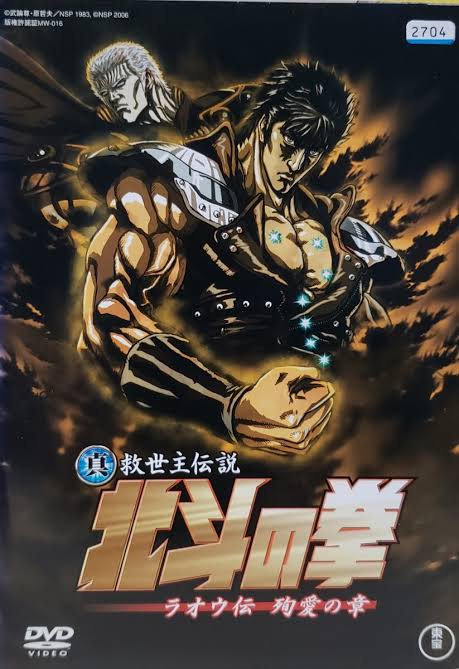
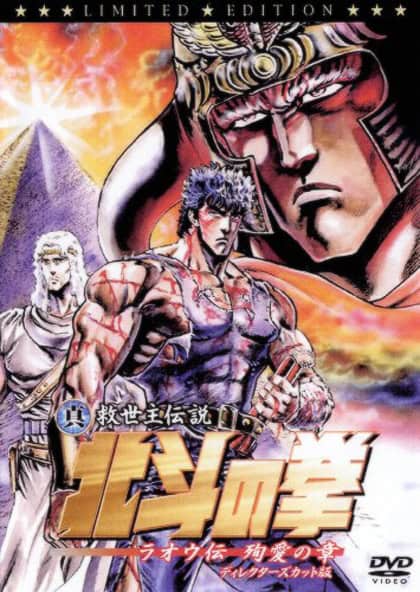
In Japan, the film was released on DVD on October 27, 2006 by Amuse Soft Entertainment, in a director's cut version enriched with over 500 reworked shots, featuring a complete re-recording of Raoh's role by Ukaji Takashi. Three editions were offered: a limited edition of 20,000 copies (18,690 yen) including two DVDs, a lengthy interview with the authors, the making-of, the "Ai wo Torimodose!!" music video, trailers, four figurines, and an illustration by Tetsuo Hara; a collector's edition (6,090 yen) featuring the same video bonus content along with four postcards; and a standard edition (3,990 yen) limited to the film and trailers.
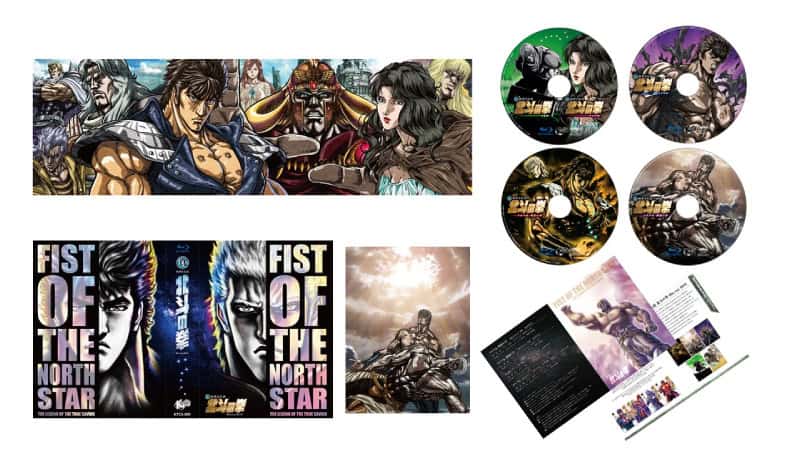
The film was remastered in high definition (1080p) as part of the Blu-ray BOX Shin Kyuseishu Densetsu Hokuto no Ken set, released on February 26, 2021 under the KINEMATICS label (reference KTCS-001, 23,000 yen before tax): four discs in a limited print run compiling all five installments of the pentalogy, with an acrylic plate and a 32-page color booklet. The Junai no Shō is included in its director's cut version, with 5.1 sound remastered in linear PCM.
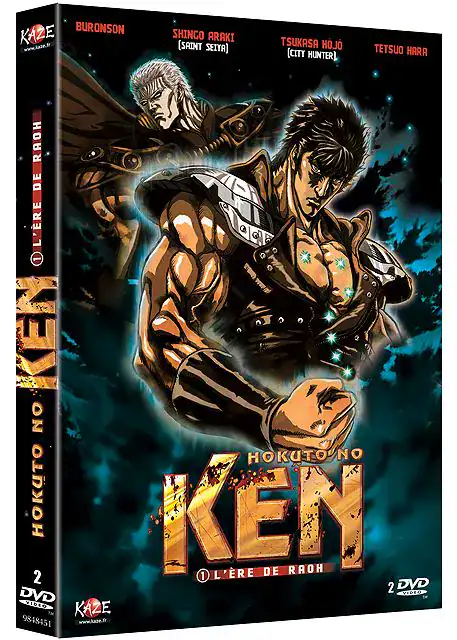
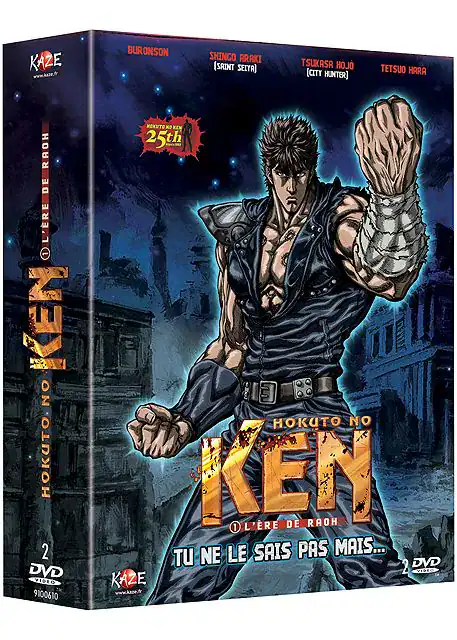
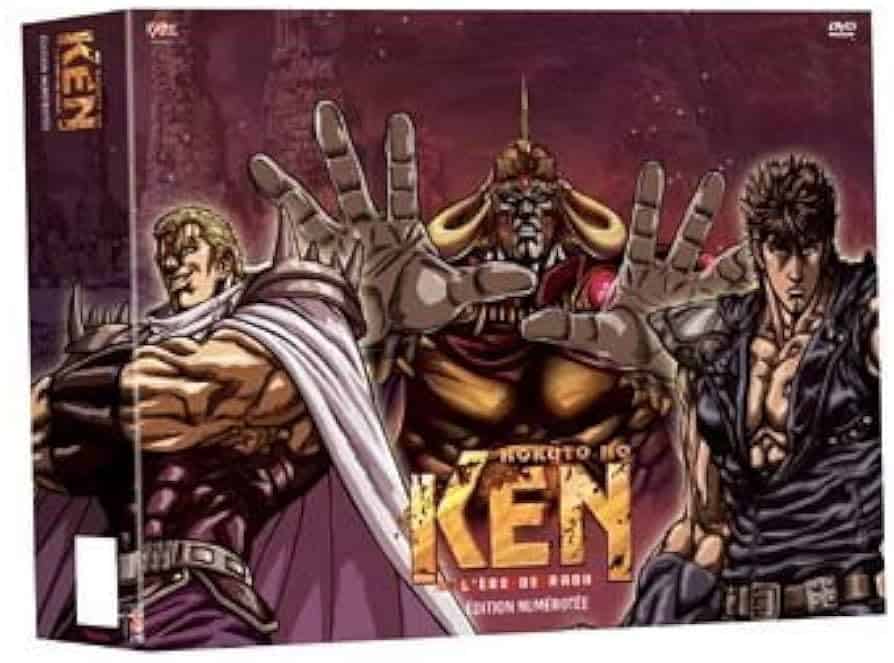
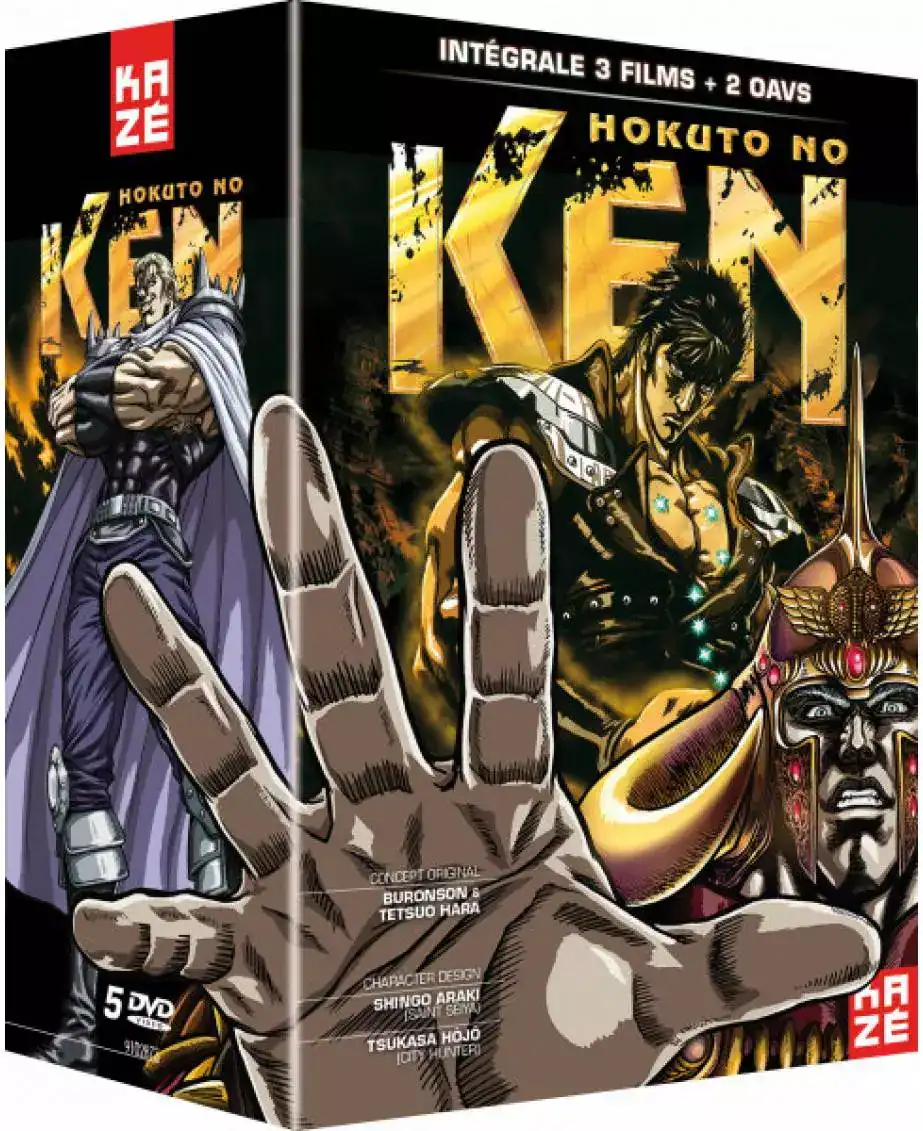
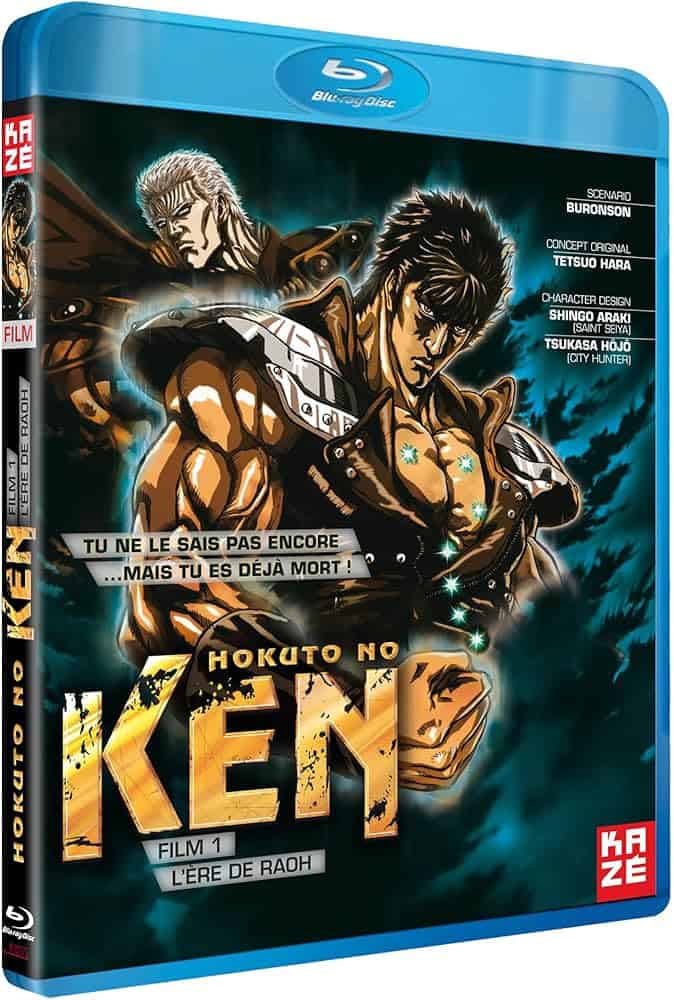
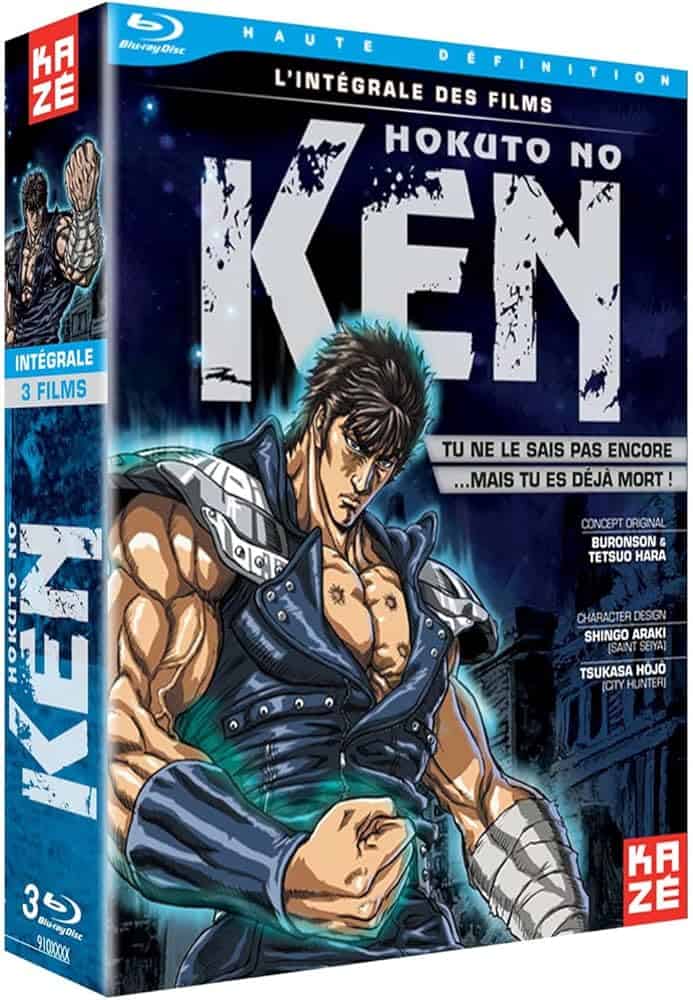
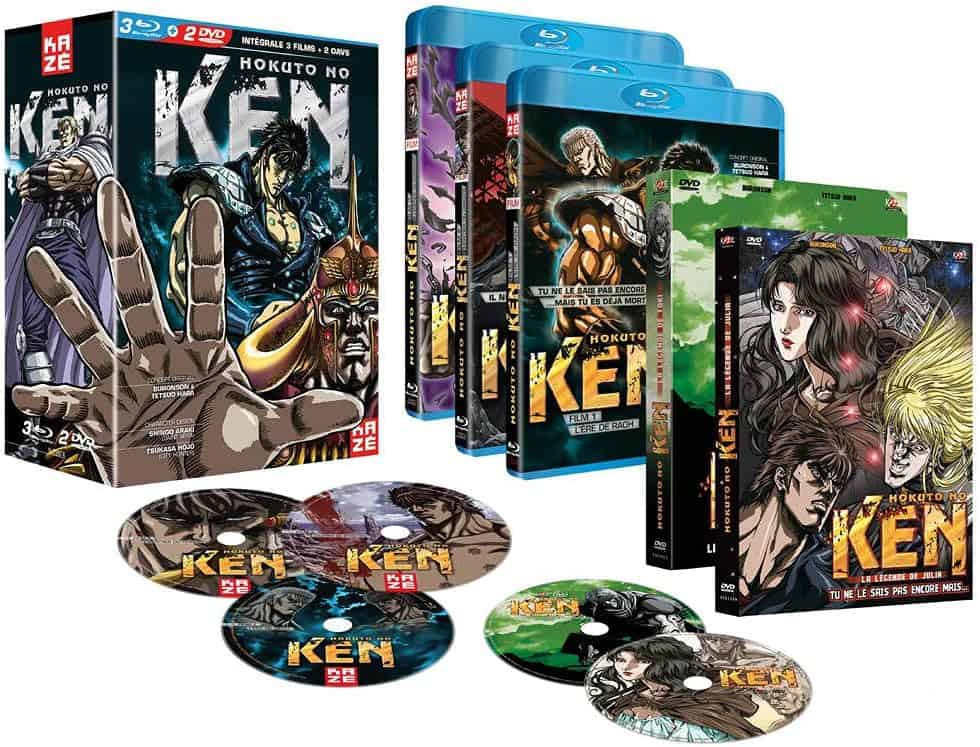
In France, the film was released in theaters on May 14, 2008 in its director's cut version under the title Hokuto no Ken: L'Ère de Raoh, then on DVD on November 19, 2008 by Kazé in three editions: a numbered edition (79.95 euros) with two DVDs, a T-shirt, an artbook, a 32-page booklet about the film's universe, a piece of film reel, and the first volume of the manga's new edition; a collector's edition (39.95 euros) with two DVDs, the booklet, a piece of film reel, and volume 1; and a standard edition (24.95 euros) with the film alone and the booklet. A standalone Blu-ray was released on January 26, 2011, and the film is also included in the complete box set of the three films from the pentalogy, in both DVD and Blu-ray.
Amuse Soft Entertainment standard editionAmuse Soft collector's editionAmuse Soft limited editionBlu-ray BOX KINEMATICSKazé standard editionKazé limited editionKazé numbered editionKazé complete DVD box set of the projectKazé Blu-ray standard editionKazé complete Blu-ray box set of the filmsKazé complete Blu-ray box set of the project
AI-assisted translation This page was translated from the original French using AI, with human review. Some wording may be imperfect. Read the original French version
Latest news
Articles related to Shin Kyuseishu Densetsu Hokuto no Ken Raoh Den Junai no Shō