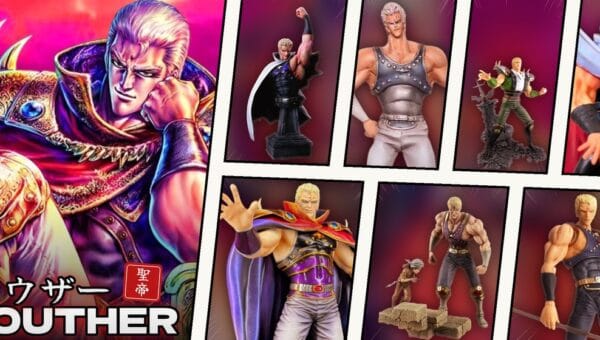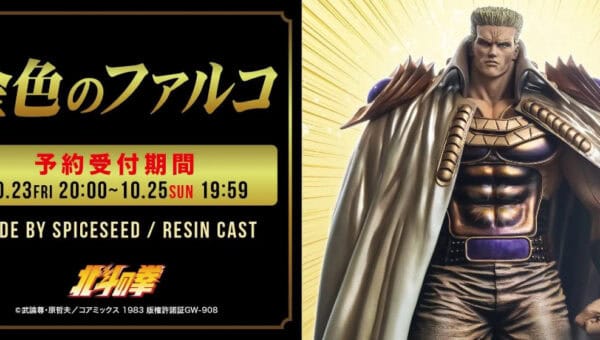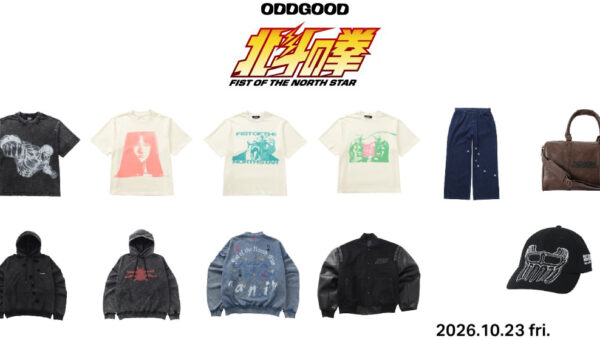



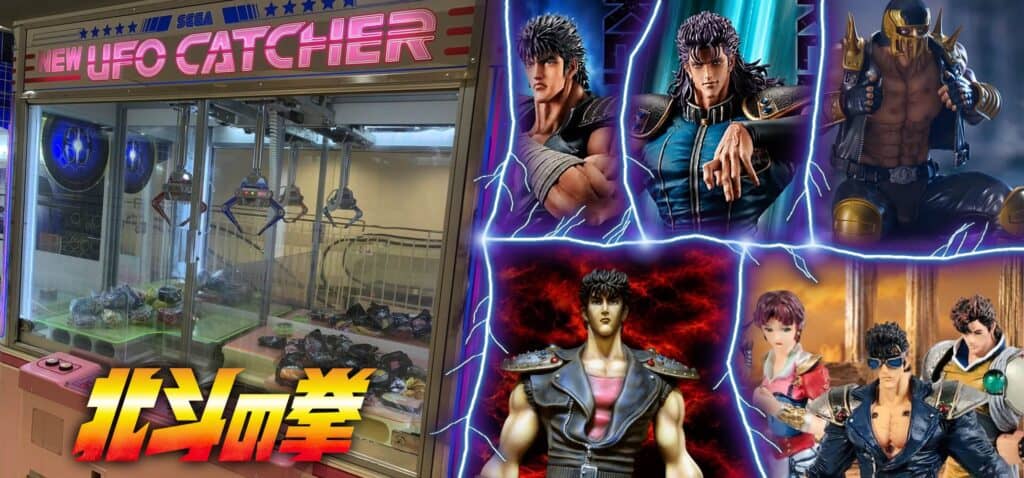
On the box, a line in small print reads ‘arcade-only prize, not sold at retail’. These figures cannot be bought. To stand a chance of getting one, you have to drop a coin into a crane machine and steer the mechanical claw towards them. In Japan these lots have a name, prizes, and Hokuto no Ken has supplied more than a hundred of them for more than twenty years.
A national game, capped prizes
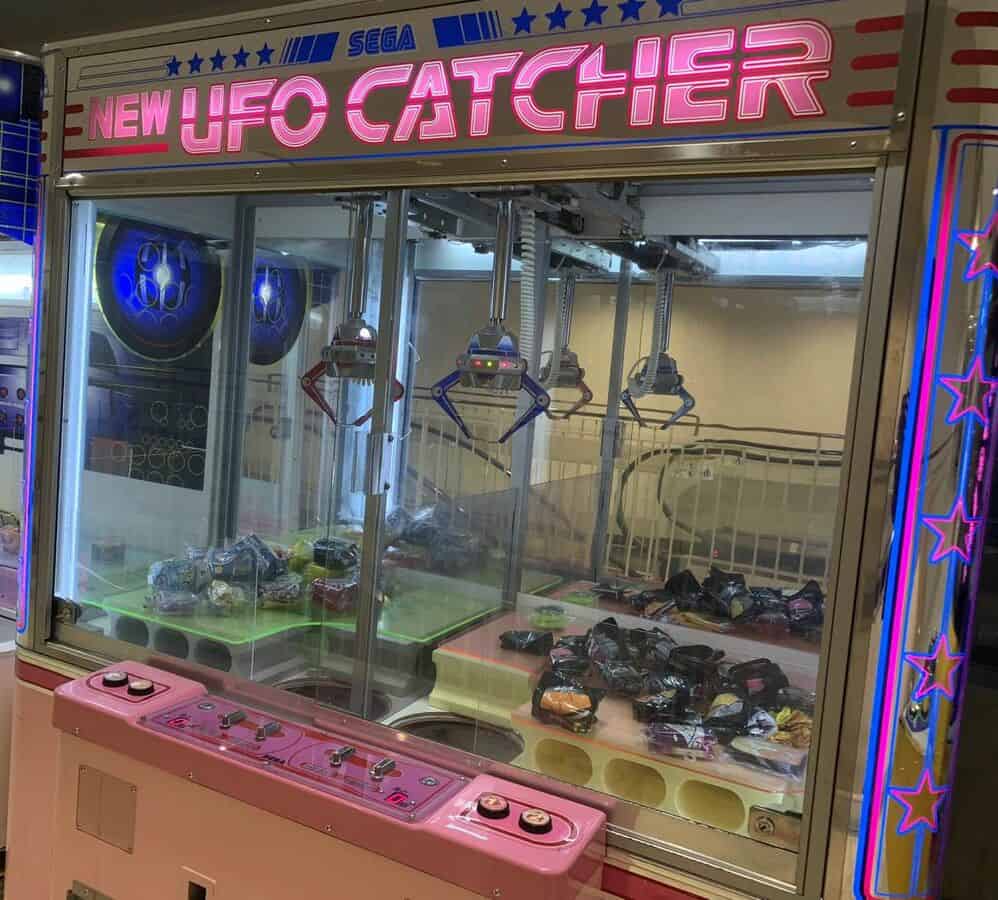
Sega launched its UFO Catcher in 1985, and the 1991 version turned it into a national game, its plush toys lining the rear windows of cars at the time. The principle has hardly changed since. Japanese law in principle forbids handing out goods according to the outcome of a game. Crane machines enjoy a tolerance, provided the prize stays modest, around 1,000 yen at retail price. The National Police Agency restated this once again in a statement on 7 July 2026. It is within this narrow framework that manufacturers compete for ideas to make players want another go.
2002, Sega gathers the whole saga
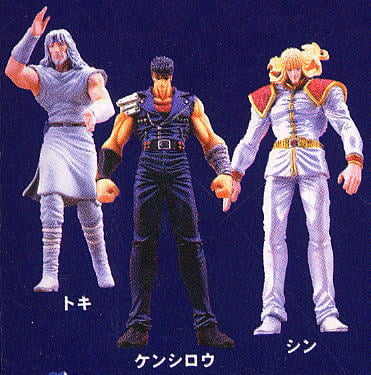
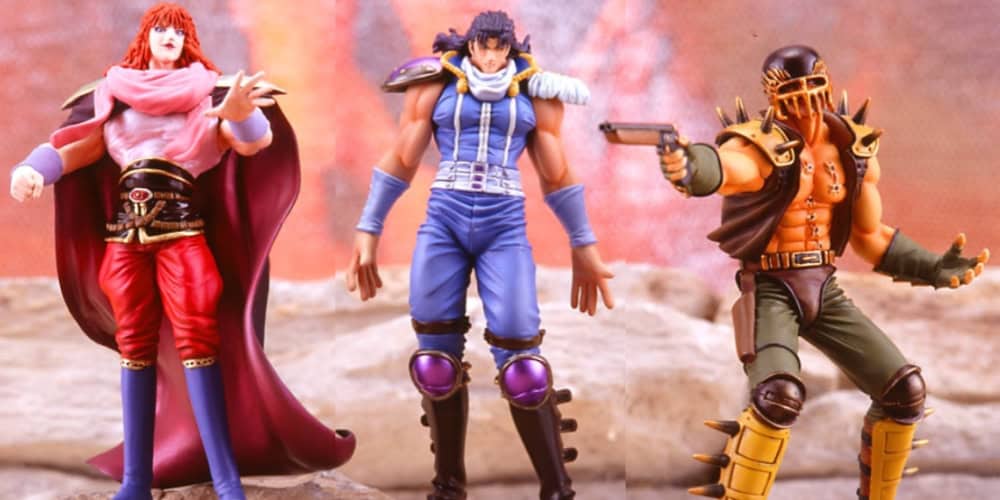
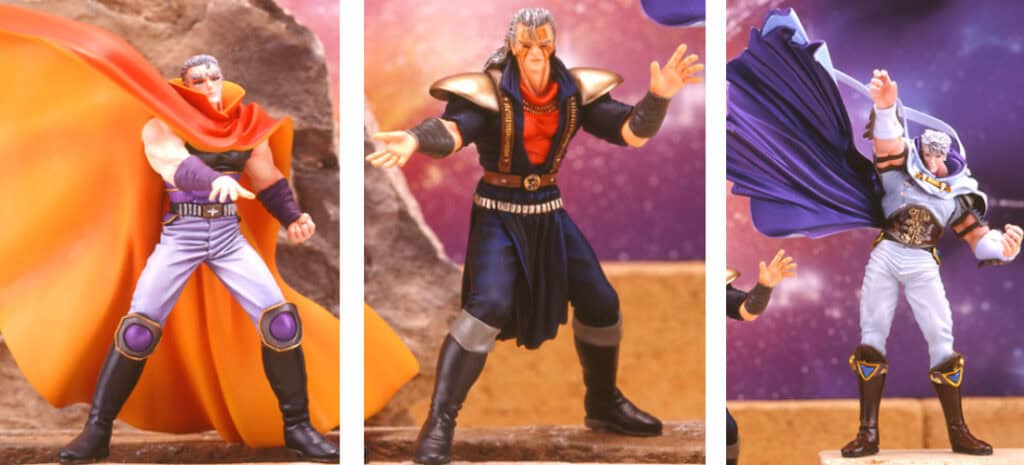
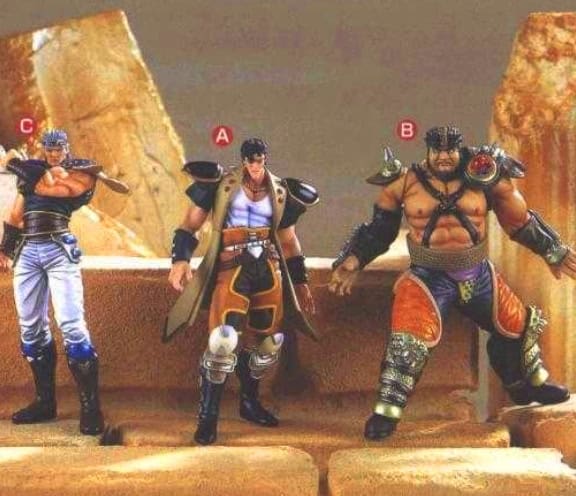
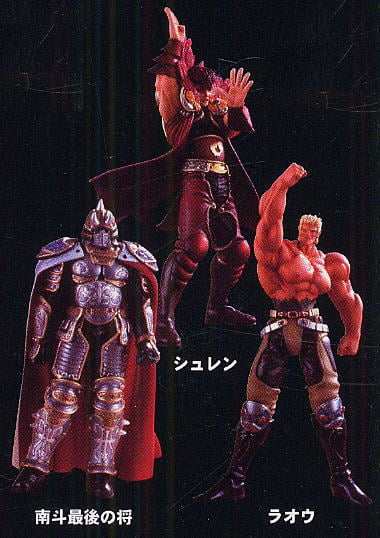
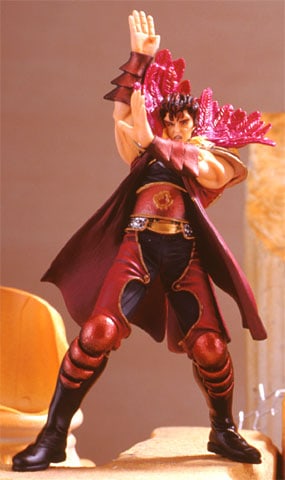
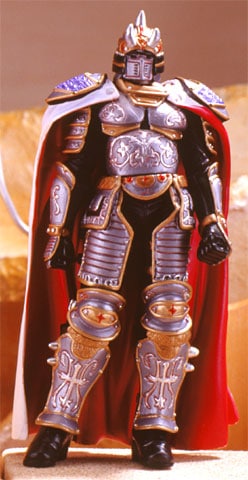
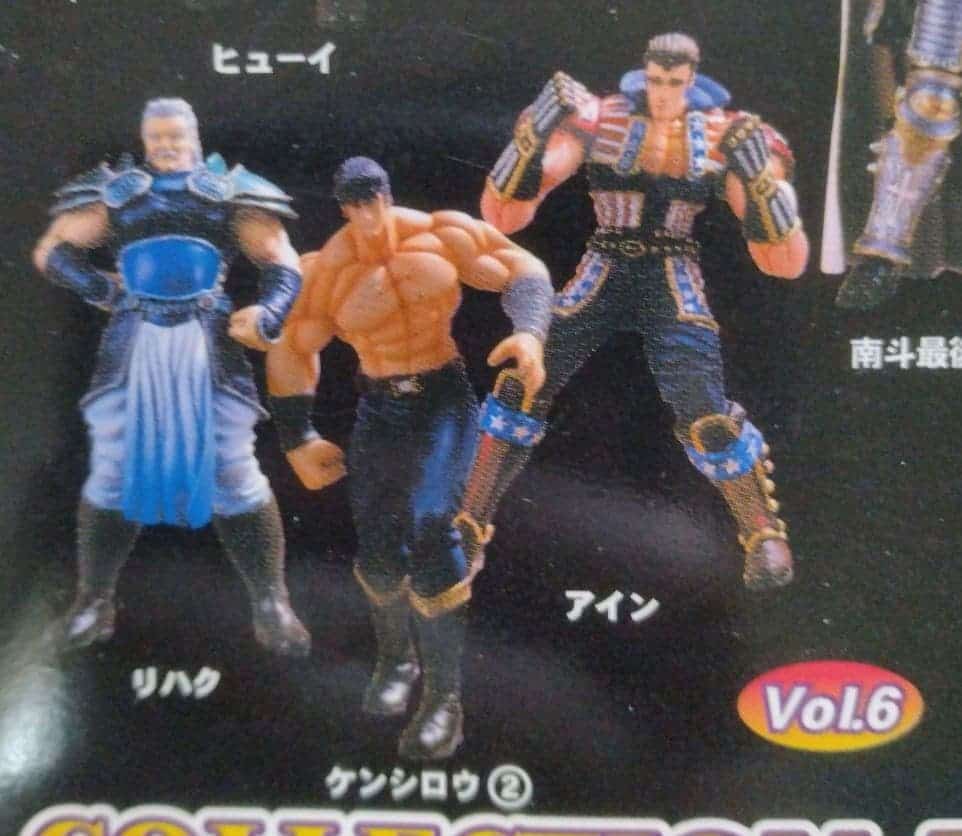
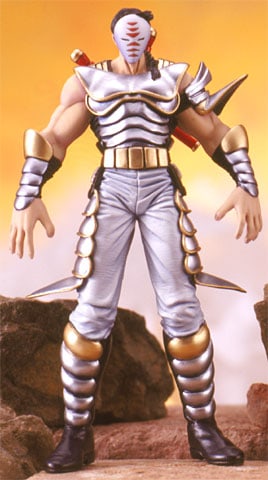
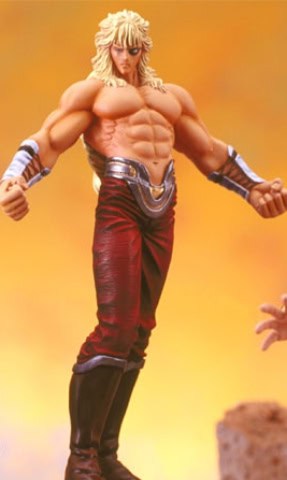
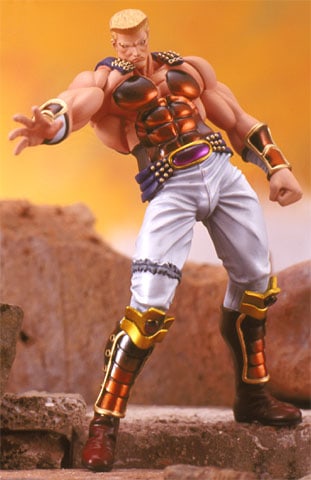
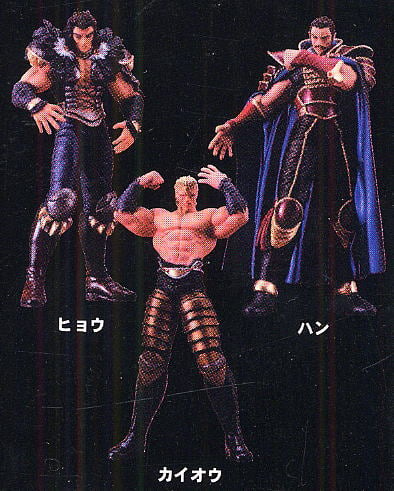
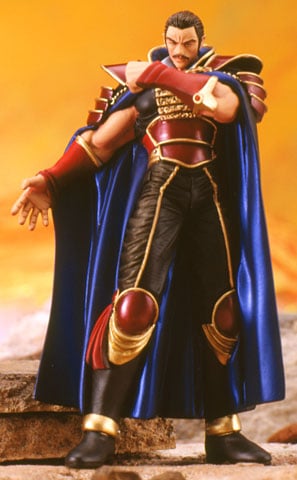
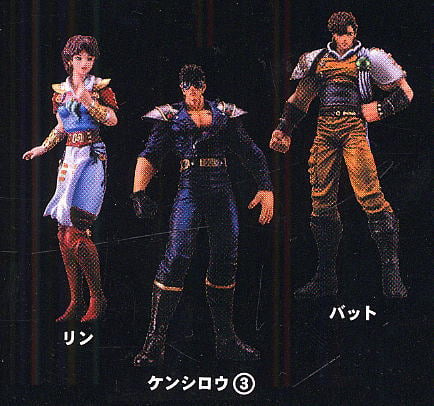
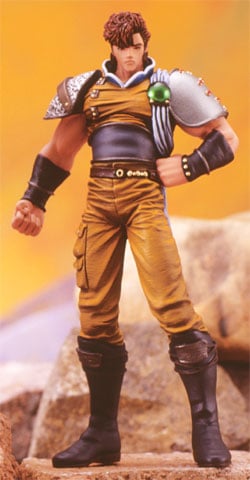
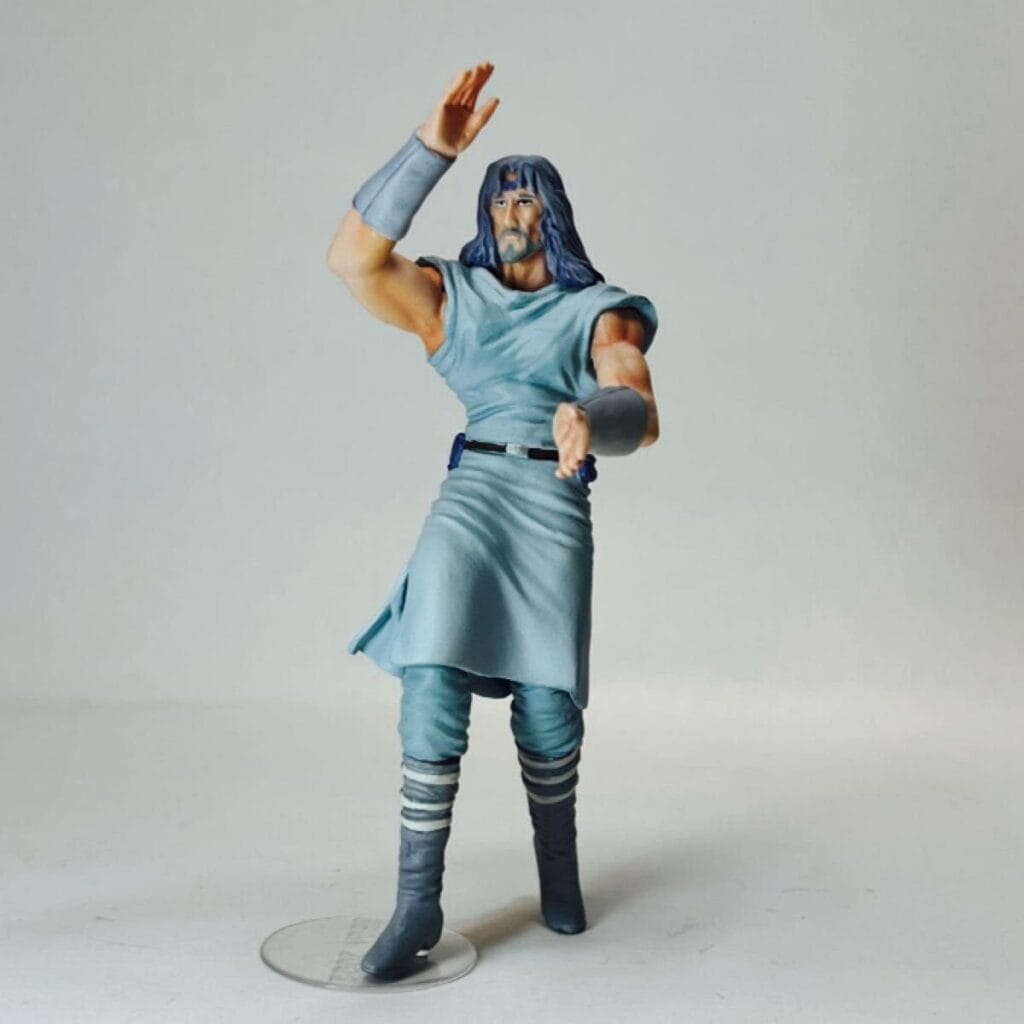
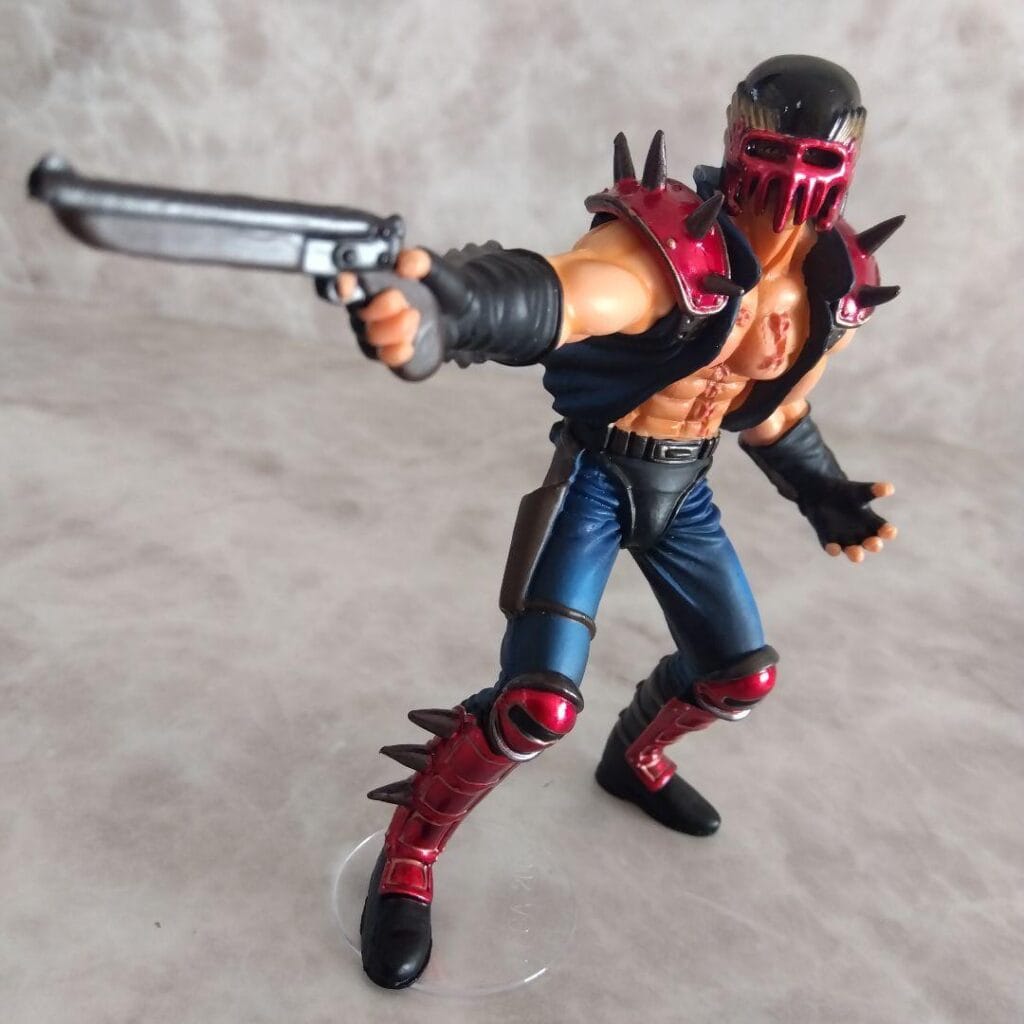
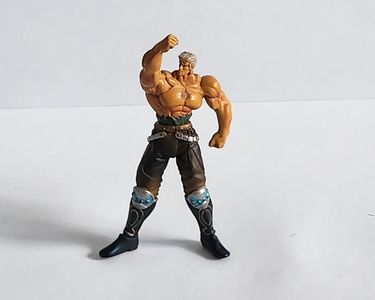
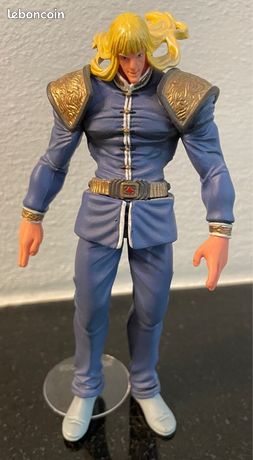
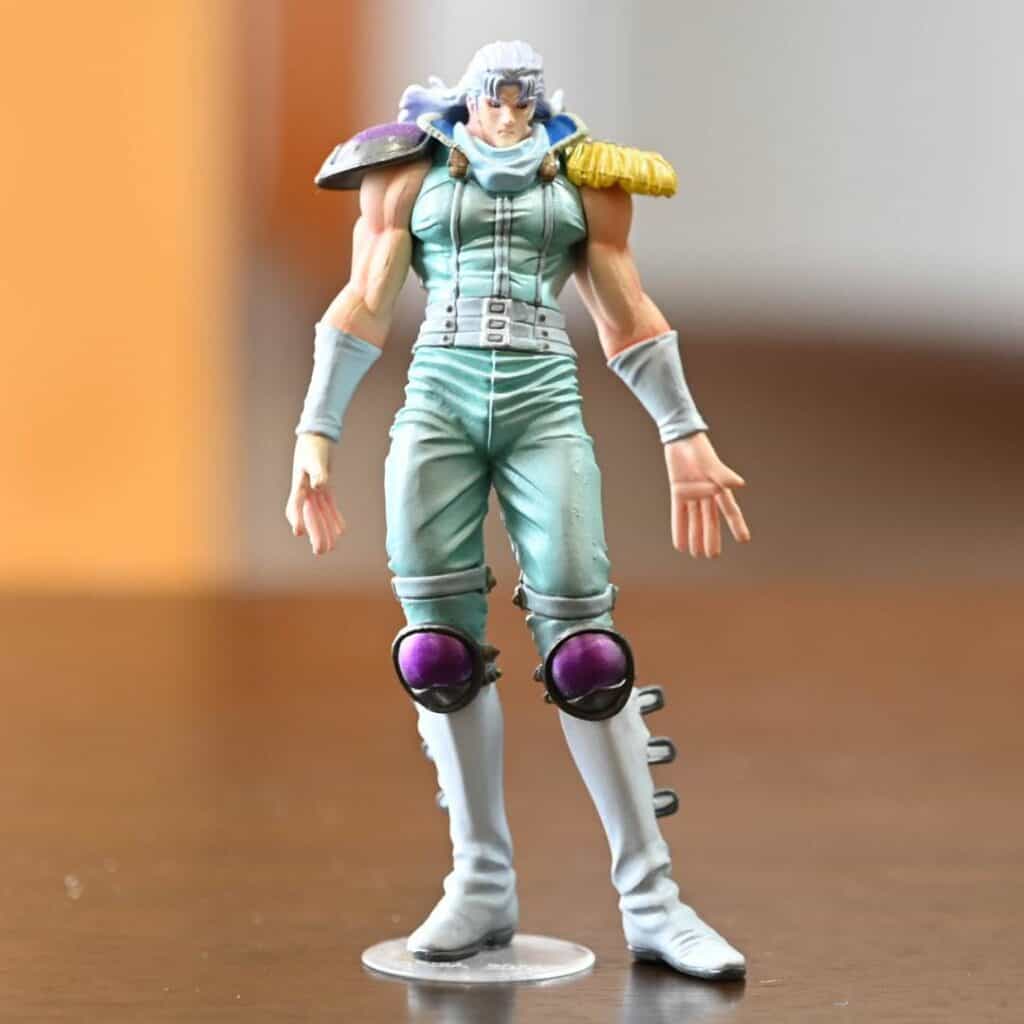
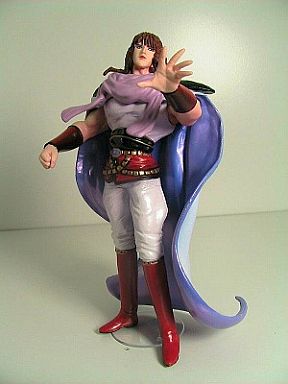
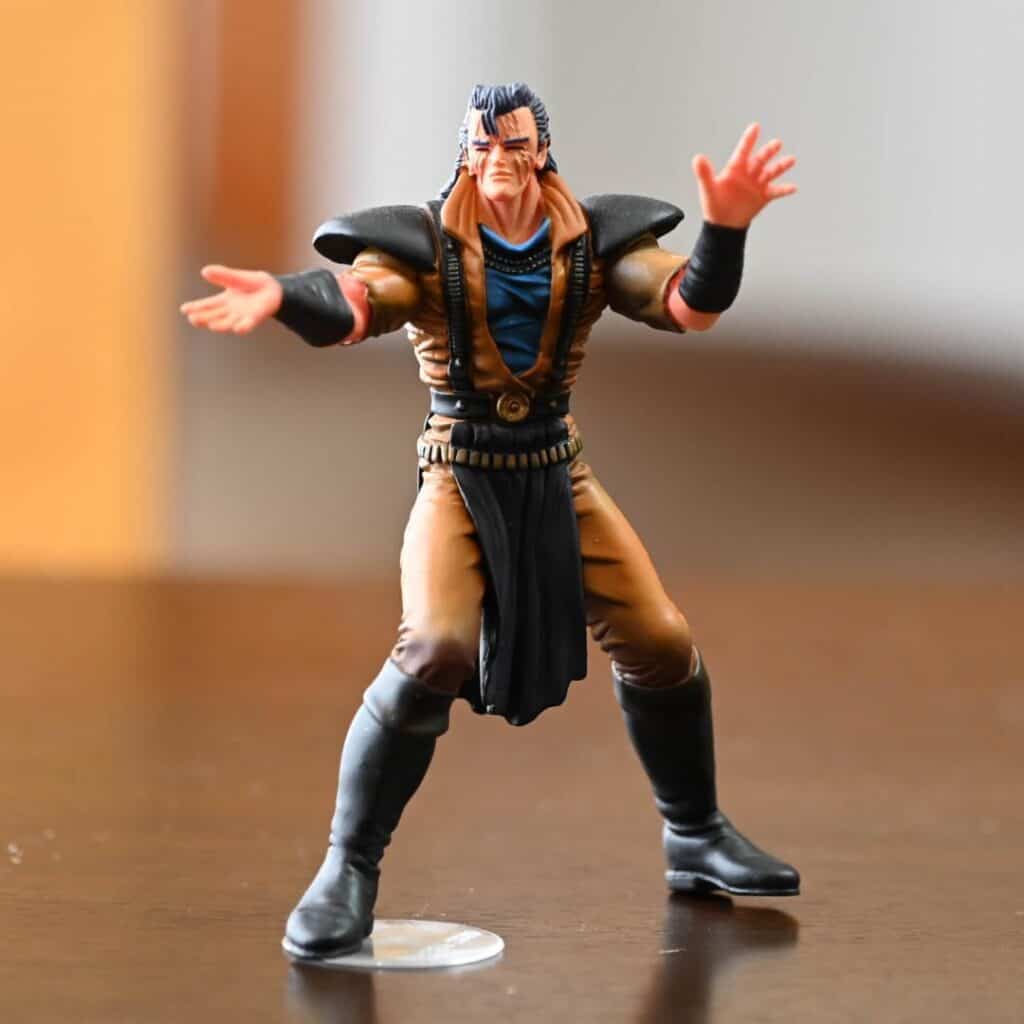
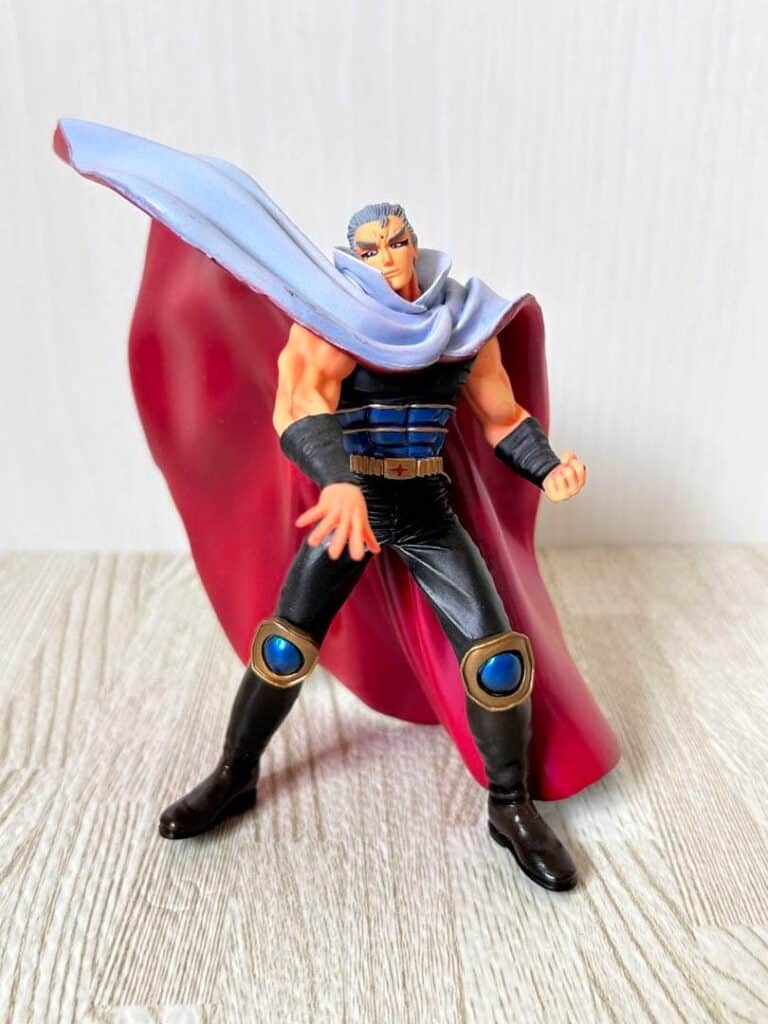
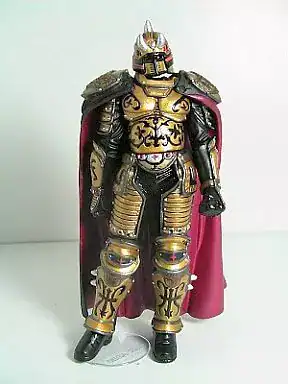
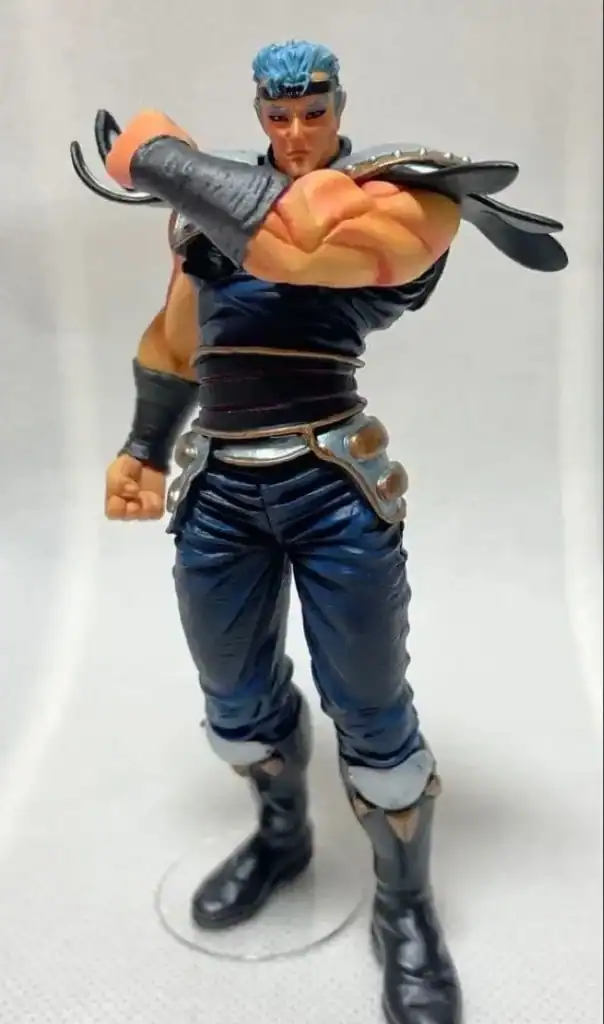
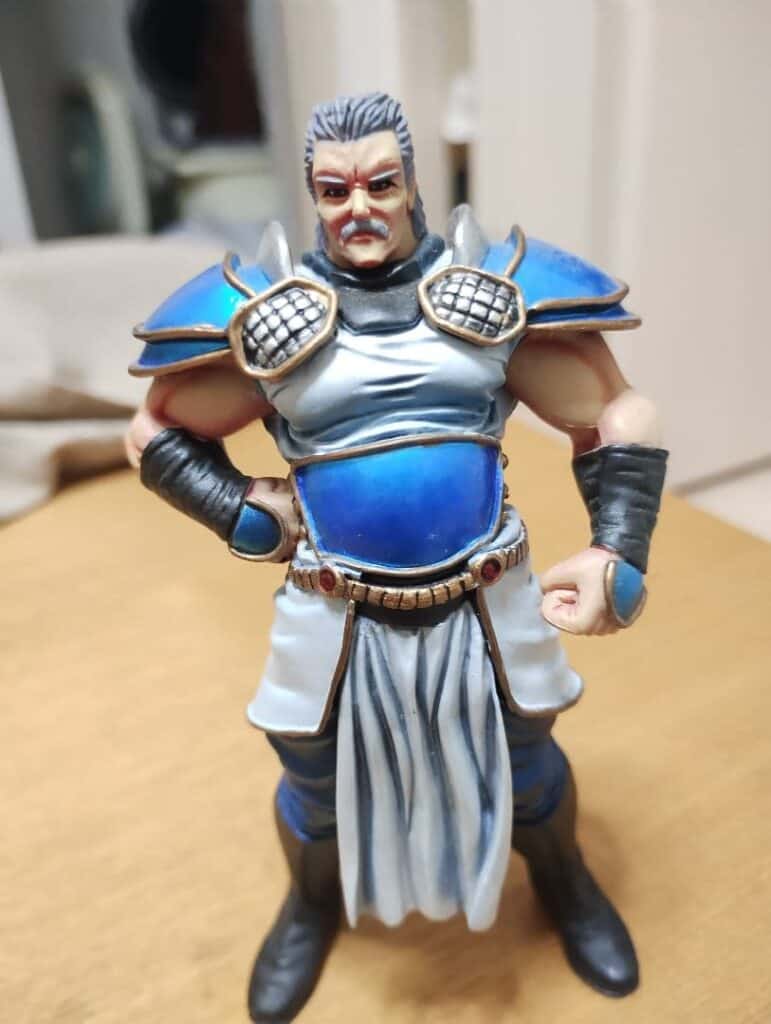
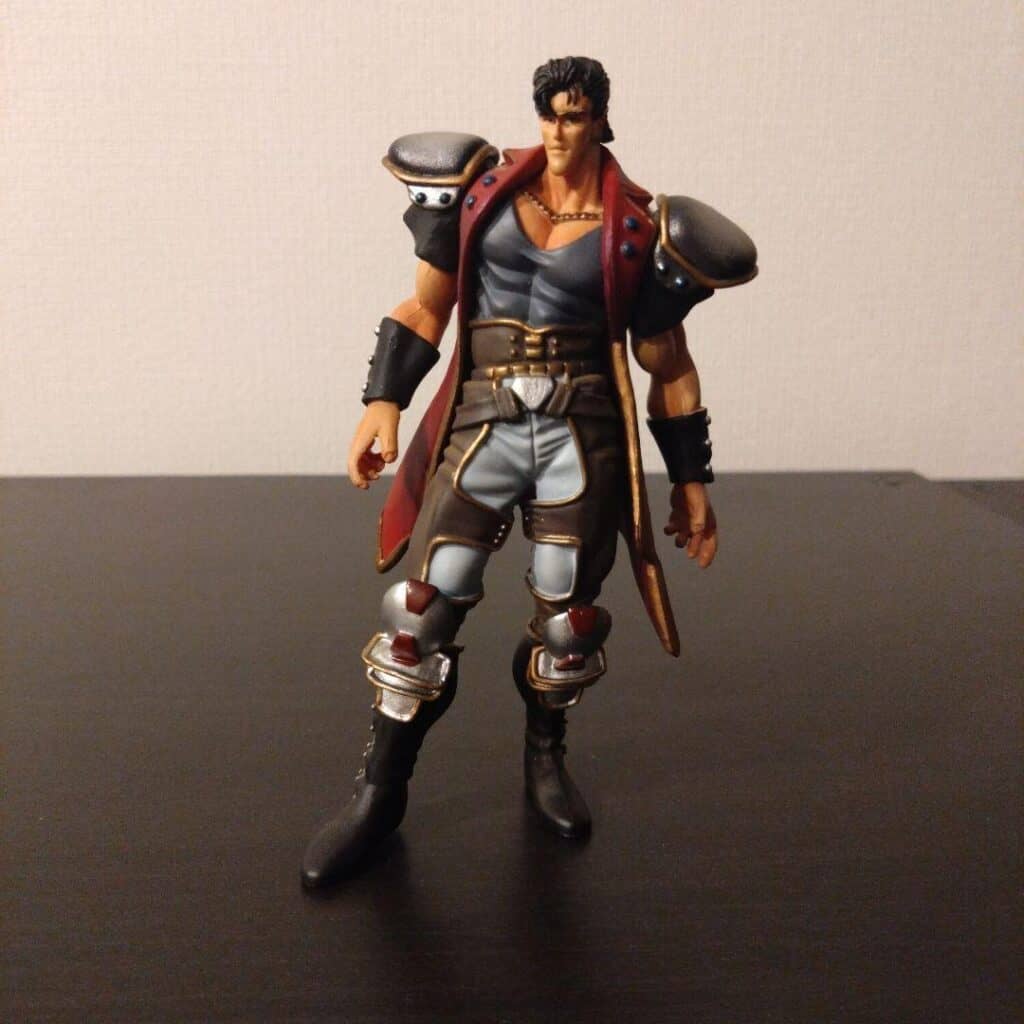
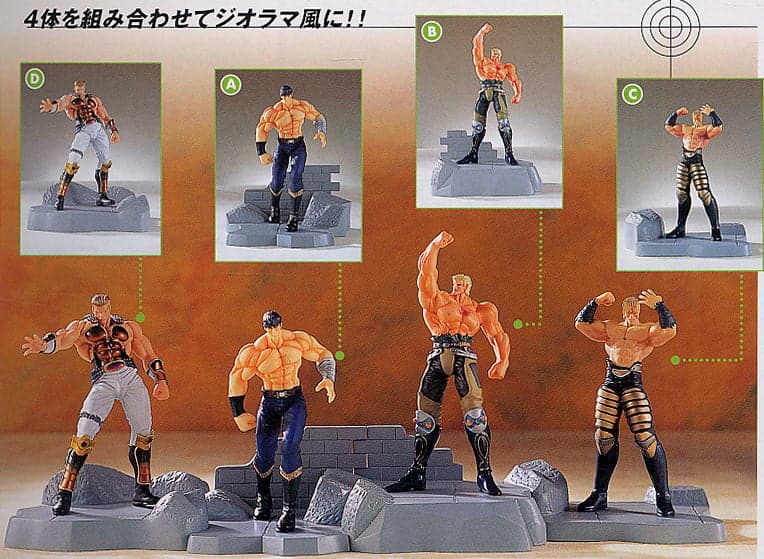
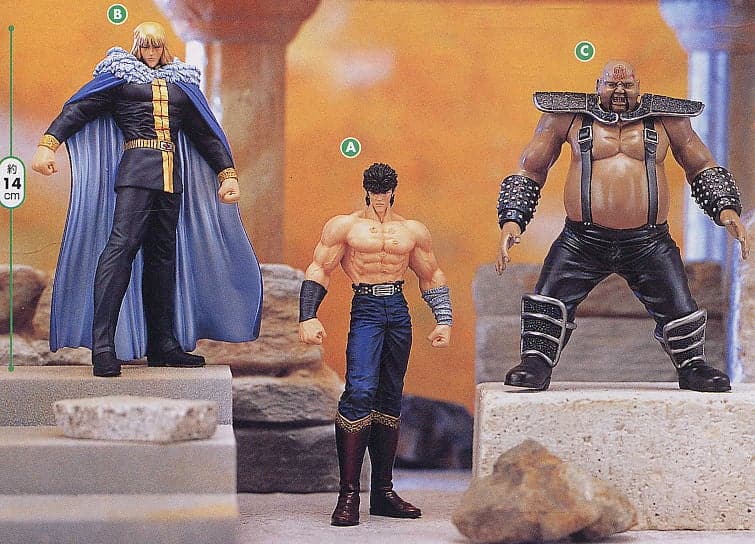
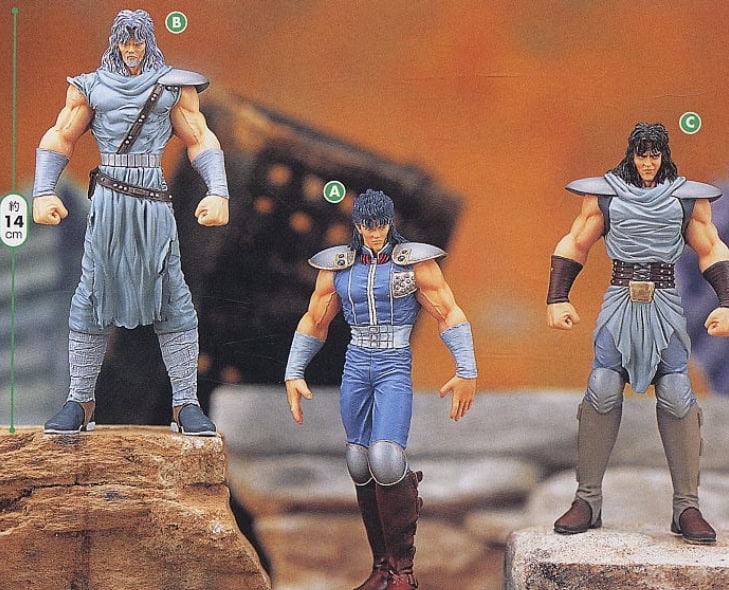
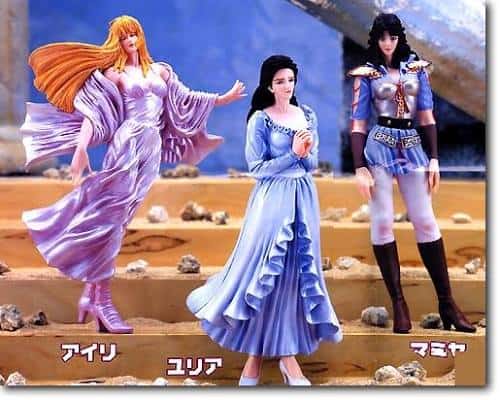
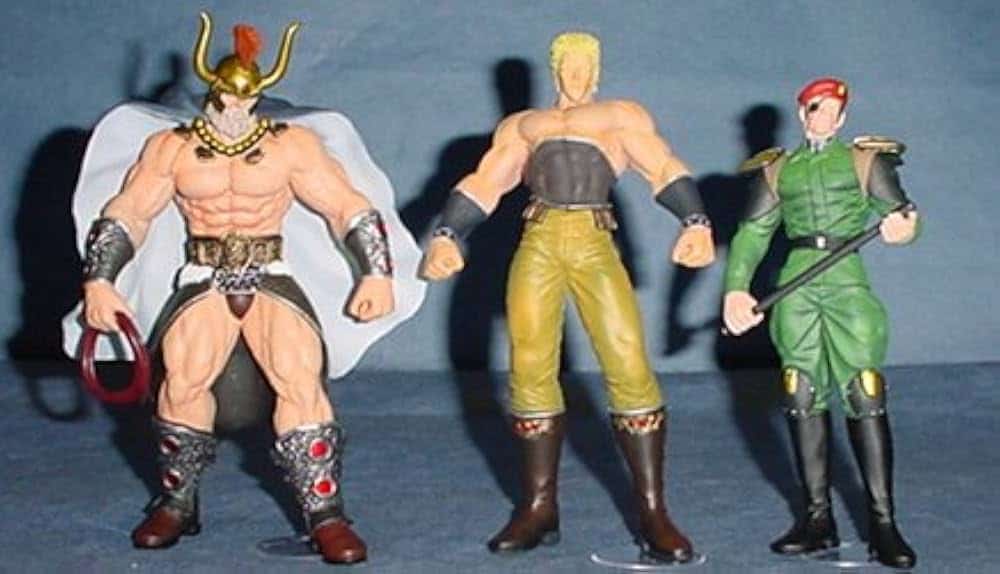
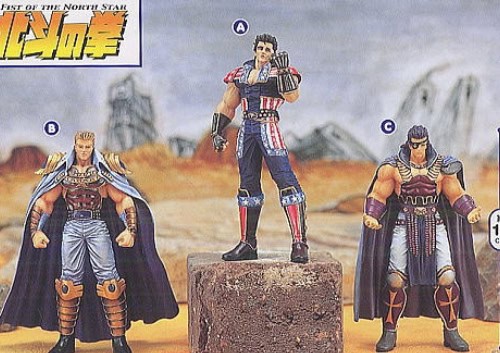
The first major line arrived in 2002. With the Hokuto no Ken Collection Figure, Sega put up for grabs figures about 14 cm tall built on Kaiyodo prototypes, three characters per volume. The first nine volumes follow the story, from Kenshiro’s first opponents to the stars of Nanto, then to the Land of Shura. To bring players back, the 2002 boxes announced a contest. With a postcard, or through the internet portals of mobile phones, i-mode, J-Sky and EZweb, players could win a nine-figure diorama base, in a desert, ruins or rocky setting, each one reserved for a thousand winners.
In 2003, while the volumes took a break, three blister-card editions brought the figures back with a new paint job, the four Hokuto brothers, the six stars of Nanto and the Nanto Goshasei. On the back of each card, a chart links the characters to Kenshiro. Raoh becomes ‘the conqueror of the century’s end who mastered strength’, Shin ‘the star of martyrdom who lives for love’, Jagi ‘the coward in the iron mask’. In May 2004, ‘the legend of the strongest’ brought together Kenshiro, Raoh, Kaioh and Falco, whose four bases fit together into a single scene, an edition Western collectors call Final Legend. The numbering then resumed up to the fifteenth volume, in June 2005, bringing in characters absent until then, Heart, Amiba, Solia and Kaiser. Sixty-four figures in all.

Mini-figures and giants
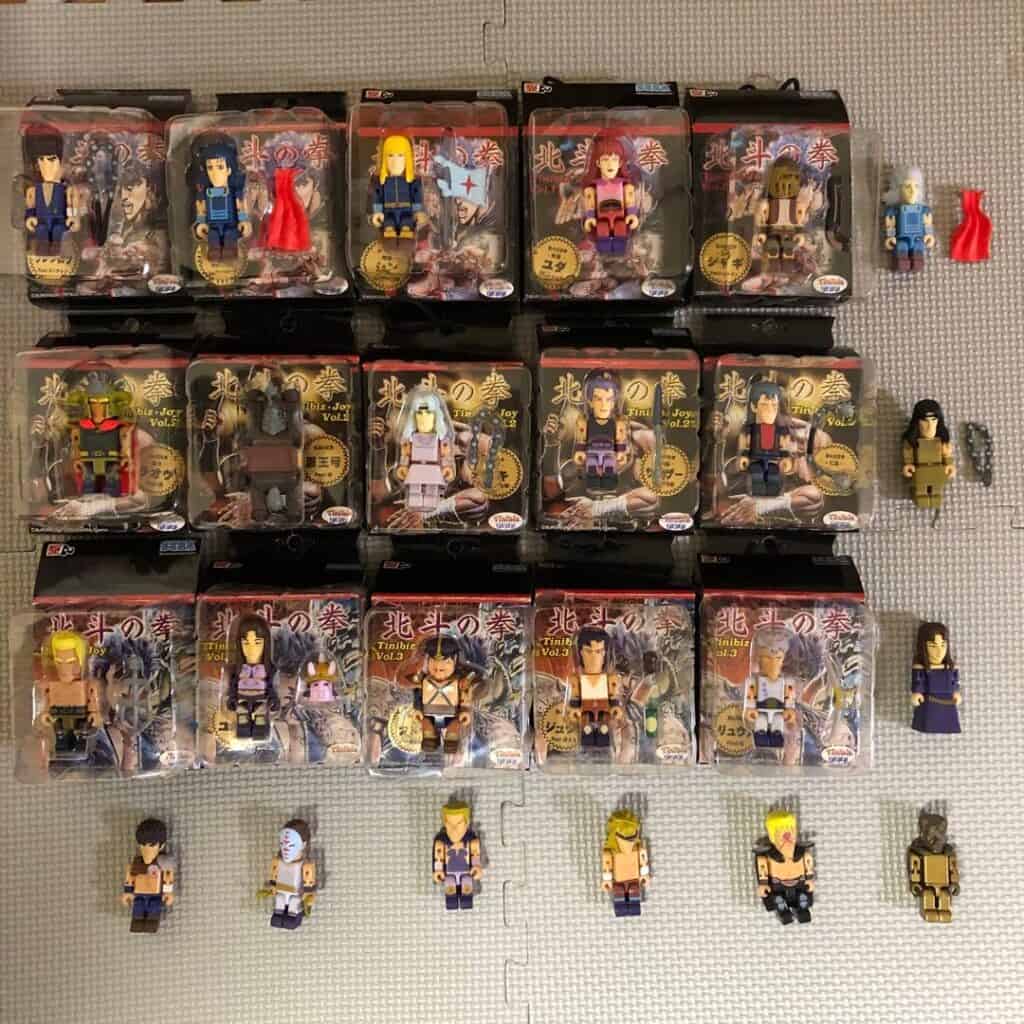
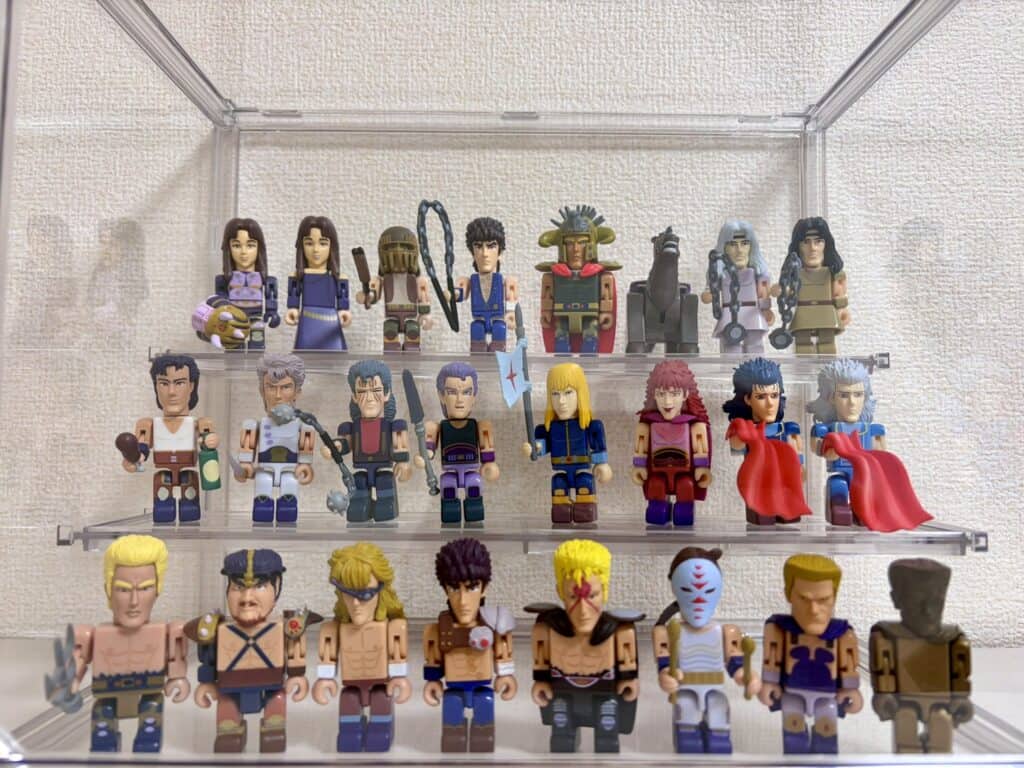
Sega did not stop there. Between 2003 and 2004, the Tinibiz-Joy line turned twenty-two characters into small block figures that Japanese listings compare to Lego. Each one comes with its accessory, introduced by a ‘Feat.’, Kenshiro’s nunchaku, the Southern Cross flag for Shin, sake and meat for Jûza. Two rare versions, a second version of Rei and a black-haired Toki, await the most persistent players.
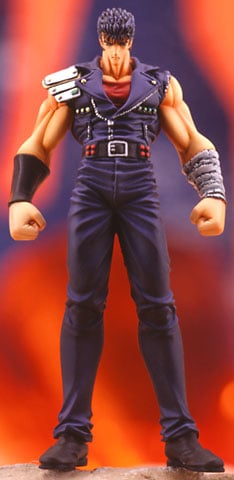
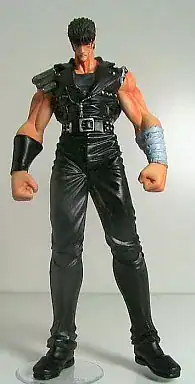
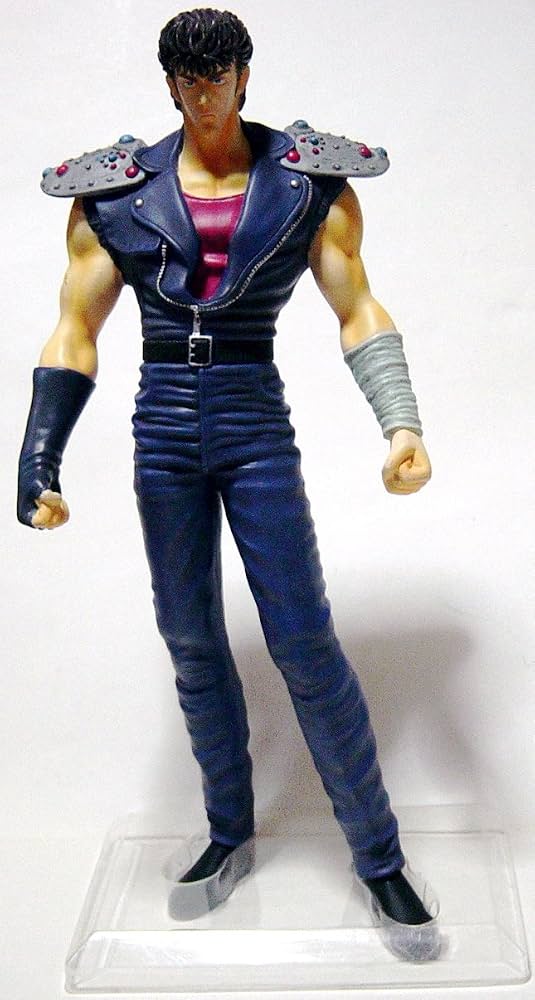
At the other end of the scale, the HG line moved up to around thirty centimetres in 2004. Only four figures, delivered in a bag under a header card, Kenshiro in colour, Kenshiro entirely in black and white, which turns the manga’s inking into three dimensions, then Rei and Jûza.
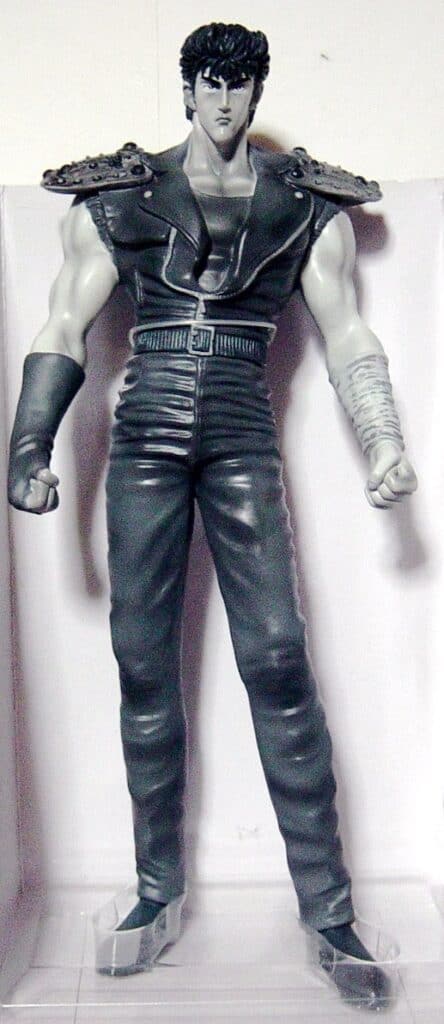
2010, the two brothers
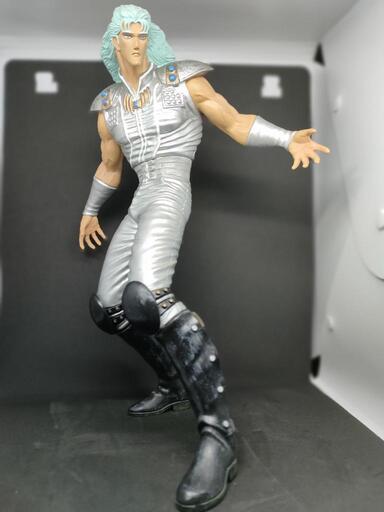
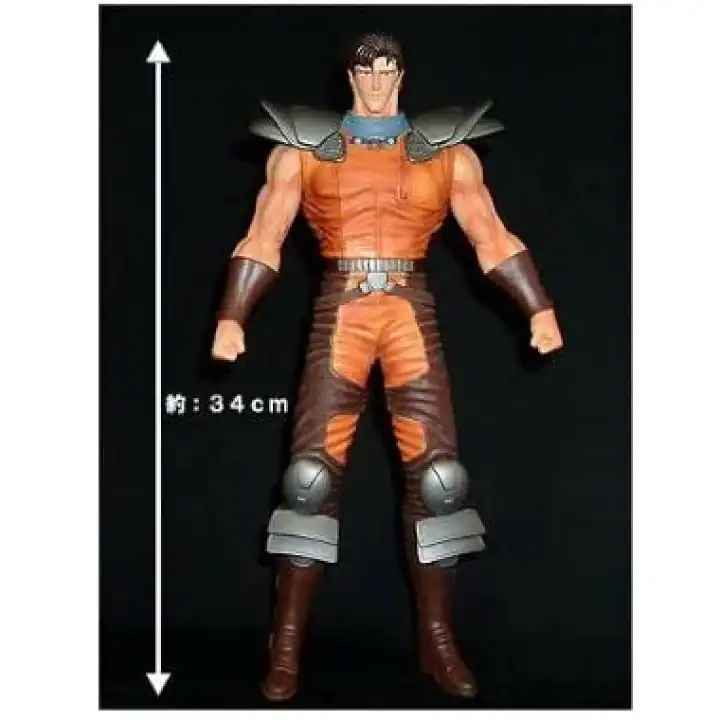
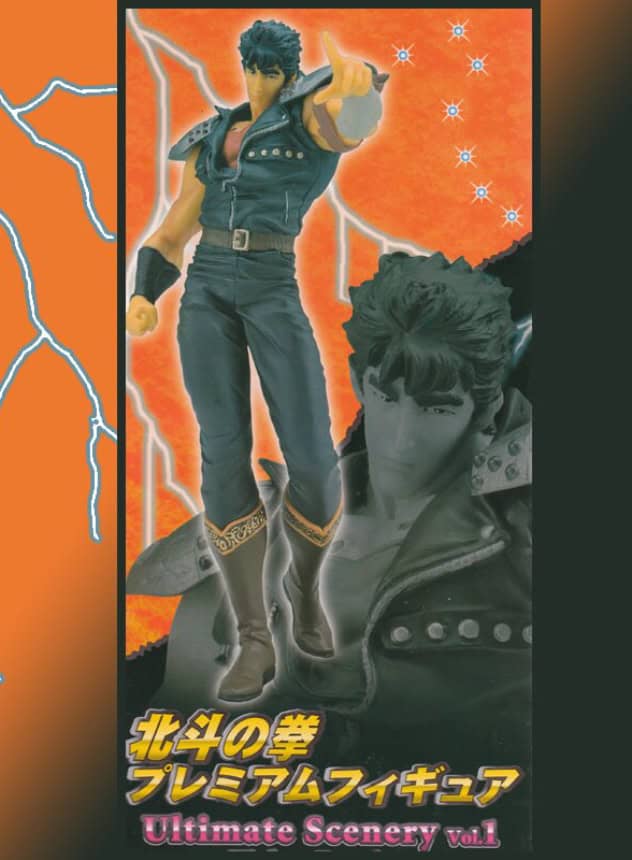
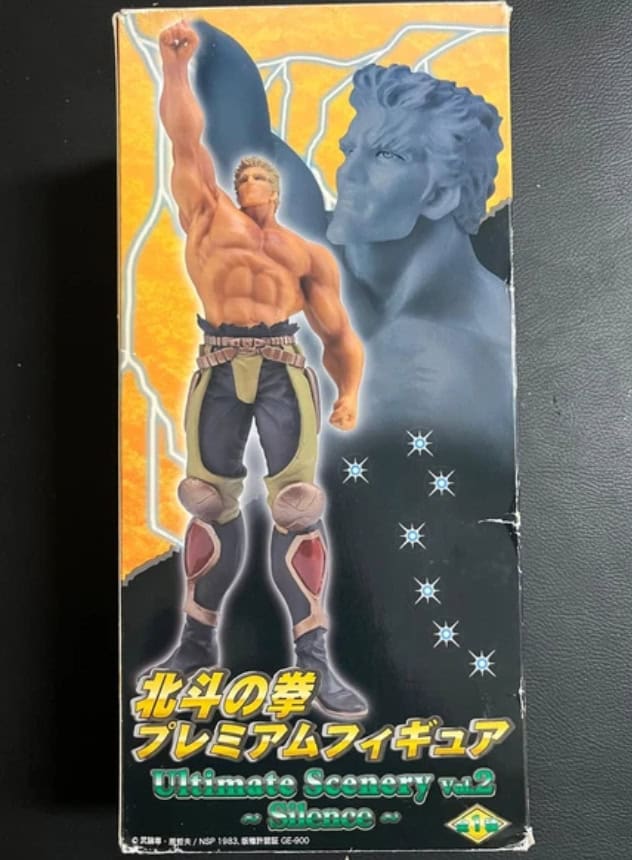
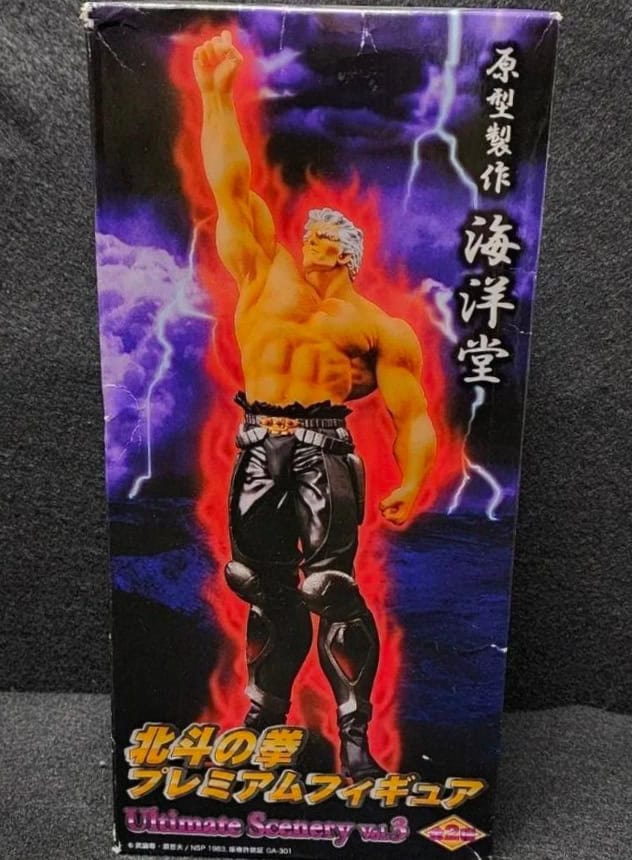
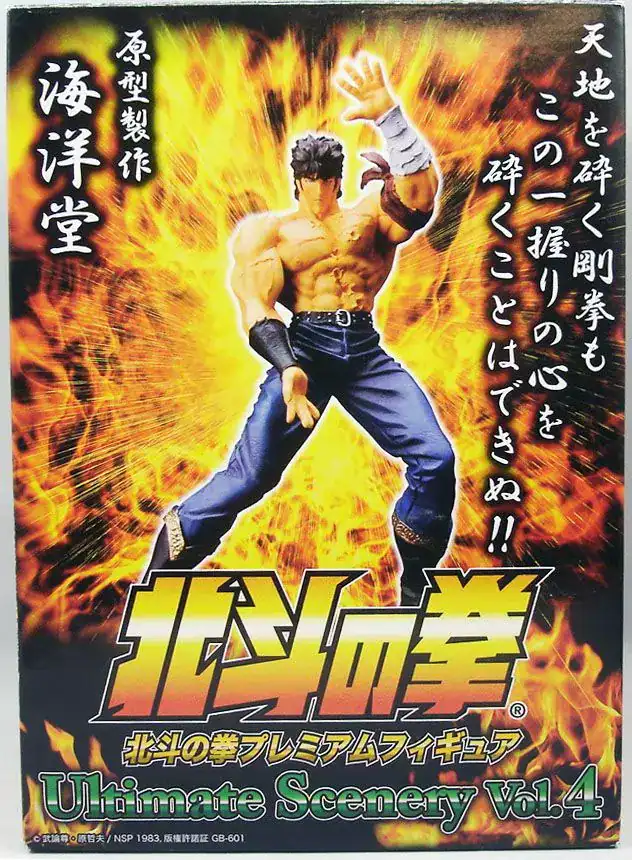
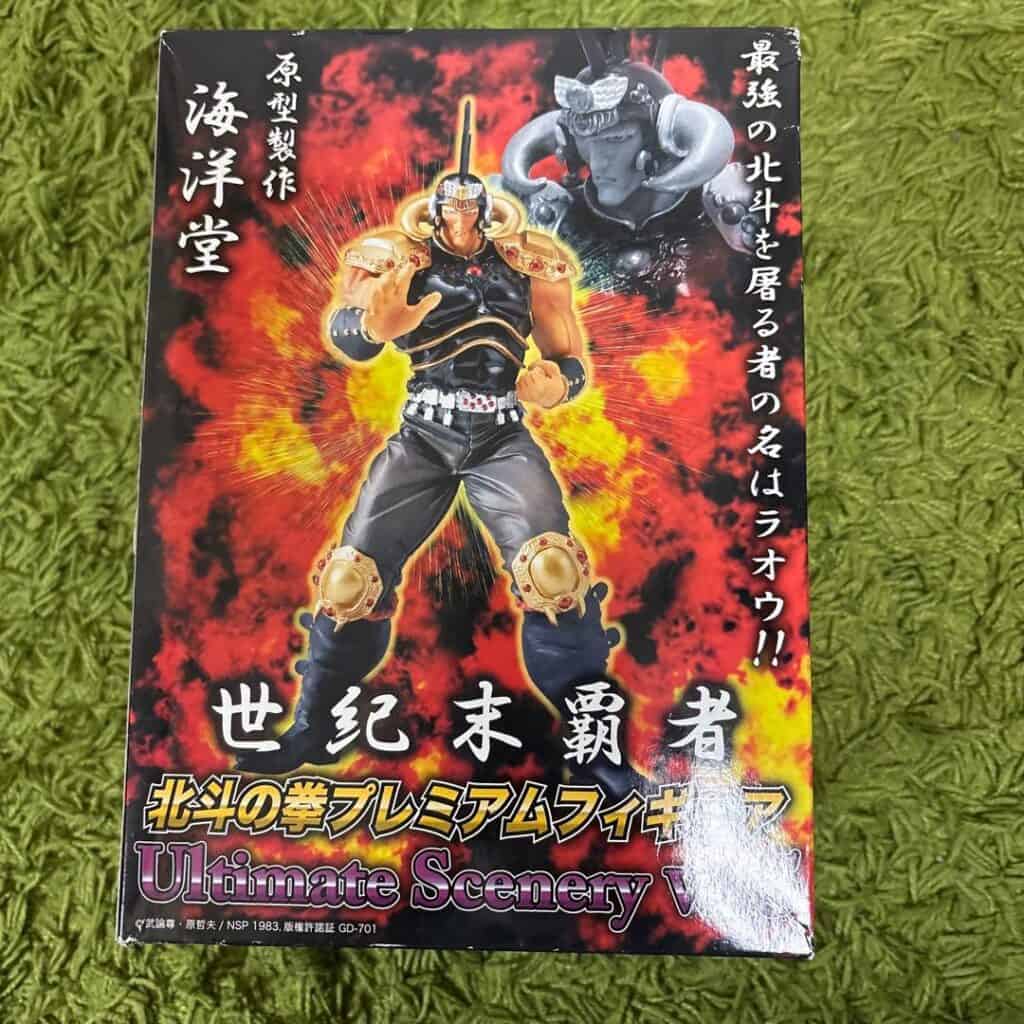
Six years later, Sega changed tone. The boxes of the Ultimate Scenery, a series of large figures from 23 to 29 cm, are reserved for ages 15 and over, whereas the Collection Figure was aimed at children from 6. Five volumes, and only two characters. Kenshiro opened the series in August 2010, Raoh answered in September, fist raised, then the two brothers came back repainted, before a bare-chested Kenshiro and, in July 2011, Raoh in the armour of the conqueror of the century’s end. Behind most of these pieces stands one name, Kagawa Masahiko, a Kaiyodo prototype maker who would resurface ten years later on the company’s Model Master busts, covered in the article devoted to the Kaiyodo busts.

2021, Raoh on a noodle cup
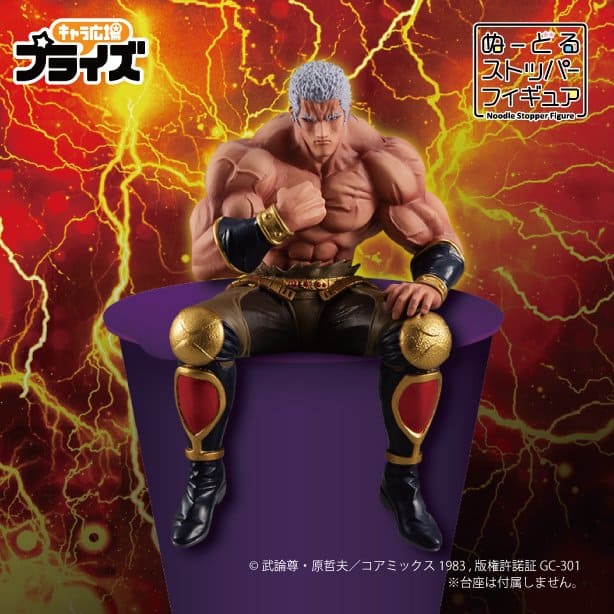
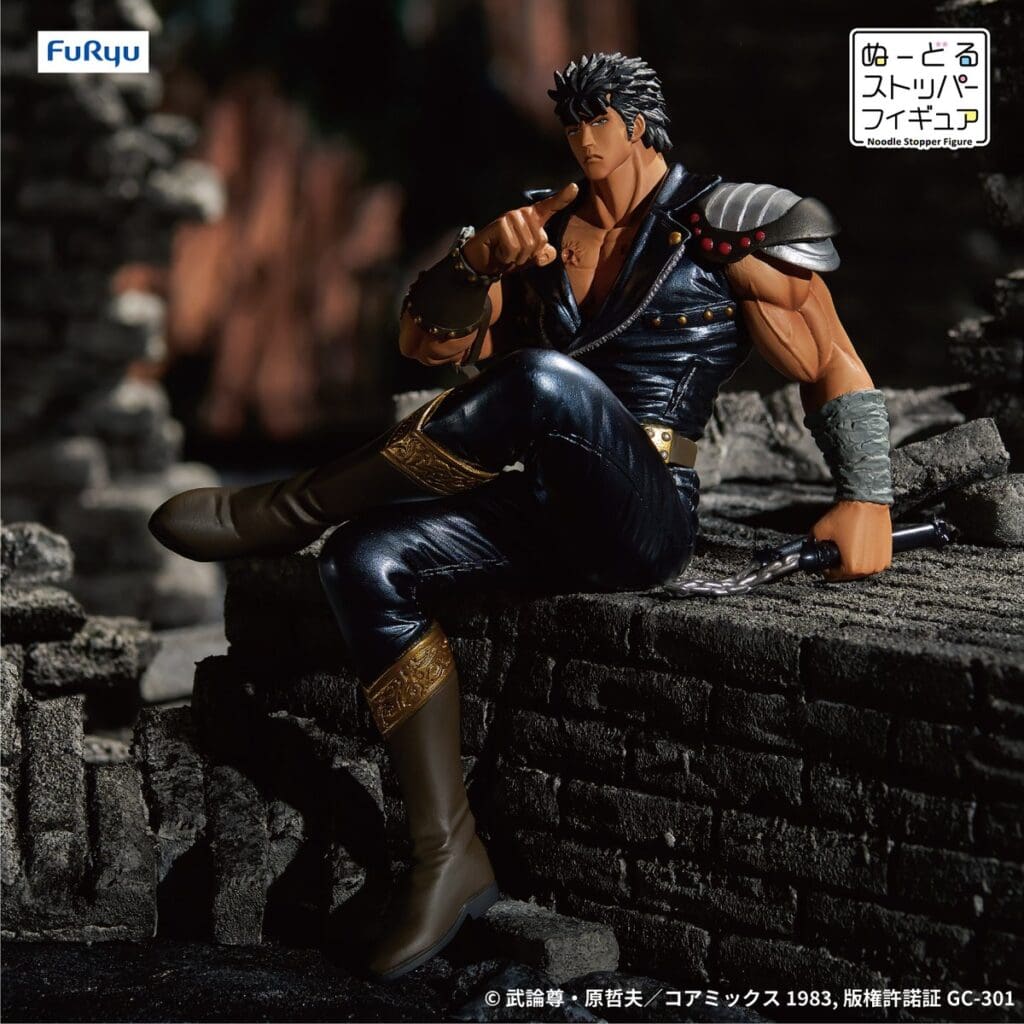
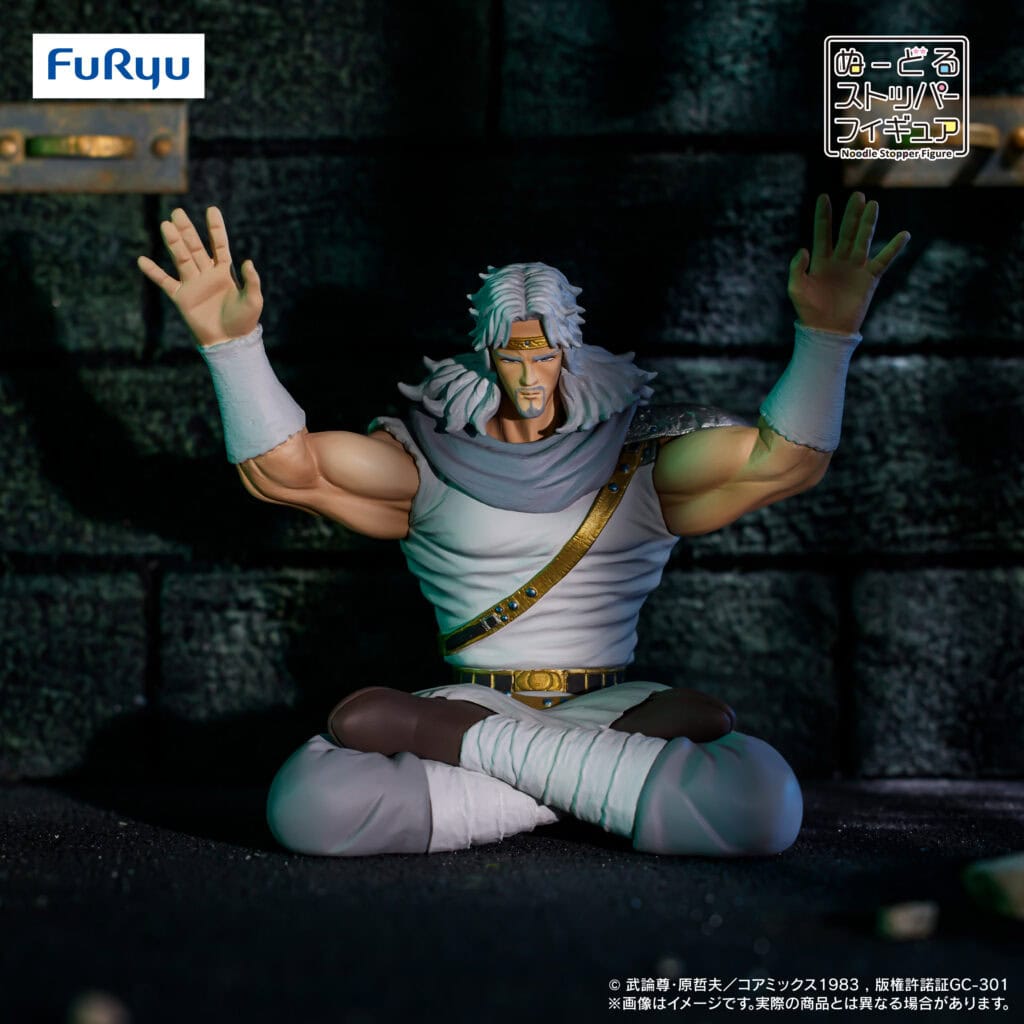
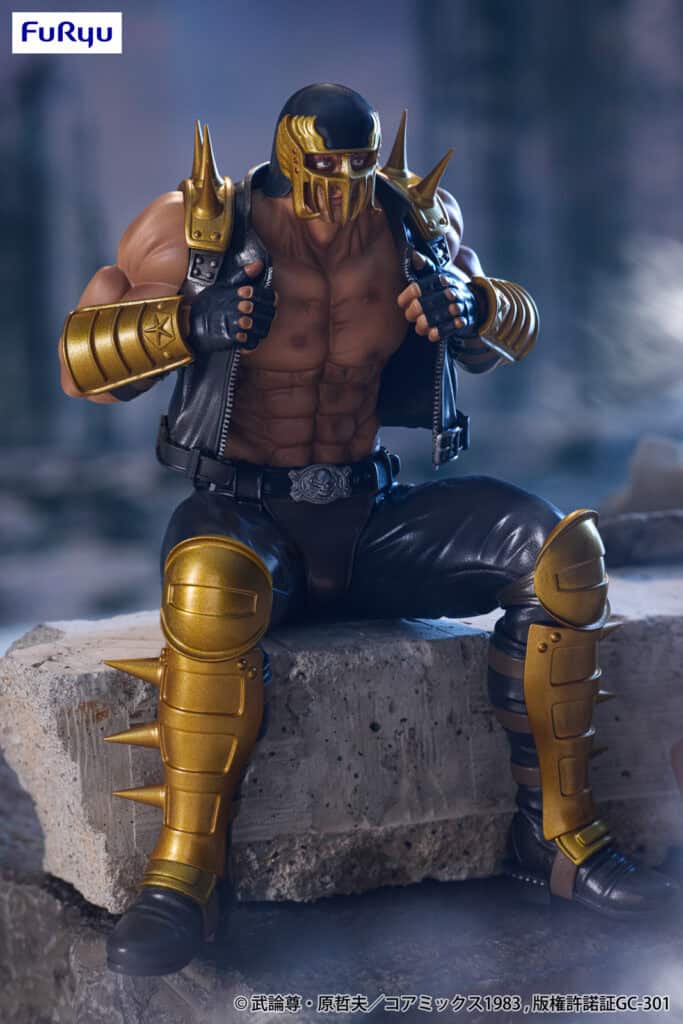
With FuRyu, Hokuto no Ken prizes took a genuinely surprising turn. Its Noodle Stopper line, launched in 2014, makes figures designed to sit on the lid of an instant noodle cup and keep it from lifting while you wait. Raoh took his seat in September 2021, sitting with all his muscles above the broth. Kenshiro followed in 2023, Toki in February 2024, cross-legged with his hands raised, then Jagi in August 2025. FuRyu announced him with his line ‘no younger brother is better than his elder!!’.
2026, the return of the large format
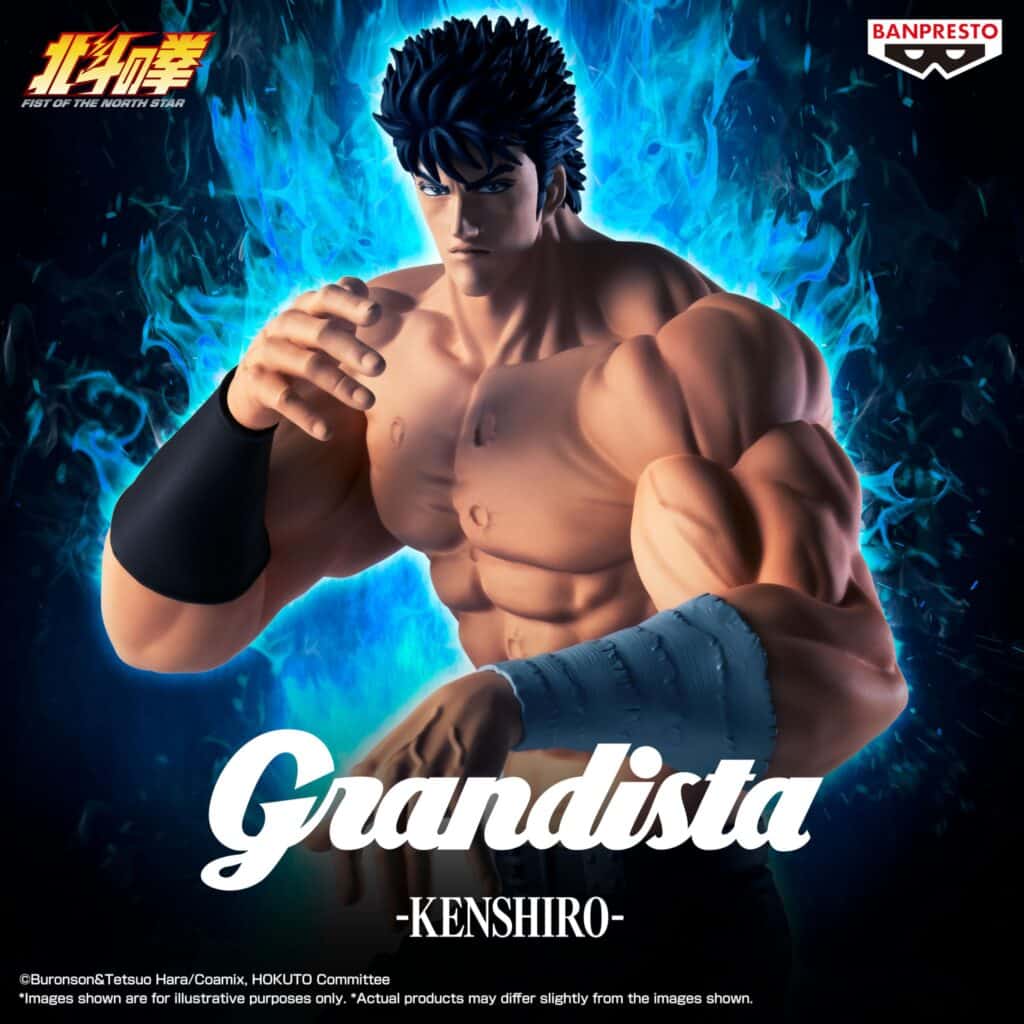
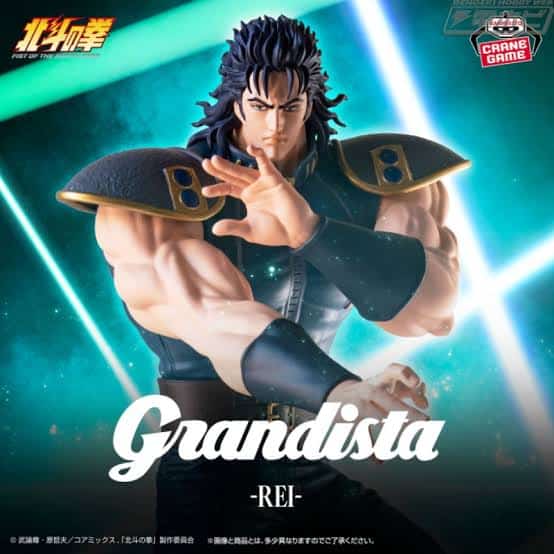
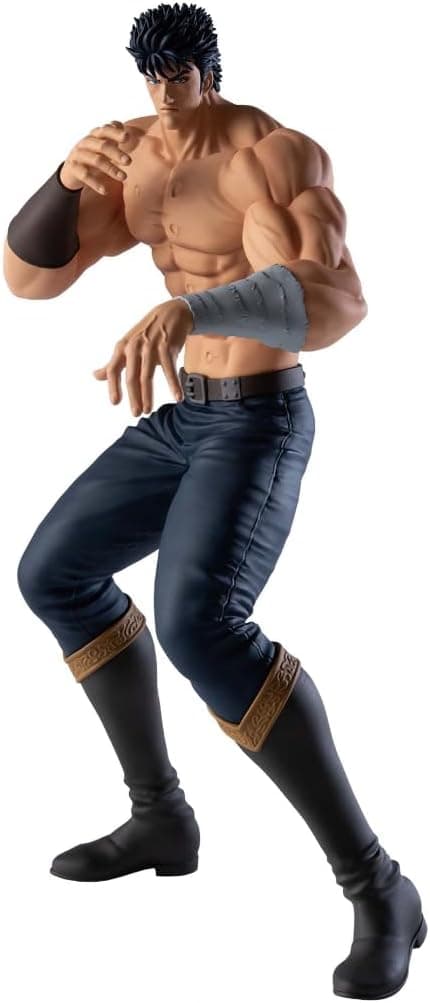
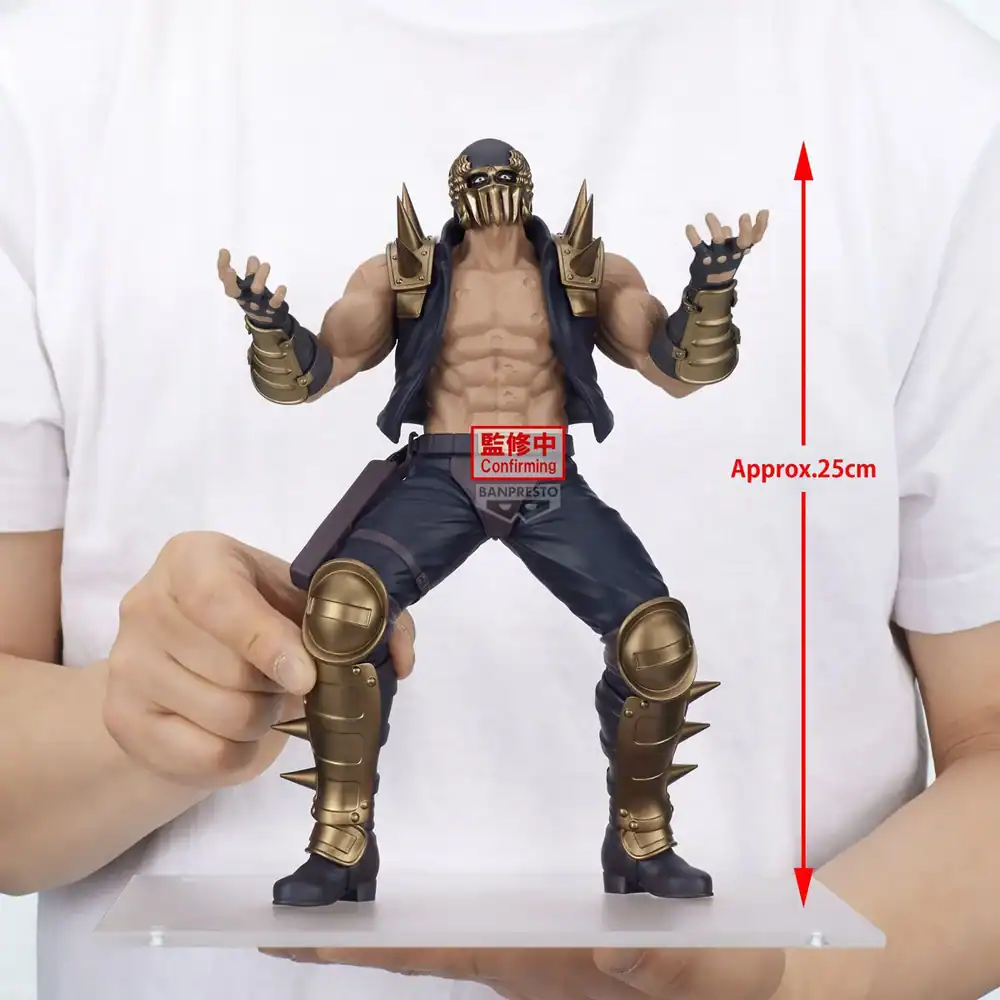
The new anime set the machine going again. Banpresto devoted three figures from its Grandista line to the series, Kenshiro in March 2026, about 26 cm, Rei in June, about 27 cm, and Jagi in October, about 25 cm, after a delay. They can be won in arcades, but also on online crane game apps such as Namco Online Crane, Capcotore or Taito Online Crane, which let people play remotely.


Figures never sold
That is the whole paradox of prizes. None of these figures ever sat on a shop shelf, and yet today they turn up in large numbers on Mercari, Yahoo Auctions or at Suruga-ya, the oldest often for a few hundred yen. Nearly twenty-five years of Hokuto no Ken at the crane, from the 2002 diorama bases to Banpresto’s Jagi, also tell the story of a very Japanese pastime, where every figure is won like a trophy.