


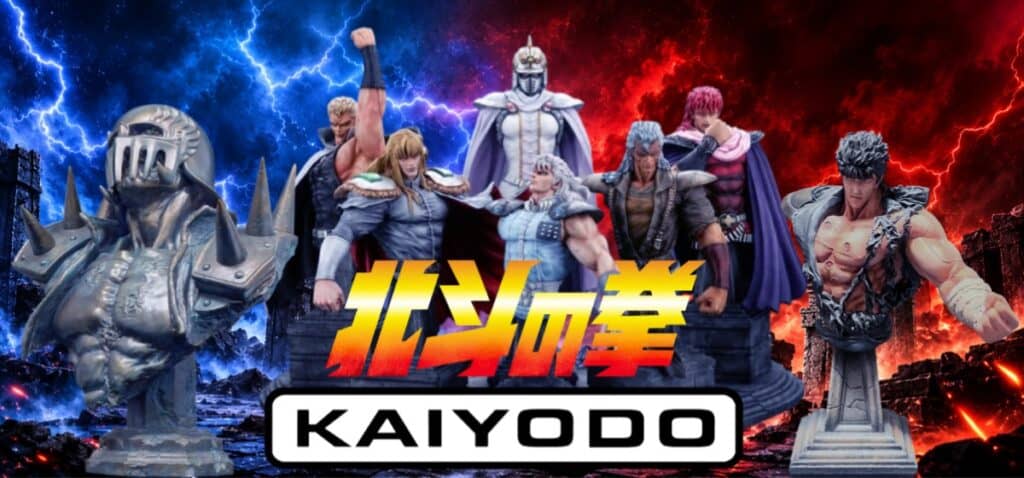
As every Friday, we revisit Hokuto no Ken figures. This week, sixteen years of busts from Kaiyodo, from small polystone pieces to assemble on a shared base to a life-size Kenshiro you display in your living room. Three sculptors pass the baton: Matsuura Ken, the Esora Keikaku studio and Masahiko Kagawa.
The four brothers, a base to complete
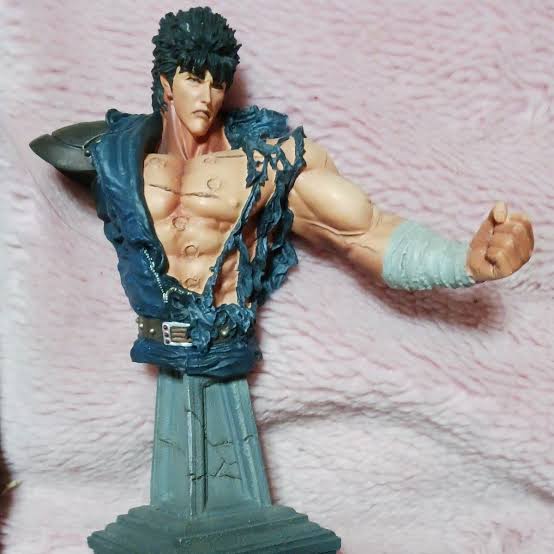
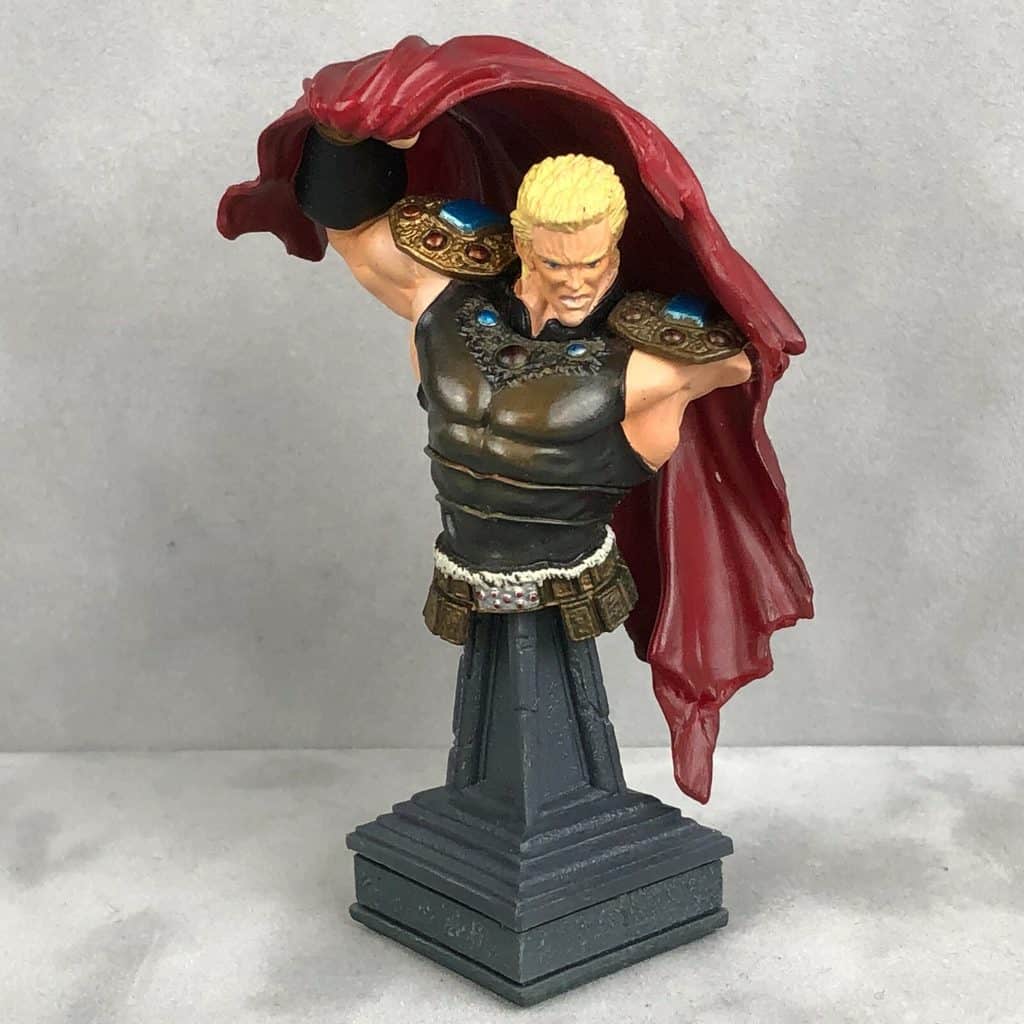
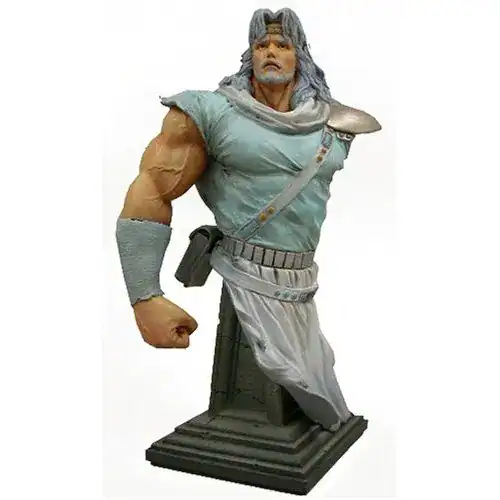
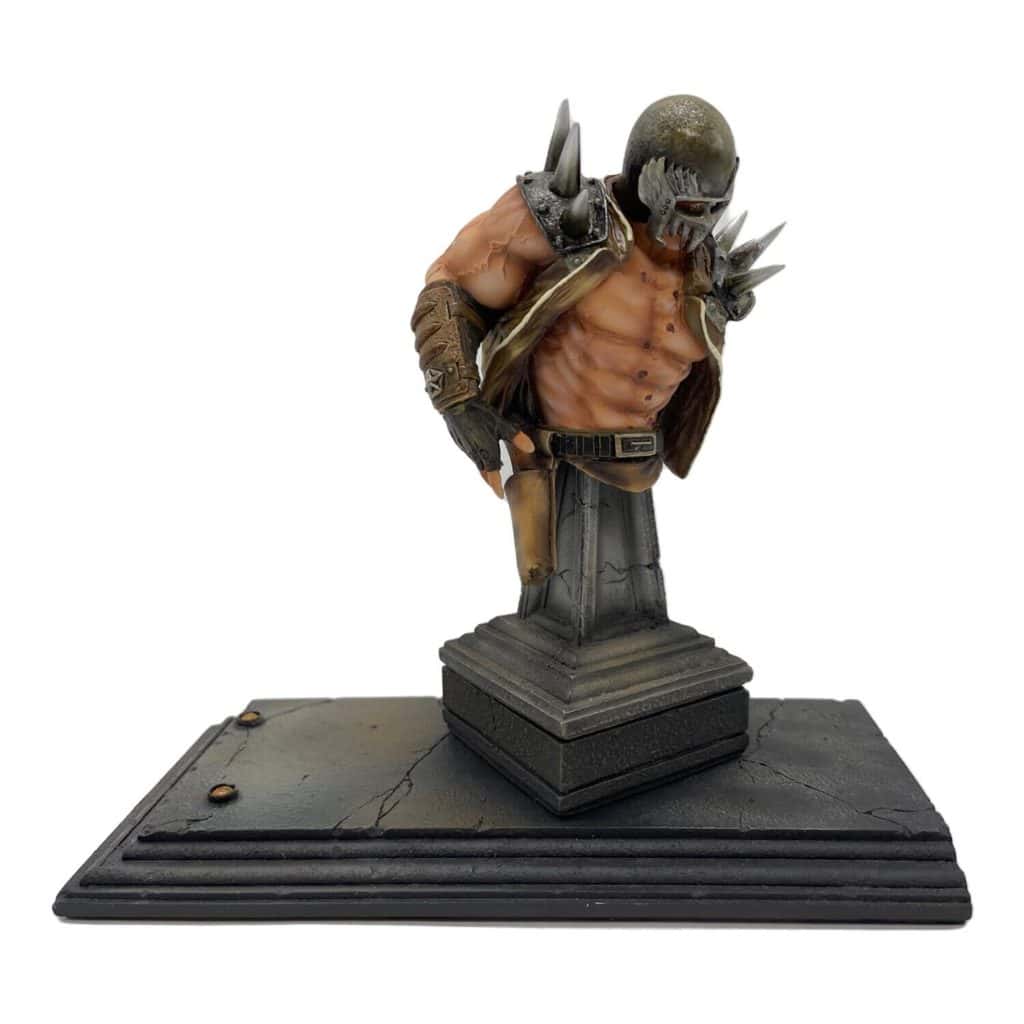
It all starts in October 2004. Kaiyodo releases the busts of the four Hokuto brothers, Kenshiro, Raoh, Toki and Jagi, in painted polystone, at 3,800 yen each. Matsuura Ken’s name is printed on the front of each box. Each bust comes with a fragment of the base, and only all four together form the complete display stand.
In late July 2005, the series returns as a 2nd Color Edition, same sculpture, same price, but with a new paint job by Yatake Yoshinori. Having worked at a painting company and an FRP moulding workshop, he made a name for himself in the garage kit scene as a professional finisher, the one who paints the masters used as references for mass-produced figures. The previous summer, the samples he had painted for a kit showcased at Wonder Festival had got him noticed. Around the same time, he began sculpting on his own under the name ACCEL, to the point of being selected for the Wonder Showcase, Kaiyodo’s platform for emerging talent.
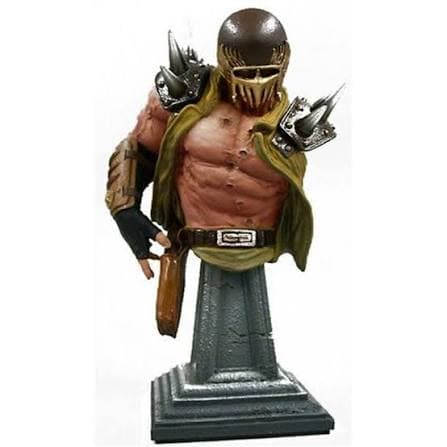
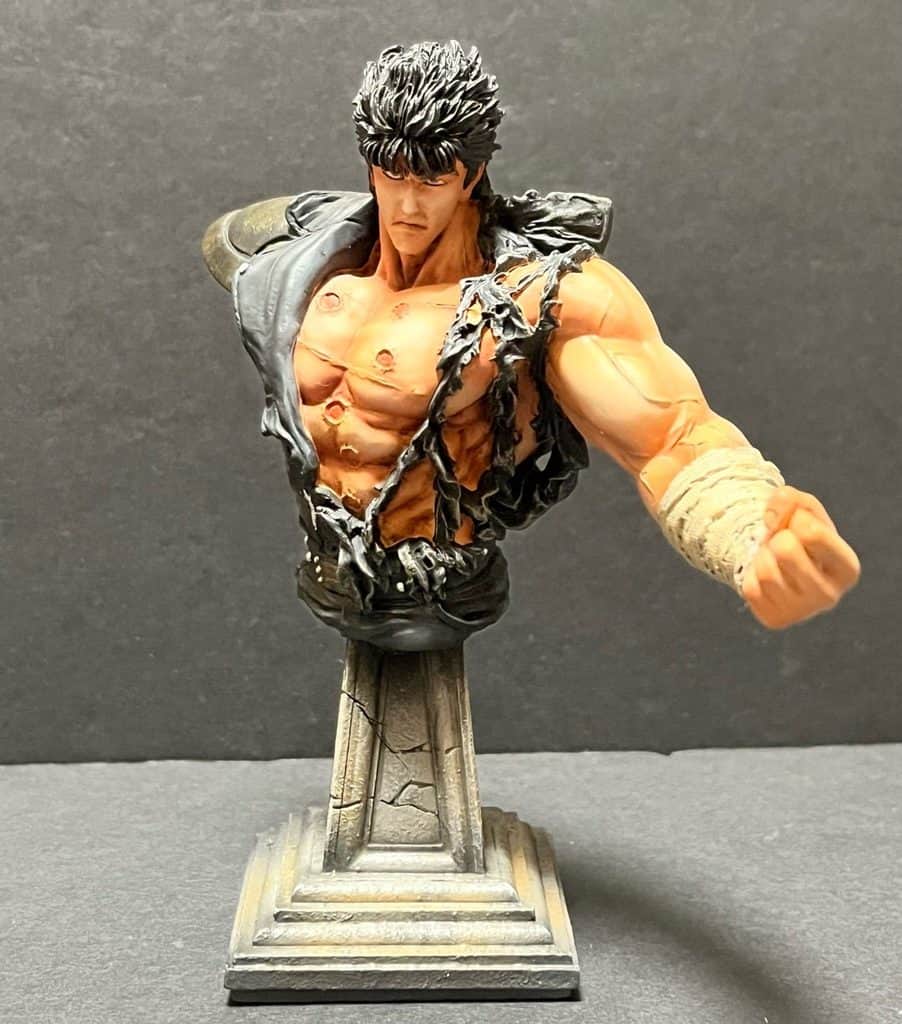
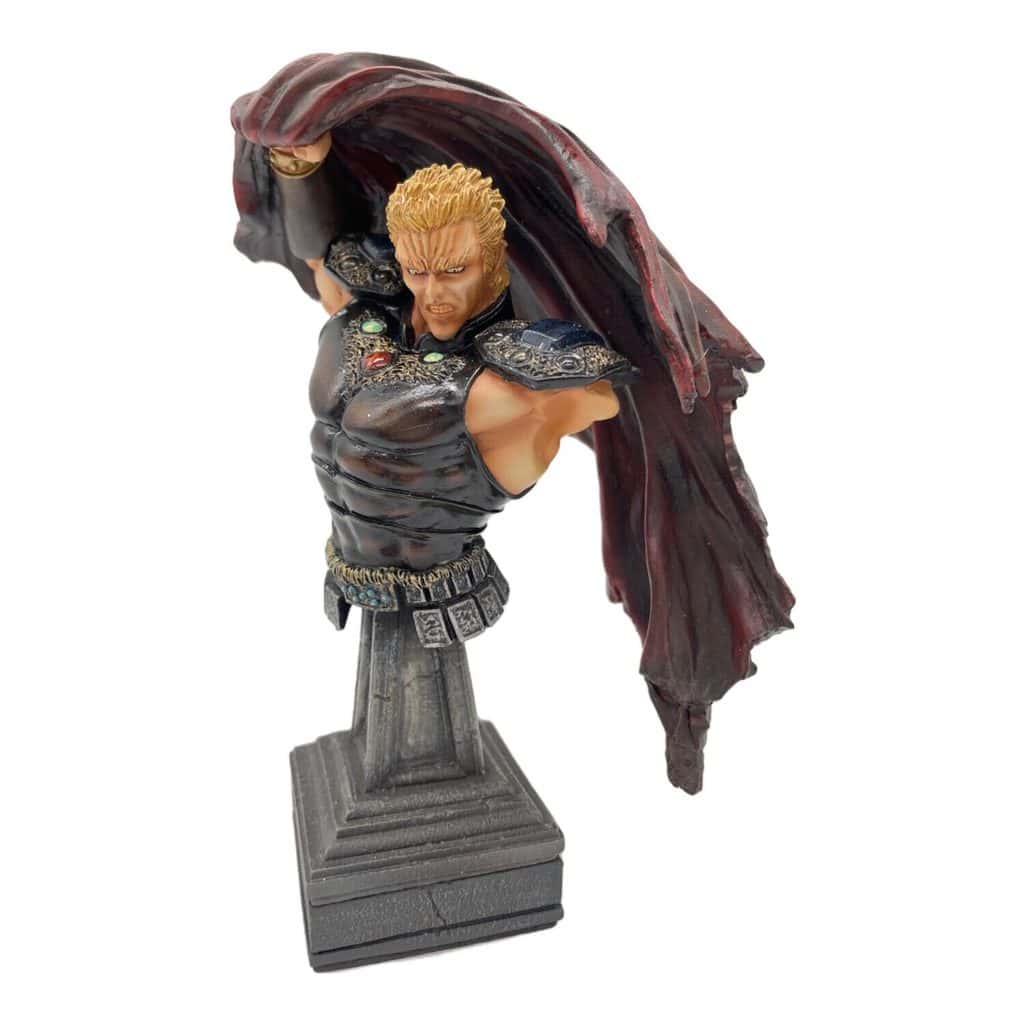
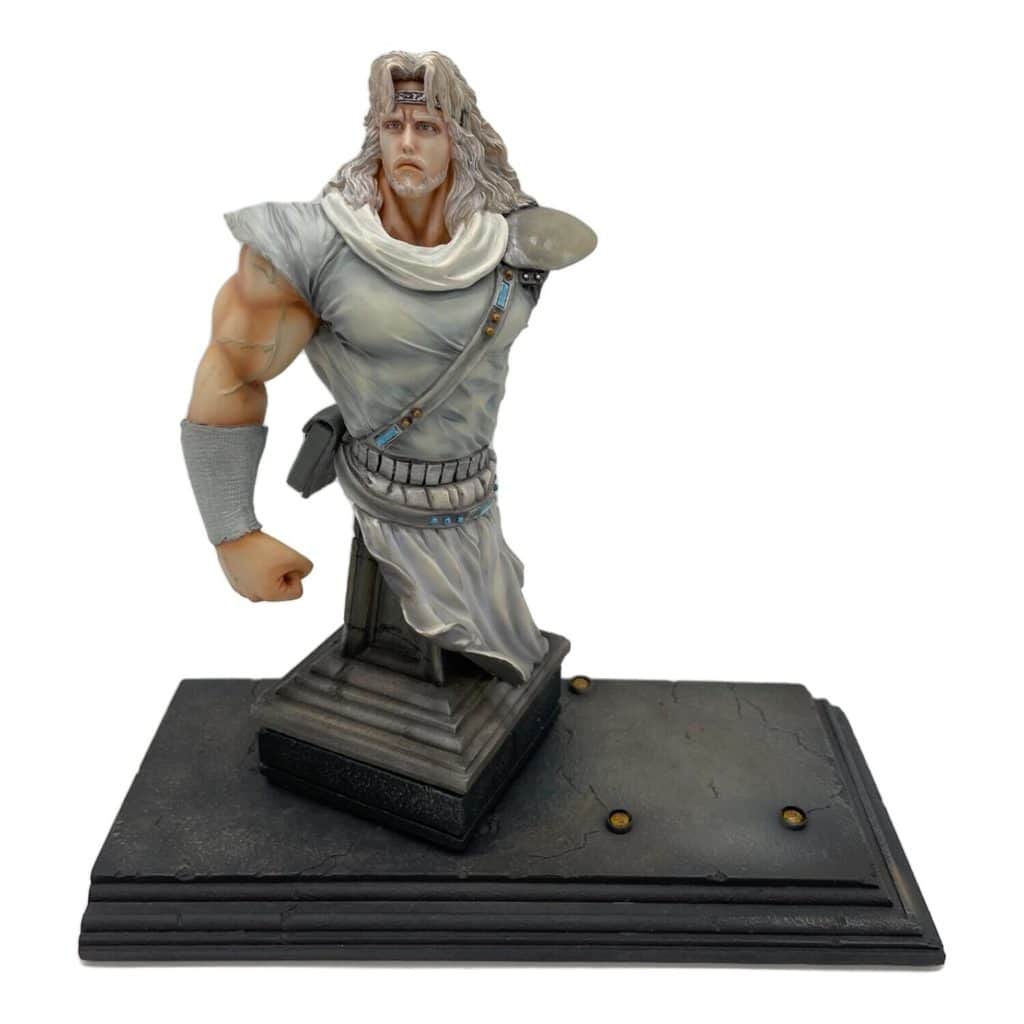
The four brothers in miniature, free with coffee
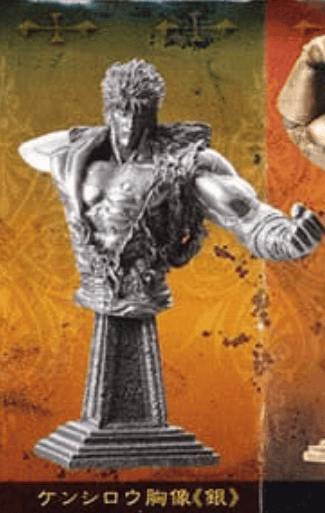
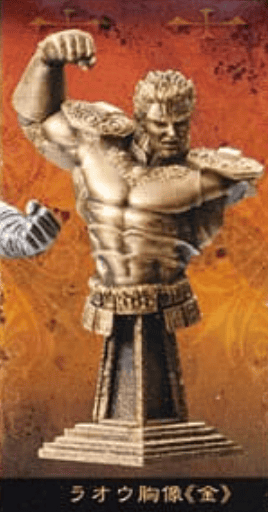
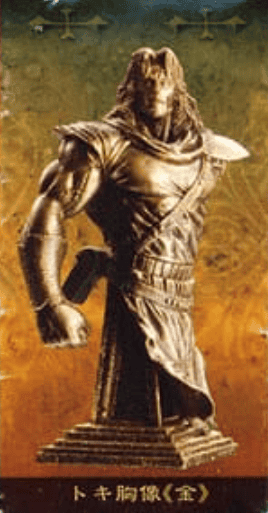
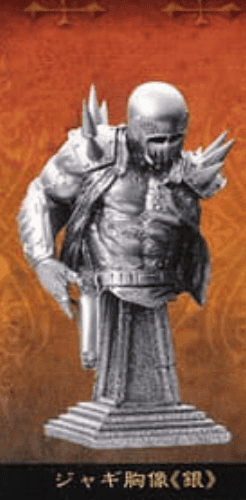
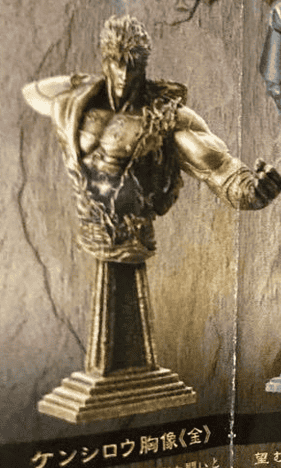
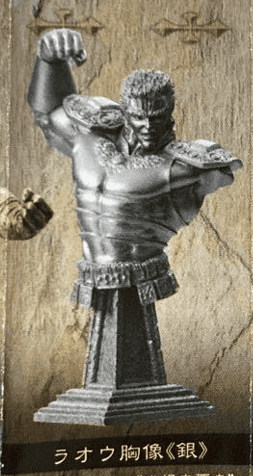
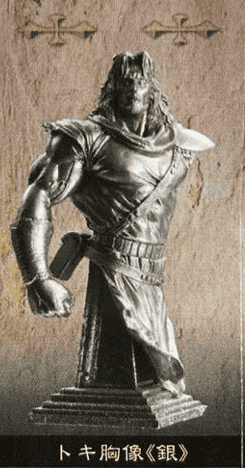
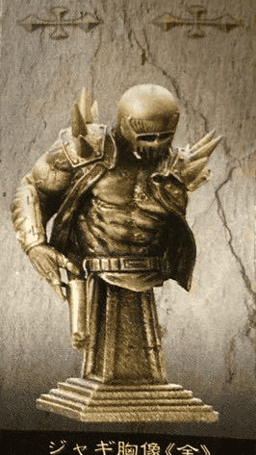
In the spring of 2006, the film Raoh Den Jun’ai no Shō is showing in cinemas, and the same four brothers show up on Seven-Eleven shelves. Buy a can of Suntory Boss coffee, get a free Kaiyodo figure, either full-body or as a bust on a pedestal. Still sculpted by Matsuura Ken, the busts come in gold or silver finishes, and the two waves swap the finishes. To get each brother in both colours, you had to drink a lot of coffee…
The six stars of Nanto
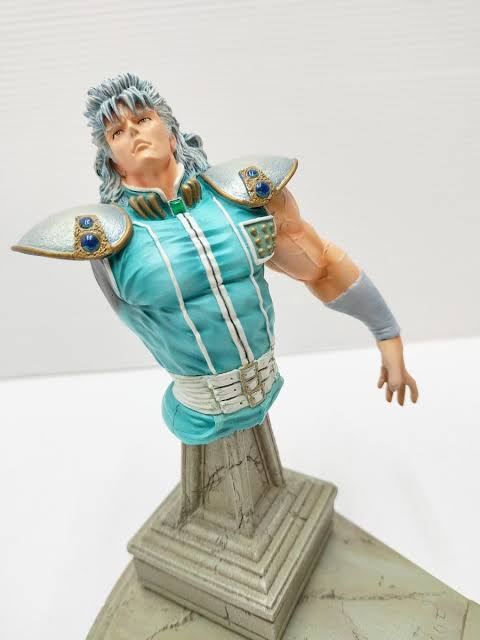
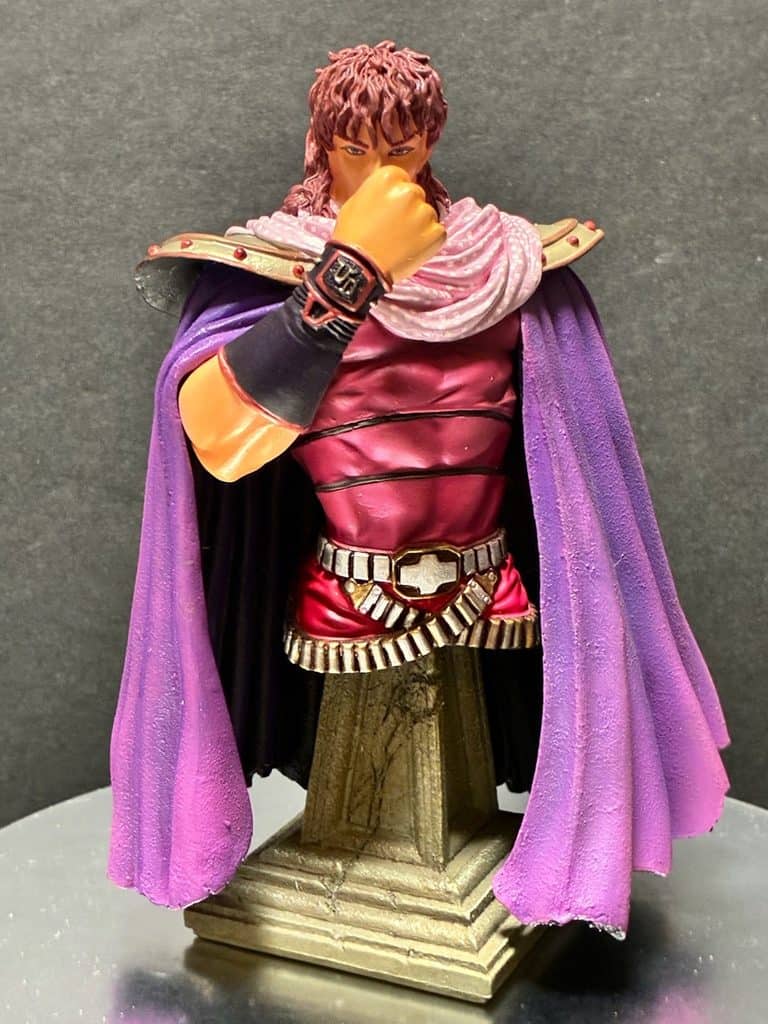
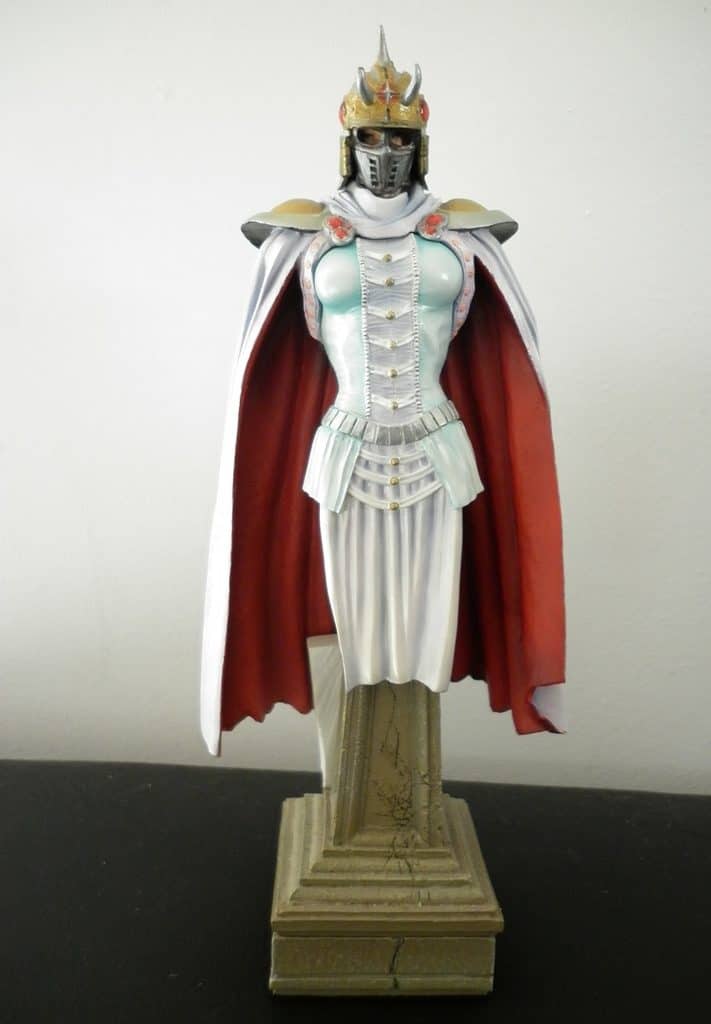
The following summer, Matsuura moves on to Nanto. The six masters of the Nanto Rokuseiken are released in two waves: Rei, Yuria and Yuda on 25 August 2006, then Shin, Souther and Shû on 15 September, at 4,500 yen each. Each box presents its character by school and star. The base concept returns on a larger scale. Combined, the six fragments form a semicircle where the five masters surround Yuria.
In May 2007, Yatake Yoshinori repaints the series in turn, and this time Kaiyodo puts his name front and centre, presenting each bust as the meeting of two crafts, sculpting and painting. The first edition followed the anime’s colours. The new one aims for realism.
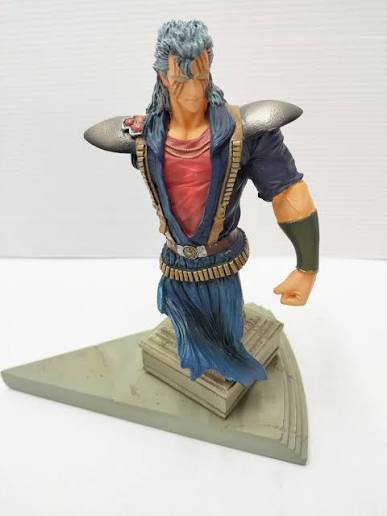
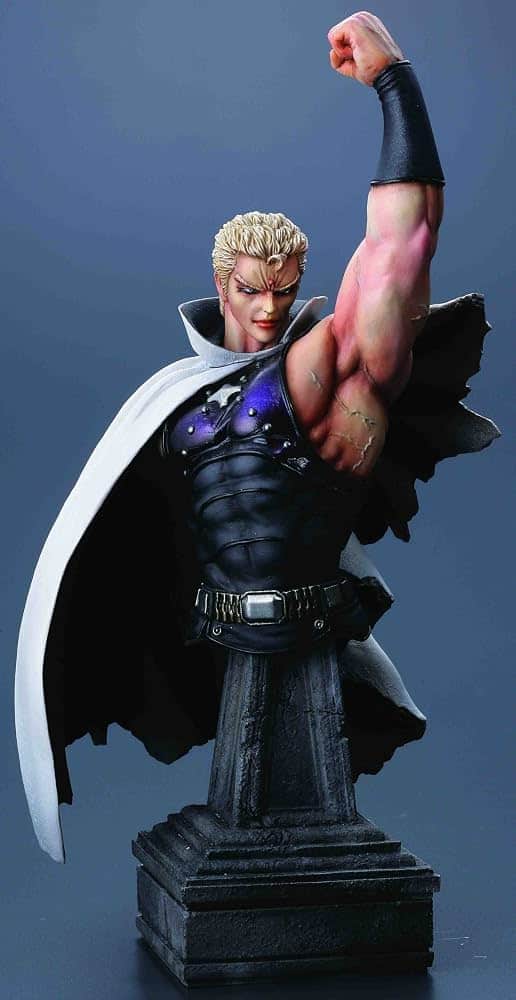
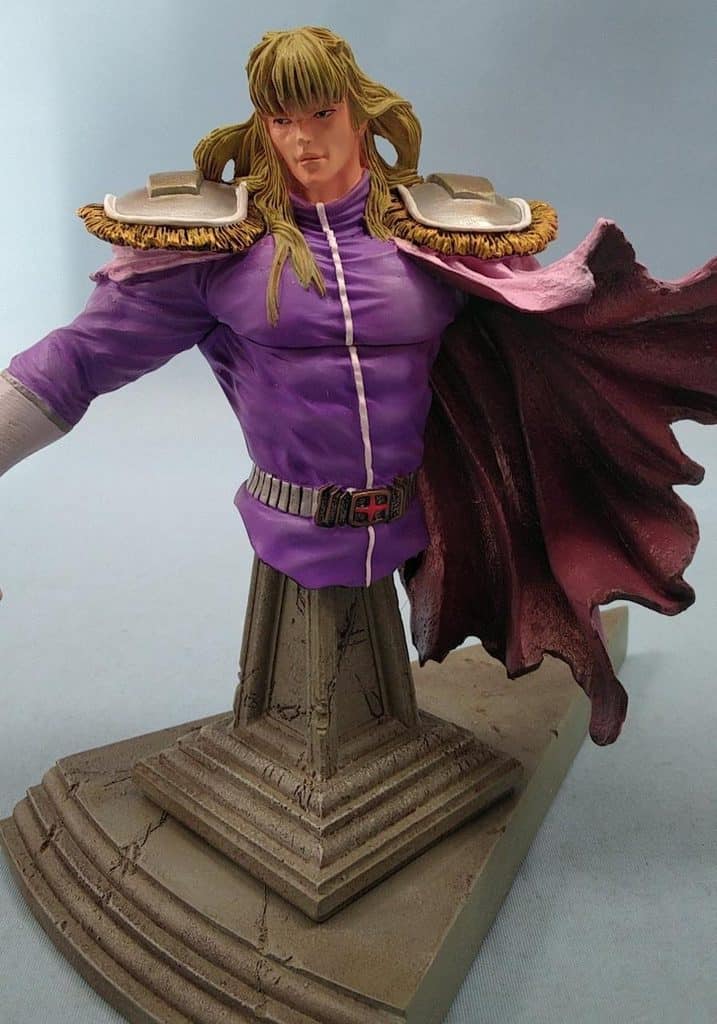
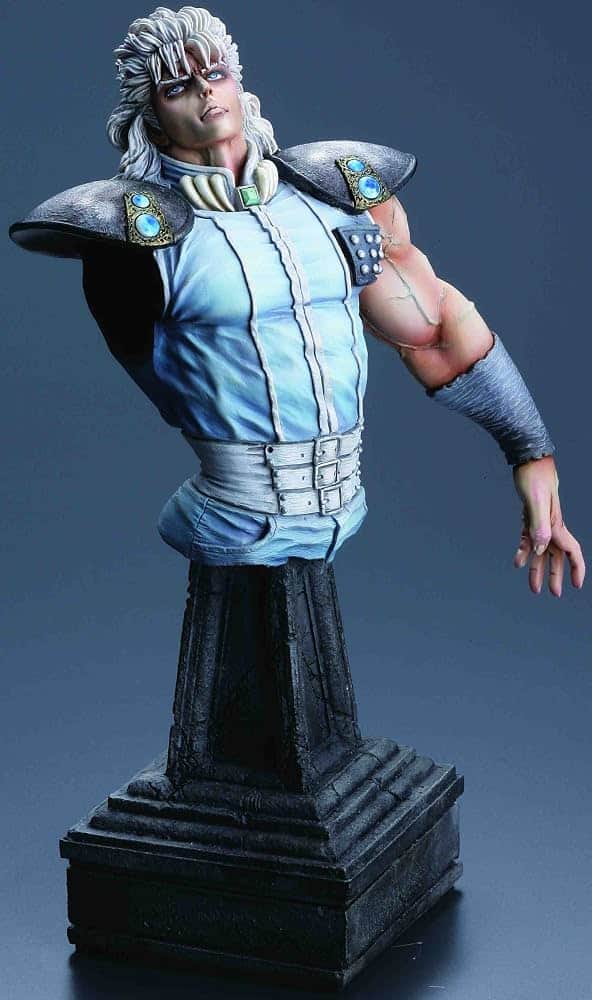
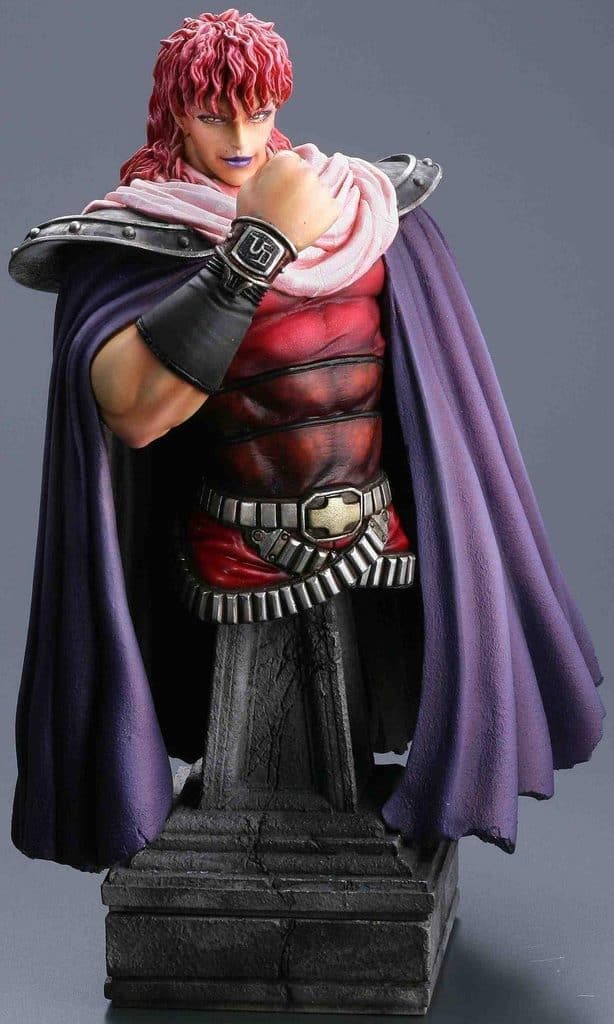
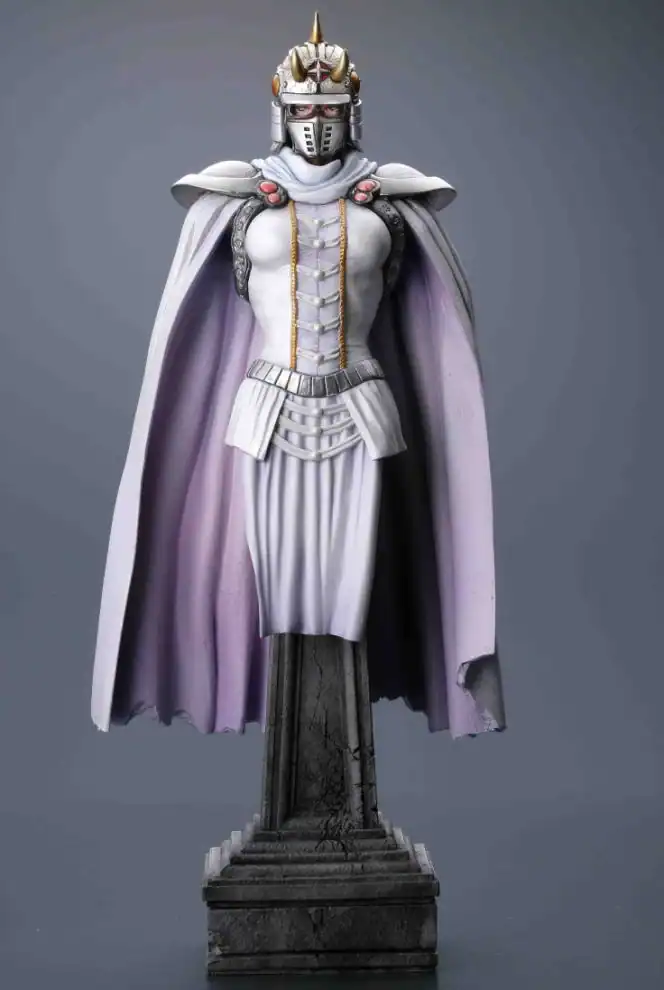
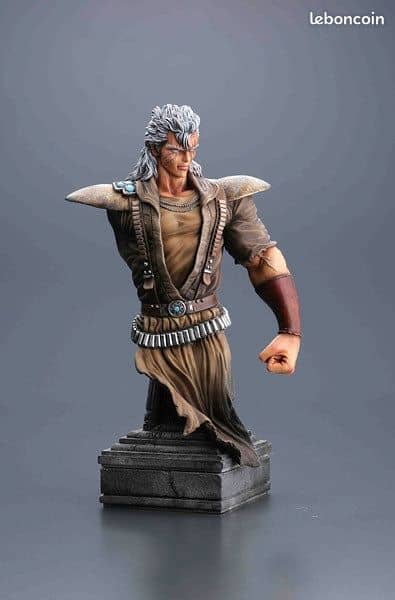
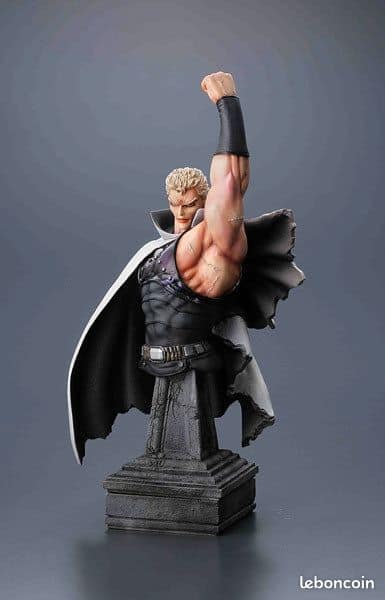

Kenshiro and Raoh at 1/6, under Hara’s eye
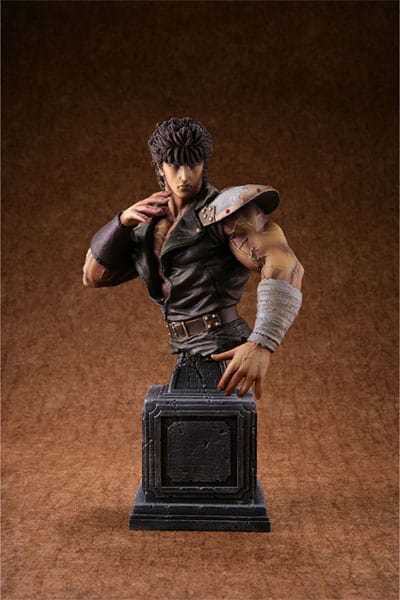
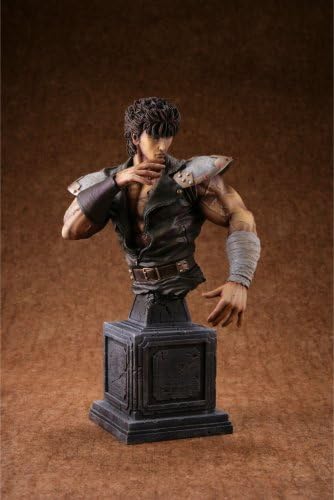
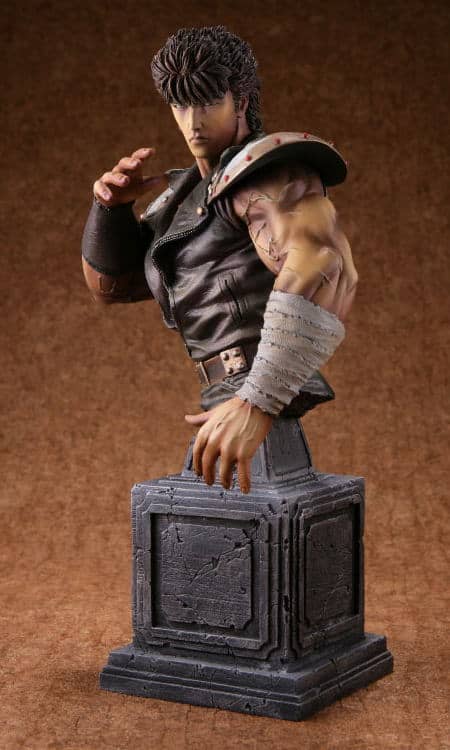
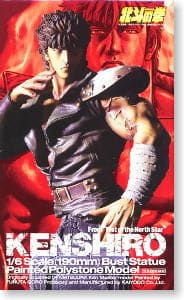
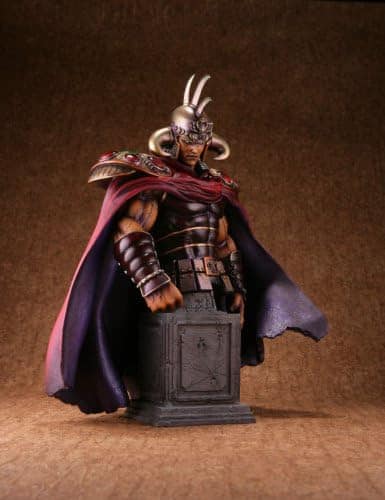
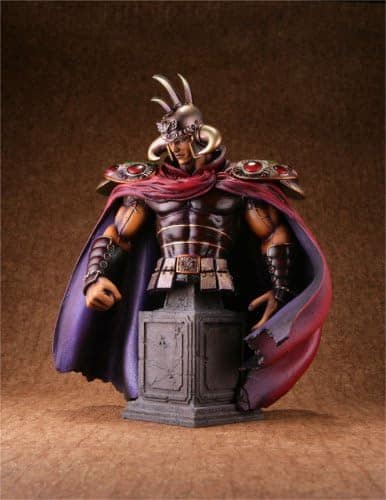
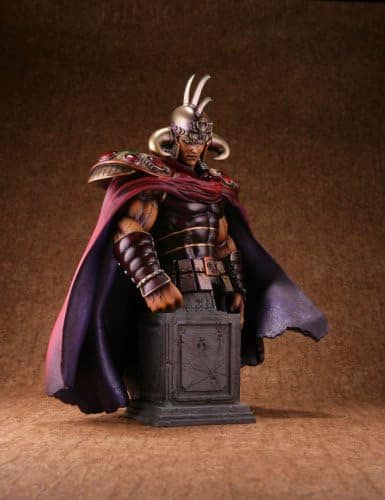
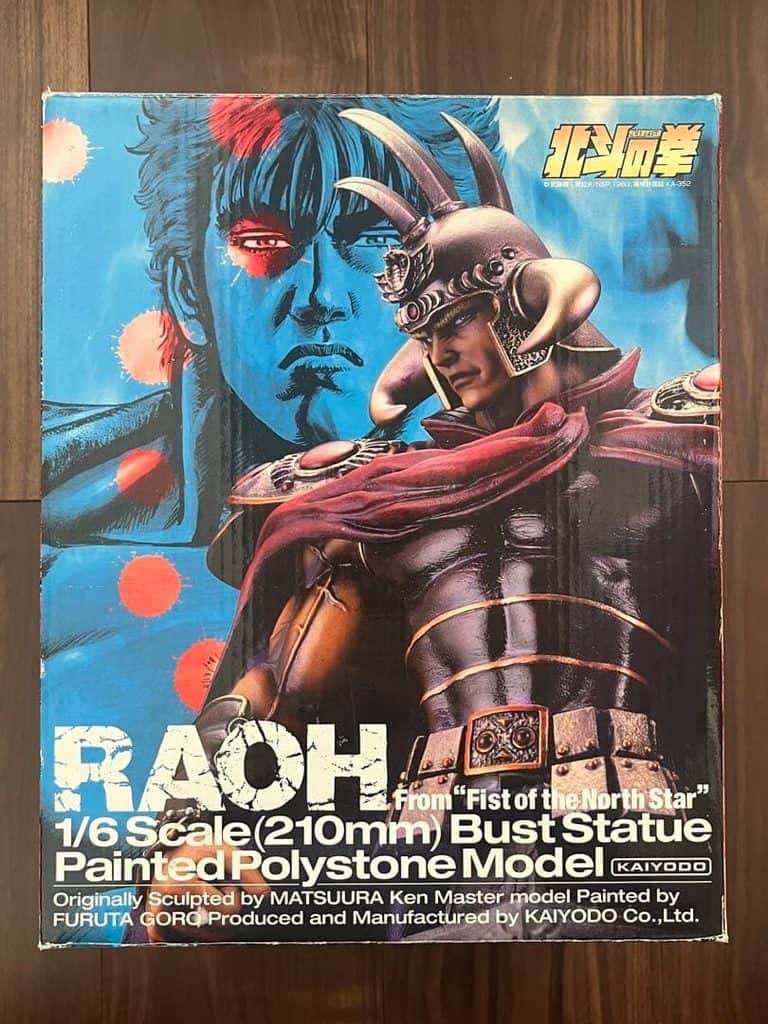
In mid-December 2007, Matsuura creates his largest busts for Kaiyodo: Kenshiro and Raoh at 1/6 scale, roughly 19 and 21 cm, each on its own base. The product description from the time recounts numerous exchanges between the sculptor and Tetsuo Hara to achieve the final result. Three years after the four brothers, the collectible format gives way to the display piece.
Life-size, in bronze
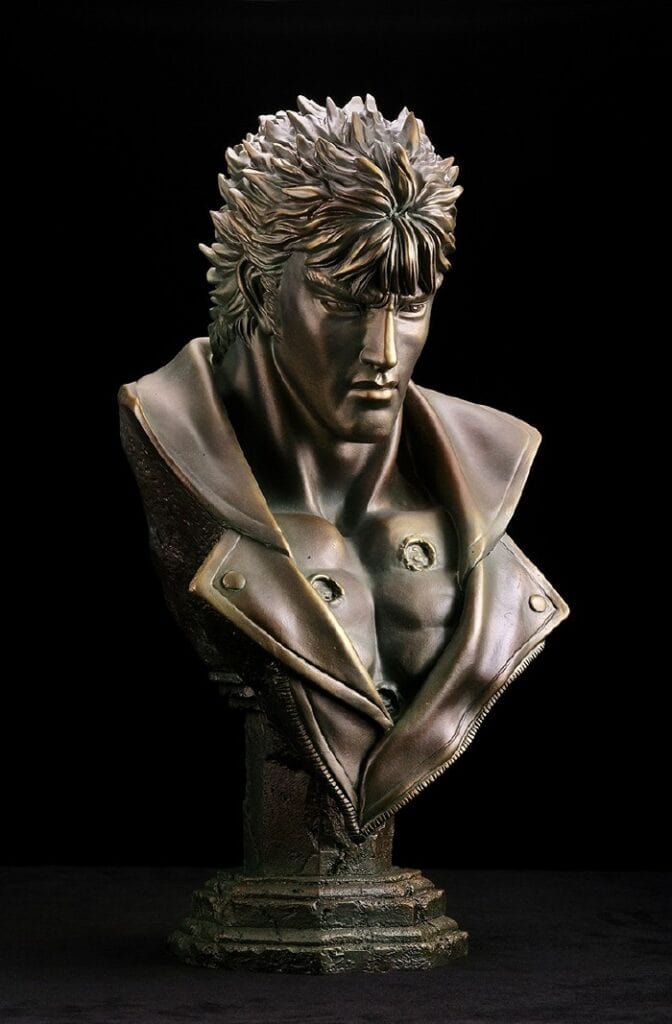
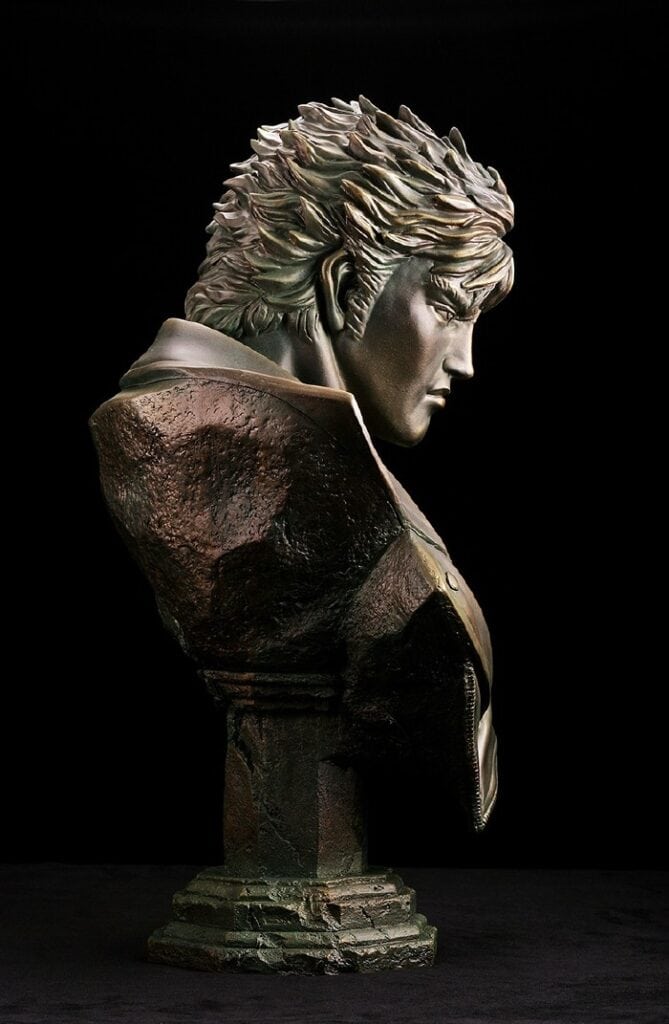
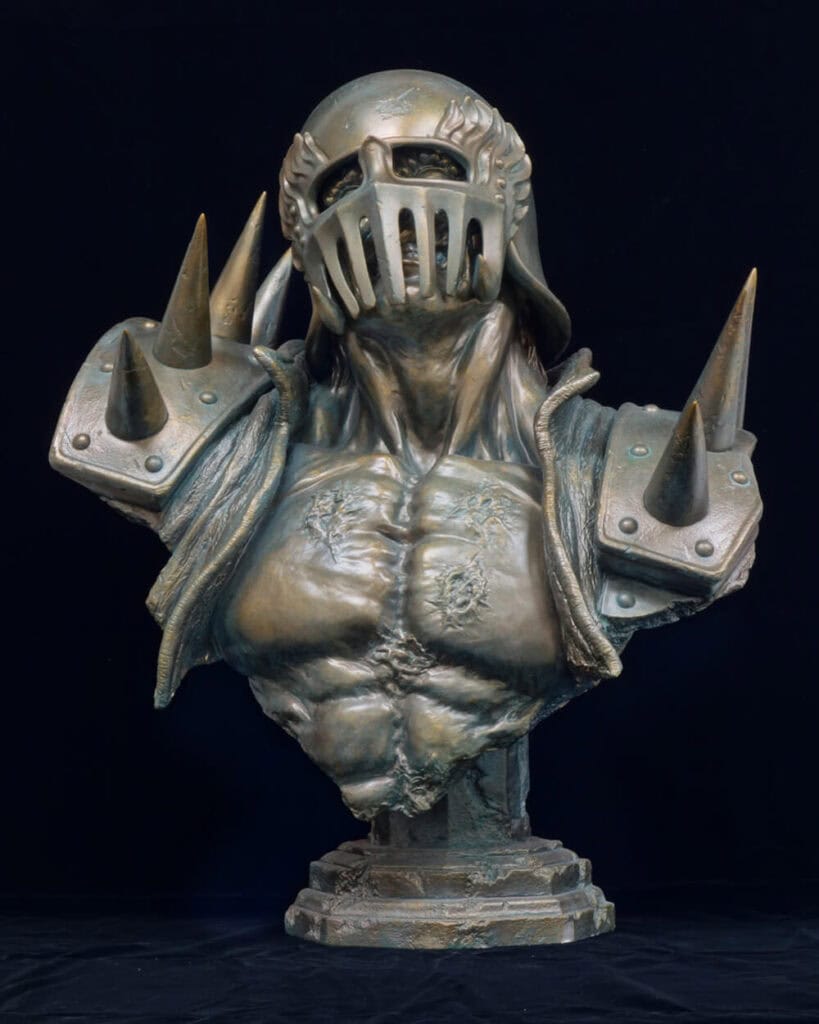
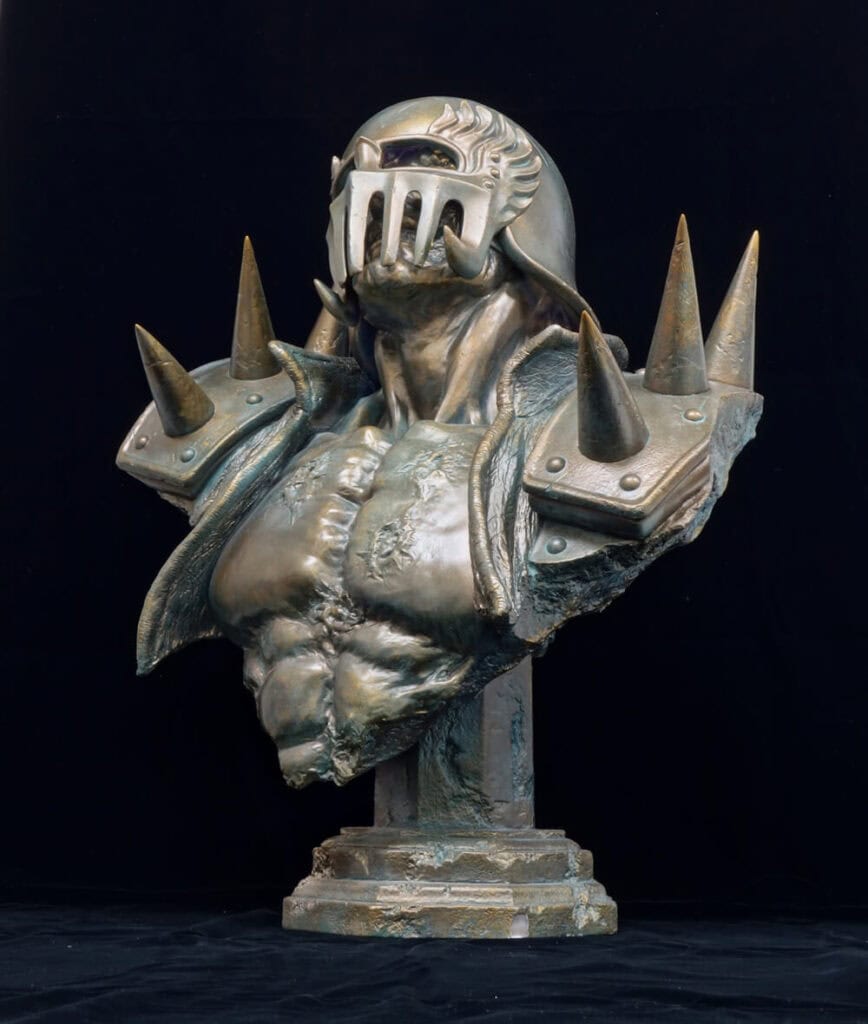
In 2006, Kaiyodo had also produced a 185 cm Kenshiro for the same film, sold to order at 609,000 yen with Hara’s approval. Ten years later, his upper body becomes a bust. In December 2016, the Kenshiro from the Mega Sofubi Advance line stands 70 cm tall, in soft vinyl. In June 2017, Jagi joins him at the same scale, reworked for dramatic effect rather than copied from the manga, his face visible under his helmet.
The sculpting is handled by Esora Keikaku, a small company based in Yamatokōriyama, near Nara, whose usual work leans more toward set pieces than figures. Statues and reliefs, structures for parks and museums, Buddhist statues, aged patinas, giant FRP characters… Partnered with a 3D studio under the name Esora Rois, they also produce realistic human figures up to three metres tall. For Kaiyodo, they sculpted the entire Mega Sofubi Advance Hokuto no Ken line, from the 50 cm figures of 2016 through their 2024 reissues.
The master for the bronze-style paint job, designed for a living room or entryway, is by Shuichi Miyawaki. The founder’s son, he grew up with the model shop his father opened in Moriguchi, near Osaka, in 1964. Everyone in the industry has called him ‘Senmu’ since 1985, the year he became 専務 (managing director) of the company. President of Kaiyodo from 2005 and organizer of Wonder Festival, he guided the company from garage kits all the way to chocolate egg figures.
Back to the collectible format
In December 2020, Kenshiro and Raoh return as busts, this time in resin, by the hand of Masahiko Kagawa. A house sculptor at Kaiyodo, he was the subject as early as 2004 of the first book devoted to one of the company’s sculptors, Kaiyodo Genkeishi Kagawa Masahiko no Sekai, published by Kōdansha, which compiled ten years of work. He was presented there as someone who turned his back on the pretty-girl figures designed to sell, in favour of his own vision of the figure. He is also behind the polystone figures of To-y, based on the manga by Atsushi Kamijō. The two pieces measure 14 and 16 cm and each come in an illustrated metal box. Production is shared between Kaiyodo and Gomora Kick for design, Model Master for manufacturing, and Platz for distribution.
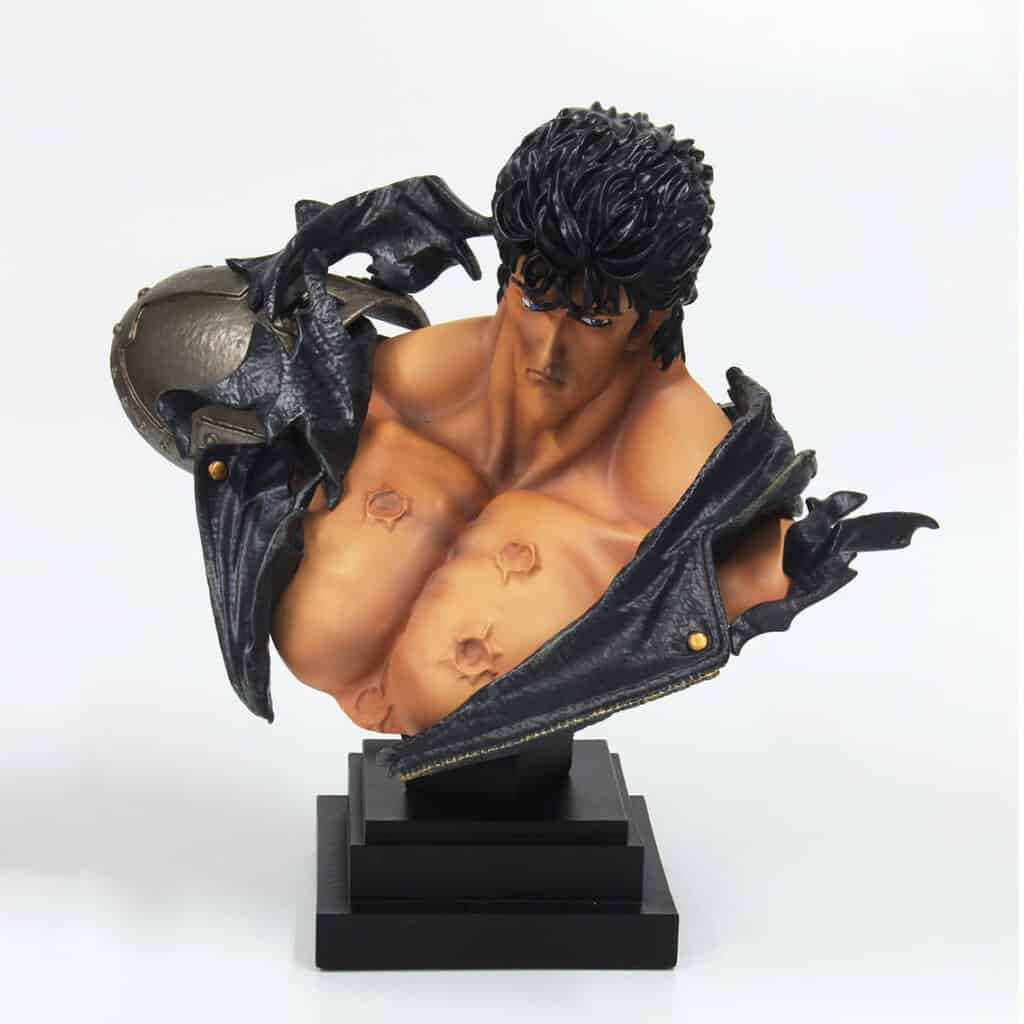
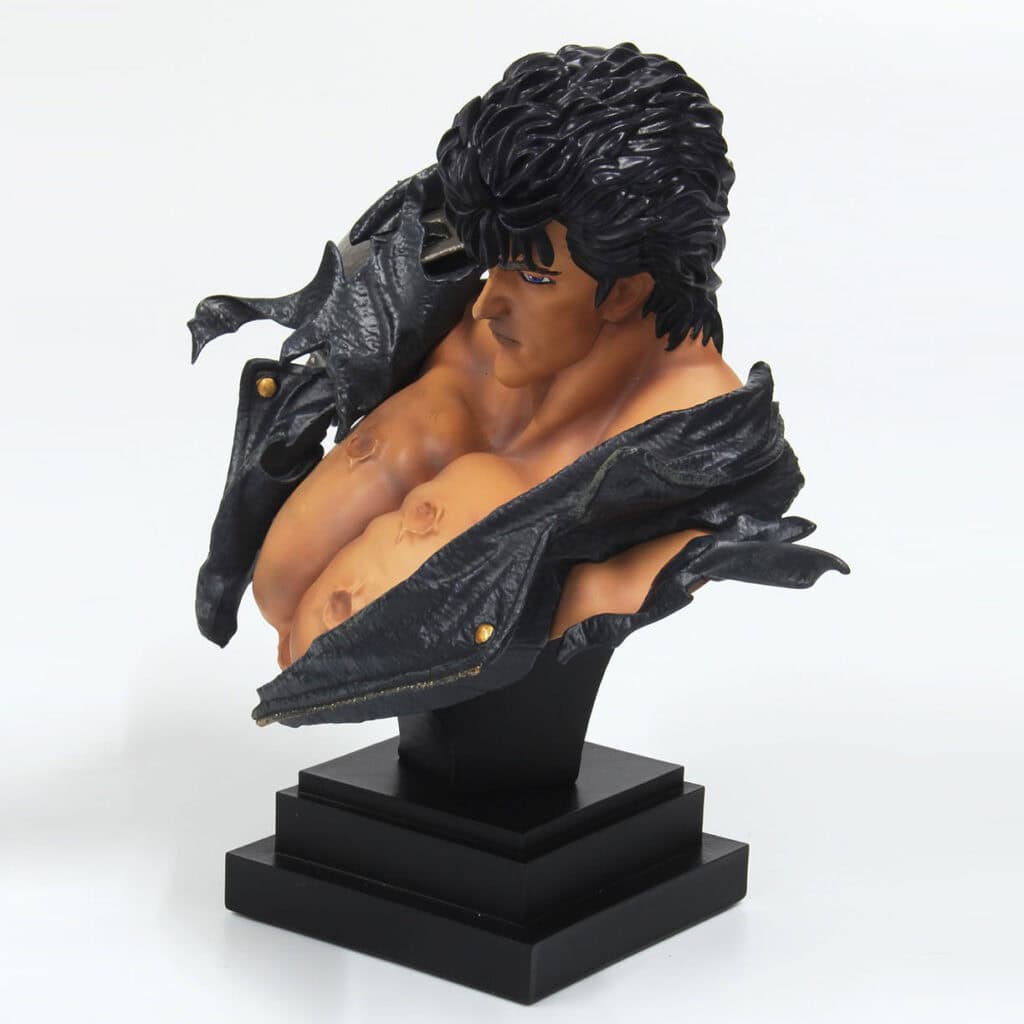

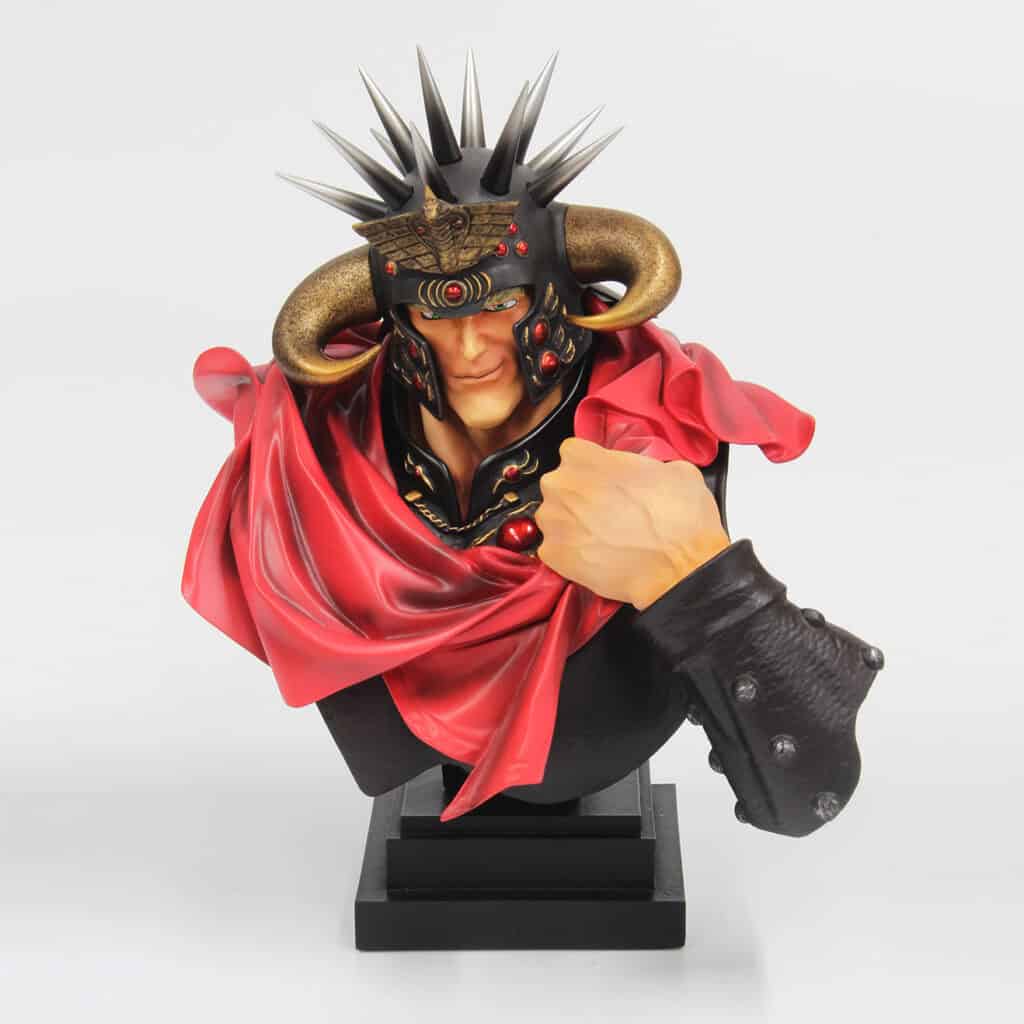
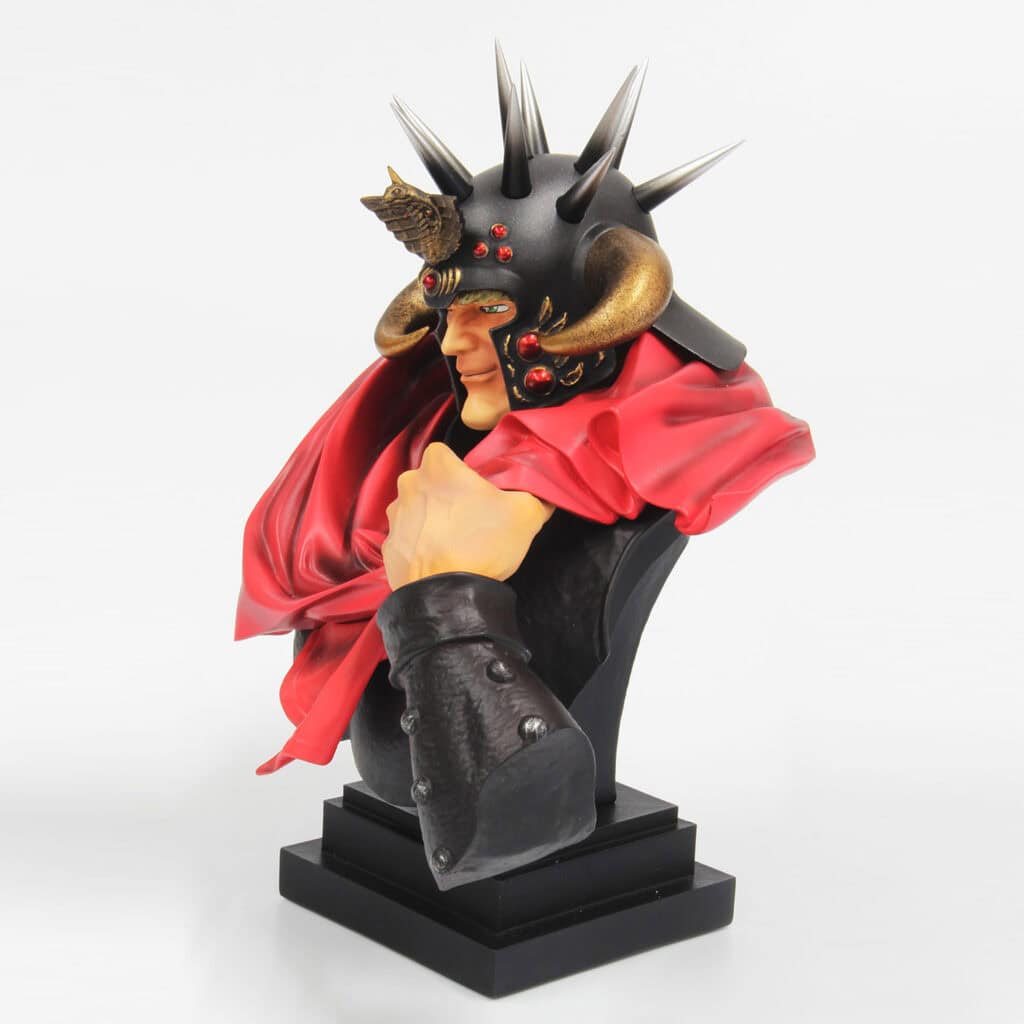

The same faces, from one era to the next
Sixteen years, three sculptors, from a bust given away with coffee to a 70 cm bust. Kaiyodo has never stopped returning to Kenshiro, Raoh and Jagi, changing material and scale each time. You can find each line in detail on its dedicated page, with all the references.