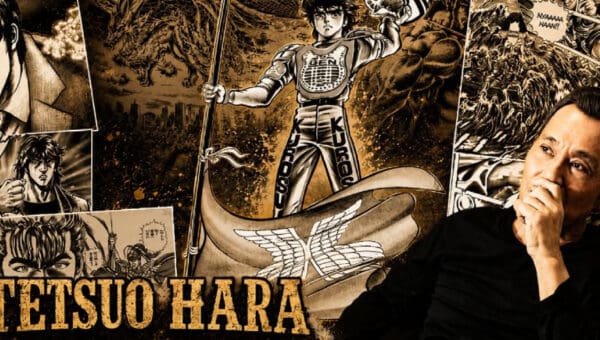


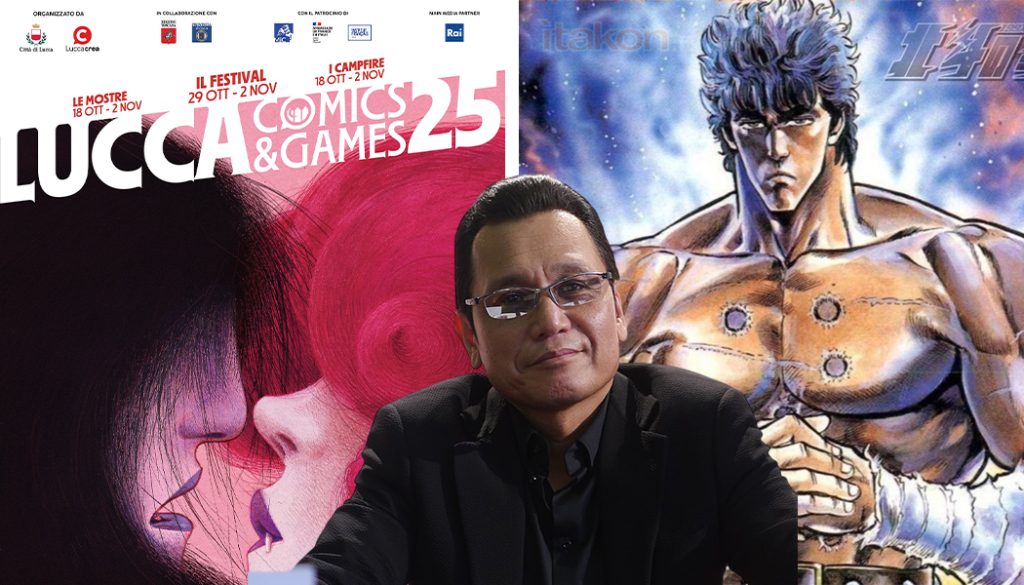
Tetsuo Hara experienced in late October 2025 one of the most important moments of his international career. Guest of honor at Lucca Comics and Games 2025 in Italy, one of the largest pop culture festivals in the world, he most notably became the first mangaka in history to have his self-portrait enter the collection of the Uffizi Gallery in Florence. A historic event that definitively establishes manga as an art form recognized by the most prestigious cultural institutions in the world.
Four days of celebrations in Lucca
From October 30 to November 2, 2025, Tetsuo Hara took part in the 59th edition of Lucca Comics and Games, in the medieval city of Lucca in Tuscany. The festival, which attracts several hundred thousand visitors each year, had placed the creator of Hokuto no Ken as the central guest of honor for this edition.
A former Napoleonic stable served as the setting for a signing session reserved for 318 lucky fans, whose tickets had all sold out well before the event began. Hara also received the Yellow Kid Maestro del Fumetto award, the festival’s highest distinction, recognizing his entire career spanning over 40 years.
On the second day, the San Romano church hosted an exhibition titled Come un fulmine dal cielo (Like a bolt from the sky), showcasing over one hundred original drawings from Hokuto no Ken, Hana no Keiji, and Souten no Ken. It was the first time these original works had left Japan. The exhibition, organized in collaboration with Panini Comics and Coamix, was one of the most visited at the 2025 edition.
A self-portrait entered into the Uffizi collection
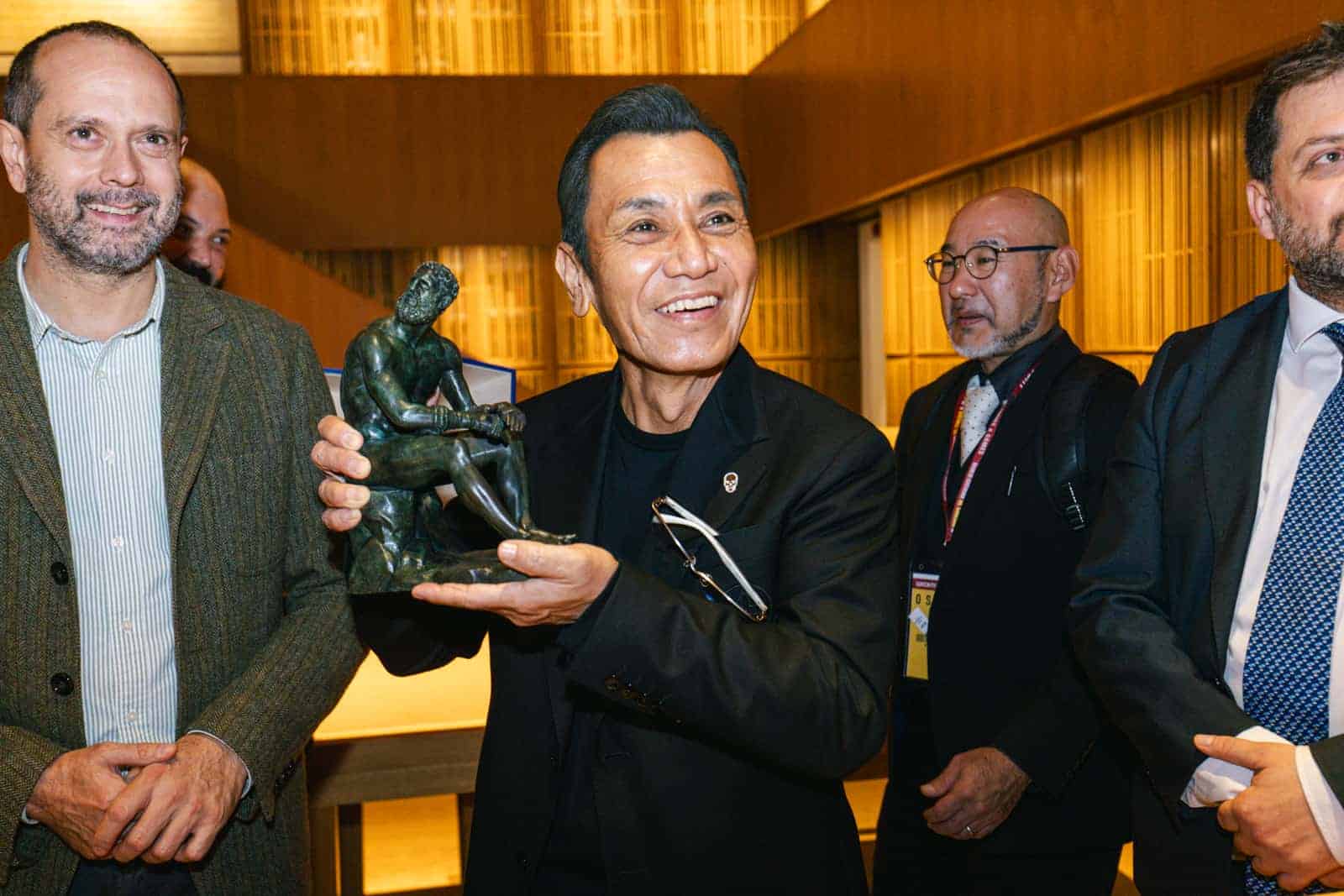
The most historic episode of this visit took place in Florence, where Tetsuo Hara traveled to the Uffizi Gallery accompanied by a delegation from Lucca Comics and Games and the Italian Ministry of Culture. He presented his self-portrait to the Uffizi director, Simone Verde, in the presence of Emanuele Merlino, head of the Technical Secretariat of the Ministry of Culture.
By entering this collection, Tetsuo Hara became the first Japanese comics artist to be part of the Uffizi’s self-portrait collection, the most important in the world with over 2,000 works from artists of all eras and cultures. In exchange for this gift, Hara received a reproduction of the famous sculpture Il pugile a riposo (The Boxer at Rest), offered on behalf of Minister of Culture Alessandro Giuli. The parallel between the anatomical power of sculpted bodies from Antiquity and Hara’s post-apocalyptic warriors was no coincidence.
During his visit to the Uffizi, Hara was particularly struck by the Laocoon by Baccio Bandinelli, which he cited as a direct inspiration for his work on the representation of the human body in Hokuto no Ken. The Uffizi had participated in the Lucca exhibition by lending three 16th-century drawings by Bandinelli, a Florentine sculptor and draftsman renowned for the anatomical power of his bodies, enabling an unprecedented dialogue between classical Renaissance art and contemporary manga.
The exclusive work for Italy
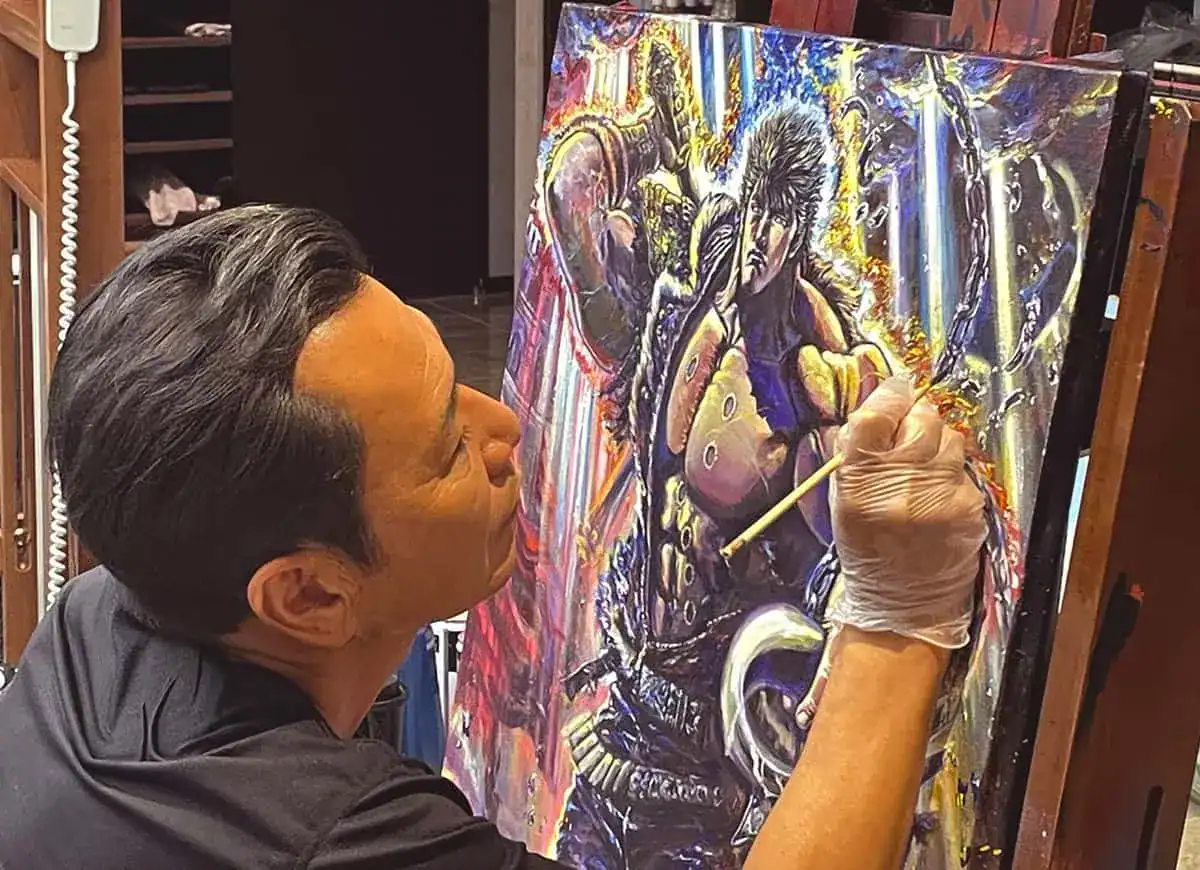
Among the works presented at Lucca, one painting particularly drew attention: Il Salvatore nell’Arena (The Savior in the Arena), an original oil painting created specially by Tetsuo Hara as a tribute to Italy and its artistic culture. The work blends the power of Kenshiro with elements of the great Italian artistic tradition. It also served as the exclusive cover for the first volume of the Italian Extreme Edition of Hokuto no Ken published by Panini Comics.
In his statements at the festival, Hara shared that this work had been conceived in collaboration with a member of his team, Enrico Croce, who submitted the initial idea to him. “I am an artist who has always worked as part of a team,” he specified, “I am grateful to all those who have brought me ideas over the years.”
A symphonic concert and his handprint
To close the festivities, a special event titled The portrait as myth: from Hokuto no Ken to Tetsuo Hara was held at the Teatro del Giglio. The Lucca Symphony Orchestra performed four iconic songs from the Hokuto no Ken anime, including the famous Tough Boy. A rare moment of emotion for an artist who had himself grown up in Japan watching his characters come to life on screen.
To conclude the event, Hara’s handprint was engraved in Lucca, a tradition reserved for major festival personalities for years. Tetsuo Hara thus joins in this Lucca “Walk of Fame” the great figures of world culture who have left their mark on the history of Lucca Comics and Games.
What this means for manga
The entry of Tetsuo Hara’s self-portrait into the Uffizi collection is not merely a personal honor. It is a powerful symbolic gesture that establishes manga as a full-fledged art form, capable of engaging with the greatest cultural institutions in the world. For decades, manga was considered a popular art, far removed from traditional museum circuits. This event marks a turning point.
Italian Minister of Culture Alessandro Giuli, during his visit to the Lucca exhibition, spoke of works that are part of the “sentimental biography of the current generation of Italian adults,” a phrase that perfectly sums up the impact of Hokuto no Ken in Europe.
Sources: MegaNerd.it, Anime Corner, Sky TG24, Coamix (official)