

Details
- Title
- Tetsu no Donquijote (鉄のドンキホーテ)
- Type
- Manga
- Author(s)
- Tetsuo Hara (dessin), Tetsuyuki Akusawa (concept)
- Publisher
- Shueisha, Coamix
- Volumes
- 2 tomes
- Start date
- 29 October 1982
- End date
- 8 January 1983
Gallery
 4View all images
Tetsu no Donquijote
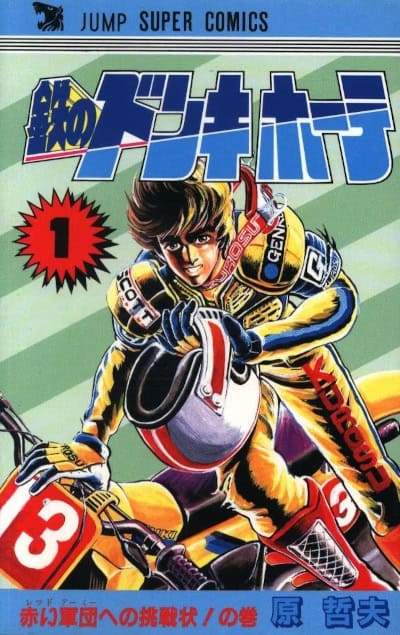
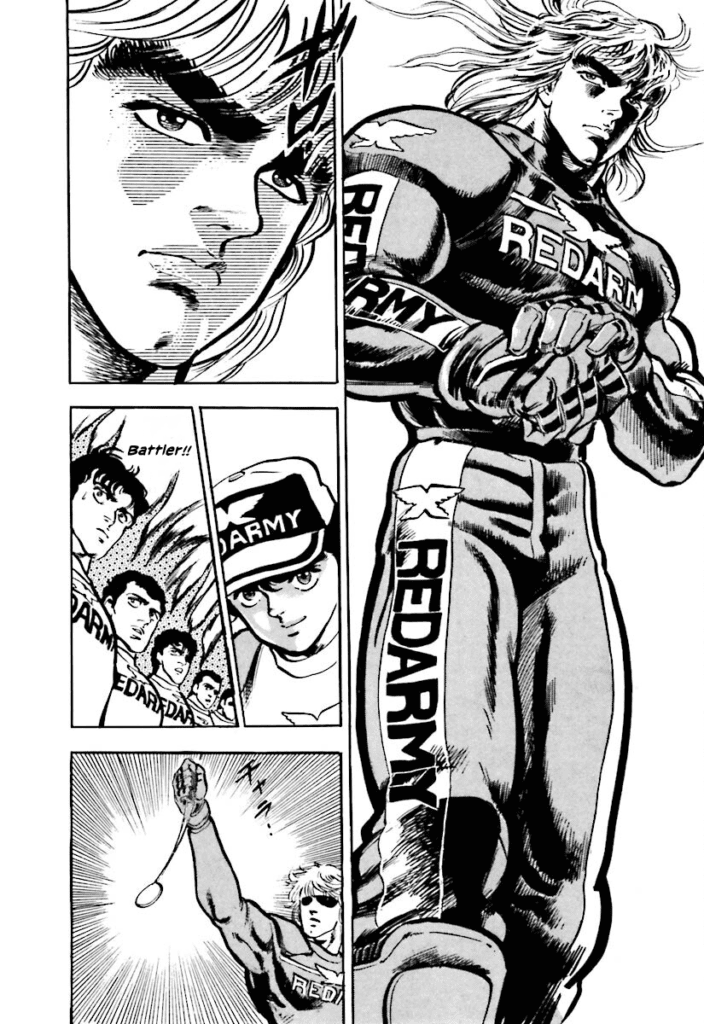
Tetsu no Donquijote (鉄のドンキホーテ) is Tetsuo Hara's first serialized manga, prepublished in Shueisha's Weekly Shonen Jump between late 1982 and early 1983. Centered on motocross, this six-chapter story compiled into two volumes, drawn by Hara based on a concept by Tetsuyuki Akusawa, represents the true debut of the future author of Hokuto no Ken, at a time when he had only just moved beyond his status as an assistant. His art style and storytelling, still in development, make it a precious curiosity for anyone who wants to understand where the master came from.
Synopsis
Motocross is a ruthless sport where riders compete on rough terrain at insane speeds. In the Japanese championship, four major teams dominate the discipline, identified by their colors. The most powerful among them is the Red Army, undefeated with one hundred and fifty annual victories. A lone warrior, Kurosu Gen, contemptuously nicknamed "the Don Quixote idiot" for his persistence deemed futile, stands up against this colossus and issues a head-on challenge.
The early days of Tetsuo Hara
Tetsu no Donquijote holds a special place in Tetsuo Hara's bibliography. It was his first serialized work, obtained on the recommendation of his editor Nobuhiko Horie after a 1982 victory at the Fresh Jump prize, the award that the Weekly Shonen Jump at the time reserved for new authors, with the one-shot Super Challenger. Hara, who had just left Yoshihiro Takahashi's studio where he had been working as an assistant, chose motocross as his subject, an unusual theme for a shonen. The concept is credited to Tetsuyuki Akusawa, already credited on Crash Hero, from which the series reprises the hero and the antagonist team, but Hara stated in 1986 that he had handled most of the story himself.
The public's reception remained lukewarm. The subject matter, considered hard to get into, did not allow the manga to establish itself over the long term. The series was discontinued after six chapters, due to insufficient popularity, and because Horie felt that Hara was capable of telling stories of much greater scope and preferred to start over on a new foundation. This editorial decision, far from being a failure, directly paved the way for the next project, which would become the phenomenal success we all know: Hokuto no Ken. Certain hallmarks of the Hara to come can already be detected in Tetsu no Donquijote, particularly visual elements.
A style in the making
The primary interest of Tetsu no Donquijote lies not so much in its scenario, which is decent without being memorable, as in its documentary value. Hara's linework here is still very far from the mastery he would later display on Hokuto no Ken or Souten no Ken. The storytelling is experimental, and the panel layouts are still finding their footing. For fans of the author, going from this early work to his mature productions is almost shocking, so striking is the gap. That is precisely what makes it such a fascinating read, as it allows one to appreciate the distance traveled and to become acquainted with a Hara still in the process of becoming.
Tetsuo Hara's recollections in the 1996 afterwords
For the 1996 Jump Super Ace reprint edition, Tetsuo Hara included an afterword with each volume in which he looked back on this first serialization, thirteen years later. He recounts that he had just turned 21 and was employing two assistants for the first time, barely a year after having been an assistant himself. The change in status left him at a loss, as did the weekly pace, which made him panic as the end of each week drew near. He also shares an anecdote related to the manga's subject matter: his editor had suggested a motorcycle outing by a river, and Hara rented a small 80 cc bike, hit the throttle full blast, lifted the front wheel, and ended up crashing.
The afterword of the second volume sheds unexpected light on the end of the series. Notified mid-run of the cancellation, Hara recounts that he began seriously thinking about what would entertain readers and pouring his heart into his pages, with a measurable effect, as the title's popularity gradually climbed with each effort. The final chapter even surpassed Dr. Slump, Akira Toriyama's hit then in the midst of serialization, in the reader rankings. Hara dates his awareness of the readership and the beginning of work carried out with pride to that moment.
He also discusses the end of the series, decided due to lack of popularity, and the modest wrap-up celebration that followed: a yakiniku meal with his two assistants and his editor. On the way back, in the nighttime streets of Kōenji, he raised his arms toward the starry sky and swore to one day become a shining star of the manga world, to the amusement of his assistants. It was in the wake of this, he explains, that he planned with his editor the next project: the short story Hokuto no Ken collected at the end of the volume, which would be well received this time.
Éditions
Tetsu no Donquijote was prepublished in Shueisha's Weekly Shonen Jump, from issue 45 of 1982 to issue 3 of 1983, for a total of six chapters. The series was then compiled into two volumes in the Jump Super Comics collection in 1983. This first edition includes as a bonus, in its first volume, the one-shot Mad Fighter as well as the first short story of Hokuto no Ken.
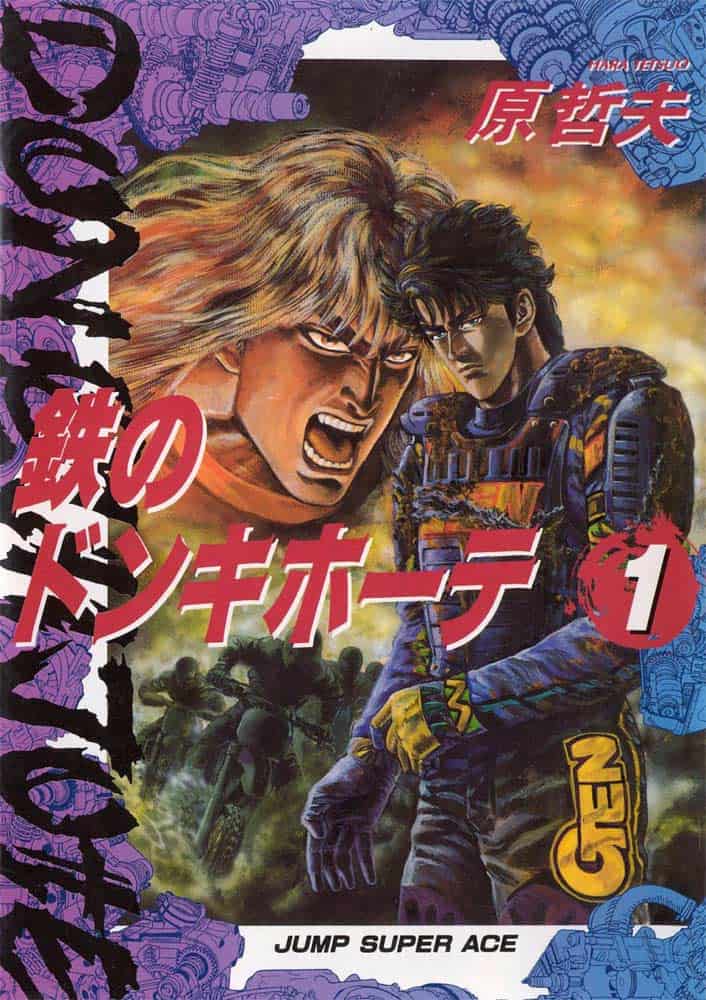
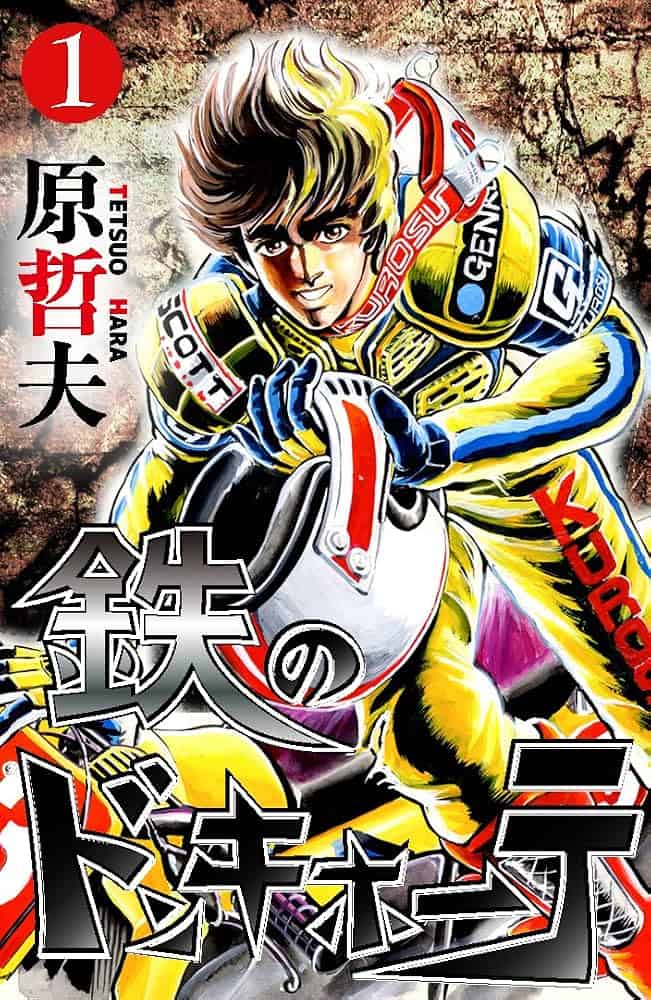
The manga was reissued in 1996 in the Jump Super Ace collection, with new covers drawn by Tetsuo Hara. It is this edition that includes, as a bonus in its second volume, the one-shot Super Challenger. The work is now available in digital format, with its rights managed by Coamix. No French edition has been released.