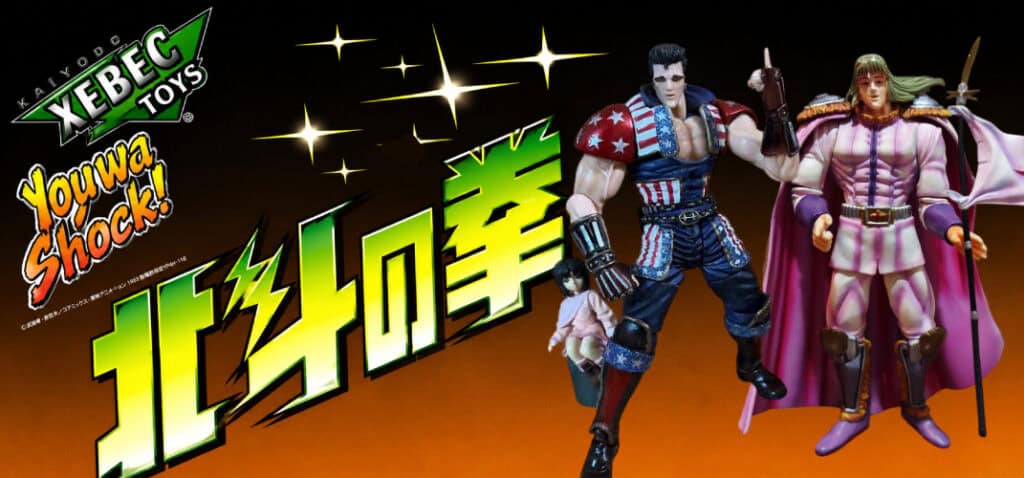
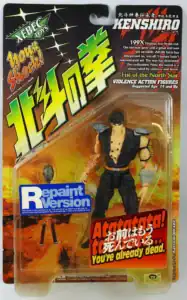
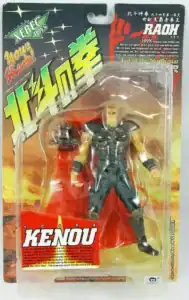
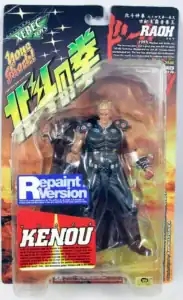
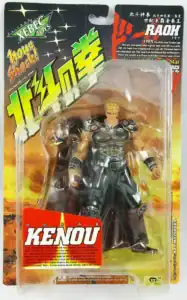
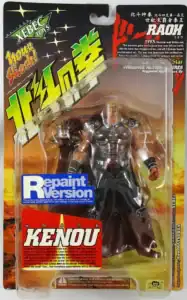
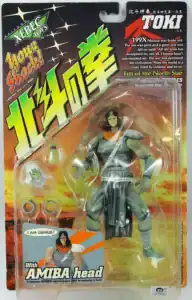
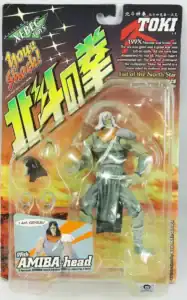
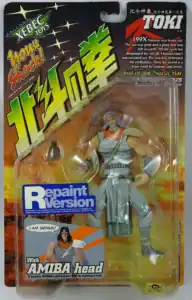
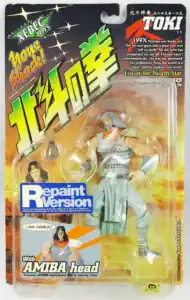
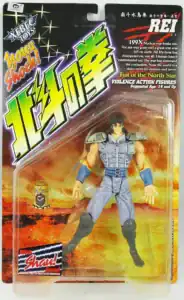
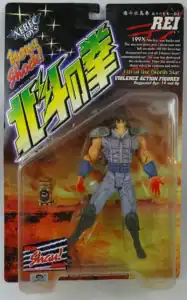
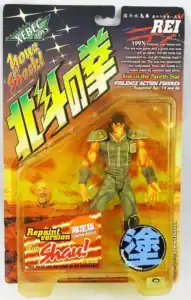
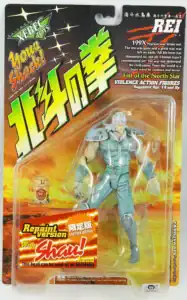
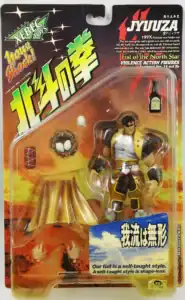
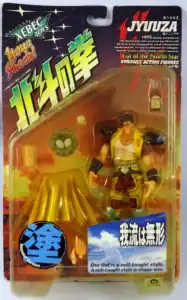
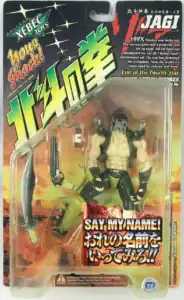
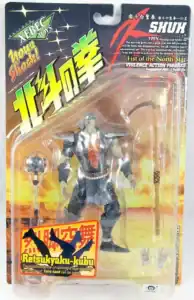
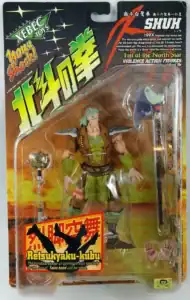
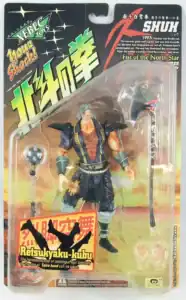
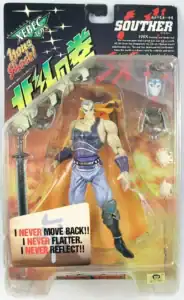
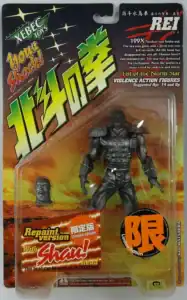
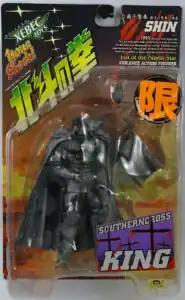
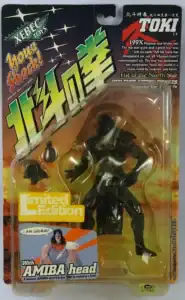
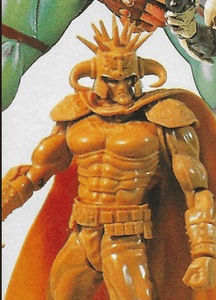
In April 1998, KAIYODO XEBEC TOYS launched the Violence Action Figures (北斗の拳・バイオレンス・アクション・フィギュア), the line that collectors now refer to as 199X. With it, Kaiyodo ushered in what the company itself would call “the era of the true Japanese action figure.” These articulated figures, standing roughly fifteen centimeters tall, covered Hokuto no Ken with unprecedented scope: nearly twenty characters, multiple colorways and accessories that have become iconic. The industrial chain consisted of three links, printed on the back of every box: design and manufacturing by Kaiyodo, publishing by Xebec, distribution by Reds.
Details
ManufacturerKaiyodo / XEBEC
Line199X (Violence Action Figures)
ScaleNon-scale (~15-18 cm)
MaterialsPVC, ABS
Production periodLate 1990s
PriceVaries by edition
A cast of unprecedented scope
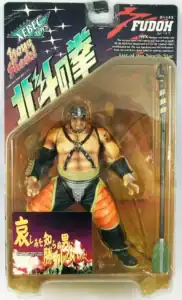
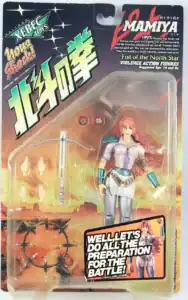
The line debuted in April 1998 with Kenshiro and Rei, sold for 2,200 yen. Jagi and Raoh followed in June, Toki in September, Spade and Shin in October, Shû and Yuda in December, then Mamiya and Kaioh in 1999, Jûza in June and Souther in November of the same year, and finally Fudô in June 2000. The price gradually rose from 2,200 to 3,200 yen depending on the complexity of the parts.
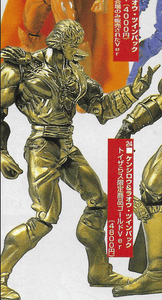
In the summer of 2000, the specialist press published, under Kaiyodo’s supervision, an official inventory of the line as of April 30, 2000: exactly fifty versions, all variants included, with Fudô, then announced as a novelty, closing the list, and the note that nothing else should exist in principle. The same census attests a Kenshiro and Raoh twin pack in an exclusive color, sold for 4,000 yen only at the 1998 Wonder Festival booth.
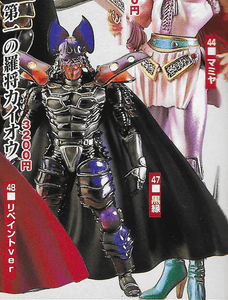
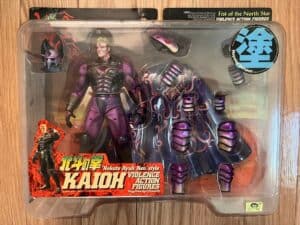
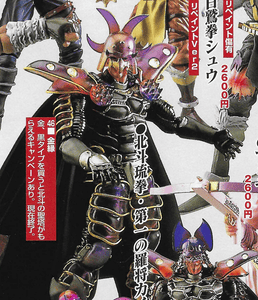
Most references exist in two or three colorways. Certain mid-production corrections distinguish the runs: the arms switched from ABS to PVC in June 1998 on Kenshiro and Rei, the pattern on Raoh’s shoulder pad changed from blue to red in October 1998, and the second Shû from December 1998 lost the leg wound and received a modified scythe. Kaioh comes in three versions, gold trim and black trim at 3,200 yen, a campaign offering the sacred tower of Hokuto to anyone collecting both, then a repaint.
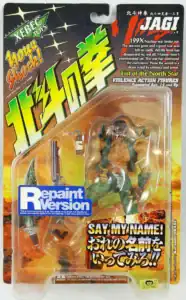
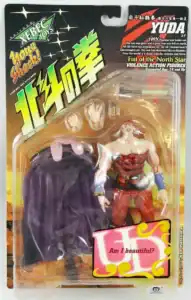
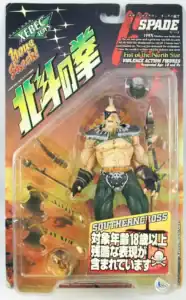
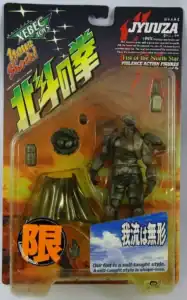
Much of the line’s legendary status comes from its accessories. Toki came with his chains and the Amiba head, Yuda with his lipstick, Spade with a second crushed face, Jagi with his sawed-off shotgun and dynamite, and Juza, the most pampered of all, with his bottle, chicken leg, egg nest and whole ham. The manga’s gore and swagger translated into little pieces of plastic.
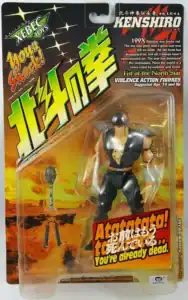
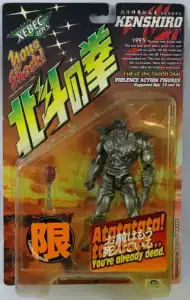
KenshiroDetails
Release
April 1998
Price
2,200 yen
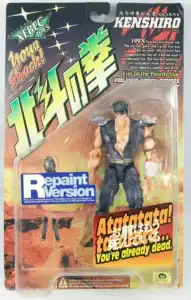
Kenshiro · repaint
Kenshiro · Bloody repaint
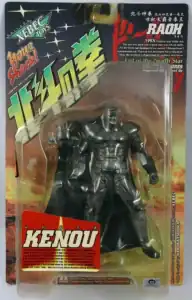
RaohDetails
Release
June 1998
Raoh · repaint
Raoh sparkling
Raoh · bloody repaint
TokiDetails
Release
September 1998
Detail
comes with Amiba’s head
Toki Final battle
Toki repaint
Toki bloody repaint
ReiDetails
Release
April 1998
Price
2,200 yen
Rei bloody repaint
Rei repaint
Rei Final Battle
JuzaDetails
Release
June 1999
Juza repaint
JagiDetails
Release
June 1998
Jagi repaint
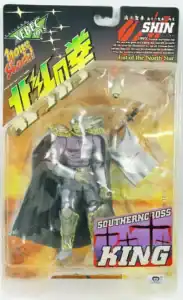
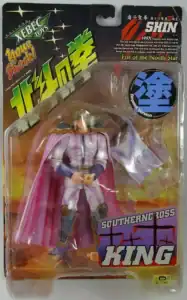
ShinDetails
Release
October 1998
Shin repaint
YudaDetails
Release
December 1998
Detail
comes with his lipstick
ShuDetails
Release
December 1998
Shu repaint
Shu Bloody repaint
SoutherDetails
Release
November 1999
FudoDetails
Release
June 2000
MamiyaDetails
Release
1999
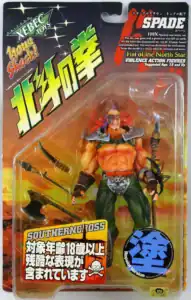
SpadeDetails
Release
October 1998
Spade repaint
KaiohDetails
Release
1999
Detail
gold or black helmet
Kaioh repaint
Kaiyodo’s parallel channels
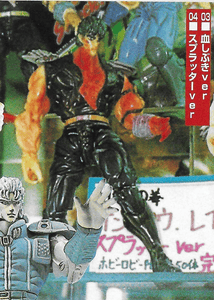
Part of the line never went through regular retail channels. As early as May 1998, the Hobby Robby shops in Osaka and Tokyo received blood-splattered versions of Kenshiro and Rei, along with a Splatter version featuring even heavier paint applications, produced in extremely limited quantities. On May 3, 2000, those same shops sold a Titanium series covering seven characters: Kenshiro, Rei, Raoh, Shin, Shû, Juza and Kaioh, limited to 300 units per store.
Reds, the distributor, ran its own collectors’ club, the Japan Collection Toy Club, whose members alone could purchase the silver pewter finish Raoh from 1998. Other pieces were sold through mail order, such as the 1999 Clear Version box set, priced at 10,000 yen and limited to 2,000 units through Hobby Robby, or through toy retailers: Toys”R”Us Japan received the gold Kenshiro and Raoh twin pack in late 1998, at 4,800 yen, followed by the pewter finish Raoh and Kokuoh in 1999.
Kokuoh, crystal and limited editions
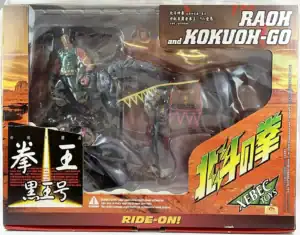
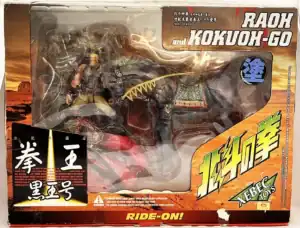
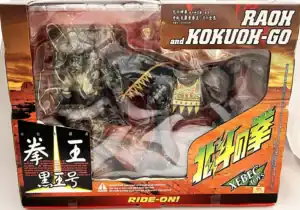
The centerpiece is the Raoh & Kokuoh-Go, the King of Hokuto on his steed, released in December 1998 at 7,800 yen. It returned in a repainted version in June 2000 at the same price, then in a 199X version in November 2004, not counting the pewter finish exclusive to Toys”R”Us.
Raoh & Kokuoh-GoDetails
Release
December 1998
Price
7,800 yen
Raoh & Kokuoh-Go, repaint versionDetails
Release
June 2000
Price
7,800 yen
Raoh & Kokuoh-Go, pewter finishDetails
Edition
Toys”R”Us Japan exclusive, 1999
The line also multiplied special editions: unpainted and Silver versions, a “Pewter Limited Edition” line with a metallic finish available for Kenshiro, Raoh, Juza, Rei and Shin, a Toki “Black Limited Edition,” “sparkling” and “bloody” repaints across several characters, a Deluxe Kenshiro bundled with Ein’s sunglasses and Shachi’s guard, a Kenshiro and Raoh set in bloody paint sold for 9,000 yen with a poster in 2000, and finally the Crystal Box, a box set bringing together Kenshiro, Toki, Rei, Juza and Shu in clear crystal plastic.
Two repaints deserve special mention. The Rei repaint from September 1998 corresponds to his white-haired version, and the April 2000 repaint series, covering Kenshiro, Rei, Spade, Shin, Shû, Juza and Kaioh, is based on Tetsuo Hara’s illustrations rather than the anime color scheme.
Kenshiro, Pewter Limited Edition
Raoh, Pewter Limited Edition
Juza, Pewter Limited Edition
Rei, Pewter Limited Edition
Shin, Pewter Limited Edition
Toki, Black Limited EditionDetails
Detail
with Amiba’s head
2Kenshiro and Raoh twin pack, Wonder Festival 1998Details
The line circulates abundantly on Yahoo Auctions, Mercari and at Suruga-ya, and its popularity has crossed borders: it can also be found at Western vintage toy dealers. Standard figures remain affordable, while limited editions, led by the Silver Kokuoh, fetch top prices. The Hobby Robby Titanium editions, limited to 300 units per store, and the Clear Version box set limited to 2,000 units are among the hardest to track down. Check for the presence of accessories, which are small and numerous and account for a large part of the value. The line had a direct successor in the 200X range, which picked up the torch with a redesigned articulation system.
Sources
Violence Action Figures line boxes and blisters, KAIYODO XEBEC TOYS, 1998-2004.
Figure Oh No.34, World Photo Press, July 2000, pages 20 and 21, fifty-version inventory compiled under Kaiyodo’s supervision.
AI-assisted translation This page was translated from the original French using AI, with human review. Some wording may be imperfect. Read the original French version