

Details
- Title
- Fist of the North Star (北斗の拳)
- Type
- Séries animées
- Author(s)
- Buronson, Tetsuo Hara (œuvre originale)
- Studio
- Toei Doga
- Broadcaster
- Fuji TV
- Start date
- 11 October 1984
- End date
- 18 February 1988
Fist of the North Star (anime)
Hokuto no Ken (北斗の拳) is an animated television series produced by Toei Doga studio and broadcast on Fuji TV from October 11, 1984 to February 18, 1988, every Thursday from 7:00 PM to 7:30 PM. Adapted from the manga by Buronson and Tetsuo Hara, which was then being serialized in Weekly Shonen Jump, it comprises 152 episodes broadcast under two titles: Hokuto no Ken for the first 109, up to March 5, 1987, then Hokuto no Ken 2 for the following 43, starting March 12, 1987. The series direction was handled by Ashida Toyoo, with character design by Suda Masami and music by Aoki Nozomi.
Synopsis
In 199X, a nuclear war has annihilated civilization. In the desolate wastelands that remain, Kenshiro, successor of Hokuto Shinken, wanders through a world ruled by the law of the strongest, accompanied by Bat and Rin. He first tracks down Shin, the man who carved seven scars into his chest and took his fiancee Yuria, before confronting the successors of rival schools as well as his own brothers-in-arms of Hokuto, Jagi, Toki and Raoh. Years later, his journey takes him to the Central Capital and then to the Land of Shura.
An adaptation launched one year after the manga
The series debuted on October 11, 1984, a little over a year after the manga's launch. The first episode was initially supposed to air on October 4, but Fuji TV was broadcasting a decisive baseball championship game that evening, forcing the network to push the program back by one week.
The first series is divided into four parts, announced on screen within the episode titles themselves. The first, with no subtitle, leads to the fight against Shin and ends at episode 22, whose title bears the mention "end of part one." The second opens at episode 23 under the subtitle Fūun Ryūko Hen (風雲龍虎編) and covers the appearance of Rei through to his death at episode 57. The third begins at episode 58 under the subtitle Ransei Hadō Hen (乱世覇道編) and runs from the entrance of Souther to the death of Toki, up to episode 77. The fourth, announced at episode 83 as the final chapter, concludes with the duel against Raoh. Starting from episode 23, the mention Seikimatsu Kyūseishu Densetsu is displayed in the opening credits before the logo, and the series is sometimes referred to by this full title.
Hokuto no Ken 2 picks up the week following the end of the first series and consists of two blocks: the Celestial Emperor arc, for episodes 110 to 122, then the Land of Shura arc through episode 152. The whole adapts chapters 1 to 136 of the manga for the first series and chapters 137 to 210 for the second.
The liberties of the adaptation
Buronson and Tetsuo Hara did not supervise the series. Pixiv Dictionary reports that the two authors sometimes questioned the production when certain schools or techniques invented for the anime strayed too far from the manga's universe.
Fuji TV, as the broadcaster in an early evening time slot, asked Toei Doga to tone down the violent scenes from the manga. Exploding bodies and severed limbs are shown in silhouette, backlit or with inverted imagery, while opponents are drawn at exaggerated sizes to distance the narrative from realism. Some of the harshest lines of dialogue are also cut or replaced. Producer Takami Yoshio, in an interview published in 2002 in the Bessatsu Takarajima issue dedicated to the series, states that no viewer complaints were received. The series does, however, appear in seventh place in the first ranking of programs deemed undesirable, established in 1986 by the Japanese federation of parent-teacher associations.
The adaptation also modifies the narrative. Children killed in the manga survive in the series. Opponents that the manga placed after the fight against Shin, such as GOLAN or Jackal's gang, are tied to the KING organization and encountered on the road to Southern Cross. Some inventions go even further: the series adds weapons that the manga does not feature, such as the Nanto human cannonball in episode 19 or the Nanto railway cannon in episode 20.
The weekly schedule also required giving the manga time to build up a lead. The series therefore resorted to recap episodes assembled from previously aired footage, including five consecutive ones, from episodes 78 to 82, then episodes 105 and 109.
Original episodes
Broadcast barely a year after the manga began, the series had to work with a serialization still in progress and produced its own stories to that end. The first part is the most affected by these additions: the duel against Shin, settled in about ten chapters in the manga, does not occur until episode 22. To cover that distance, the anime invents new enemies and several entire episodes, and gives KING an officer created for the series, Joker, who recurs from the earliest episodes.
Screenwriter Uehara Shozo, who wrote episodes 1, 2, 9 and 10, recounted that he was asked at the time to follow the manga and that he deliberately wrote stories not found in it, before leaving the series due to receiving no response to his proposals.
Starting from the second part, additions become rarer and the series follows the manga's order more closely. Later creations are more occasional: characters unique to the anime, such as Rock in episodes 131 to 133 or Shion in the Wind Brigade, and techniques named on screen that the manga ignores, such as the Gosha Fūretsuken of Huey.
The series in France
The dubbing
The series arrived in France on August 31, 1988 on the Club Dorothée, the show produced by AB Productions for TF1, under the title Ken le Survivant, chosen by AB. According to Philippe Ogouz, dubbing director and French voice of Kenshiro, AB was at the time buying Japanese series in bulk at low cost, without much attention to their content, and had them dubbed at the same pace, "by the kilo" in his own words.
In an interview given in 2001 to the website Mangas 2000, Ogouz recounts the making of this French version. The team, composed of five to six actors, discovered episodes they deemed extremely violent, and he claims to have told the studio director that the actors would stop dubbing if nothing changed. Cuts were made and the team was given complete freedom over the dialogue. Starting from a base script, the actors improvised, challenged each other by working in certain words, and multiplied puns and absurd lines, giving the French version the parodic tone that made its reputation. Ogouz reaffirmed this account in several subsequent interviews, taking responsibility for the artistic direction of this choice.
The broadcast on Club Dorothée was interrupted after episode 84, in September 1990. Episode 35, for its part, never aired on the show and was long thought to have never been dubbed: it was re-dubbed in 2005 by a new team for the DVD release and cable rebroadcast, while the original dubbing appears on later editions. Episodes 85 to 91, dubbed but never broadcast by TF1, made it to air on AB Cartoons, where the series began airing on April 2, 1996. The last eighteen episodes, 92 to 109, which had no French version, were dubbed in 2009 by a new team under the direction of Maurice Latino for the AB Vidéo collector DVD edition, released on August 6, 2009 with the original version. They were broadcast for the first time on November 4, 2009 on the Mangas channel. The series became available for legal streaming on March 29, 2021 on ADN, and Crunchyroll has offered it since October 2025 with official French titles. The second series, never broadcast on French television nor dubbed, joined ADN on June 24, 2021.
The French version was recorded at the SOFI studios, then Soundfactor, based on an adaptation by Jean-Claude Iltis and Jean-Yves Jaudeau, under the direction of Philippe Ogouz, succeeded by Jacques Torrens for episodes 47 to 49 and then by Maurice Latino for episodes 92 to 109. The French opening theme was performed by Bernard Denimal. The original, tight-knit team shared all the roles under Frenchified names (Raoul, Jagger, Sauzer, Shew...):
| Ken | Philippe Ogouz |
|---|---|
| Raoul | Luc Florian |
| Shin, Toki, Jagger | Jean-François Kopf |
| Julia, Mamiya | Sophie Gormezano |
| Rei, Sauzer | Patrick Messe |
| Bart (first voice) | Jackie Berger |
| Lin | Virginie Méry |
| 2009 dubbing, episodes 92 to 109 | |
| Ken | Philippe Valmont |
| Raoul, narration | Antoine Tomé |
| Julia | Magali Rosenzweig |
| Lin | Marie Diot |
| Bart | Gérard Malabat |
| Toki, Rihaku | Cyrille Monge |
The controversy
The violence of the series fueled a controversy in France that contributed to its removal from the schedule. In 1989, member of parliament Ségolène Royal published Le Ras-le-bol des bébés zappeurs, a book devoted to television programs aimed at young audiences, and the series is cited from the foreword onward. Evoking the withdrawal of children's series such as Gros Nounours, Maya l'Abeille or Le Manège enchanté, the author acknowledges the passage of time, "but to give way exclusively to 'Ken le Survivant,' 'Metalder,' 'Capitaine Power,' 'Bioman,' one can, without being old-fashioned, say: 'Enough' and demand at least a mix of genres" (foreword, p. 11). The book devotes several pages to Japanese series and sets out its reasoning:
"The Japanese have proven that the faster the image, the more violent and shocking it is, the more the viewer watches and forgets to change the channel. Advertising is therefore more profitable. Hence these Japanese TV movies and these worthless, aggressive cartoons. No need for a script, a story, or even characters. They just hit each other. Neither good guys nor bad guys, what would be the point? It would cost more to have a story; you would even have to pay a writer... Just a set and noise!"
The book also targets the business model of AB Productions. To earn more, writes the author, the idea is to "buy at the lowest price from Japanese wholesalers" enough to fill the schedule and to "churn out miles of film pouring out fear, blood and tears," interspersed with advertising and skits (p. 48). It is the same system described by Philippe Ogouz, this time seen from inside the studios. An entire chapter, titled "TF1, AB Productions et Dorothée : quand les enfants servent d'appâts," is devoted to it. The series is cited among the channel's daily programs, alongside Chevaliers du Zodiaque, Dragon Ball and Bioman.
The book in turn provoked strong reactions. The author herself reports that her book was thrown in the trash on live television, one Sunday morning, even before it had been printed. She attributes the act to Dorothée. The footage exists, but it is Ariane who throws the book, in a sketch from episode 71 of Pas de pitié pour les croissants. The series thus became one of the symbols of the French debate on violence in Japanese cartoons, and the end of its broadcast after episode 84 took place within this context of complaints and pressure on TF1. Years later, Bernard Minet would present Ségolène Royal as directly responsible for the cancellation of Club Dorothée, which occurred in 1997.
One point of view was long missing from this controversy: that of the creators. Tetsuo Hara only learned the full extent of the French affair in 2013, when he was a guest of honor at Japan Expo. Interviewed by Le Monde, he pointed out that the series had never been intended for the audience to whom French television had presented it. The target readership consisted, he said, of "young adults and mature teenagers, certainly not middle schoolers." The misunderstanding was therefore not about the work itself, but about the time slot in which it had been scheduled. In the same interview, the artist explained that the project was born from his admiration for Bruce Lee, whose memory he wanted to keep alive through drawing.
The music
The original soundtrack is composed by Aoki Nozomi. The opening and ending themes change across the different blocks. Episodes 1 to 82 open with "Ai wo Torimodose!!", performed by Crystal King, and close with "Yuria… Eien ni", by the same group. Starting from episode 83, the opening switches to "SILENT SURVIVOR" and the ending to "DRY YOUR TEARS", both performed by KODOMO BAND on a composition by Ujiki Tsuyoshi. Hokuto no Ken 2 adopts "TOUGH BOY" as its opening and "LOVE SONG" as its ending, performed by TOM★CAT.
Two insert songs accompany the first series: "Kareta Daichi", performed by Kamiya Akira, and "Ai wa Kokoro", by Yamamoto Yuriko, with lyrics by Miura Yoshiko and music by Aoki Nozomi. The second series features two more, "WIND & RAIN" and "KILL THE FIGHT", performed by Shimon Masato. The final episode of the series reprises all the opening and ending themes as insert songs, while the ending credits play "Yuria… Eien ni" in its full-length version.
Episode Guide
The series consists of 152 episodes in continuous numbering: 109 under the title Hokuto no Ken and 43 under the title Hokuto no Ken 2, broadcast from October 11, 1984 to February 18, 1988. The French titles are those from Crunchyroll, which offers the complete series.
Part Oneepisodes 1 to 22
- Dieu ou Démon ? L'homme surpuissant surgit des enfers
- Le Terrible Zankai Ken ! J'ai vu le futur dans ces plaines arides !
- Les Poings du solitaire brûlent dans la ville sans lumière ! Le Goshi Retsu Dan
- Détruis la Bloody Cross ! Botte secrète : le Jûha Zan
- La Flamme de l'amour brûlera-t-elle en enfer ? Tu es déjà mort !
- L'Avis de recherche du démon. Tous à la recherche de l'homme aux sept cicatrices !
- Gredins ! Lancerez-vous le compte à rebours de votre mort ?
- Frappe les points vitaux ! Pas de requiem pour les crapules
- Crapules ! Faites vos prières avant de mourir !
- Le coup du retour de flamme ! Trop de personnes méritent de mourir !
- Gredins ! Écoutez le Blues de l'enfer !
- Je suis le faucheur. Je vous poursuivrai jusqu'au fin fond de l'enfer !
- Le Coup du Diable ! Une fois en marche, on ne l'arrête plus !
- Quelle Époque tragique ! Plus on est bon, plus on meurt jeune !
- Compte jusqu'à trois ! C'est toi qui vas mourir !
- Crapules ! Chantez la comptine du chemin vers l'enfer !
- Bats-toi si tu es un homme ! La grande bataille commence enfin !
- Vivre ou mourir ? Le bout du désert est le premier cercle de l'enfer !
- Crapules, préparez votre billet ! Aller simple pour l'enfer !
- Grande Bataille cauchemardesque ! Mes poings font un million de volts !
- Le Palais maléfique flambe ! Shin, je t'ai presque rattrapé !
- Fin du premier chapitre : Yuria à jamais… Toi aussi, Shin !
Part Two, Fūun Ryūko Hen (風雲龍虎編)episodes 23 to 57
- 2e chapitre : la saga du tigre et du dragon ! N'y a-t-il donc que le combat qui m'attende ?
- Le Nanto Suichô Ken ! La Tragédie des hommes surpuissants a commencé !
- Misérables Criminels ! Ils se font appeler le clan Kiba !
- Tremblez dans votre sommeil ! Brigands de la vallée brumeuse !
- Seules les crapules s'esclaffent ! Je déteste cette époque !
- Rei ! Je vengerai tes larmes avec mes poings !
- Il est trop tard pour demander grâce ! Va en enfer, roi Kiba !
- Le Destin se tapit dans l'ombre ! Jagi, qui es-tu donc ?
- Le Masque de fer de l'enfer ! Barbare, tu te prétends du Hokuto !
- Les Rafales des quatre poings de la colère ! Jagi, attends-moi en enfer !
- Voici Le Village des miracles ! L'ange déchu est descendu sur terre !
- Toki ! Es-tu un ange ou un démon ?
- Tu n'es qu'un monstre ! Toki, ton cœur est rongé par le mal !
- Le Passé est le passé ! Honni soit le mal. Je tuerai Toki !
- Il me faut renoncer à l'amour ! Je porte le fardeau de l'étoile maudite !
- Le Ranzan Kurenai Ken ! Cette époque a engendré une bien triste femme !
- La Légende sanglante ! Les portes de Cassandra vont enfin s'ouvrir !
- Pas de pierre tombale pour les crapules ! Ici, c'est Cassandra, la prison de l'enfer !
- 2 000 ans de tragédie du Hokuto ! J'entends les pas de Ken-Oh !
- Une Fin de siècle sans lendemain ! Ken, je t'attendais !
- Cassandra s'effondre ! La légende du Hokuto renaît !
- L'Étoile de la mort brille ! Ken-Oh, commanderais-tu même la mort ?
- Vous, qui craignez la mort ! Écoutez le cri ardent du cœur de Lynn !
- Une Voix surgie de l'enfer ! Rei, as-tu vu l'étoile de la mort ?
- La Danse de la mort du Nanto Suichô Ken ! Au nom de l'amour, j'offre ma vie !
- Au Summum de l'art ! Le destin des frères du Hokuto est au-delà de la haine !
- Le Combat le plus terrible de tous les temps : Raoh contre Ken ! C'est toi qui vas mourir !
- Plus que 72 heures à vivre ! L'étoile de la mort attire Rei à elle !
- Un Destin sans lendemain ! Pourtant, cette femme croit en l'amour !
- Yuda, le poing sacré du Nanto ! Nul n'est aussi beau que moi !
- L'Étoile de la mort approche ! Rei ! Le temps s'écoule impitoyablement !
- Mamiya, mon amour ! Dans l'éclat de tes pupilles se cache l'étoile de la mort !
- Rei, cours-tu à la mort ? Dieu, que cet homme est beau !
- Deux Sublimes Guerriers : Rei contre Yuda ! Point de larmes quand un homme meurt en brave !
- Fin du 2e chapitre : adieu, Rei ! La légende de ce héros traversera les âges.
Part Three, Ransei Hadō Hen (乱世覇道編)episodes 58 to 77
- Début de la 3e partie : le règne de l'autorité suprême est troublé ! Alors que le Nanto s'éclipse, le Hokuto reparaît
- L'étoile des ténèbres dévore les cieux ! Le temps s'écoule au-delà du duel à mort !
- Shuh du Nanto Hakuro Ken ! De quoi seras-tu témoin à la fin du siècle ?
- L'amour sur le champ de bataille ! Le temps doit-il mettre l'amour en pièce ?
- Je suis Souther, l'Empereur sacré ! Rejetez l'amour et la compassion !
- Un jeune héros défie son destin ! Les hurlements de ton âme feront mouvoir les cieux !
- Shuh contre Souther, un combat sanglant ! L'amour est noyé dans les larmes de l'étoile de la bienveillance !
- Le mausolée de l'Empereur sacré ! Shuh ! Je recevrai tes larmes dans mon cœur !
- Vite, Kenshirô ! Un autre camarade est sur le point de mourir !!
- Ken contre Souther, le duel des étoiles polaires ! Mon étoile est la seule protectrice des cieux !
- Souther, l'Empereur sacré abattu ! Tu es fatigué par l'amour !!
- Période cruciale pour le Hokuto ! Trois frères de destinée sont en route !!
- L'autre disciple du Hokuto No Ken ! Mène Raoh à son extinction !
- Le secret des origines révélé ! Les cieux préfèrent les tragédies !!
- Adieu, Toki ! Un homme ne pleure qu'une fois !!
- Ryuga de Sirius ! J'empoignerai l'arc-en-ciel en pleine tempête !!
- Un loup court à l'horizon ! C'est là que s'éteignent l'amour et la haine !
- Pardonne-moi, ma sœur ! Je suis destiné à affronter le Hokuto !!
- Un poing d'acier pour le loup qui hurle ! Toki est en danger !!
- Fin de la 3e partie : Que le nouvel âge s'éveille ! Le hurlement du loup fait mouvoir les cieux !
Part Four, Final Chapterepisodes 78 to 109
- Shin du Nanto Kôhaku Ken ! Il a risqué sa vie pour un amour qui n'adviendra pas !!
- Rei du Nanto Suichô Ken ! Un homme qui est mort pour ses amis !!
- Yuda du Nanto Kōkakuken ! Son sourire ravageur annonce une tragédie !!
- Shuh du Nanto Hakuro Ken ! Les cieux n'offrent que des destinées cruelles !
- Souther, l'Empereur sacré ! Tu laisses ta passion dévorante te consumer !
- Conclusion de la partie quatre : Raoh doit mourir ! La légende sème la terreur !
- Le Nanto revient ! La Brigade des Vents protège le dernier général du Nanto !
- Prélude à un combat à mort ! Les hurlements de Hyui des Vents résonnent dans les cieux !
- Les Flammes ! Shuren est noyé dans des larmes de feu !
- Les cinq étoiles de la Petite Ourse sont en danger ! Raoh a transpercé les flammes !
- Les cinq étoiles de la Petite Ourse approchent de Kenshirô ! Qui es-tu, Fudo ?
- La crise approche ! Le destin attend à la capitale du Nanto !
- Je suis Juza des nuages ! Je me déplace au gré du temps !
- Les nuages restent ! L'identité du général masqué est enfin révélée !
- Juza des nuages ressuscite ! Je ne crains pas Raoh !
- Juza contre Raoh ! La Légende de l'invincible !
- Un grand danger menace Fudo. Ken ! Un homme n'abandonne jamais ses amis !
- Des sables mouvants impitoyables ! La main du salut atteindra-t-elle Fudo ?
- Juza chute ! Je protégerai la femme que j'aime au péril de ma vie !
- Adieu Yuria ! Un héros emporte le secret de son amour dans la tombe !
- La capitale du Nanto tremble ! Les deux frères du Hokuto arrivent !
- La tristesse de la Petite Ourse ! L'amour et le destin planent sur cette femme !
- Mussô Tensei, la technique ultime du Hokuto ! Raoh, je t'ai enfin à ma merci !
- Est-ce la fin des ambitions de Raoh ? Le ciel hésite encore !
- Le supplice du géant Raoh ! Je ne crois pas en l'amour !
- Le Défi du diable ! Fudoh, change-toi en démon pour ceux que tu aimes !
- Fudo, le héros bienveillant ! Ses larmes réveillent un cœur ardent !
- Protégez L'Étoile de l'amour maternel du Nanto ! Même si les cinq Chariots doivent tous périr !
- Raoh est en plein cauchemar ! Yuria, il n'y a plus que toi !
- Ultime Combat au temple de formation du Hokuto ! Plus personne ne les arrêtera !
- Adieu, Frères du Hokuto ! Vous êtes allés au bout de l'amour et de la tristesse !
- Fin du dernier chapitre ! Oyez, oyez ! 2 000 ans d'histoire du Hokuto !
Hokuto no Ken 2, the Celestial Emperor Arcepisodes 110 to 122
- Le temps passe. Une ère nouvelle commence !
- Quand va-t-il se réveiller ?
- Le sauveur vient du nord !
- Eïn, le mystérieux mercenaire ! J'aurai la peau de Kenshirô !
- Un autre art de l'assassinat ! Le Gento Kô Ken !
- L'empereur est fou de rage ! Falco, extermine le Hokuto !
- La colère du Nanto ! Les illustres frères Harn !
- Eïn est en danger ! Le diable a mis la main sur sa bien-aimée !
- Falco, le général du Gento ! L'ombre de Raoh…
- Les sanglots de l'empereur trahi résonnent dans la cité impériale ! Falco, où es-tu ?
- L'impératrice céleste apparaît enfin !
- L'élégie d'Eïn ! Plutôt mourir avec courage que vivre sans honneur !
- La capitale s'effondre ! Jakô le démon, va en enfer !
Hokuto no Ken 2, the Land of Shura Arcepisodes 123 to 152
- À l'épreuve de la mort ! Kenshirô traverse la mer !
- Que réservent les ténèbres ? Le légendaire pays de Shura !
- Le bien ou le mal ? Le secret du Hokuto Ryû Ken !
- Elle ose parler de l'amour à la fin du siècle ! Son nom est Leïa !
- Le Général suprême Han ! L'homme qui teint la neige en rouge !
- La légende du sauveur se propage ! Son nom est Raoh !
- Le terrible secret de Kenshirô ! Le pays de Shura est sa terre natale !
- Terrible nouvelle ! Kenshirô, tu ne peux pas être le sauveur !
- Rock, le cavalier sans peur ! Je ne crois pas en Kenshirô !
- Ils ne veulent rien savoir ! Les sept cavaliers attaquent Kenshirô !
- La mort de Rock ! Kenshirô, ils sont morts pour toi !
- Le créateur du nouveau monde ! Mon nom est Kaioh le Dieu-démon !
- Le sceau du démon ! Le Hokuto Sôke, 2 000 ans de tragédies !
- Ton frère, Ken, est en danger ! Hyoh, tu es bon, alors ouvre ton cœur !
- Kenshirô condamné à mort ! Le ciel envoie le dieu de la mer !
- Victoire éphémère pour Kaioh ! L'esprit du Hokuto lui fait face !
- Les destins se croisent : Hyoh rencontre Ken ! Il ne reconnaît pas son petit frère !
- Le choix de Kaioh le démon ! Un sang glacial parcourt tout mon corps !
- Le défi de Kenshirô ! Cette fois-ci, tu ne me battras pas !
- Hyoh le tyran et son triste second ! Qui pourra donc l'arrêter ?
- Le duel des frères ! Les larmes ne reviendront plus dans les yeux de Hyoh !
- Le Hokuto en péril ! Kaioh porte la main sur l'impératrice céleste !
- Les retrouvailles des frères ! Kenshirô, je t'attendais !
- Le combat d'amour de Shachi ! Kaioh, oses-tu en rire ?
- Mort de Shachi, guerrier de l'amour ! Mes amis, sachez que l'amour est tout !
- Les tristes victimes de l'amour ! Voici l'origine du mal de Kaioh !
- L'histoire de l'humiliation de Kaioh ! Le ciel réécrit aussi le destin de Lynn !
- Plus que trois épisodes avant la fin ! Voici l'histoire sanglante des 2 000 ans du Hokuto Sôke !
- Prologue du dernier épisode ! Un troisième homme tient le destin de Lynn entre ses mains !
- Adieu Kenshirô ! Adieu le Hokuto Shinken !
Cast and staff
Cast
| Kenshiro | Kamiya Akira (神谷明) |
|---|---|
| Bat | Suzuki Mie (鈴木三枝); Namba Keiichi (難波圭一) in Hokuto no Ken 2 |
| Rin | Suzuki Tomiko (鈴木富子); Tominaga Mīna (冨永みーな) in Hokuto no Ken 2 |
| Yuria | Yamamoto Yuriko (山本百合子) |
| Raoh | Utsumi Kenji (内海賢二) |
| Toki, Amiba | Hashi Takaya (土師孝也) |
| Jagi | Totani Koji (戸谷公次) |
| Shin | Furukawa Toshio (古川登志夫) |
| Rei | Shiozawa Kaneto (塩沢兼人) |
| Yuda | Shimada Bin (島田敏) |
| Souther | Ginga Banjo (銀河万丈) |
| Shû | Mori Katsuji (森功至) |
| Mamiya | Fujita Toshiko (藤田淑子) |
| Huey | Sogabe Kazuyuki (曽我部和恭) |
| Shûren | Wakamoto Noriaki (若本紀昭) |
| Fudô | Iizuka Shozo (飯塚昭三) |
| Jûza | Yasuhara Yoshito (安原義人) |
| Rihaku | Aono Takeshi (青野武) |
| Ryūga | Hori Hideyuki (堀秀行) |
| Characters introduced in Hokuto no Ken 2 | |
| Falco | Tanaka Hideyuki (田中秀幸) |
| Rui, the Celestial Emperor | Takamori Yoshino (鷹森淑乃) |
| Ein | Yamaguchi Ken (山口健) |
| Akashachi | Gori Daisuke (郷里大輔) |
| Shachi | Suzuoki Hirotaka (鈴置洋孝) |
| Leia | Katsuki Masako (勝生真沙子) |
| Jukei | Miyauchi Kohei (宮内幸平) |
| Kaioh | Utsumi Kenji (内海賢二) |
| Hyoh | Ogawa Shinji (小川真司) |
| Han | Totani Koji (戸谷公次) |
| Narration | Chiba Shigeru (千葉繁); Ginga Banjo (銀河万丈) on the opening credits of the first part and in the first episode of Hokuto no Ken 2 |
Staff
| Original work | Buronson, Tetsuo Hara |
|---|---|
| Planning | Oka Tadashi (岡正), Nakao Yoshinobu (中尾嘉伸) |
| Series direction | Ashida Toyoo (芦田豊雄) |
| Character design | Suda Masami (須田正巳) |
| Art design | Nakamura Mitsuki (中村光毅), Sakamoto Nobuto (坂本信人) |
| Music | Aoki Nozomi (青木望) |
| Production | Takami Yoshio (高見義雄) |
| Production manager | Sugawara Kichiro (菅原吉郎) |
| Editing | Hanai Masaaki (花井正明) |
| Sound recording | Imazeki Tanekichi (今関種吉) |
| Sound effects | Ito Michihiro (伊藤道広) |
| Music selection | Tanaka Hideyuki (田中英行) |
| Audio direction | Fukunaga Kanji (福永莞爾) |
| Animation studio | Toei Doga |
| Production | Fuji TV, Toei |
Éditions
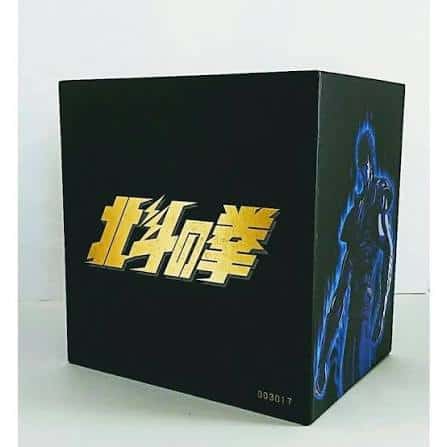
In Japan, the series was first collected in a complete box set with the Hokuto no Ken DVD Super Premium BOX, released on July 24, 2002 by Universal Music, at a price of 105,000 yen: 26 discs for the 152 episodes, a hundred-page booklet, and, for the first pressing, a Kenshiro figurine, a serial number engraved on the box set, and a poster reserved for pre-orders. The box set was reissued on March 29, 2006 under the title TV Series DVD Perfect BOX, as a limited-time pressing, with the same content but without the first pressing bonuses. The same publisher also released the series in individual DVD volumes, twenty-six in total, staggered from May 21, 2003 to January 21, 2004, at 3,990 yen each with six episodes per disc.
In 2005, a three-disc collection was released, Kyūkyoku Retsuden, TV Series Best Selection, which gathered seven conclusion scenes per volume, selected from among the 152 episodes. The covers featured previously unreleased illustrations, and the first pressing came with a box to store the three discs.
For the twenty-fifth anniversary of the series, a second complete box set was released on March 28, 2008, the 25th Anniversary DVD-BOX, TV Series HD Remaster Edition: 28 discs, the 152 episodes remastered in high definition on 26 discs, and two bonus discs including the three compilations released on DVD for the first time, the clean opening and ending credits, the 1984 launch announcement, and the first episode in its Mandarin-dubbed version. Its edition limited to 2,000 copies added a large figurine of Kenshiro and Kokuō produced by Kaiyodo.
Blu-ray arrived on December 4, 2019, for the thirty-fifth anniversary of the anime, with the Ikkyomi collection from Toei Video, four volumes sold at around 10,000 yen each. Each of the four parts of the first series fits on a single disc: episodes 1 to 22 for the first volume, 23 to 57 for the second, 58 to 77 for the third, and 83 to 108 for the last. The scope is therefore limited: the five recap episodes 78 to 82, episode 109, and the entirety of Hokuto no Ken 2 are absent. The picture also uses the standard-definition DVD master rather than the 2008 remastered edition.
In France, releases followed one another without ever reaching completion. A first DVD range was released in 2001 by AB Vidéo under the TV Collector label, eight volumes distributed by Manga Distribution, whose covers did not detail the episodes contained.
Toei Animation then directly released the second series, starting in 2002, under the title Ken 2, Fist of the North Star: five DVD volumes, eight episodes each for the first four and eleven for the last, in original version with subtitles, the covers bearing the mentions "never broadcast on TV" and "uncensored version," the fifth volume subtitled "The Ultimate Battle." Each disc included as extras a filmography, a character presentation, an image gallery, and trailers. The entire set was repackaged in a collector's complete limited edition box set of five DVDs released on May 11, 2006.
A second range followed for the first series from AB Vidéo, distributed by TF1 Vidéo, starting in February 2004: eighteen volumes, six episodes each up to the eighth then four, stopping at episode 88. A third range was released under the label "uncensored edition." These editions bear the titles from the original dubbing, unrelated to those of the current version: the first episode becomes "Ken l'héritier de la Grande Ourse," the second "La famine," the third "L'homme aux 7 cicatrices."
AB then published, starting in 2009, a "Complete Uncensored Edition French dub / Original with subtitles" range in six digipack box sets covering the 109 episodes of the first series: episodes 1 to 22, the first volume following Shin's arc, then 23 to 38, 39 to 54, 55 to 70, 71 to 86, and 87 to 109, restored picture, original opening and ending credits, with episodes that were never dubbed included in subtitled version.
Black Box finally released on October 15, 2014 a complete collection of both series on 26 DVDs, picture restored from the Japanese 25th anniversary master, uncensored version: the first series in French dub and in original version with subtitles, the second in original version with subtitles only, due to the lack of a dub. The limited collector's edition came in five digipacks accompanied by a hundred-page artbook, followed by a standard reissue.
 7
7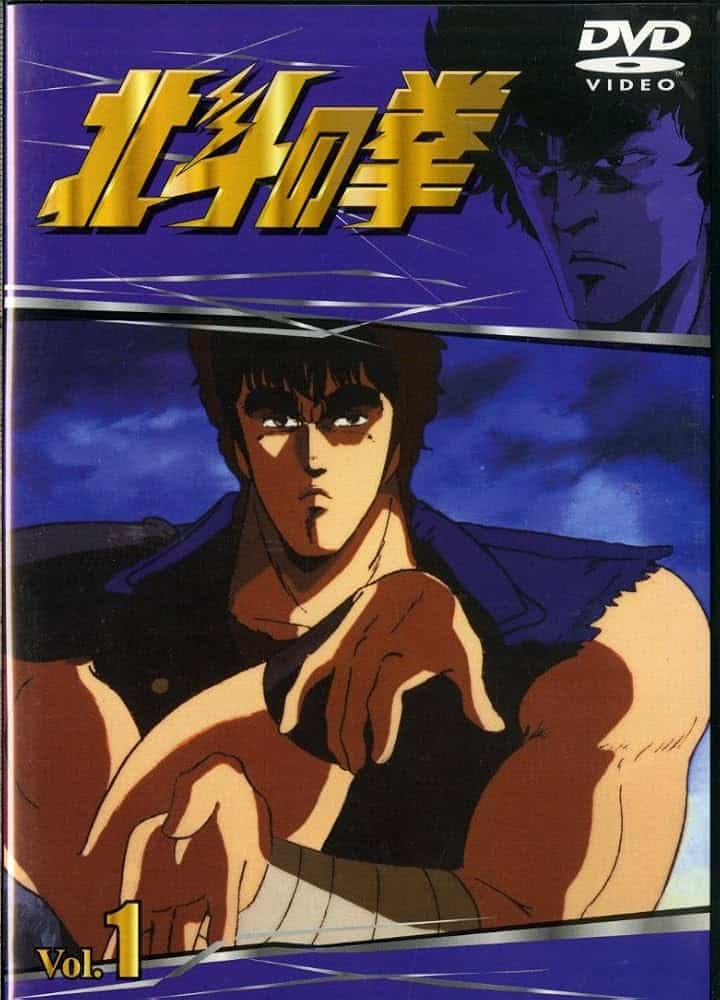 26
26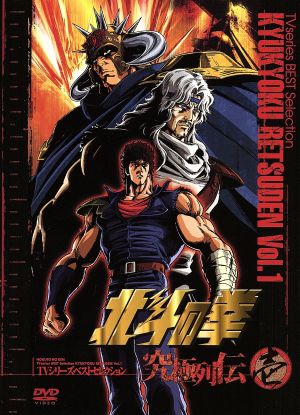 4
4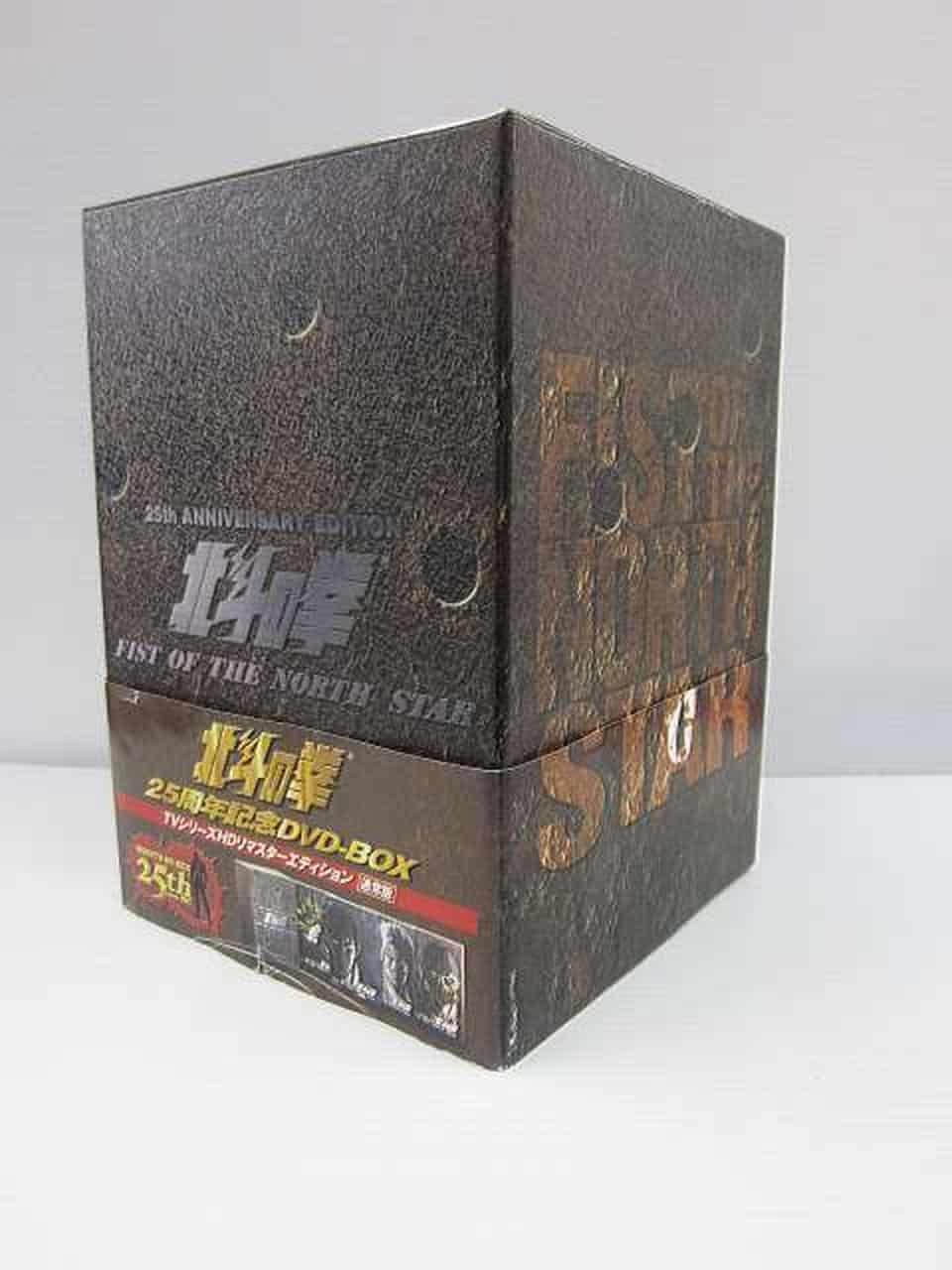 9
9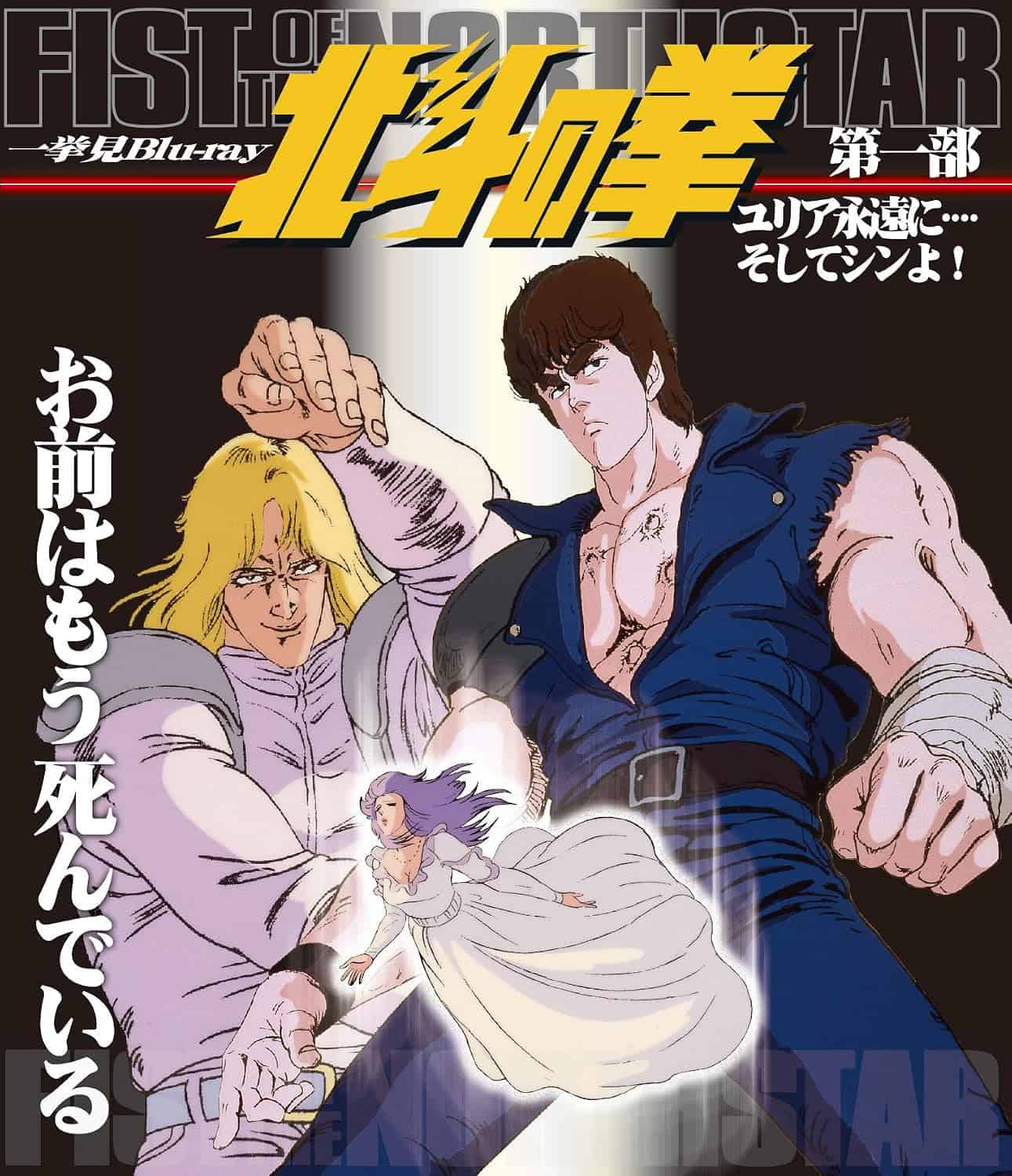 4
4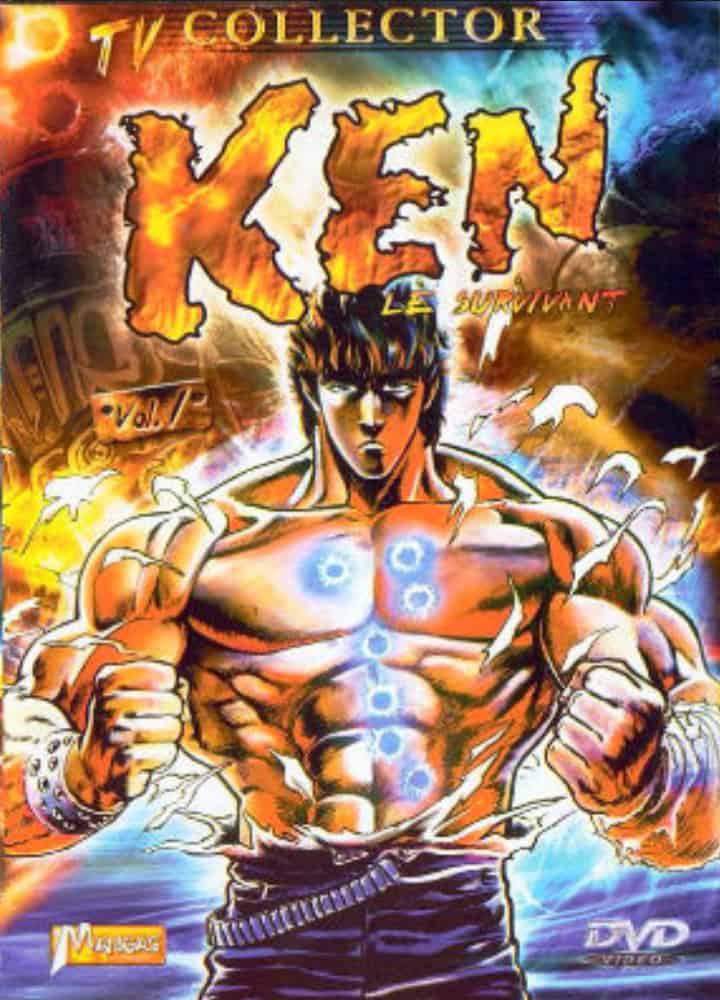 8
8 6
6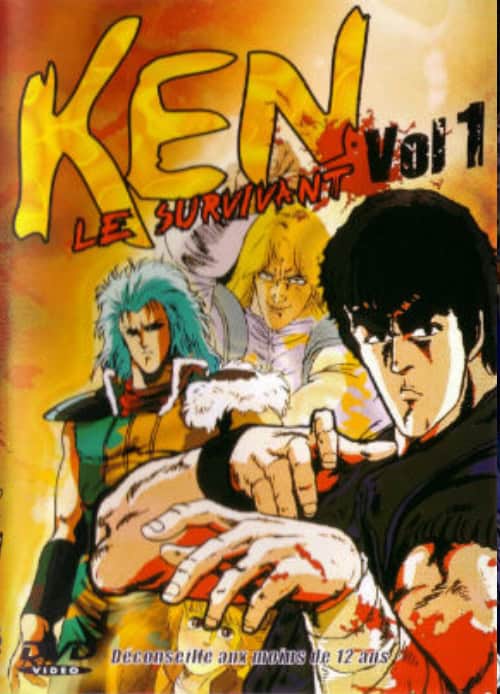 18
18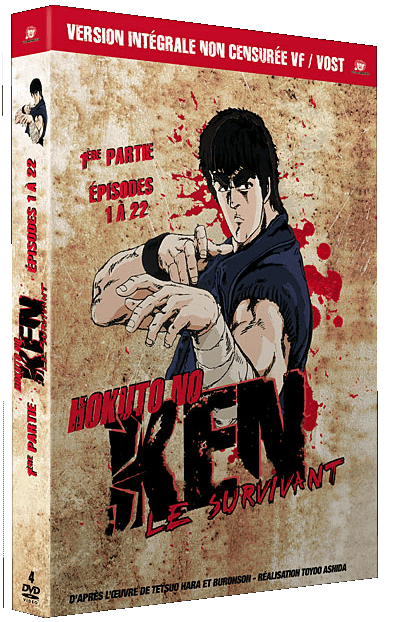 6
6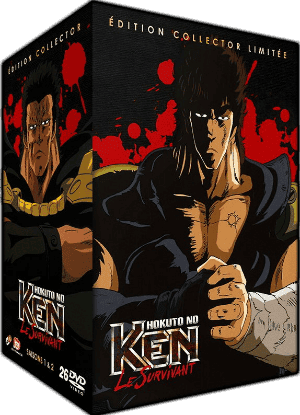 4
4