


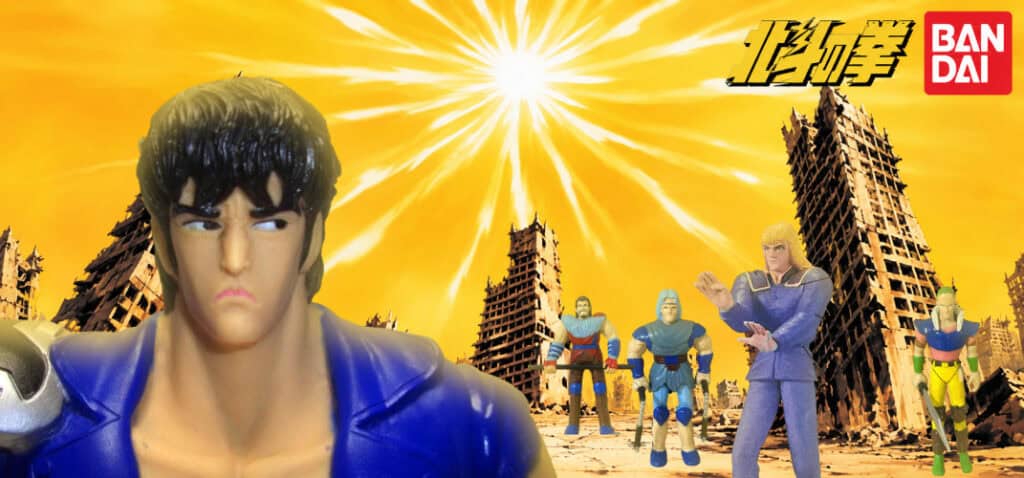
As we do every Friday, we take another look at Hokuto no Ken figures. This week, we go back to 1985: in twelve months, Bandai released seven different lines based on the licence, under two different labels, then left it alone until the gashapons of the 2000s.
A company in transition

To understand what happened in 1985, we need to go back two years. In March 1983, Bandai absorbed seven of its group companies at once, in a restructuring carried out ahead of its stock market listing, which came in January 1986.
Two of them had very different cultures. Popy, a subsidiary founded in 1971, was the character toy brand, the home of Chogokin. Bandai Mokei handled model kits: riding the Gunpla boom, it already outweighed Popy the year before the merger. Both became internal divisions, ポピー事業部 and ホビー事業部, housed at the same Komagata address in Tokyo’s Taitō ward.
When Hokuto no Ken reached television in October 1984, Bandai was a company in transition, where two approaches to merchandise existed side by side. Both divisions took up the licence at the same time, each with its own methods and know-how. Five of the seven lines launched in 1985 came out under the Popy label, two under the Hobby label. One question remains that the available sources cannot answer: were the two divisions working together or each on its own?
A licence that came through the TV series
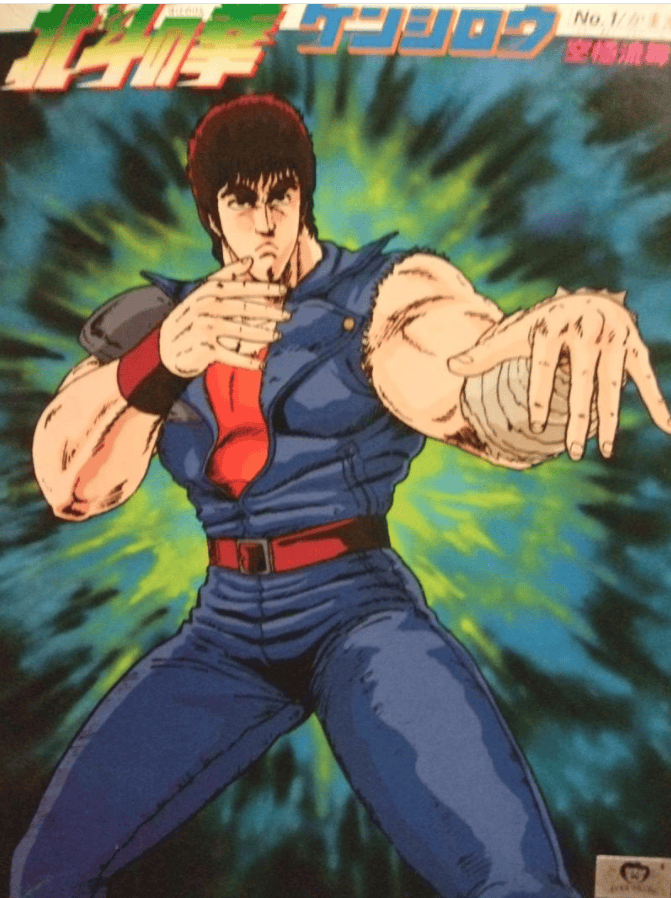
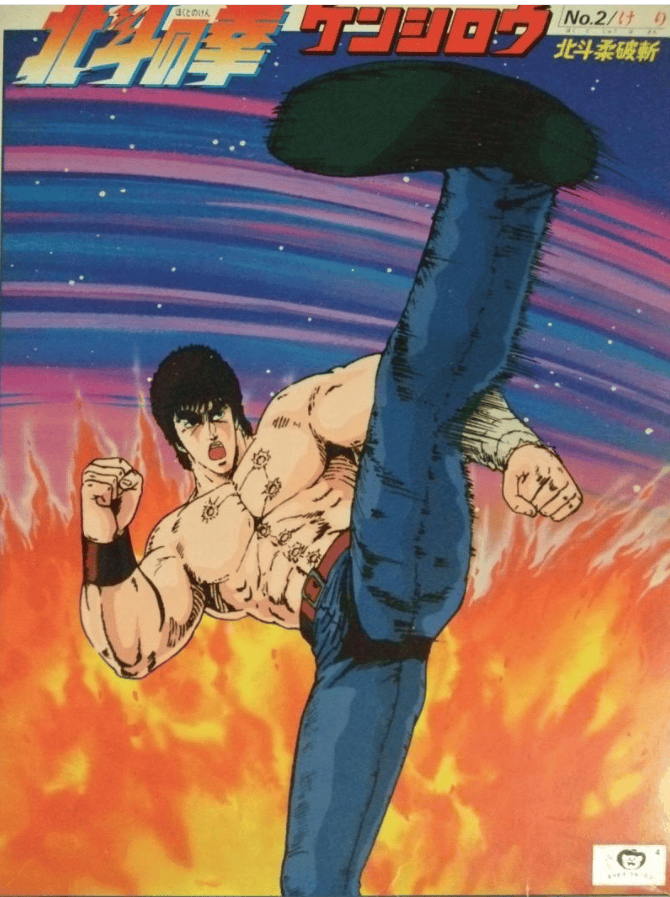
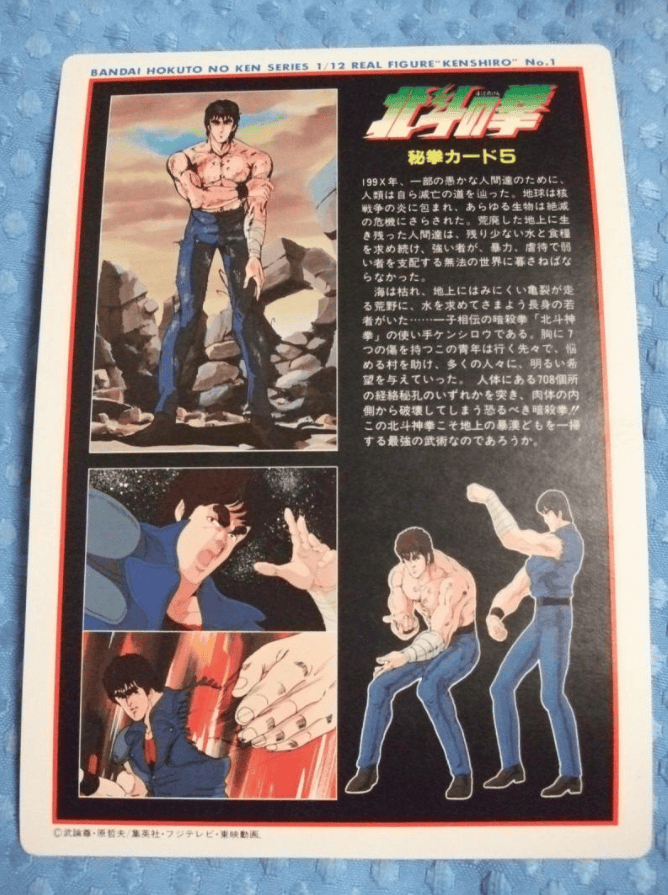
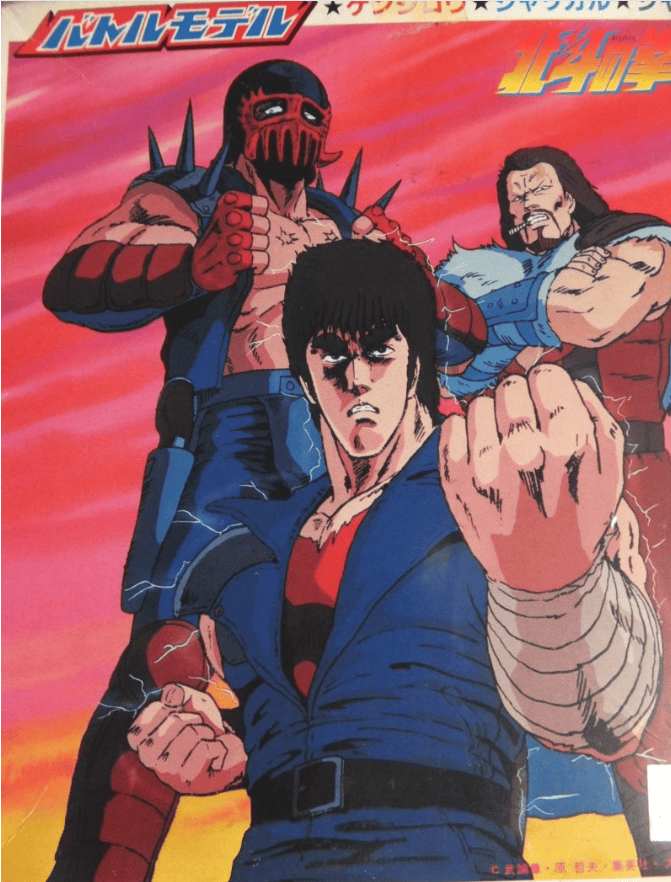
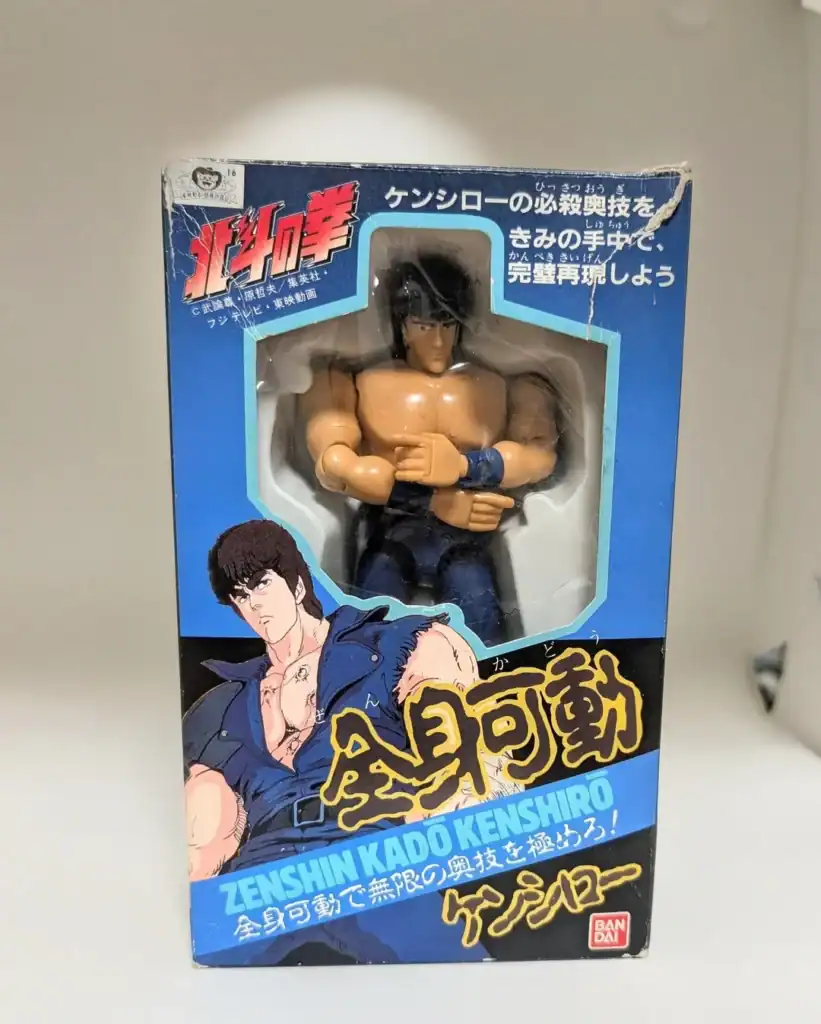
One detail recurs on the boxes, on the instruction sheets and, in shortened form, even under one of the sofubi’s feet: the copyright ©武論尊・原哲夫・集英社・フジテレビ・東映動画. Fuji TV and Tōei Dōga are everywhere. The 1985 licence came through the anime, and the box art, drawn in the series’ animation style, makes this obvious at first glance. Several items also carry Tōei Dōga’s licence approval seal, a numbered sticker: 16 on the Zenshin Kadō Kenshiro box, 18 under the sofubi’s other foot. The approval really did come from the animation studio.
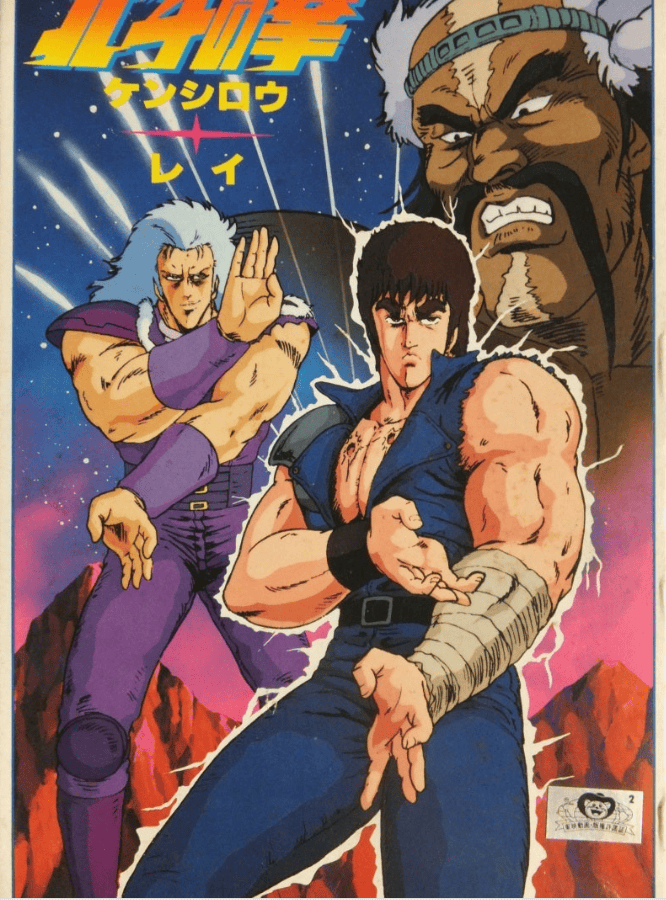
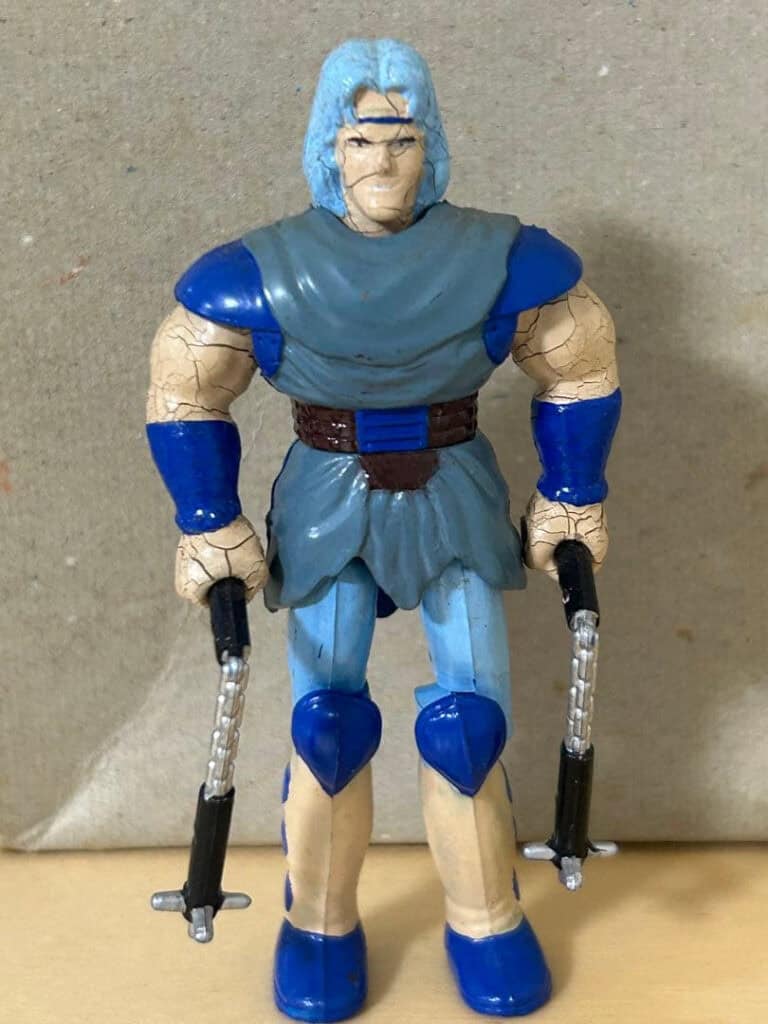
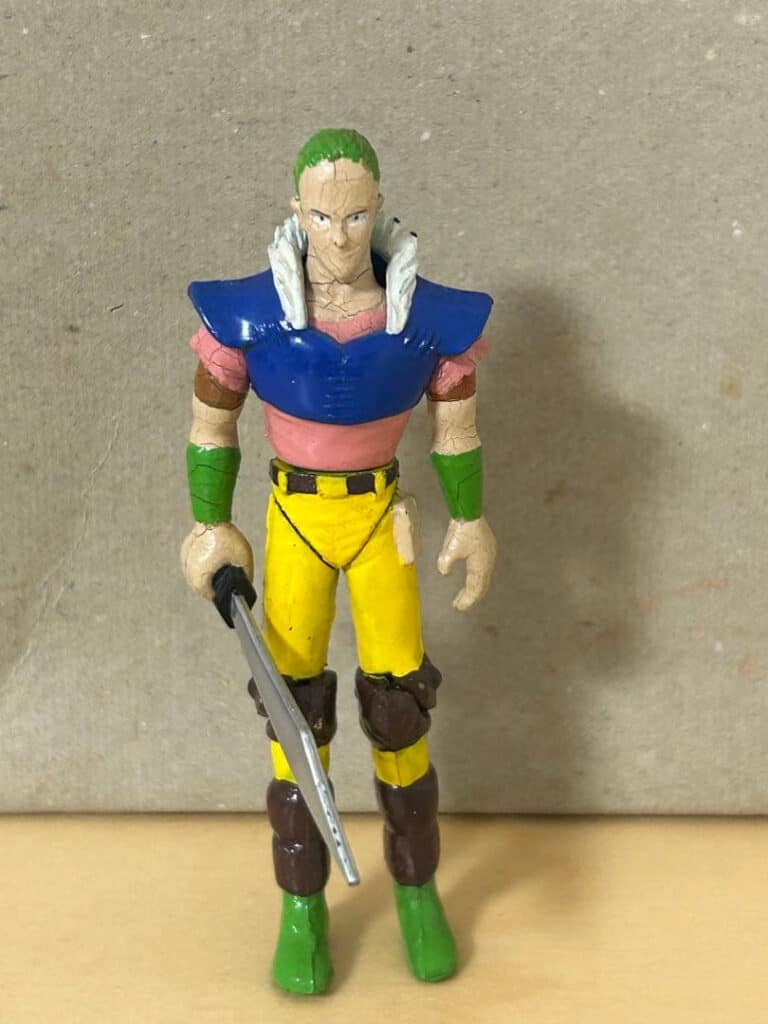
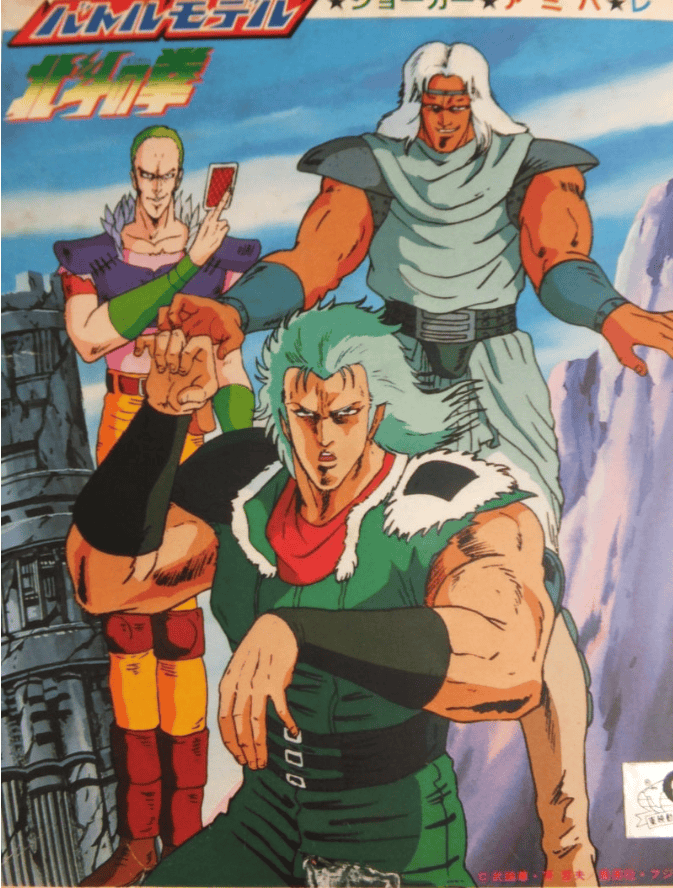
The choice of characters also follows the series. The Real Scale Model kits came out in February and March 1985 with Shin, then Rei, while the Battle Models arrived in June with Joker (a character exclusive to the anime), Jackal and Amiba. The February kit is also, to this day, the oldest documented officially licensed Hokuto no Ken toy. Nothing has been found between the start of the broadcast in October 1984 and its release, which does not mean nothing existed before it.
On the Hobby side, learning to paint
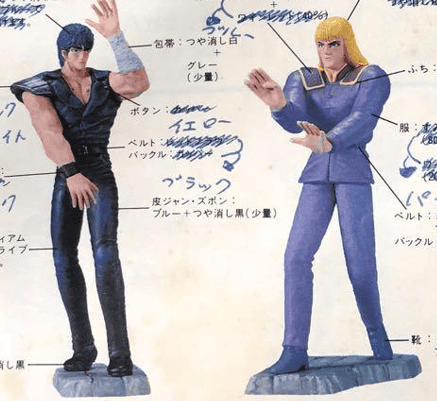
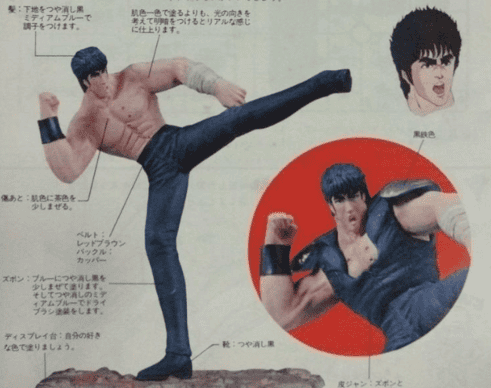
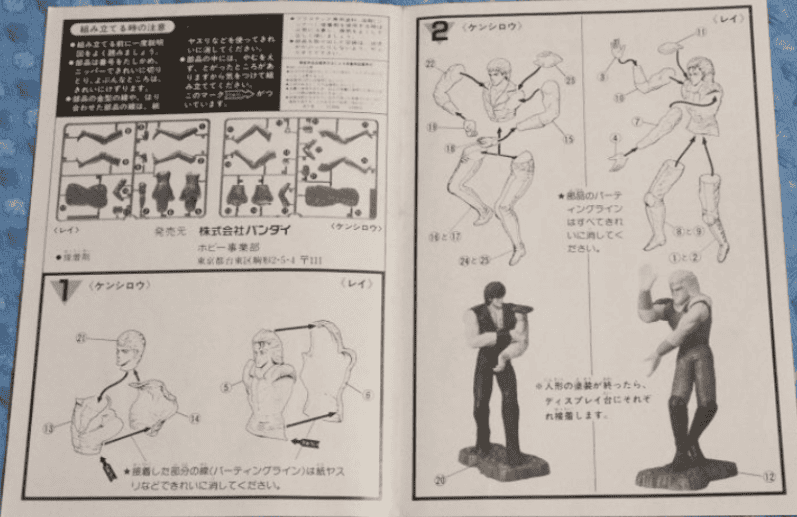
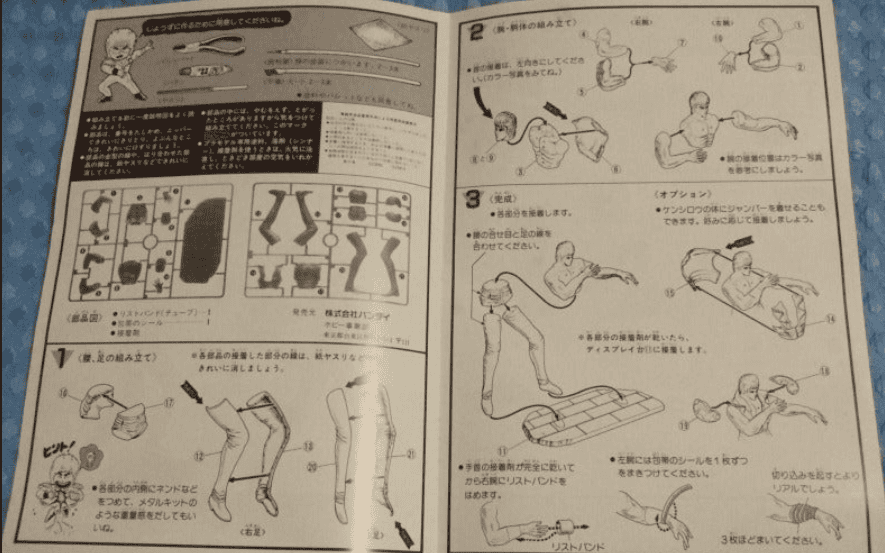
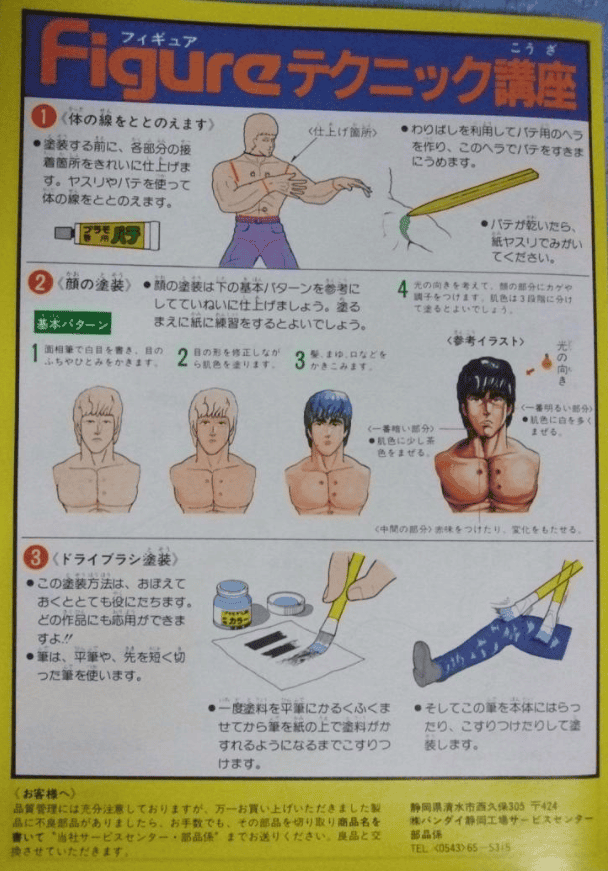
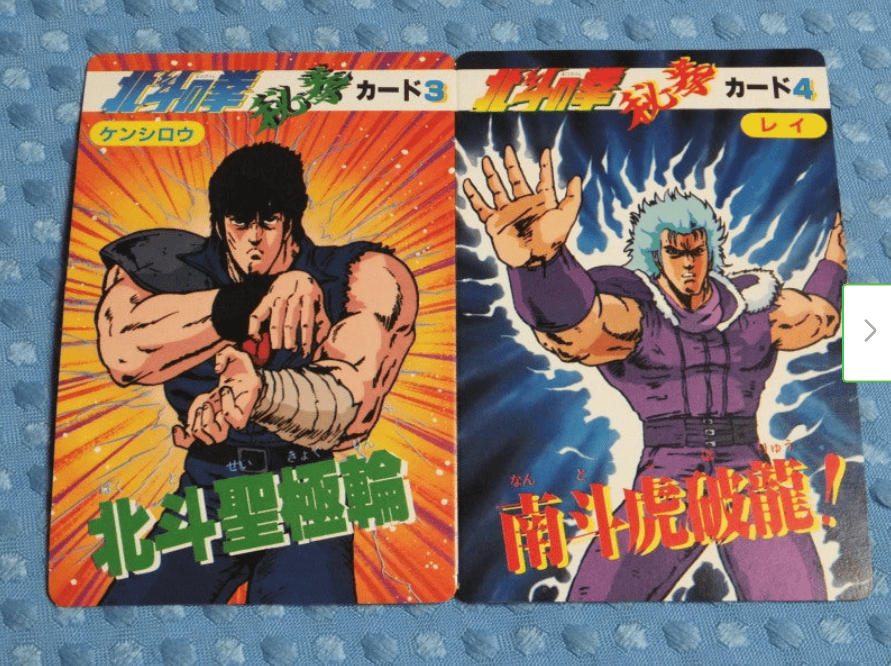
The Hobby division opened with the Real Scale Model line, four plastic kits to build and paint yourself: two 1/20 scale pairs, then two 1/12 scale Kenshiro figures. The format was that of Gunpla, but painting a figure is not the same as painting a robot, and Bandai took the matter in hand. Each instruction sheet included a tutorial, the Figure Technique Kōza, whose leaflet in the second kit is marked ‘PART 2’: sanding seam lines, preparing a fine brush, shading a face according to the light. On one copy, a previous owner even jotted down his colour mixes in blue pen, proof that the lesson was put to use. Numbered collectible cards and bonus sheets completed the package.
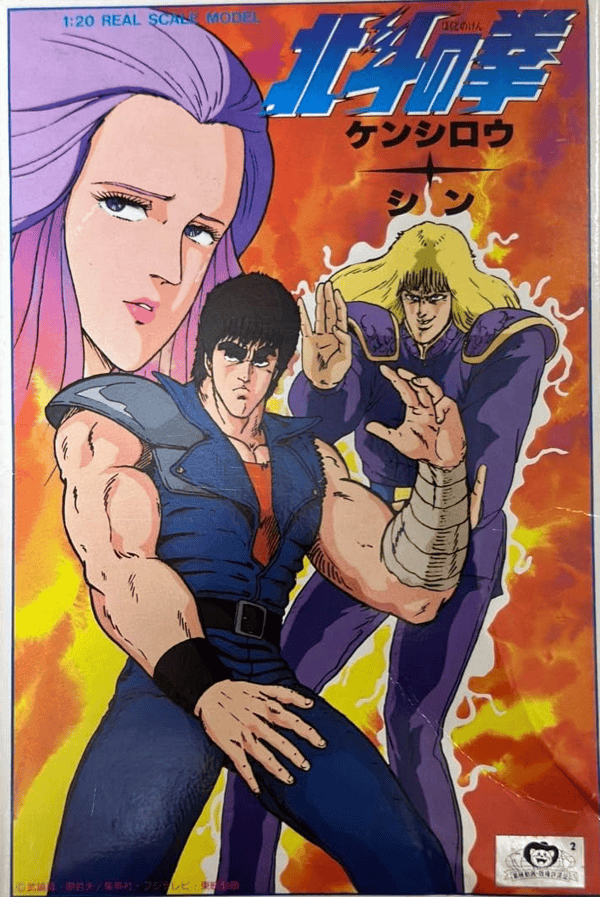
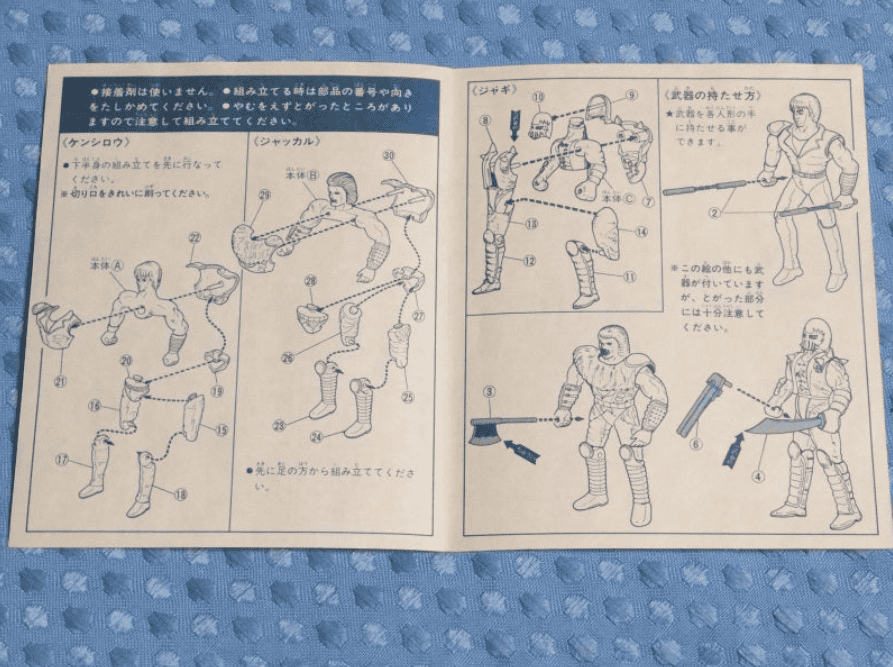
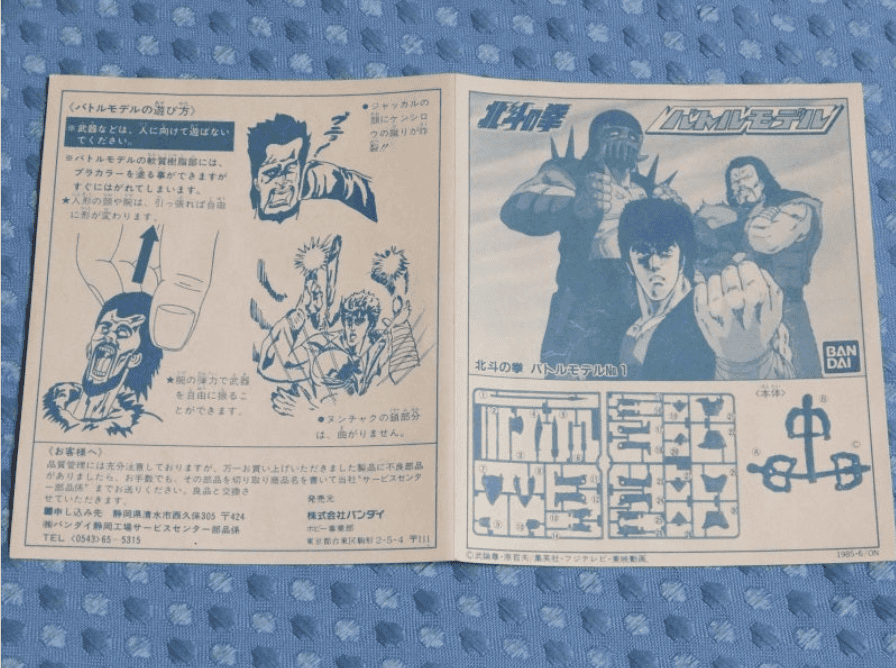
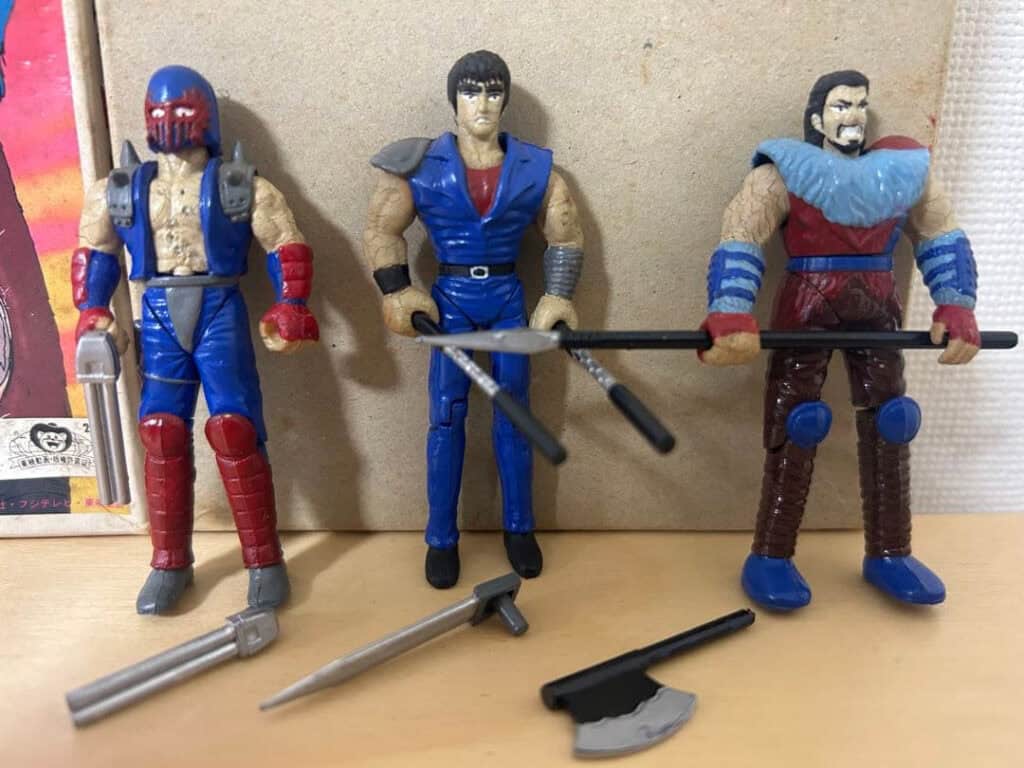
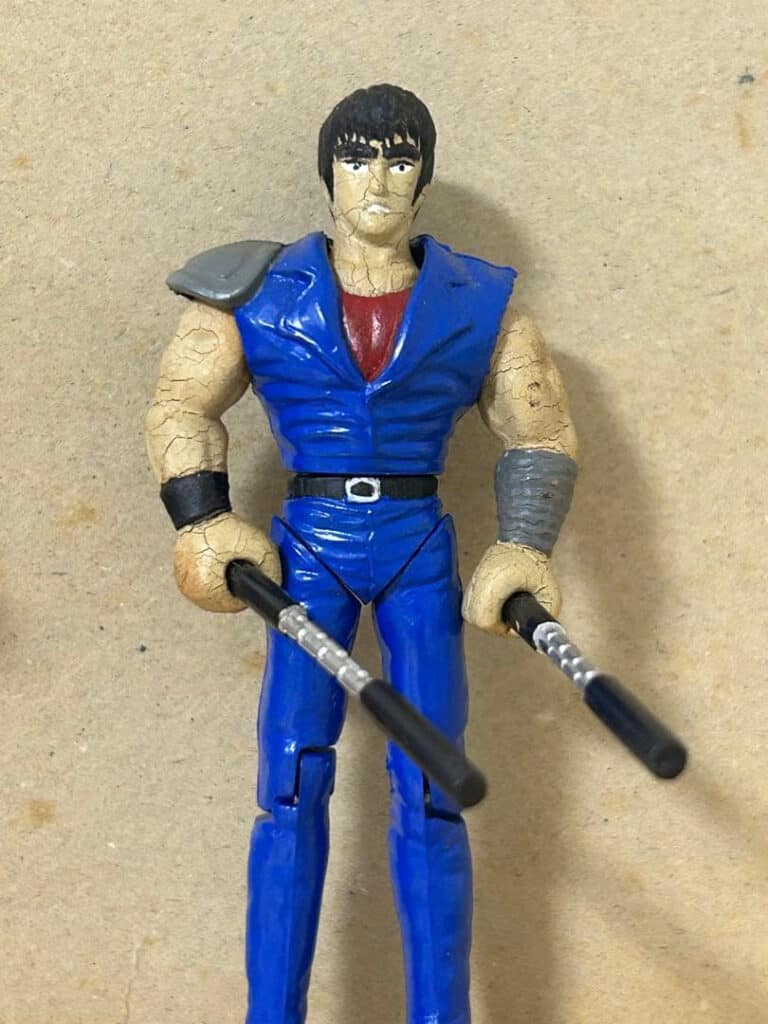
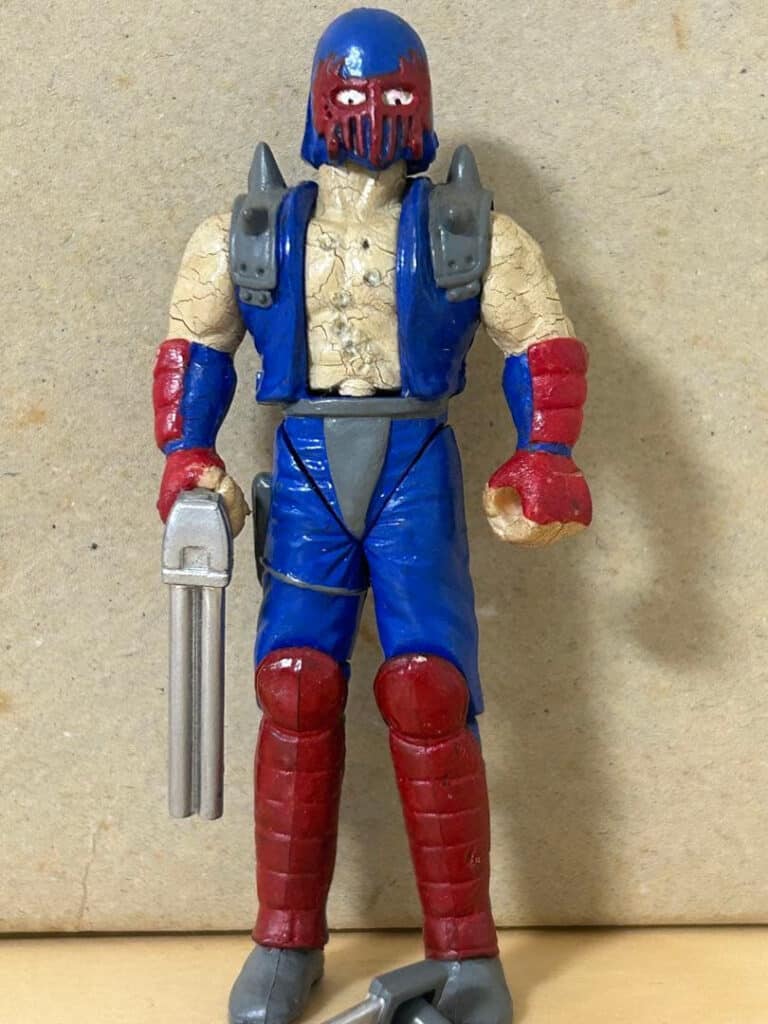
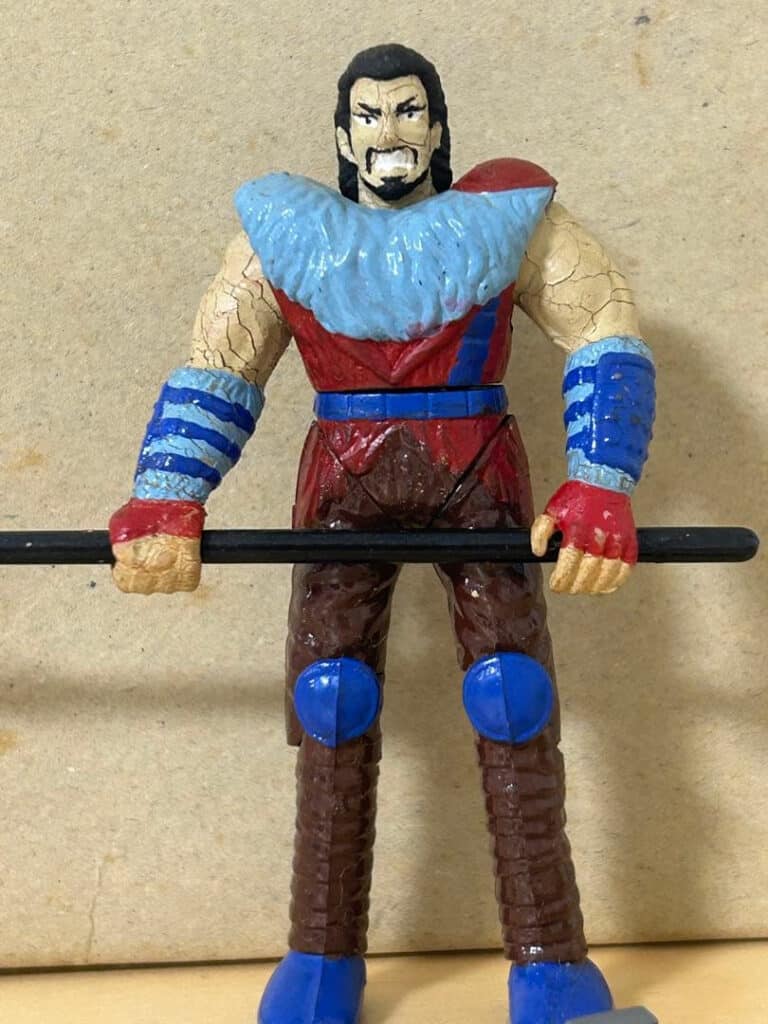
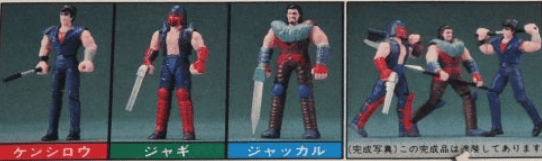
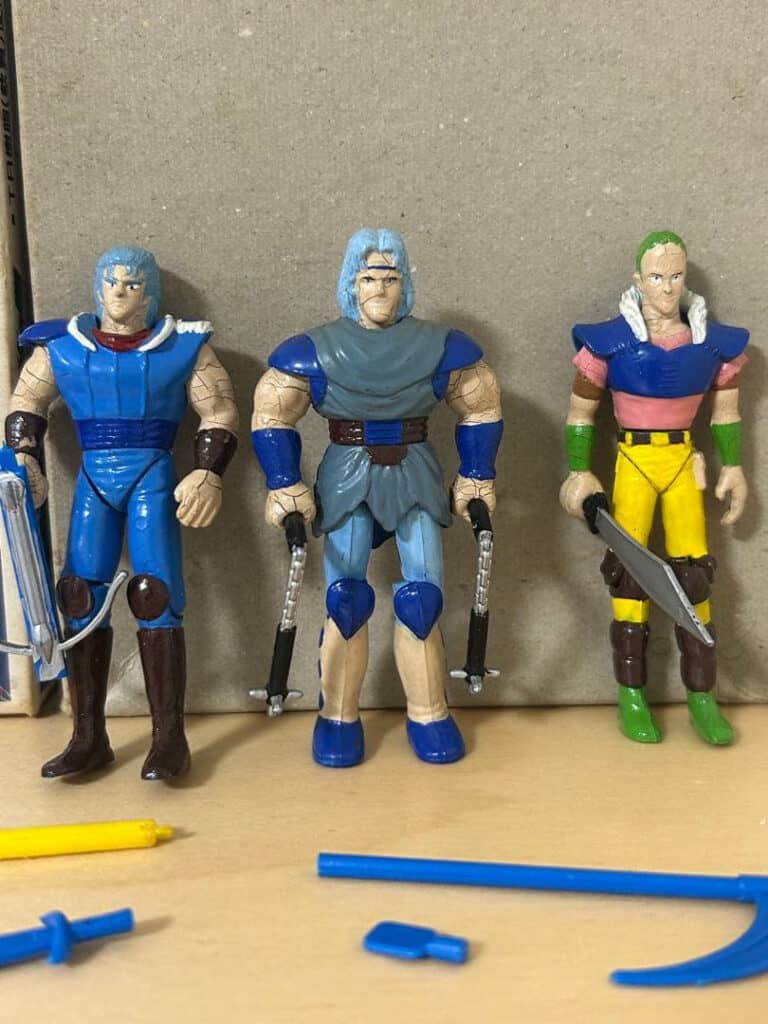
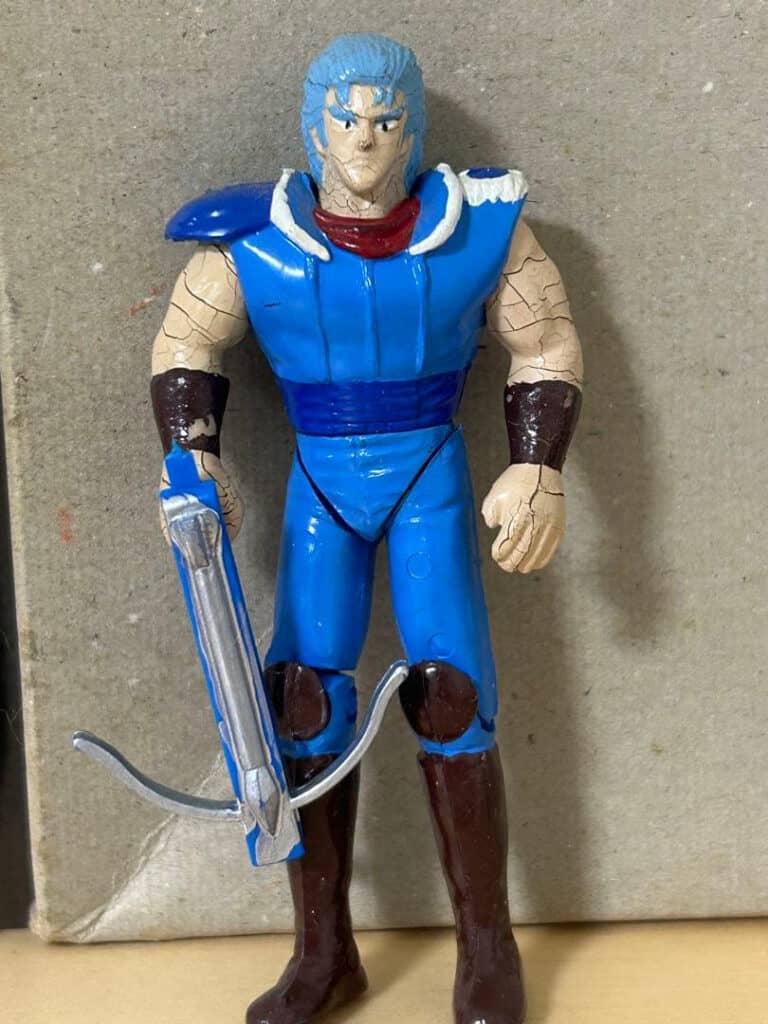
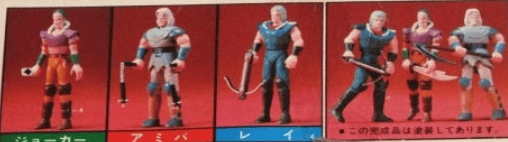
In June, the same division turned its own logic on its head with the Battle Model line. No more building, this was for playing: three figures per box, no glue needed, heads and arms in soft thermoplastic rubber that could be stretched at will, weapons included. The instruction sheet swapped the painting lesson for a manga-style how-to page showing Jackal taking a punch from Kenshiro. Six characters, two boxes, and the line stopped there.
On the Popy side, re-enacting the killing blows
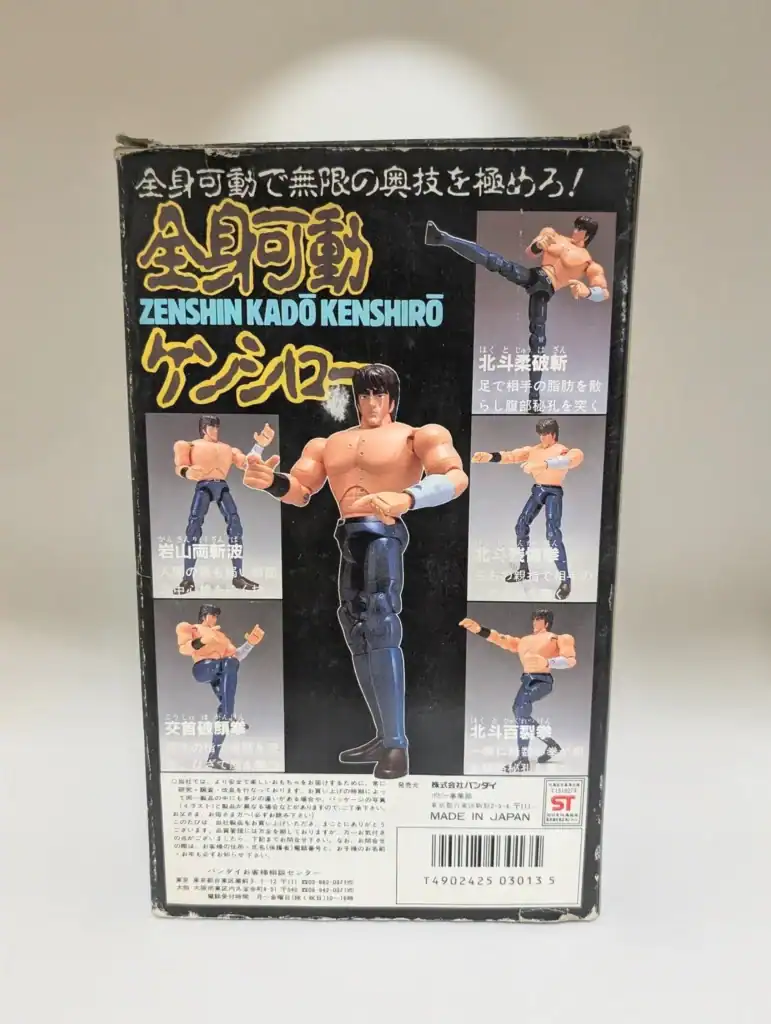
The Popy division did what it had always done: toys. The Zenshin Kadō Kenshiro, a fully articulated figure at 1,980 yen, promised on its box to ‘perfectly recreate Kenshiro’s deadly techniques in your own hands’, and its back laid them out like a martial arts manual.
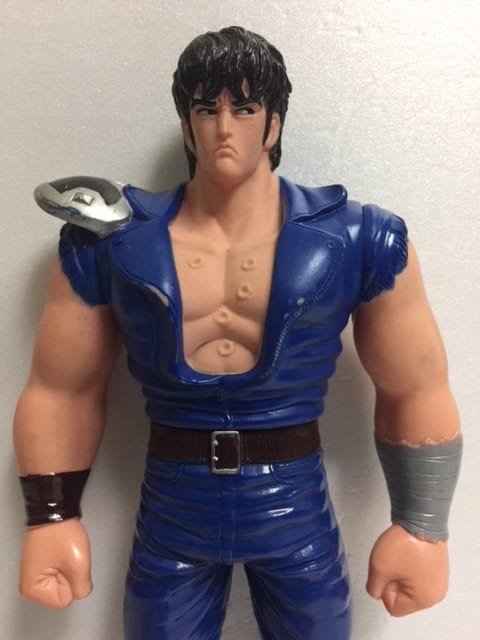
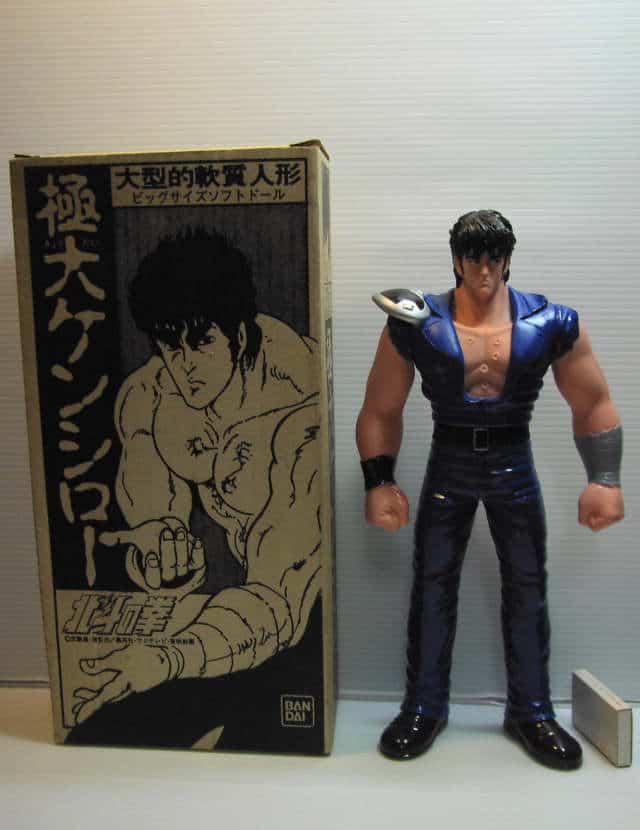
Alongside it came a large 32-centimetre sofubi, in the tradition of the TV hero vinyl figures Bandai was turning out in great numbers at the time. A hollow, 250-gram toy with simple sculpting, the rights holders’ markings moulded under one foot and the Tōei Dōga licence seal under the other. It may be the very first Hokuto no Ken figure, but nothing allows it to be dated more precisely.
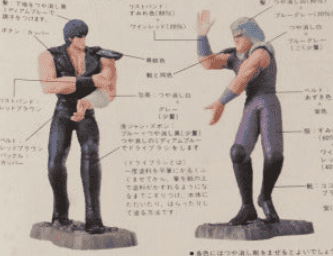
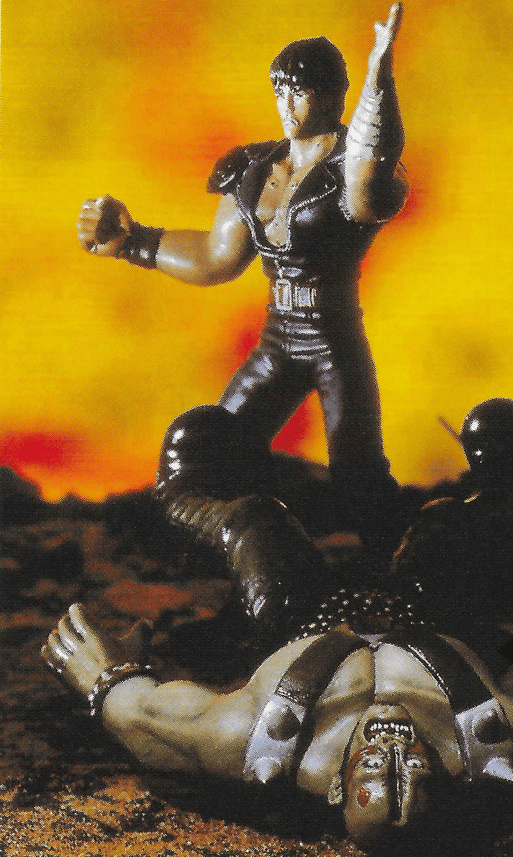
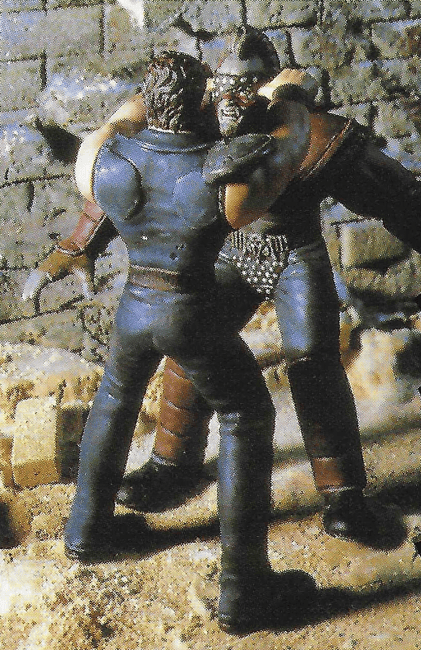
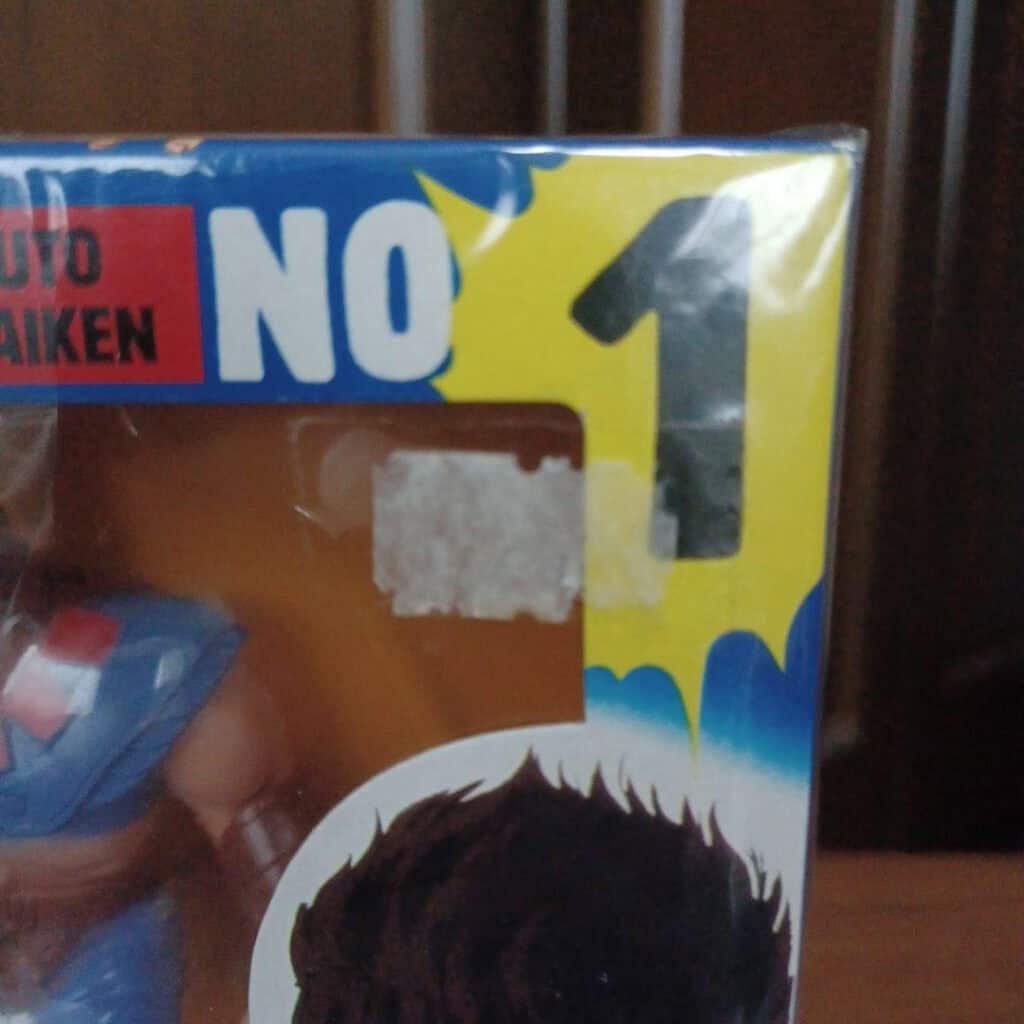
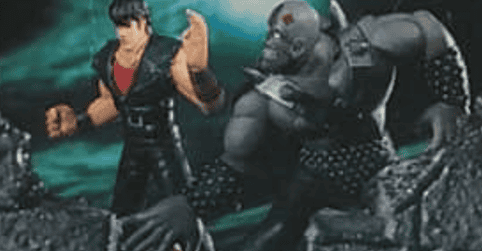
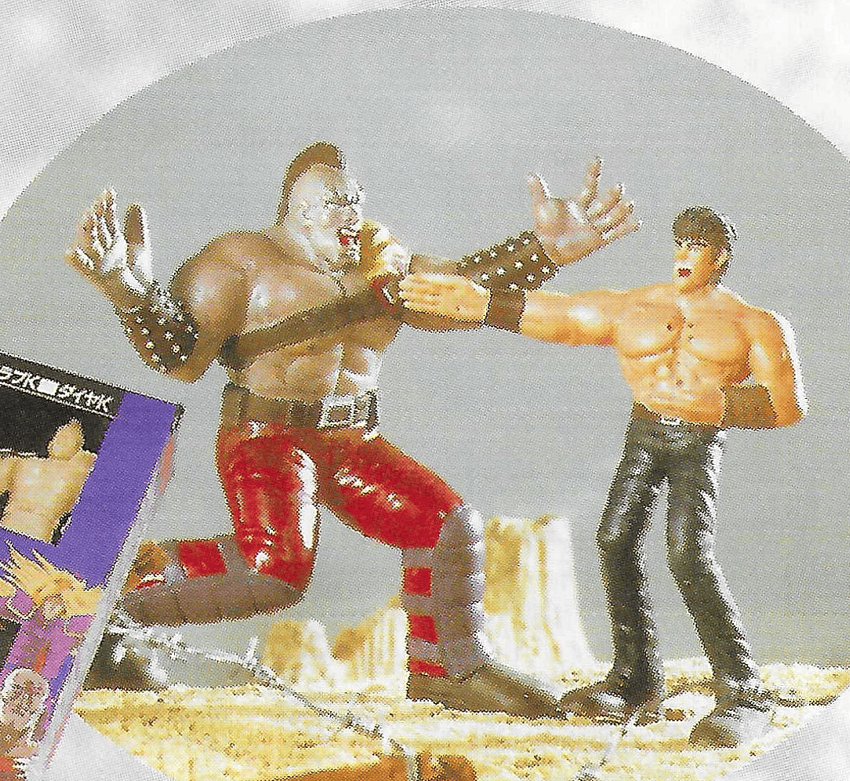
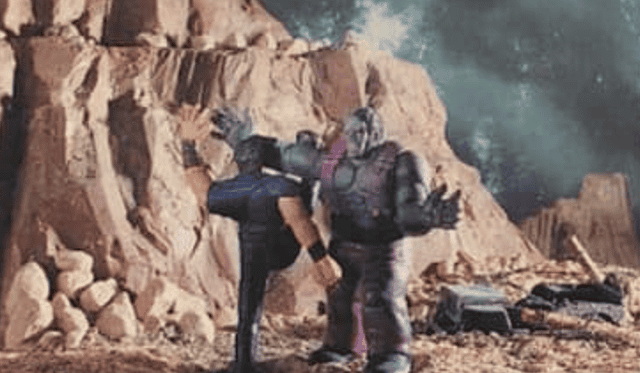
Then came the scenes. The Sakuretsu Ōgi dioramas, at 1,600 yen, froze Kenshiro and his opponent at the moment of impact. The Saikyō Higi Set, at 1,000 yen, did the same in painted vinyl, with five announced references, only two of which are confirmed. The back of a Sakuretsu Ōgi box carried a warning that seems wildly out of place: never re-enact Hokuto no Ken at home. These death-scene dioramas really were children’s toys.
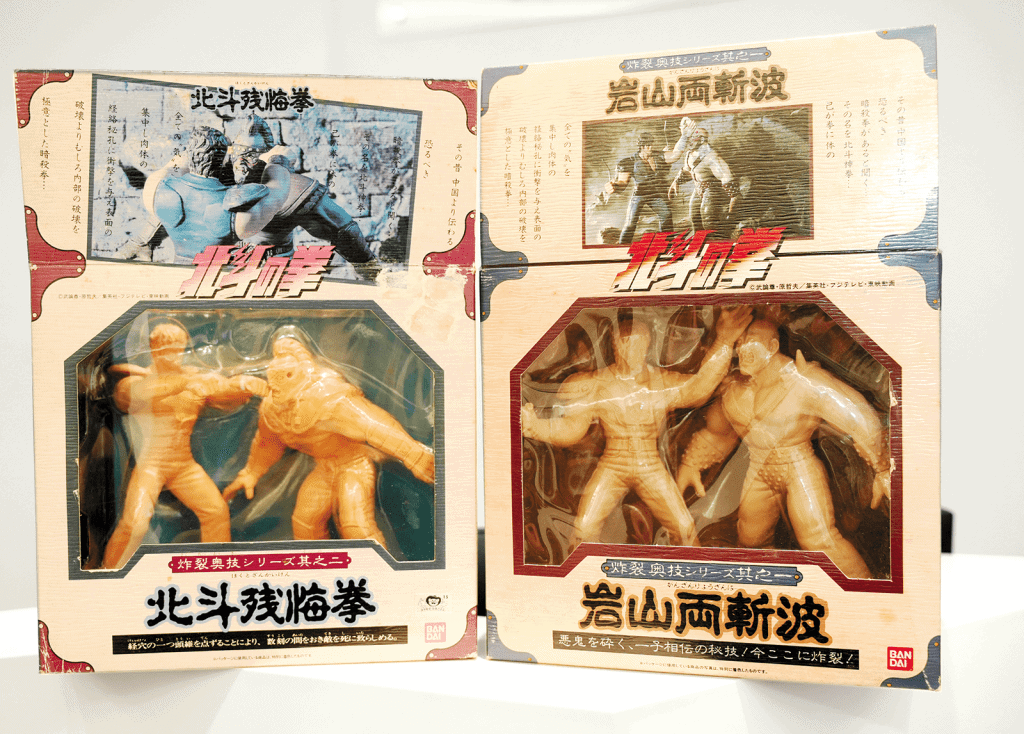
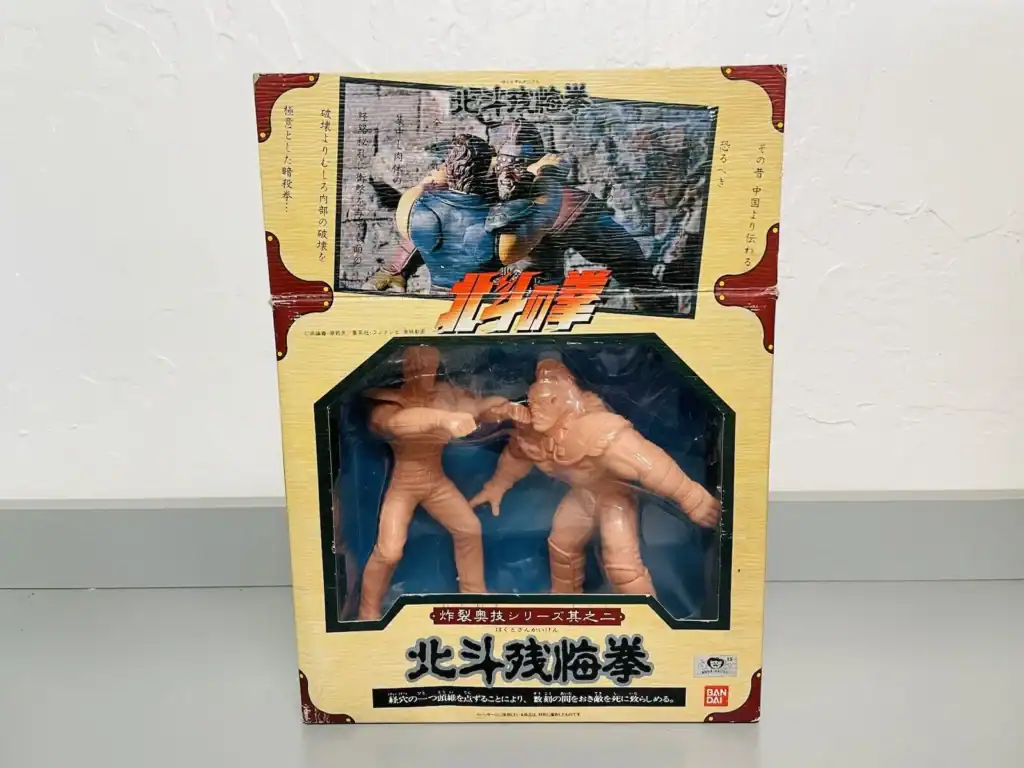
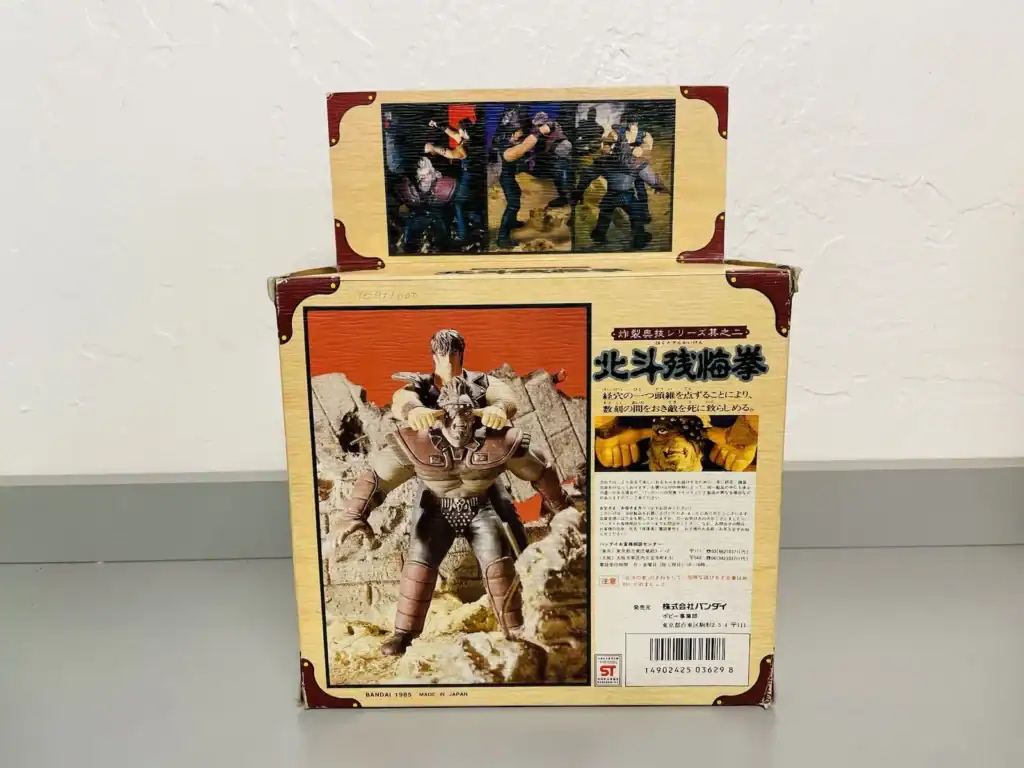
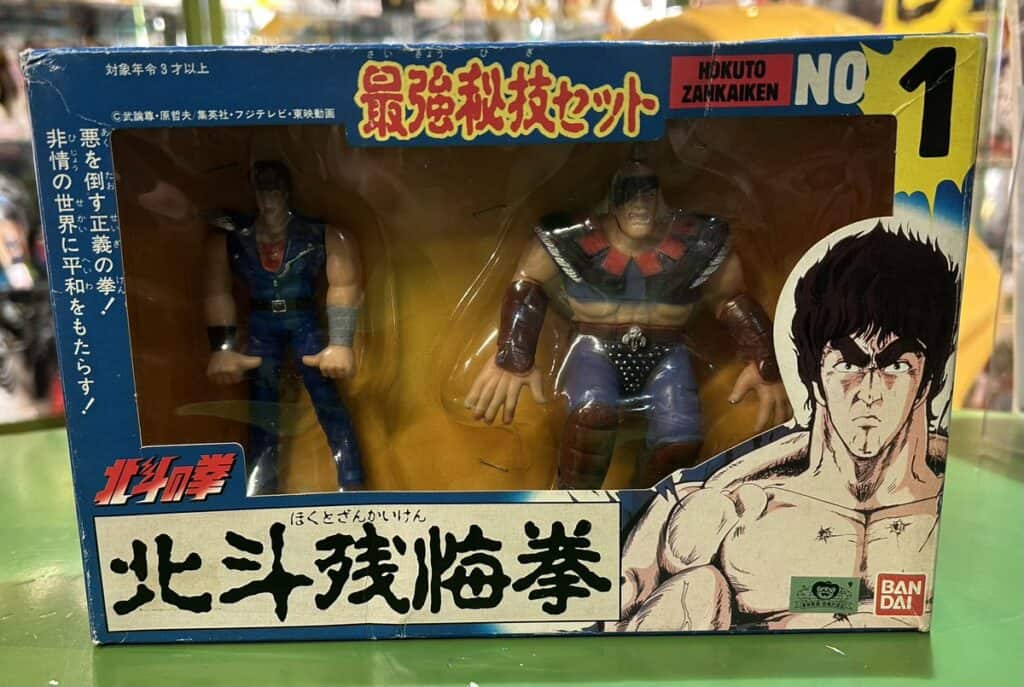

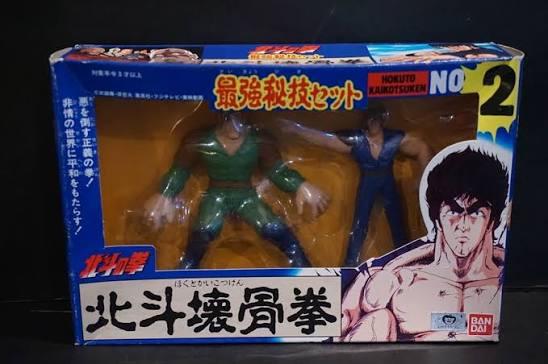
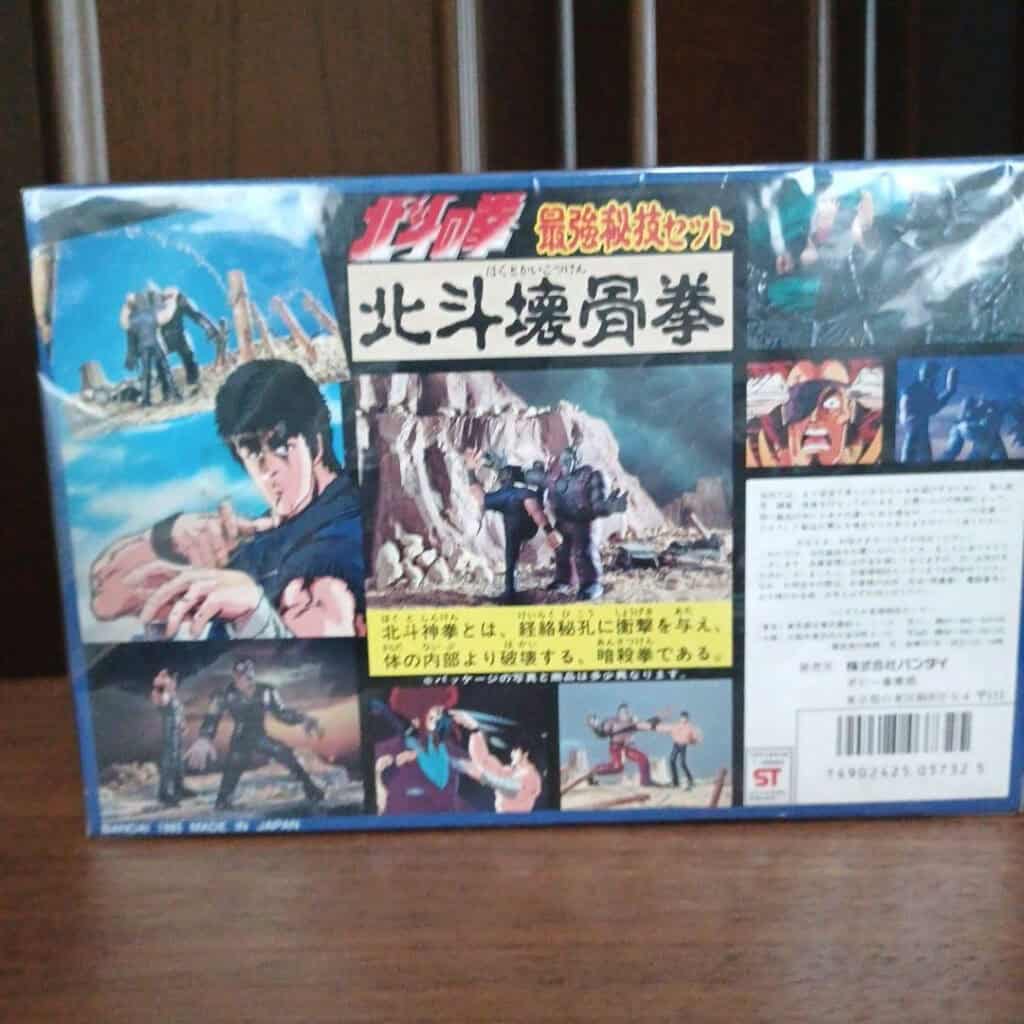
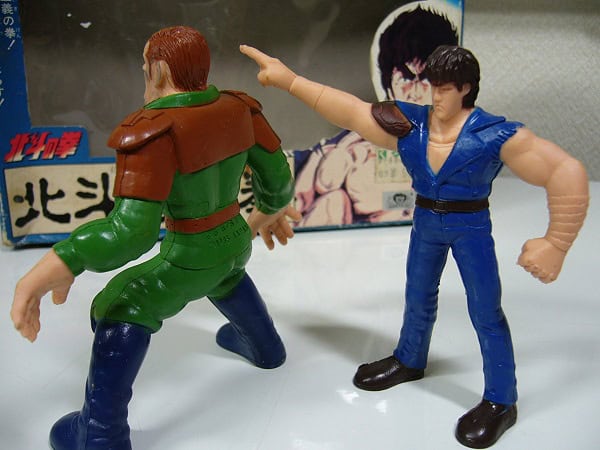
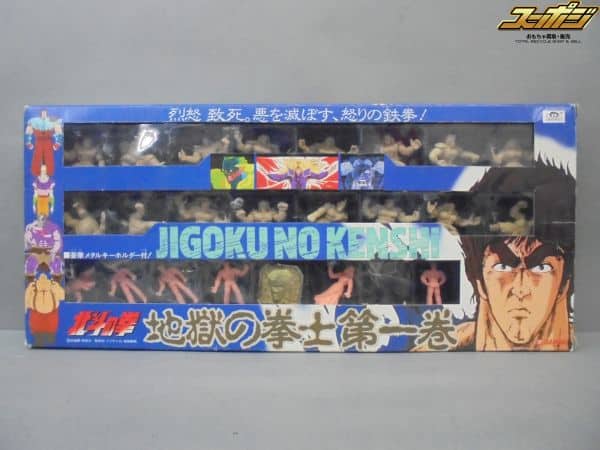
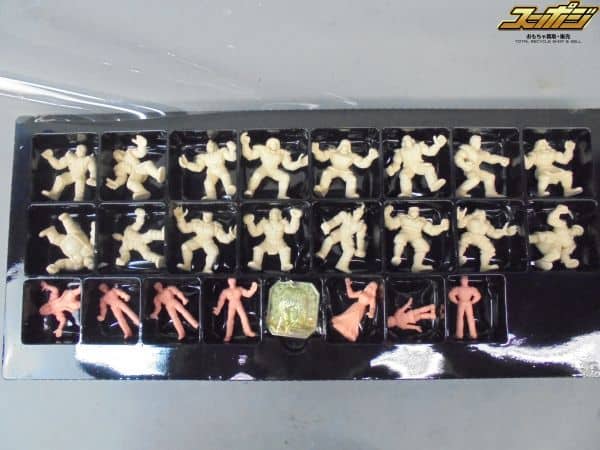
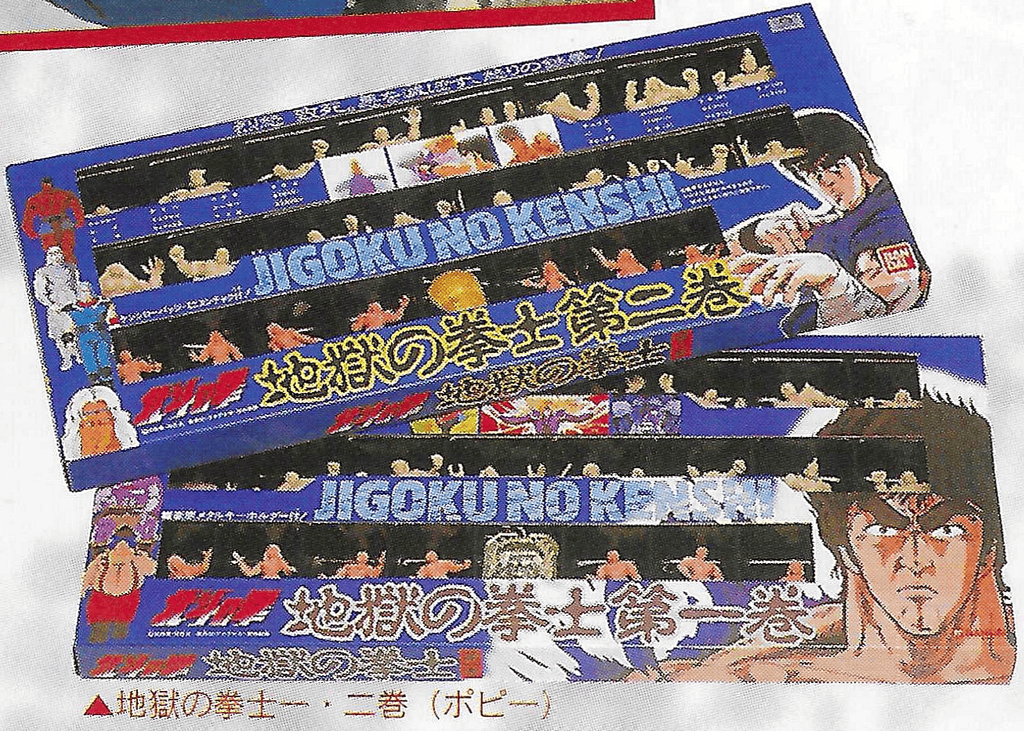
Then there were the Jigoku no Kenshi box sets, at 1,200 yen, which lined up the henchmen destined to explode as monochrome mini-figures, in the character eraser format Bandai had launched two years earlier with the Kinnikuman capsules. Where every other line celebrated Kenshiro, this one sold only his victims.
One licence among many
A Bandai catalogue from the period shows three of these lines on the same page, with their prices, between a robot and a Macross Valkyrie. Hokuto no Ken was simply one licence in the range. The catalogue also notes, in small print, that the photos show samples painted specially for the occasion. The same note appears on the Battle Model boxes, on the sides of the Real Scale Model boxes and on the Sakuretsu Ōgi sets: at Bandai in 1985, almost everything was sold unpainted, and painting was left to the buyer.
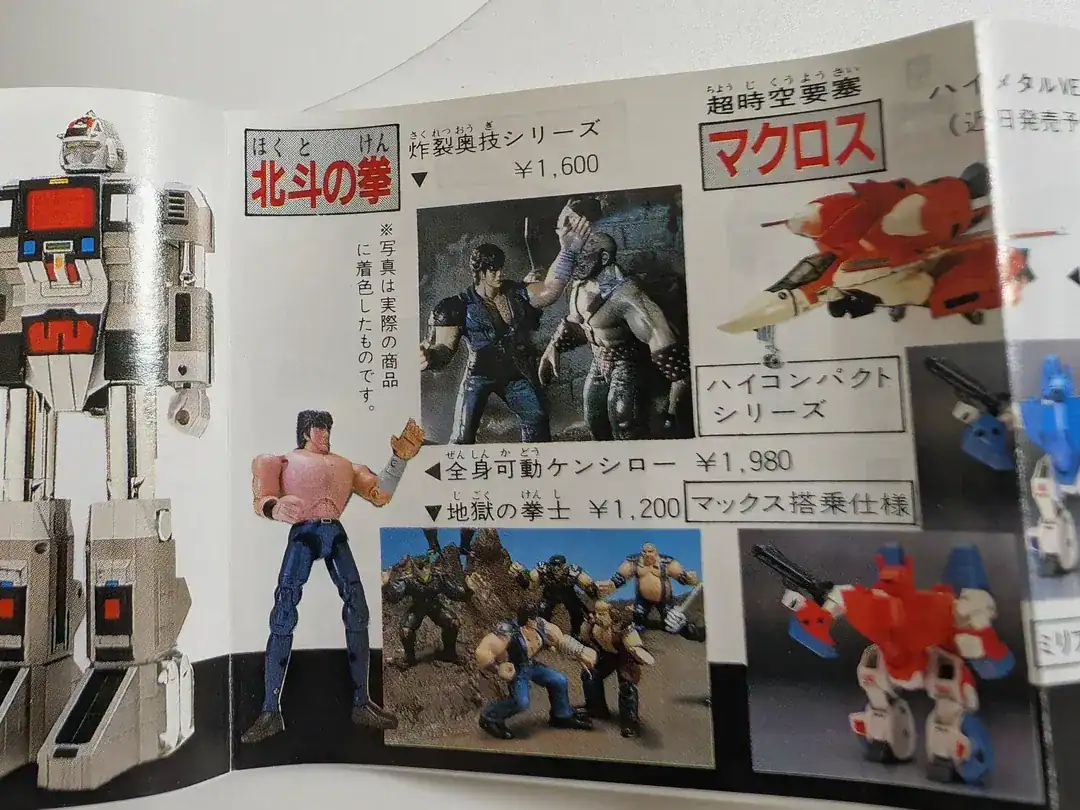
This catalogue is also the only period source for prices. For the other four lines, no price is printed anywhere, neither on the boxes nor in the instructions, and the original retail price remains unknown. No sculptor is credited either, on any of the seven lines. That was the norm at the time: in 1985, the people who sculpted toys went uncredited.
Several lines, then nothing
Seven formats in a single year: the model kit, the articulated figure, the sofubi, the diorama, the eraser, the snap-fit kit, the painted vinyl scene. None of them took hold. Bandai only came back to the licence in the 2000s, with six-centimetre gashapons, then through Banpresto’s prize figures, which have since come under the Bandai Spirits banner. In the meantime, it was Kaiyodo and others who shaped what Hokuto no Ken figures would become.
Why the momentum of 1985 stopped so abruptly, no source explains. All one can note is that Bandai was then preparing its stock market listing and that Gunpla already weighed heavily in its Hobby division. What remains of that year is whatever still turns up on Yahoo! Auctions, Mercari or Suruga-ya: boxes that are often damaged, rarely complete, and have struggled through four decades.
Sources
- Boxes and instruction sheets from the seven lines: publisher panels, copyrights, licence seals, print codes. Details in each line’s entry.
- Period Bandai catalogue, toy page, Hokuto no Ken section: prices of the Sakuretsu Ōgi, Zenshin Kadō and Jigoku no Kenshi lines.
- Figure Oh No. 34, World Photo Press, July 2000, page 22: survey of discontinued Popy toys, price of the Saikyō Higi Set.
- Bandai corporate histories and the Popy article on Japanese Wikipedia: March 1983 merger, January 1986 stock market listing, April 1983 Kinnikuman capsules.