

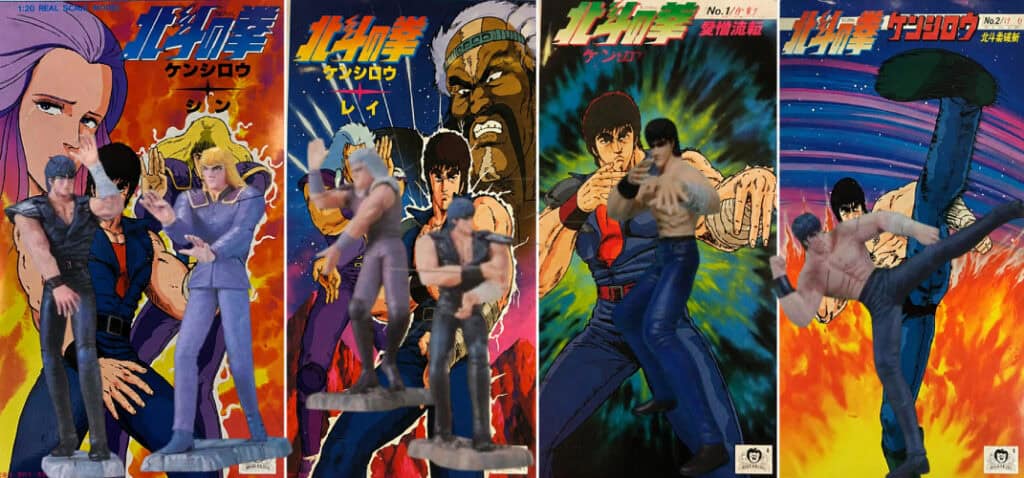
In 1985, while the first anime series was airing, Bandai’s Hobby division launched the “Real Scale Model” line. Four Hokuto no Ken plastic model kits (plamodel) to assemble and paint yourself. An extremely rare format in the history of the franchise’s merchandise, which has been far more accustomed to finished figures than build-it-yourself kits. The line mixed two scales, included collectible cards and bonus sheets, and even went so far as to feature actual painting tutorials to introduce the young readers of the era to the art of scale modeling.
Details
A line born with the anime
The print codes on the instruction sheets allow the releases to be dated precisely: February 1985 for the first kit, March 1985 for the second. Bandai was keeping pace with the TV series, which had just wrapped up the Shin arc and was then airing the Rei arc. Each box showcased the current adversary. The text printed on the spine actually varies from one kit to another, summarizing the corresponding story arc.
The line comprises four references, numbered Series No.1 through No.4 on the promotional strip shared across all spines. The first two are 1/20 scale duos, while the next two are solo Kenshiro kits at 1/12, larger in size.
The 1/20 duo kits
Each duo pairs Kenshiro with an adversary, each with its own display base. The sprues are separated by character, and the instruction sheet details the assembly piece by piece.
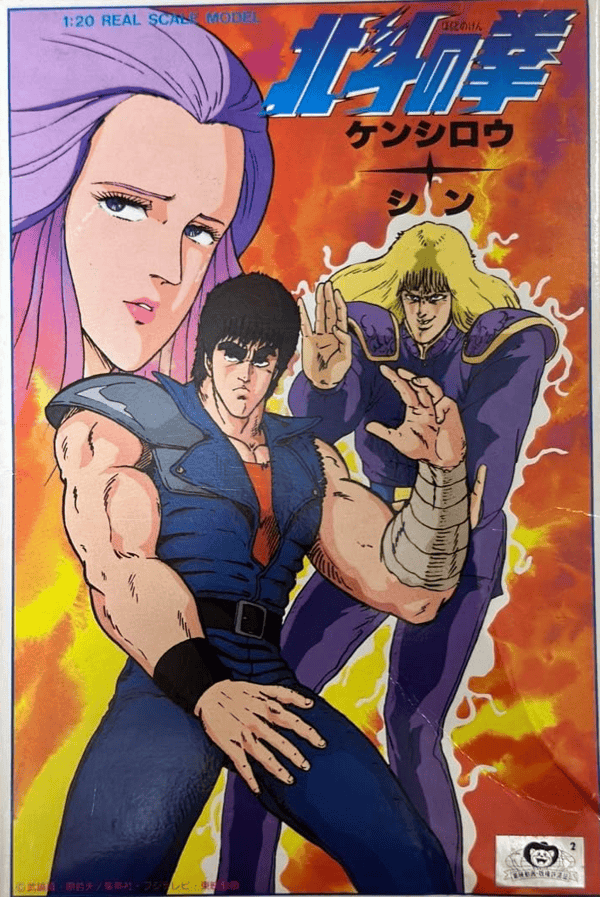
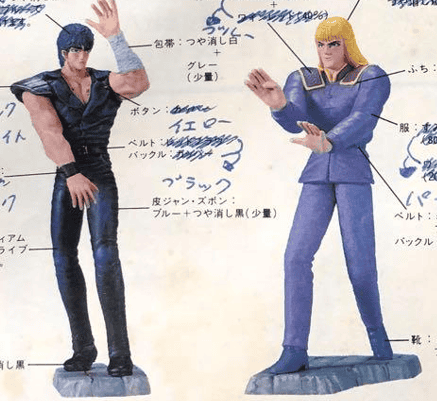
Series No.1: Kenshiro + Shin (Computer Number 0503566-300, 300 yen, instruction sheet dated February 1985). This box is the only one in the line to feature a female presence, with Yuria in the background of the illustration. Shin is presented as the practitioner of Nanto Seiken, frozen in his signature fighting stance, purple uniform and shoulder pads. The painting guide specifies the color mixes: Shin’s outfit in purple (80%) enhanced with wine red (20%), entirely matte finish, while Kenshiro’s leather calls for a semi-matte finish.
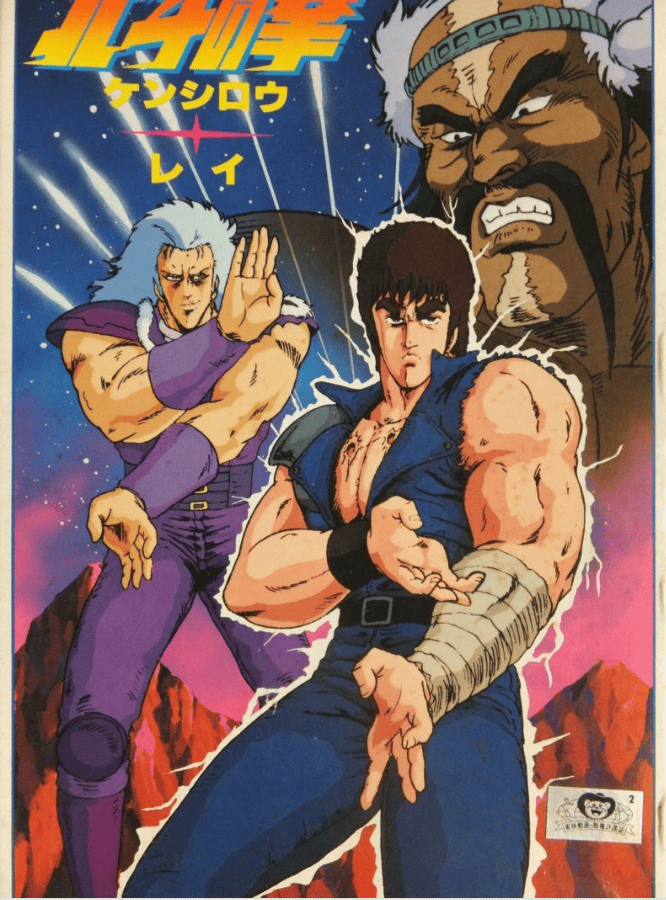
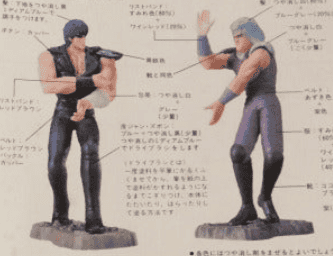
Series No.2: Kenshiro + Rei (Computer Number 0503567-300, 300 yen, instruction sheet dated March 1985). Kenshiro adopts the stance of the Hokuto Sei Kyoku Rin (北斗聖極輪) and Rei that of the Nanto Koha Ryu (南斗虎破龍), the two techniques from their first confrontation at the Kiba clan, whose leader is featured prominently on the box illustration. The painting guide breaks down Rei’s mauve outfit zone by zone, down to the shoulder pads and fur collar.
Kenshiro at 1/12
The last two references drop the duo format for Kenshiro alone, at 1/12 scale, noticeably more imposing. Watch out for the dual numbering, a source of confusion among collectors. While the promotional strip designates them Series No.3 and No.4 within the full line, their boxes display “No.1” and “No.2,” the numbering specific to this 1/12 sub-series called “Real Figure Kenshiro” on the included cards.
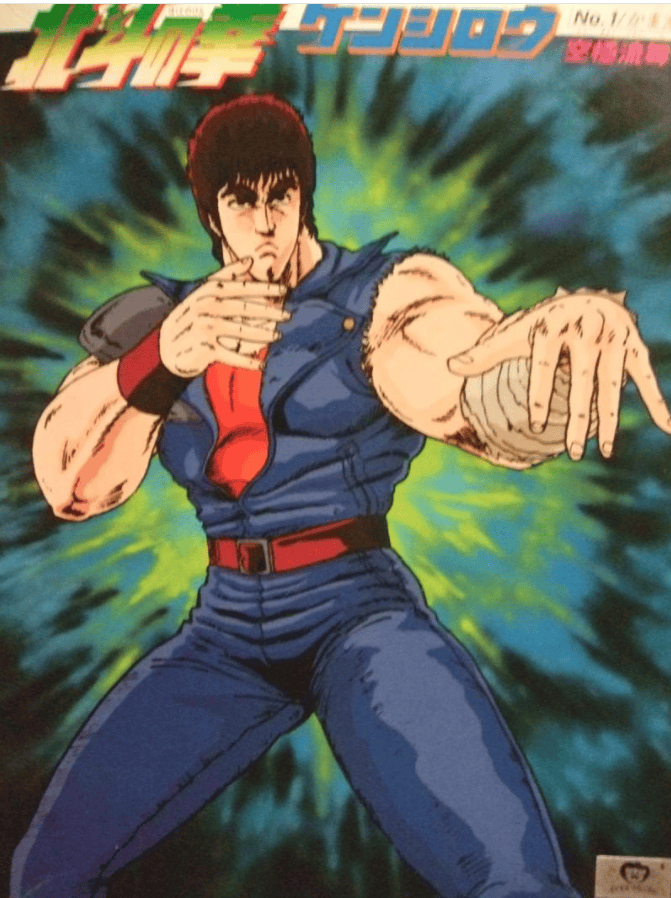
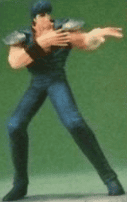
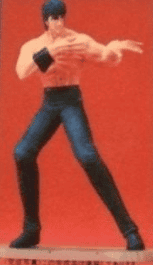
No.1: Kenshiro “kamae,” Kukyoku Ryubu (空極流舞, Computer Number 0503568-500, 500 yen). Kenshiro in a fighting stance, in the posture of this evasion technique seen against the Colonel of Golan. The kit is molded in two colors (flesh and blue), comes with a brick wall base and a sticker sheet to recreate the wrist bandages, which the instruction sheet recommends wrapping in three layers for added realism. A clever bonus: the jacket is an optional part, allowing the model to be built bare-chested or clothed.
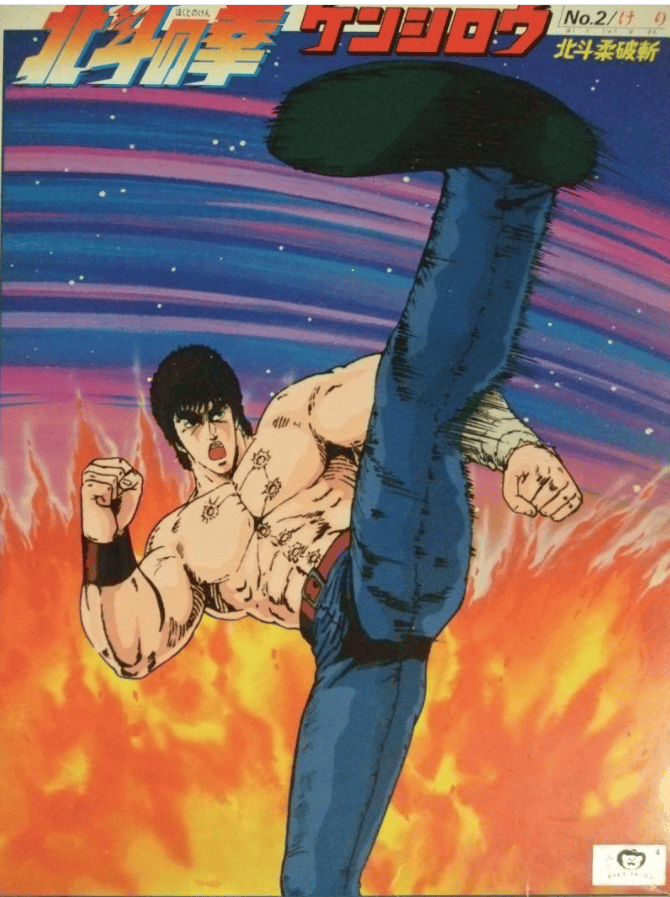
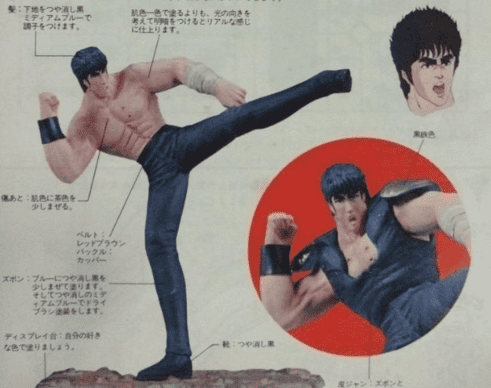
No.2: Kenshiro “keri,” Hokuto Ju Ha Zan (北斗柔破斬, Computer Number not recorded). Kenshiro bare-chested delivering a high kick against a backdrop of flames, the technique used against Heart, the giant from Shin’s gang. The painting guide recommends a skin base mixing orange and white, matte finishes, and dry brushing for the pants.
Painting your model kit: the Bandai pedagogy
This is the most interesting aspect of the line. Each instruction sheet contains, in addition to the assembly plan and color-by-color painting guide, an illustrated tutorial called “Figure Technique Koza” that teaches the fundamentals of figure modeling: smoothing seam lines with sandpaper (400, 600, then 1000 grit), making a fine brush for faces, dry brushing, and even painting facial shadows using a gradient of three skin tones depending on the direction of the light. The instruction sheets recommend water-based paints, safer for the young audience being targeted.
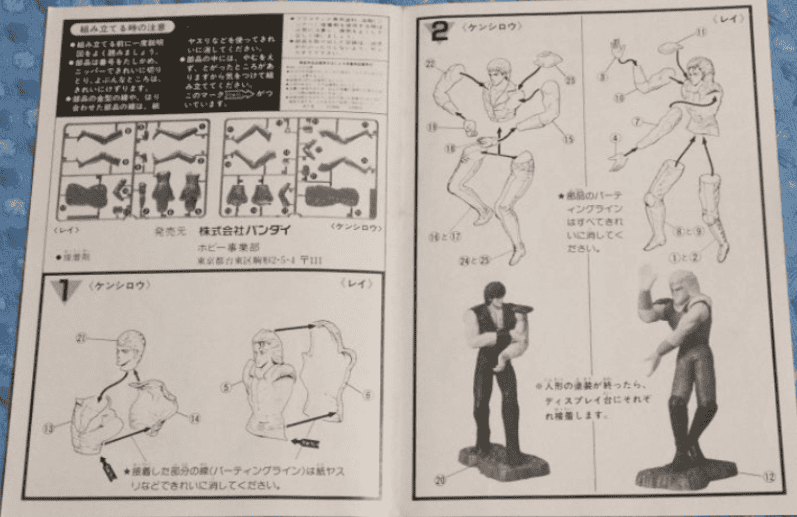
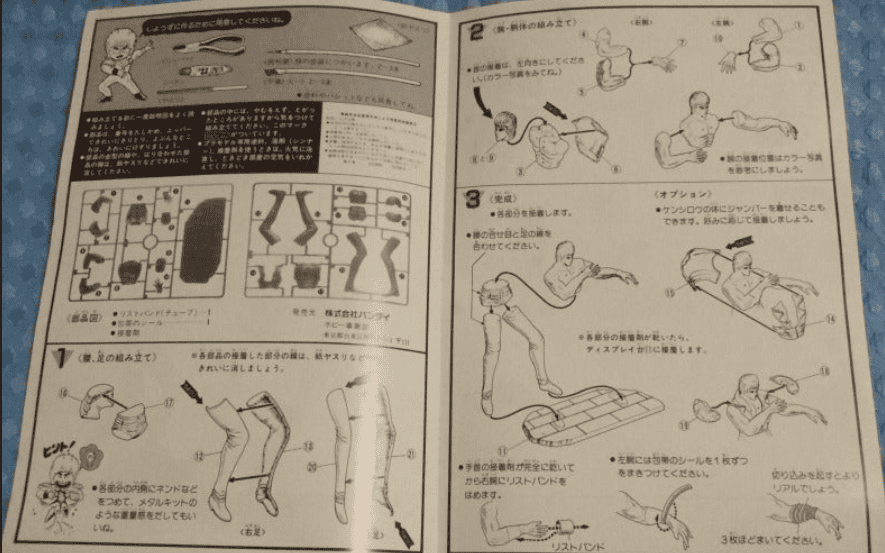
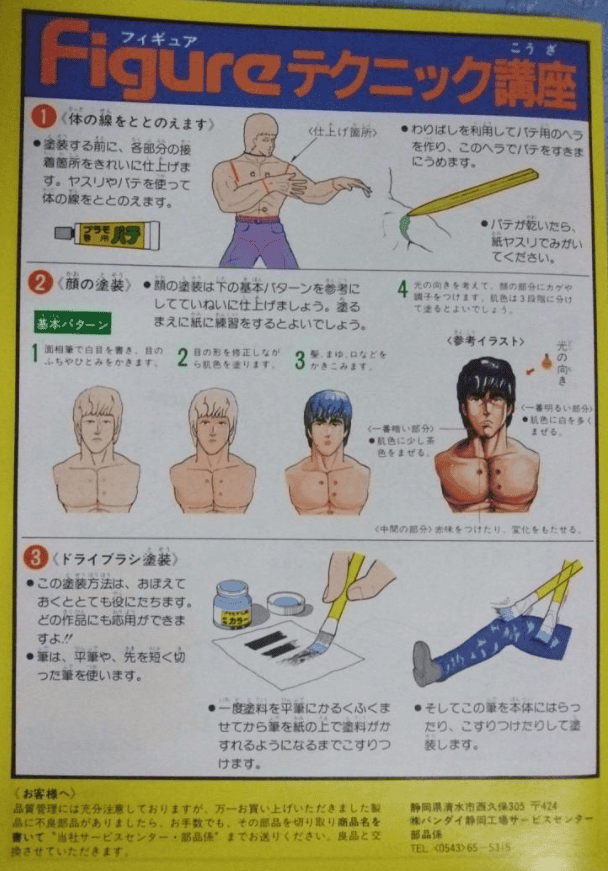
The instruction sheets mention the spare parts service at the Bandai factory in Shizuoka, in Shimizu. In case of a defective part, the buyer was invited to cut it out and send it by mail for a replacement. A different era.
Hiken cards and bonus sheets
Each kit includes collectible cards numbered sequentially across the line, at a rate of one card per character. Cards 1 and 2 for the Shin kit, cards 3 (Kenshiro, Hokuto Sei Kyoku Rin) and 4 (Rei, Nanto Koha Ryu) for the Rei kit, card 5 for the kamae and one card for the keri. The series is titled “Hiken Card” (秘拳カード). The backs of the duo cards feature “combat data” (戦闘データ) in sepia illustration: location of the confrontation, martial school, techniques, and a narrative summary of the character.
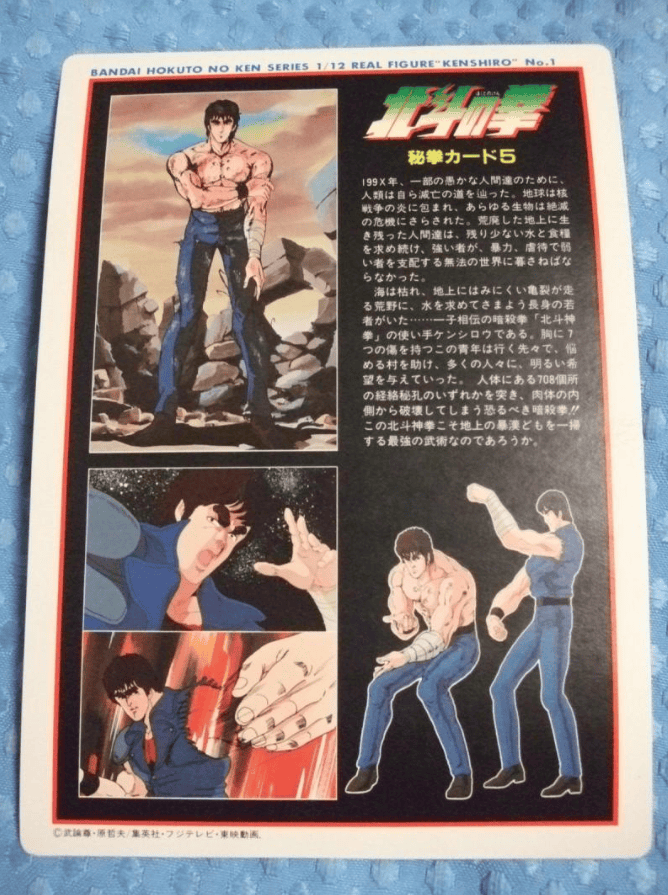
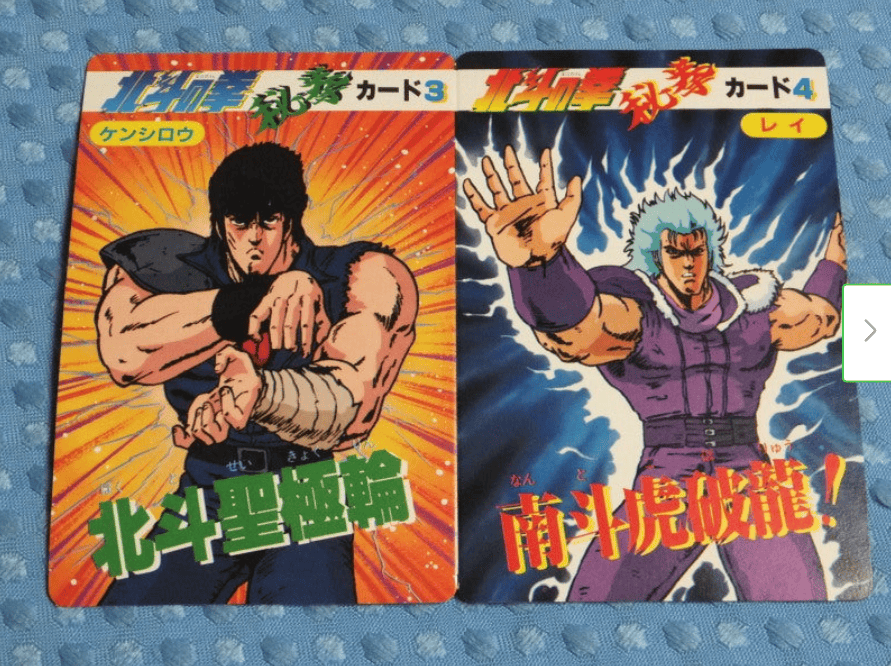
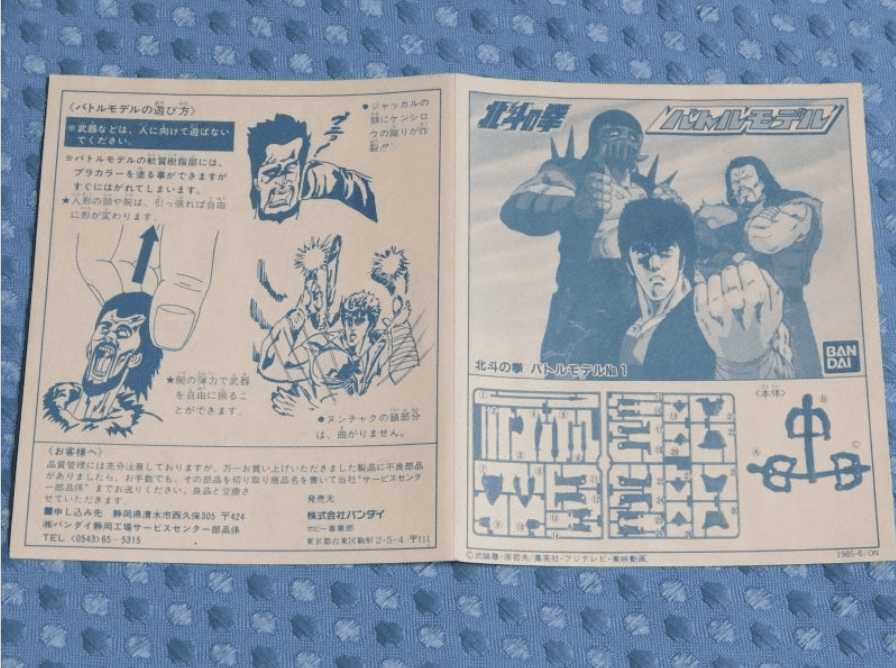
The 1/12 kits add large-format bonus sheets. The kamae includes the “Hokuto Shinken Hiko-zu” (北斗神拳秘孔図), a double-sided diagram of the human body’s pressure points, mapped onto the silhouette of a mohawked punk, with the obligatory regulatory warning never to reproduce these dangerous techniques. The keri includes the “Dai-Akunin Retsuden” (大悪人列伝), a gallery of the great villains from the beginning of the series: Shin and his four lieutenants Spade, Diamond, Club and Heart, the Colonel’s God Army, the Kiba clan leader, Jackal and Devil Rebirth. A nice touch: Heart’s biography specifies that he was defeated by the Hokuto Ju Ha Zan, the very technique reproduced by the kit’s figure.
Finding them today
Never reissued, the line can mainly be found on the Japanese secondhand market: Yahoo Auctions and Mercari for auctions and private sales, Suruga-ya for shops. Sealed copies are rare, and the condition of the boxes makes all the difference in value, as the thin cardboard from 1985 has rarely survived forty years without damage. Always check for the presence of the Hiken cards and bonus sheets, often missing from opened copies, as well as the sticker sheet from the kamae. That same year, Bandai took the license in an entirely different direction with its soft interlocking figures, the Battle Model.