

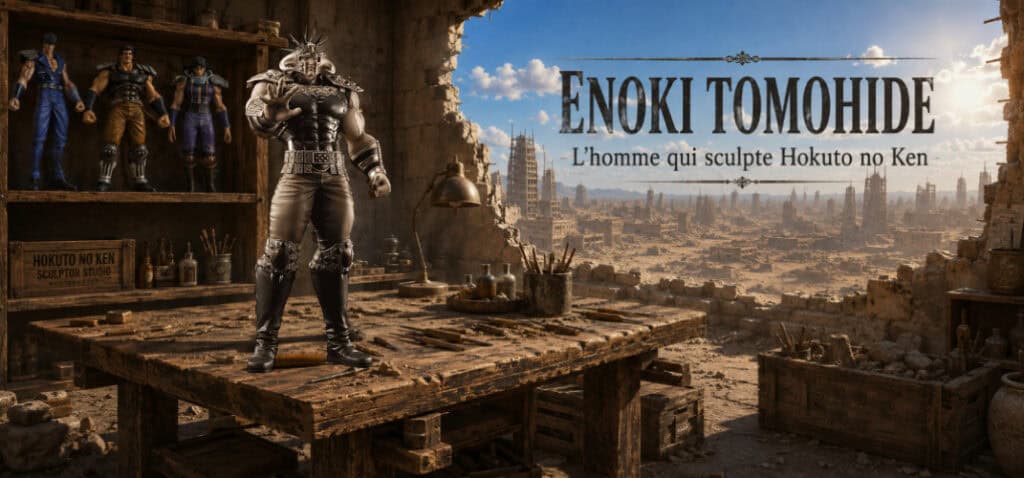
As every Friday, we revisit Hokuto no Ken figures. Change of direction this week: instead of following a product line, we follow a sculptor. The one whose name appears on the boxes of three different Kaiyodo series, from 2000 to 2007, and who sculpted the manufacturer’s Hokuto no Ken figures for several years.
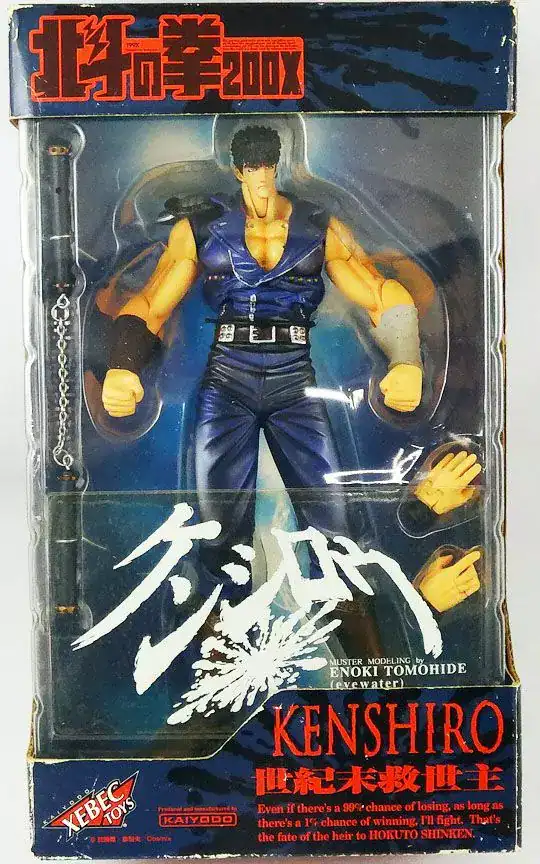
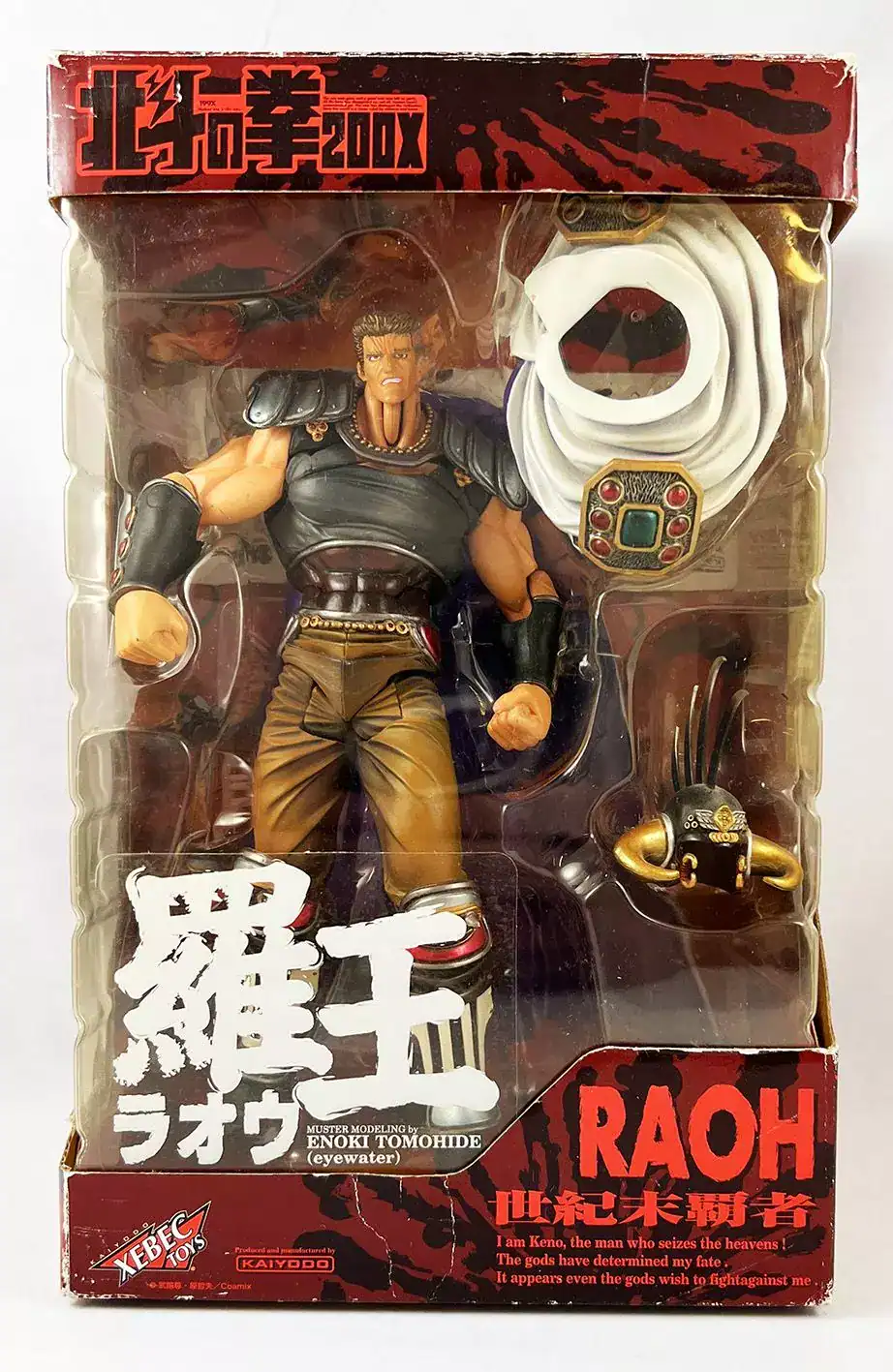
His name is Enoki Tomohide (榎木ともひで). On the blisters, his name appears just below the character’s name, followed in parentheses by his studio name, eyewater. This practice is far from trivial: Kaiyodo makes a point of featuring on each of its products the name of the person who created the prototype, including on toys sold with confectionery.
From drawing to sculpture
Born in 1974 in Wakayama Prefecture, Enoki initially aimed for a career as a manga artist. He enrolled in the illustration department at Osaka’s art school, but submitted a sculpture as his graduation project, as that art form had taken precedence over drawing. He traces his very first piece even further back, to a modeling clay project made in his final year of elementary school.
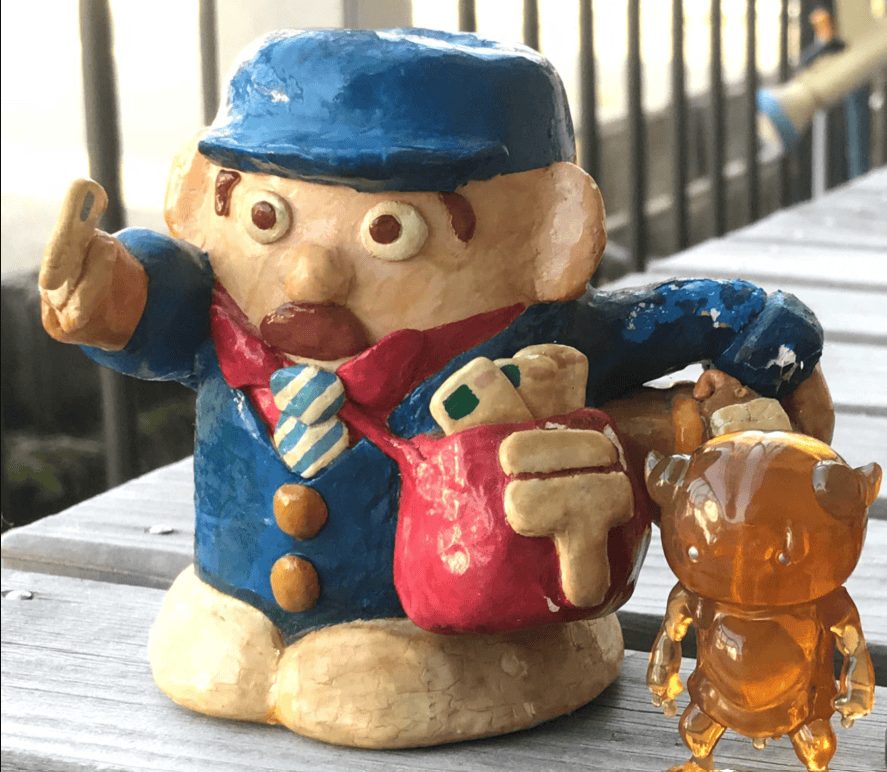
Yet he never aimed for the profession. In a 2023 interview, he explained that he started on someone’s recommendation, seeing it as nothing more than a side job, and that he never stopped since. His first professional commission dates from 1998 and has nothing to do with Hokuto no Ken: it was Kero-chan, the flying plush from Card Captor Sakura. That same year, he presented his first original piece at Wonder Festival.
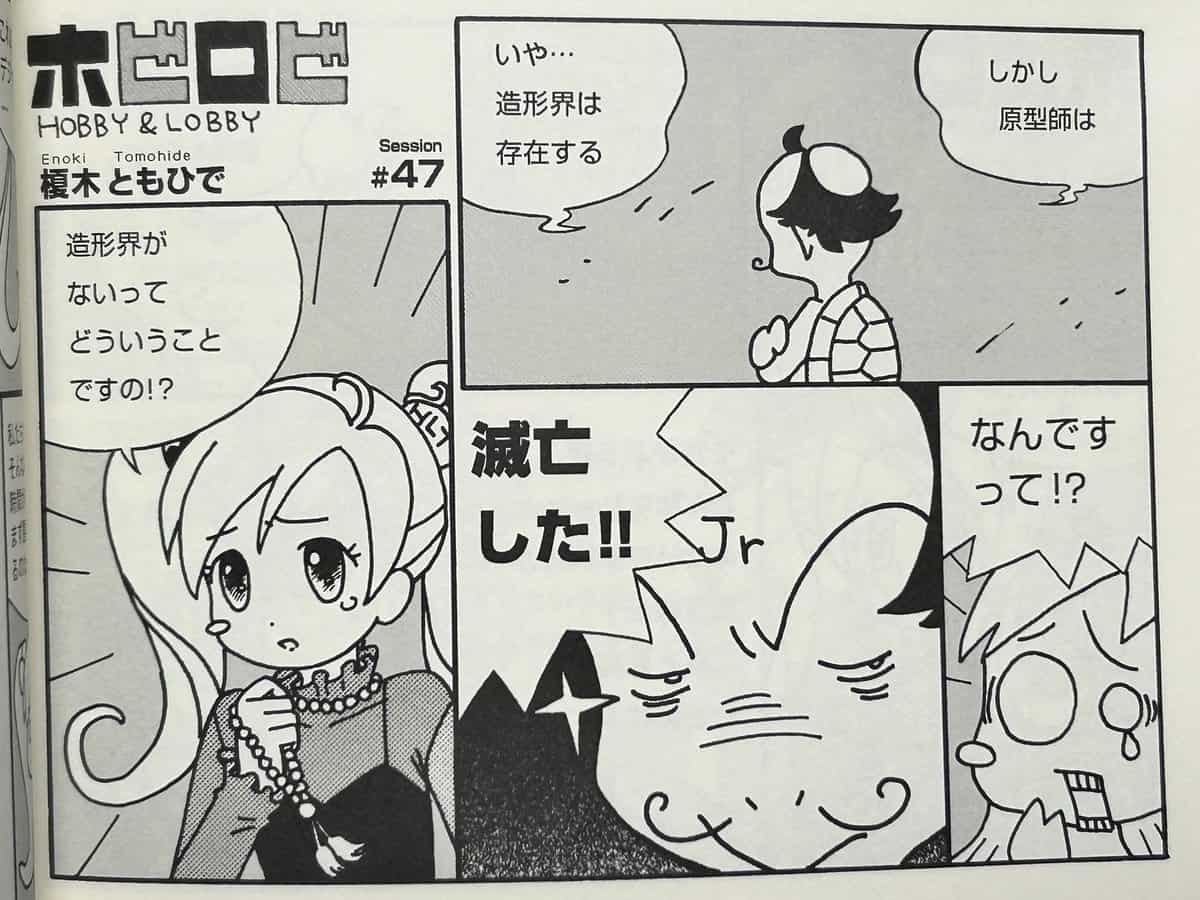
The beginnings were modest. That first appearance earned him only a single sale. A month later, illustrator Mizutama Keinojō devoted a column to his work in Model Graphix magazine, and things took off from there. Drawing never really left him either: for twelve years he produced a comic strip titled Hobiro, published in Kaiyodo’s advertising pages in modeling magazines, and eventually collected into a volume.
200X and Kaiyodo’s statement of intent
Kaiyodo had already been working on Hokuto no Ken for two years when his name first appeared. The 199X, launched in April 1998, had paved the way with around twenty characters and dozens of variants, but its blisters credited no sculptor. The 200X followed in August 2000, and this time the name was printed on the front, below the character’s title.
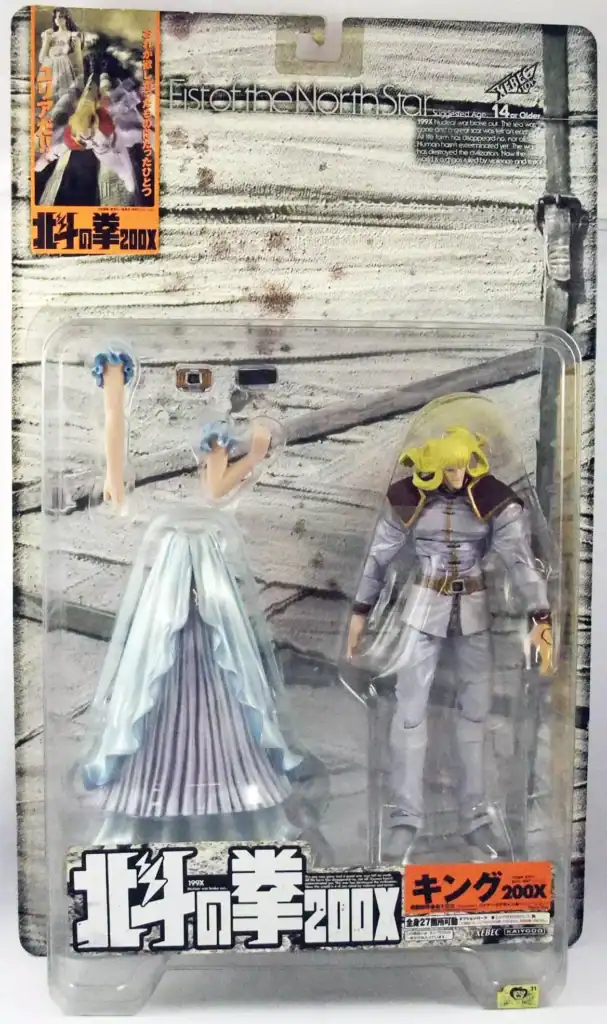
On the back of each blister, an orange insert announces the series program. The text comes from the manufacturer and closes with a credit line: prototyping by Enoki Tomohide, eyewater studio, packaging design by Pepper Shop.
Without “expressiveness,” you can’t call it a figure. If you can’t play with it, it’s not a toy. The sharp sculptural quality honed on garage kits, married to a new kind of articulation mechanism. Articulation that is both solid and surprising, that you can play with, and where every position becomes a fully realized pose. Had anyone ever seen a figure like this before? A limp, characterless pose obtained by simply bending a joint is not “expressiveness.” That kind of thing, let’s leave it to plastic model kits. In the 21st century, the action figure must evolve. Opening a new frontier, ceaselessly advancing toward the next one: that is what the Hokuto no Ken 200X action figure series is all about. (Publisher’s text from the back of the blisters, translated by us)
This text neatly sums up the brief given to the sculptor: hide the joints without distorting the silhouette, and achieve a realistic pose regardless of the chosen angle.
The line remained in production until December 2006, but it was not the work of a single man. The blisters we were able to examine credit Enoki on Kenshiro and Raoh, as well as on Shin in his KING outfit. Other pieces are attributed to other hands: Matsuura Ken signed the 2005 Bat and Kenshiro with Kokuoh, whose horse is credited to Ōtsu Atsuya. For the rest of the line, credits still need to be checked box by box.
Big Scale Real Figure, 40cm of soft vinyl
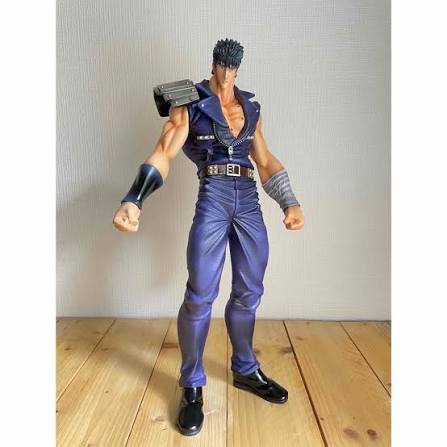
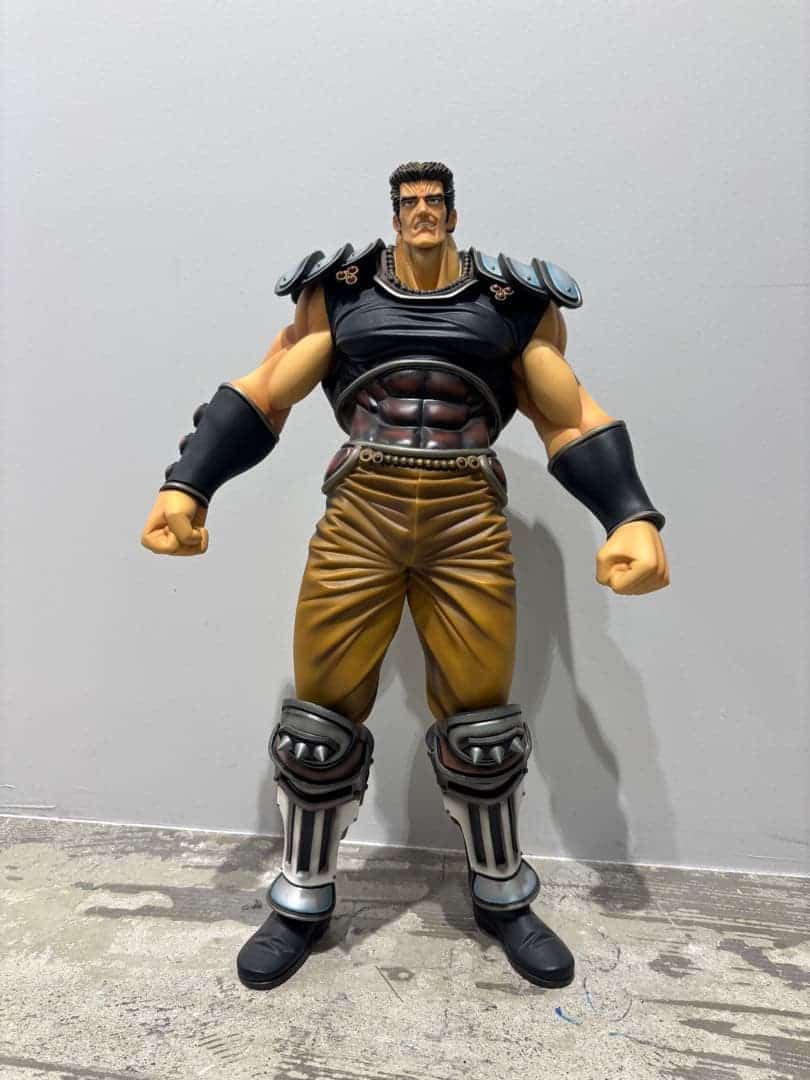
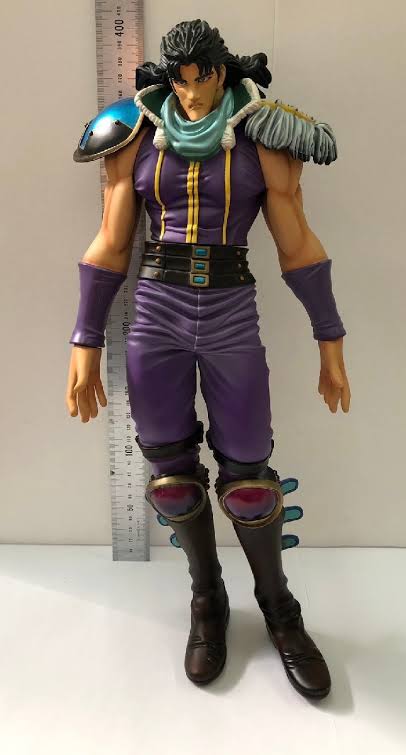
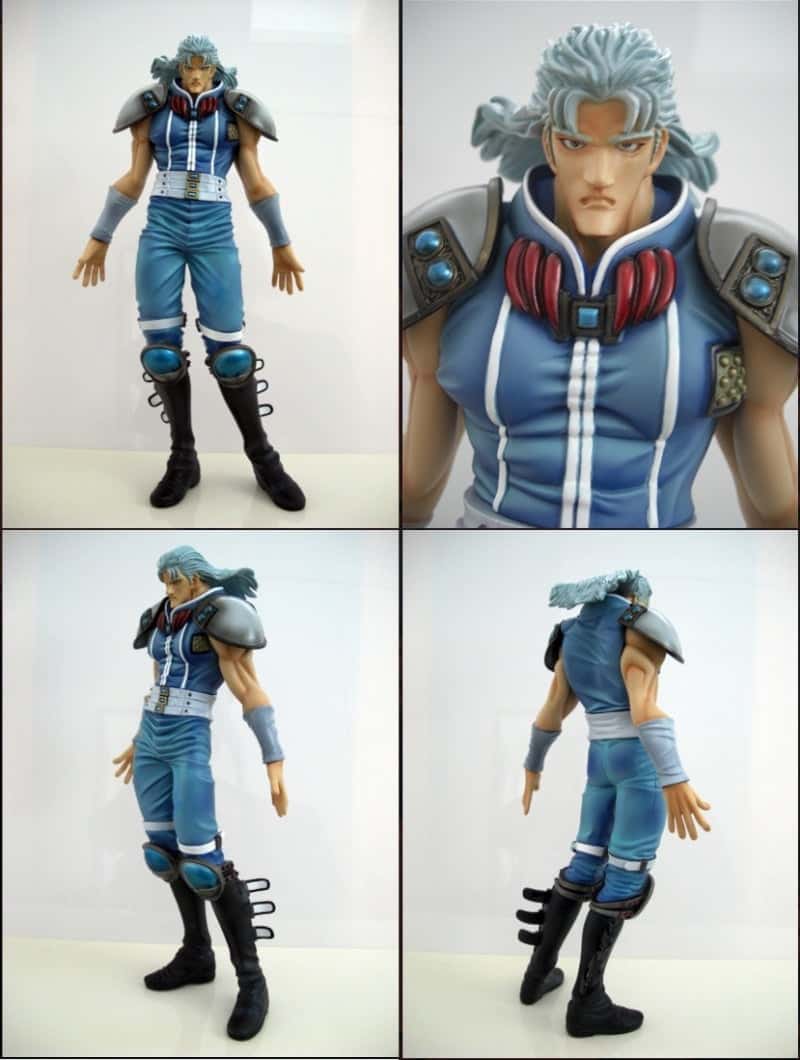
Between December 2004 and February 2005, the same aesthetic was scaled up to 40 cm in soft vinyl with the Big Scale Real Figure. Three sculptures, four references: Kenshiro and Rei in late 2004 at 4,800 yen, Raoh on January 24, 2005 at 5,300 yen, then a white-haired Rei in February. Going from twenty to forty centimeters is far from a simple scale-up; every proportional flaw, every anatomical shortcut that the smaller size let slide becomes visible.
Violence Vignette, the art of freezing iconic scenes
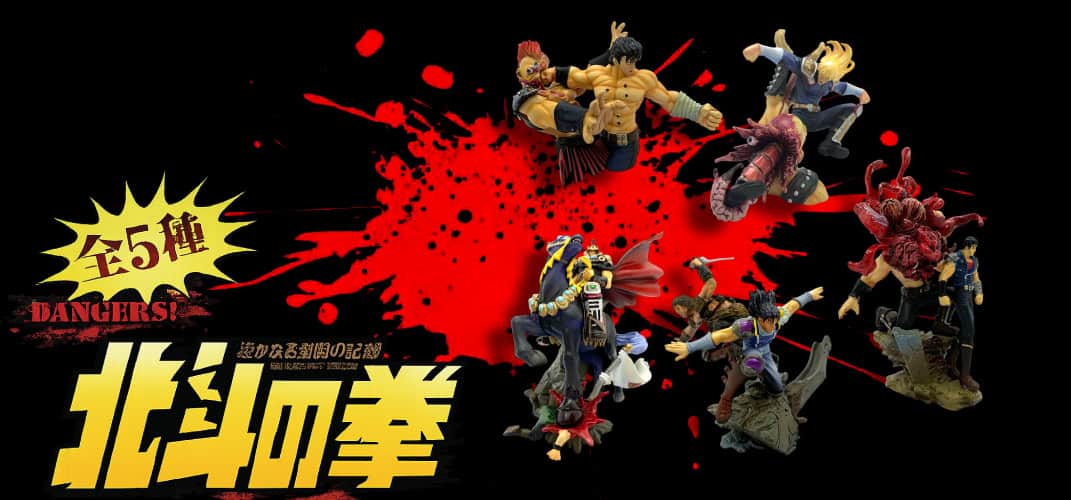
Two years later, in 2007, the reverse exercise. The Violence Vignette line brought together five scenes in 300-yen capsules, standing 6 to 8 cm tall. The concept was no longer the standalone figure but the complete scene, base included, in the most compact format possible. The promotional visual displayed his name in full, along with his studio’s; Kaiyodo was selling the line on its sculptor’s reputation.
The five references, distributed like the Big Scale by Happinet Robin, bear lengthy titles in the finest tradition of the genre: “Ōgi! Hokuto Hyakuretsu Ken,” “Sōzetsu! Nanto Seiken no Shin,” “Jūrin! Kenoh to Kokuoh,” “Bakuretsu! Hokuto Shinken,” and “Eiri! Nanto Suichōken.” Fitting Kenoh rearing up on Kokuoh while trampling a henchman into eight centimeters is a very different exercise from an action figure, and it is this wide range that best defines his work.
When he’s not sculpting the end of the century
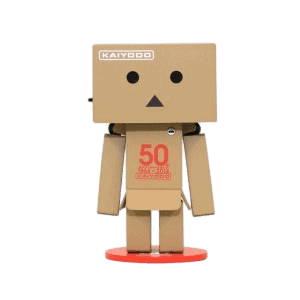
Kaiyodo’s official catalog holds a few surprises. The man who sculpted Raoh and the bloody scenes of the Violence Vignette also created the Danboard figures, the little cardboard character from Yotsuba&!, its feline variations Nyanboard, and Snoopy vignettes for the Peanuts Museum in Tokyo.
On the same pages appear an Iron Man Mark V in Legacy of Revoltech, several Evangelion figures, Attack on Titan vignettes, a Kemono Friends series, and a set devoted to the creatures of Moroboshi Daijirō. His profile page says it all: from virile violence to children’s literature, from articulated figures to highly detailed vignettes.
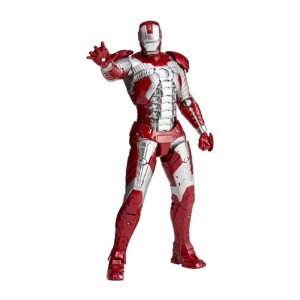
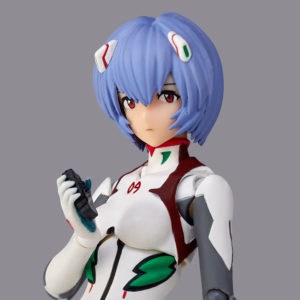
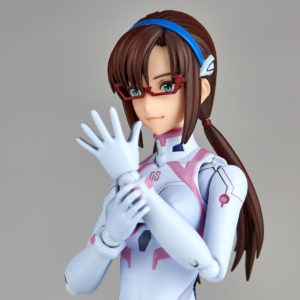
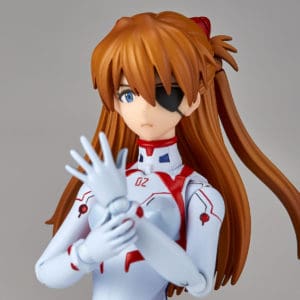
He has never left the profession, even though he has considered it. He describes 2022 as his worst year, to the point of having thought about quitting, before deciding to make it a turning point in his career. He still exhibits at Wonder Festival (most recently on July 26, 2026), continues to take prototyping commissions, and works about ten hours a day.
Asked about what he hopes for going forward, he offered a clarification: “We sculptors are not three-dimensional photocopiers. The way to present something in three dimensions, to conceive it, to adapt it: we are the ones who know it best, and I would like people to recognize that we are the specialists.” (translated by us). A statement that takes on particular significance when you have followed his work on Hokuto no Ken, where he never settled for simply copying panels.
What is he doing today?

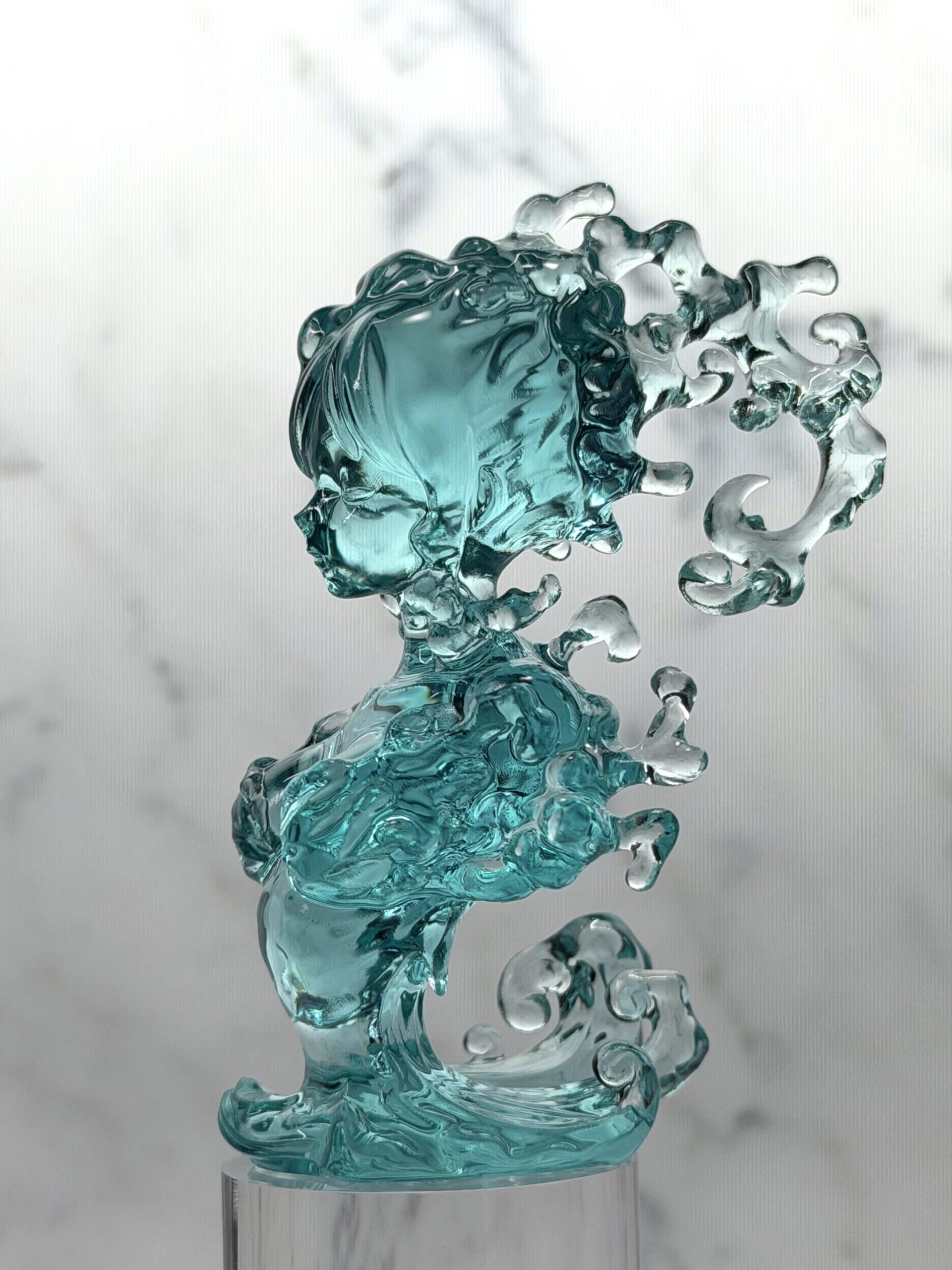
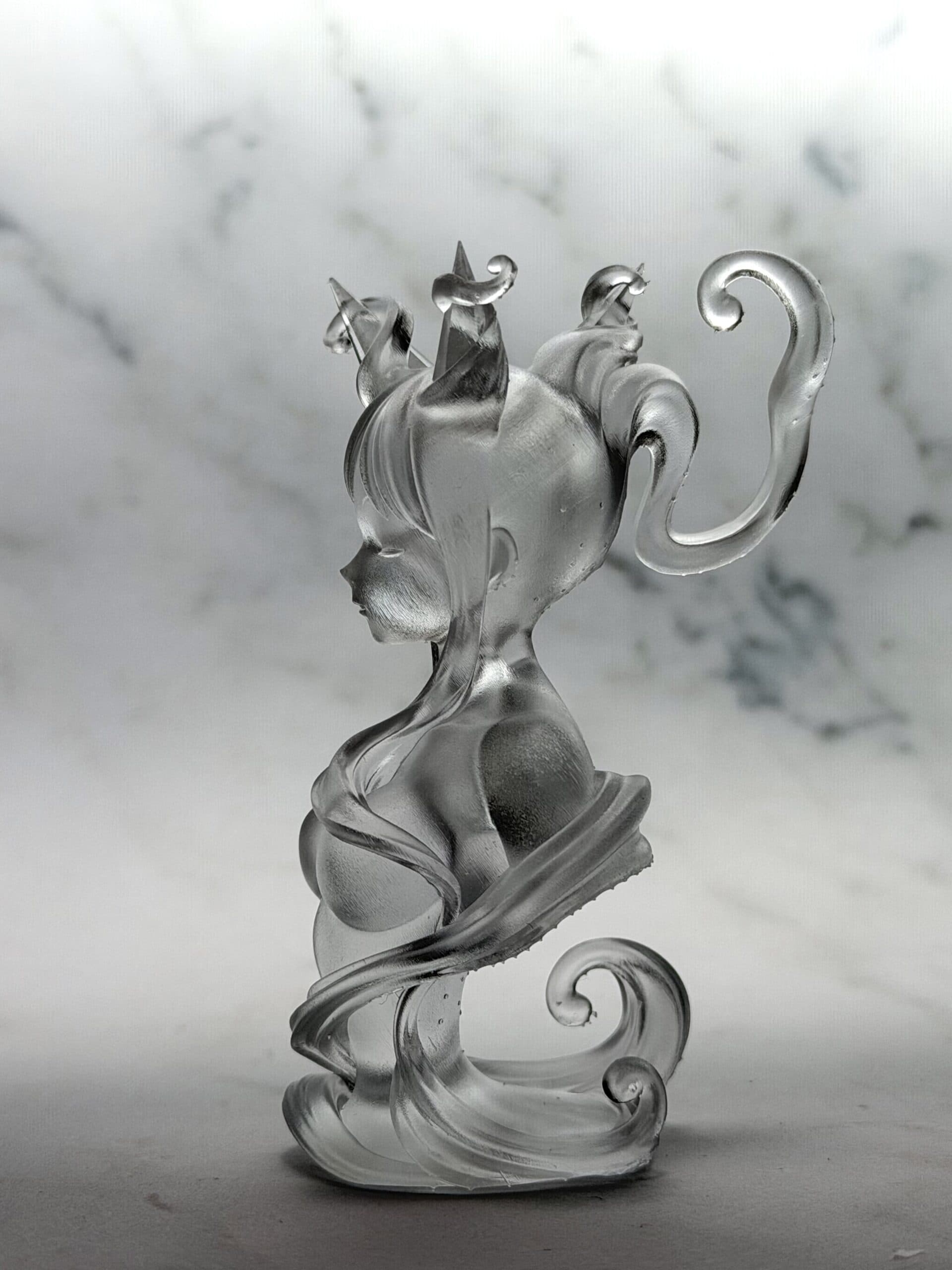
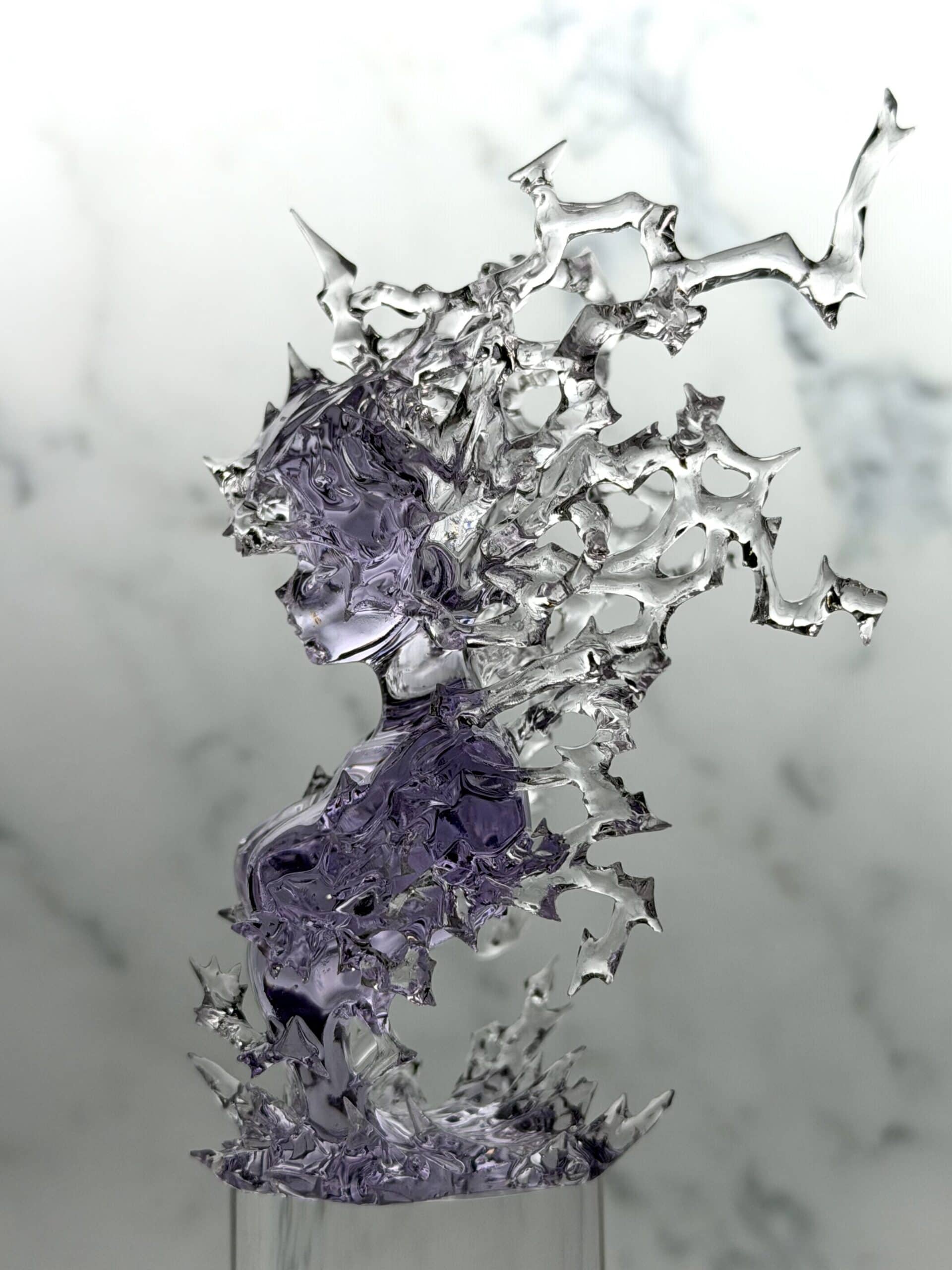
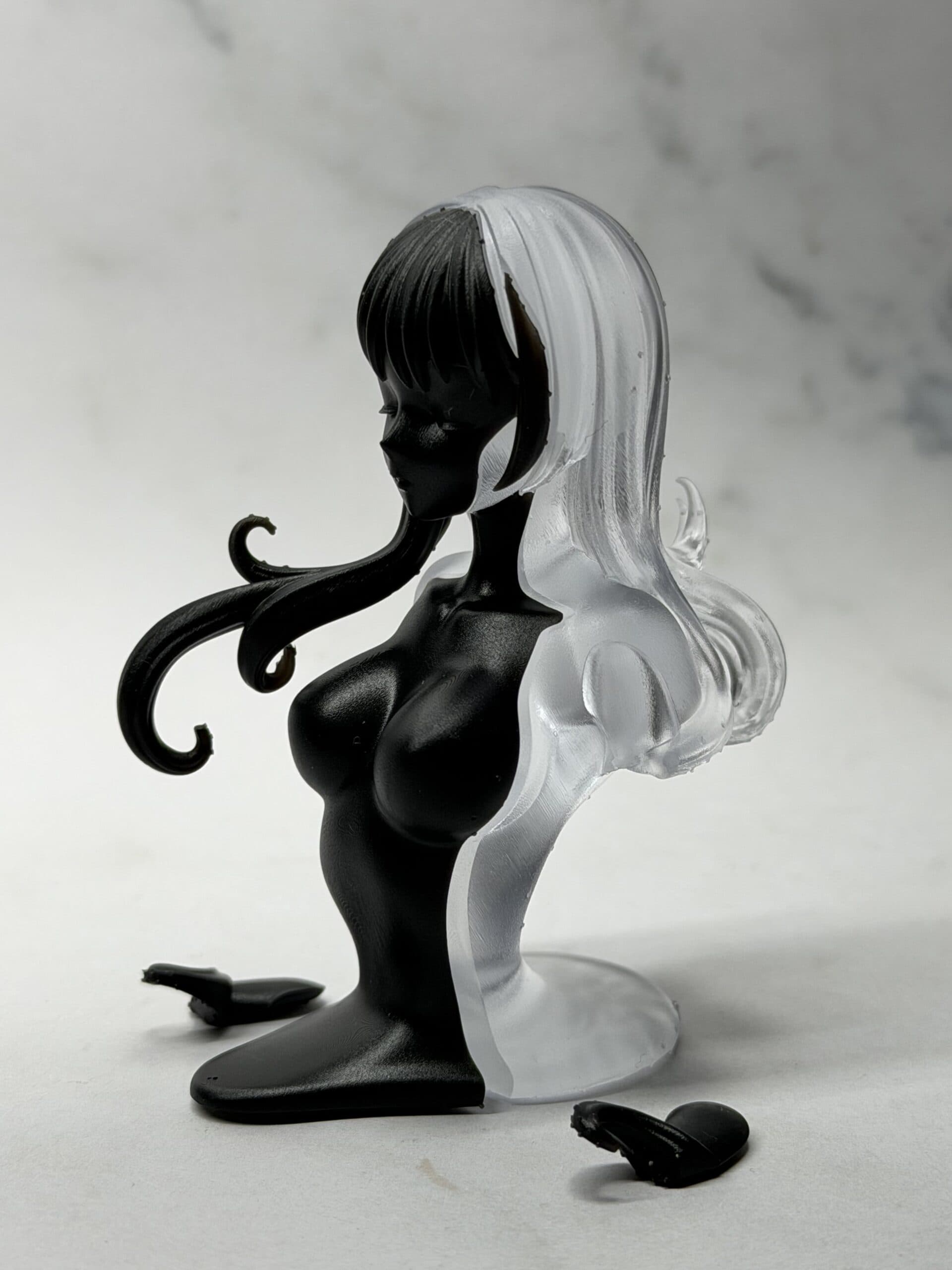
The name eyewater does not refer only to his personal studio. It is a unit of sculptors, which celebrated its twenty-fifth anniversary in 2025, and to which Ōshima Yūki also belongs. Enoki has been developing a series of personal creations there for several years, the Element Girls, sold on his online shop.
The material is no longer vinyl or painted PVC, but transparent resin produced by a three-dimensional printer. Each piece is placed on a luminous base, with light traveling through the body of the figurine via fiber optics embedded in the sculpture. In July 2025, he explained how the twilight girl gets her orange sunset even though the light source is located at a distance: the end of the fiber, on the base side, is painted in transparent orange.
A return to the Hokuto no Ken scene in June 2026
On June 20, 2026, Bandai Spirits launches an Ichiban Kuji Hokuto no Ken -FIST OF THE NORTH STAR-, at 850 yen per draw. The Last Chance prize is a Raoh MASTERLISE approximately 27 cm tall, also awarded to winners of the Double Chance campaign. Three days after the release, Enoki posts a message on his X account: he is the one who created the Raoh prototype, and he had not sculpted one in about twenty-five years.
Kenshiro and Rei from lots A and B are not his work, and it is no longer Kaiyodo publishing them. But after nineteen years away from the license, it is indeed the same sculptor picking up the same iconic character.
The sculptors behind these brands
We often look at figurine lines as brand catalogs. Enoki’s trajectory reminds us that there are people behind them first, and that a manufacturer who calls on the same sculptor for several years on a license does not do so by chance, but to maintain a certain consistency between the models.
Kaiyodo would later entrust its Hokuto no Ken figurines to other hands: Matsuura Ken on the Seikimatsu Gekitoroku and then on the Revoltech line, Kagawa Masahiko on the busts. The handoff actually takes place in 2007, the year both the Violence Vignette and the Seikimatsu Gekitoroku are released. But his name appears across several years of production, on three lines and in three different formats. And twenty-six years after his first Raoh, he is still the one they sought out to sculpt a new one, proof if any were needed of true expertise.
Sources
- Interview and biographical profile, SCULPTORS Database, April 17, 2023: sculptors.jp
- Author’s portfolio page, “Enoki Tomohide, the figurine technique”: note.com/eyewater_e
- Official website of the eyewater studio: eyewater2000.net
- Author’s X account: @eyewater_e
- eyewater online shop, Element Girls series: eyewater-enoki.shop-pro.jp
- Official Kaiyodo product credits: kaiyodo.co.jp