

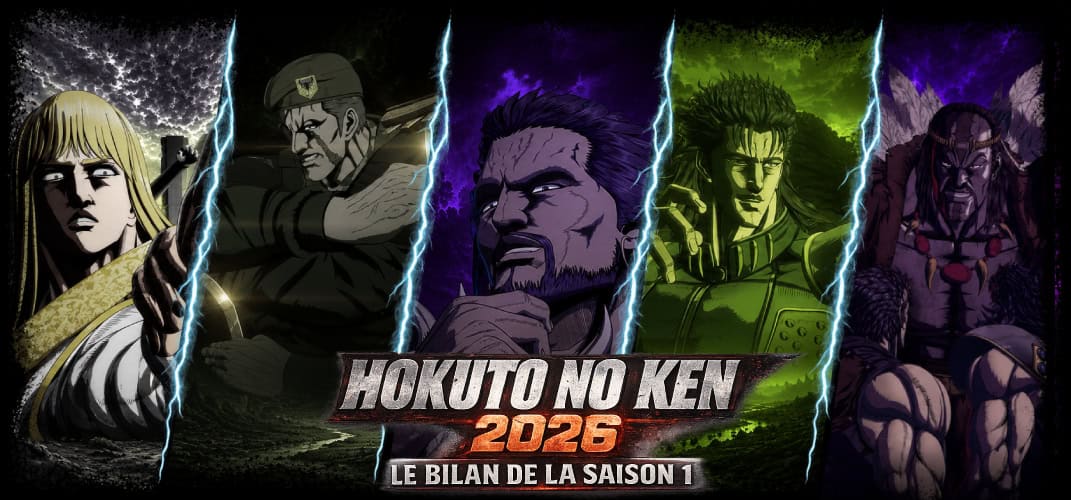

Forty years after Toei’s 1984 adaptation, Kenshiro returned to screens on April 10, 2026, under circumstances few people approached with confidence. Presented as an anniversary project, backed by a promise of faithfulness to the manga by Tetsuo Hara and Buronson, this new series streaming on Prime Video was nevertheless weighed down from its very first trailer by CGI that worried fans. Over the course of its first block of fourteen episodes, it attempted to answer a simple question: can a polished, faithful Hokuto no Ken animated predominantly in CGI recapture the soul of the original manga?
We followed this first batch episode by episode, from the fight against Zeed to the trap set by Kiba Daiō. This feature is not meant to be yet another verdict; it offers the perspective that weekly reviews could not provide, an overall reading of the narrative arc, the technical trajectory, the sound, the voice cast, and the adaptation choices, before the long break separating this first part from the continuation, expected in 2027.
The narrative arc of the 14 episodes
This first block of fourteen episodes covers the beginning of the manga through chapter 38, from Kenshiro’s wandering to the fall of Kiba Daiō. Beyond a simple summary, this overview also tells, between the lines, the story of how the series sought, and sometimes found, its balance.
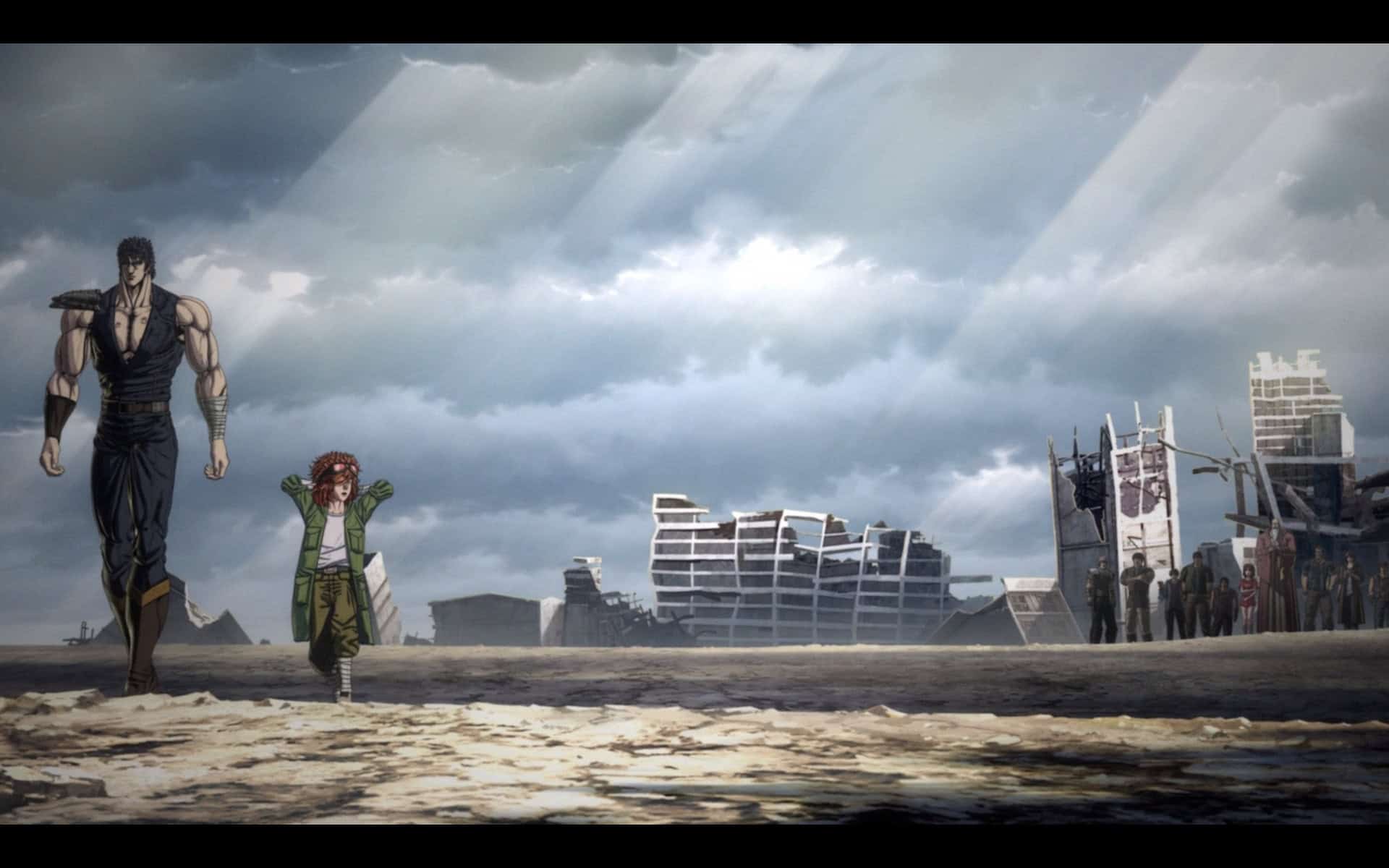
The early episodes establish the universe and its hero. Kenshiro wanders the post-apocalyptic desert, crosses paths with Bat and Rin, then takes on Zeed‘s raiders before facing Spade and King’s other men. It is the classic Hokuto no Ken introductory sequence, but also the most visually thankless one: the deliberately dark imagery, which director Maeda conceives as a reflection of a world without hope, comes with still-hesitant CGI. The universe takes shape, the tone is right, but the eye stumbles on the technical shortcomings of certain passages.
Next comes the conclusion of the Shin arc, a true emotional high point of the series’ opening. The reunion with the man who carved the seven scars into Kenshiro’s chest and tore Yuria away from him reaches its climax in episode 5, where Shin’s death is depicted without any triumphalism. This is where the sound work truly comes into its own: unlike the heroic theme of 1984, the 2026 anime features a somber score, a choice that sound director Konuma justifies by the solemnity of this moment, the moment when Kenshiro realizes what he will now have to carry. This episode combines the series’ two main flaws: Shin is beautifully animated in 2D during the flashbacks, but becomes unrecognizable once rendered in CGI. Additionally, the choices regarding lighting do not always convince.
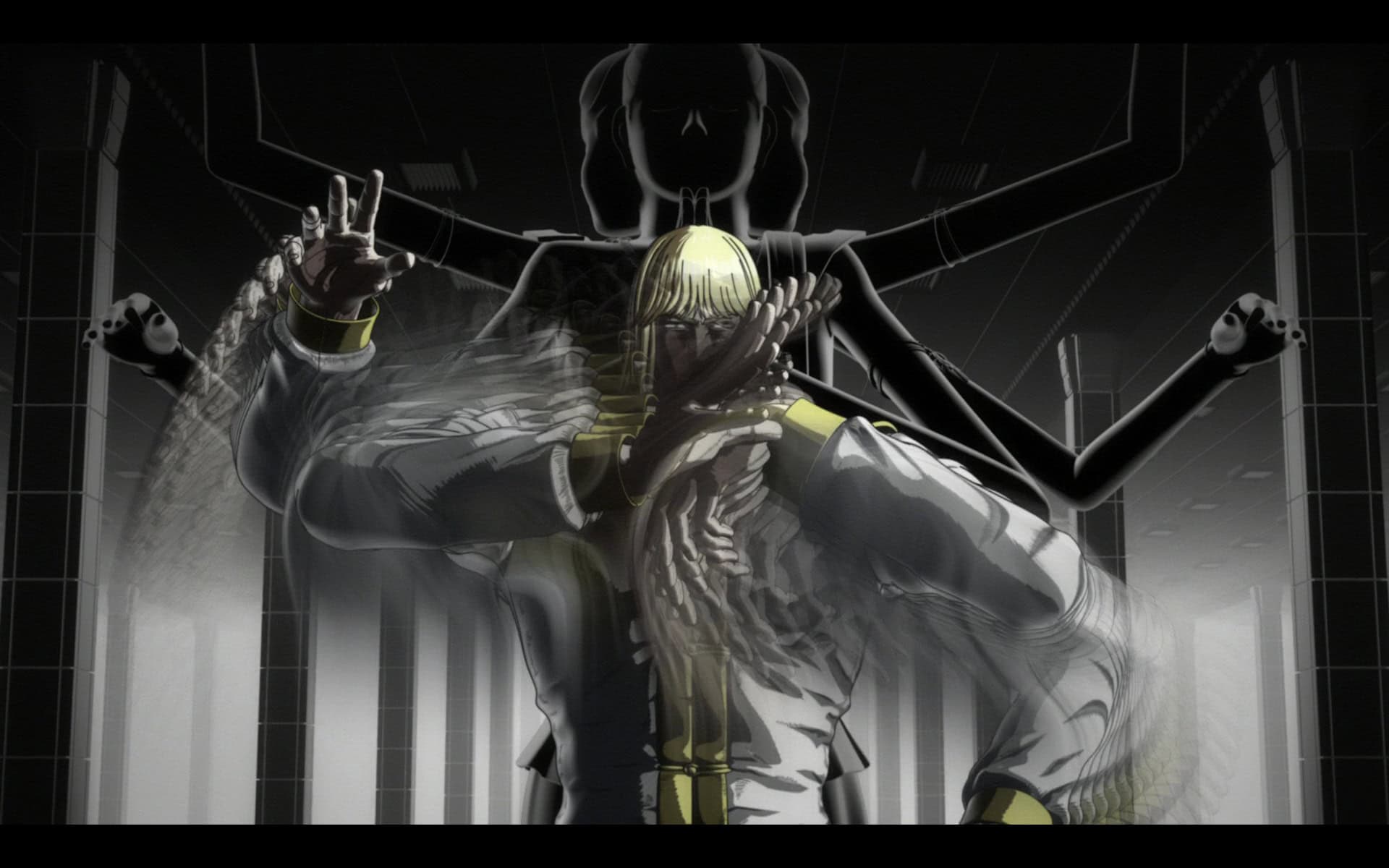
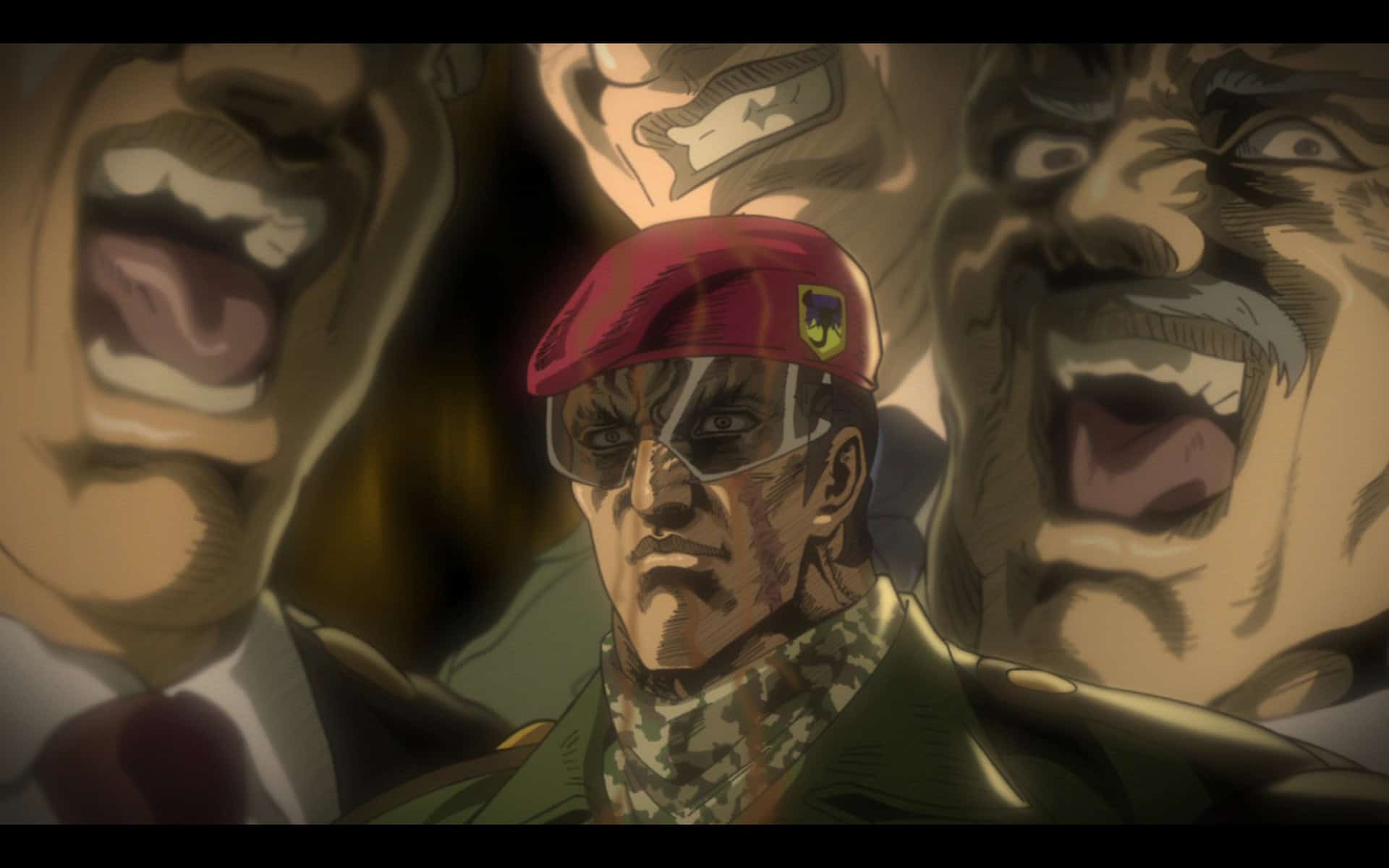
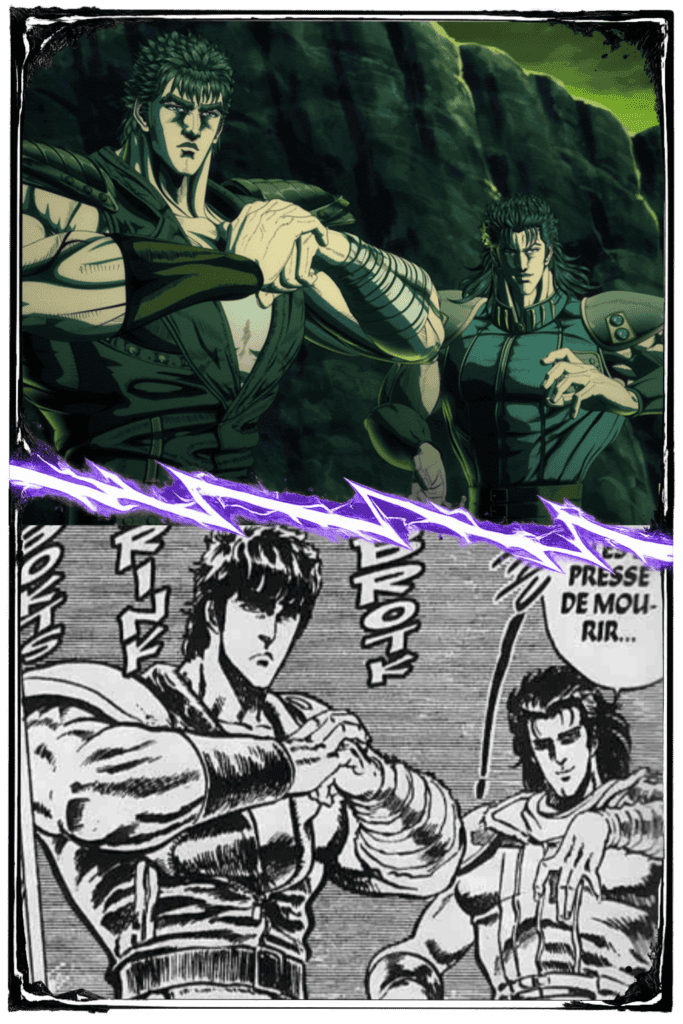
The narrative arc centered on the Golan and the Colonel perfectly illustrates the bold approach of this new adaptation: faithfulness to the manga, including what the 1984 anime had removed. Where the original version had deeply betrayed this arc by reducing the Colonel to a mere subordinate of Shin and erasing his entire backstory, the new series restores his true trajectory as the manga had written it. The flashback devoted to this red beret officer, betrayed by a corrupt chain of command, thus reclaims its rightful place. It is also very well staged, with numerous 2D shots of fine quality, even though they often remain static frames.
The Jackal arc represents a true turning point in the series. Starting from episode 8, the series reaches its first genuine technical peak. It is also at this point that the cast delivers its strongest performances, with a particularly sarcastic and well-portrayed Jackal. Devil Rebirth also makes his appearance; his colossal stature is rendered very convincingly, he exudes impressive power, and his confrontation with Kenshiro is both dynamic and remarkably well-staged. The episodes of this arc mark a clear improvement, even though nothing is ever fully guaranteed from one week to the next, with a few shots or lighting choices that still leave you puzzled.
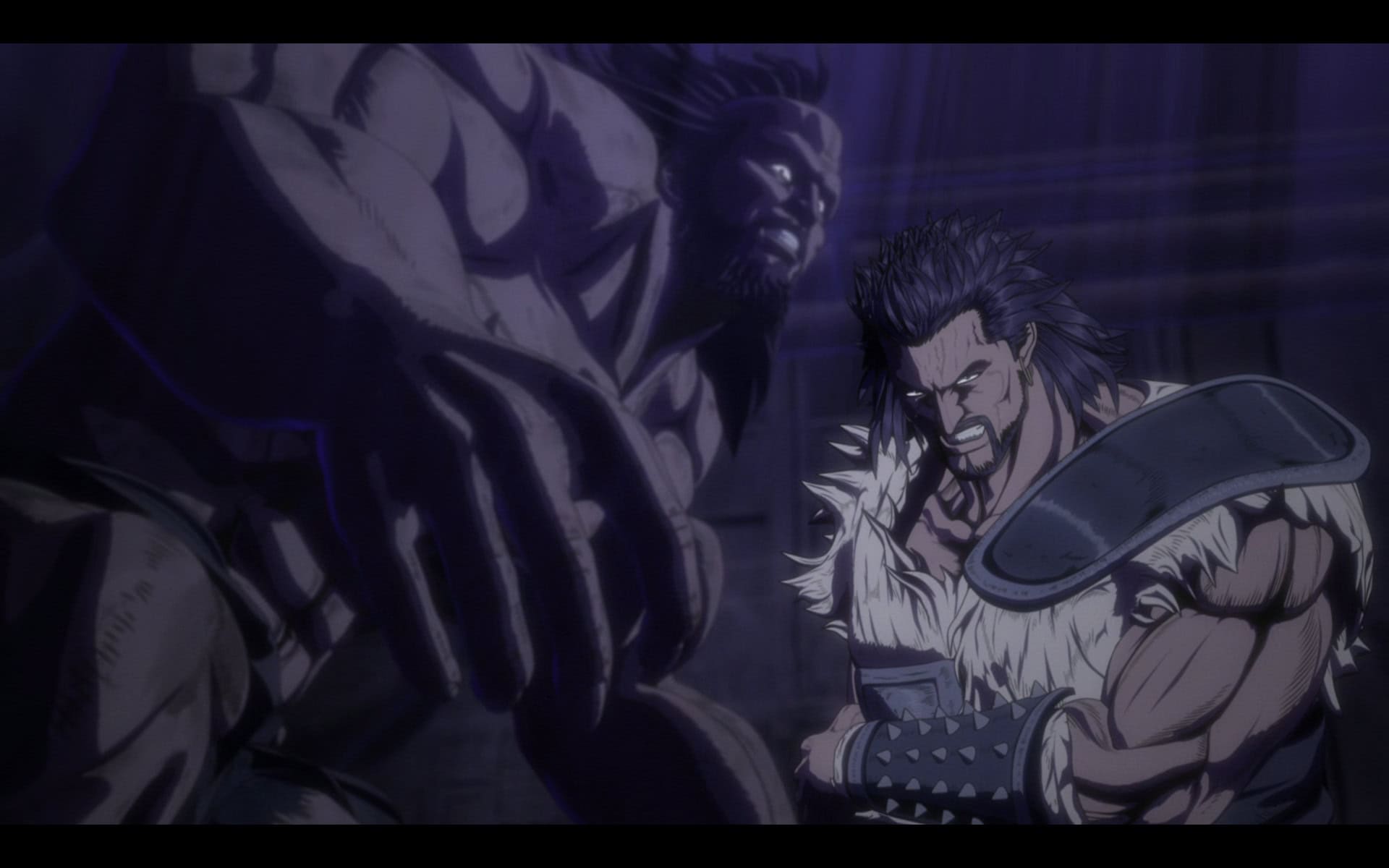
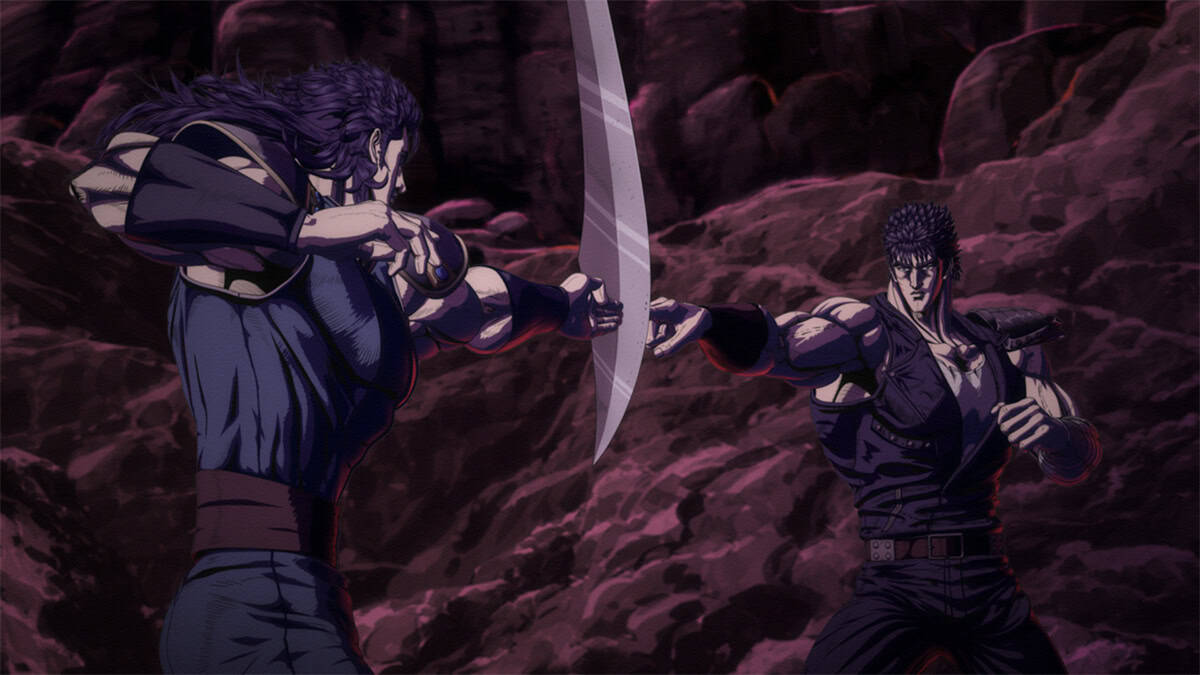
The last narrative arc of this block is the one featuring Rei and the Kiba clan, and it is arguably the most accomplished. The arrival of Mamiya, whose face reminds Kenshiro of Yuria, and especially the arrival of Rei, launches a long sequence during which the Nanto Suicho Ken asserts itself powerfully, carried by the vocal performance of Nakamura Yuichi, which our reviewers have consistently praised. It is also within this arc that a scene takes place to which Maeda draws particular attention and clearly holds dear: the one where Kenshiro faces Rei and only raises his fist as a very last resort, out of respect for his new ally. The director even confides a personal attachment to the character, to the point of having personally handled the effects of his techniques, even at the risk of being scolded by the team for overdoing it. The dialogue in which Kenshiro reminds Rei that they are alike, two men fighting for a woman (Kenshiro for Yuria, Rei for his sister Airi), reaches a dramatic intensity rarely matched throughout the entire season. The arc concludes with the defeat of Kiba Daiō and the introduction of Jagi.
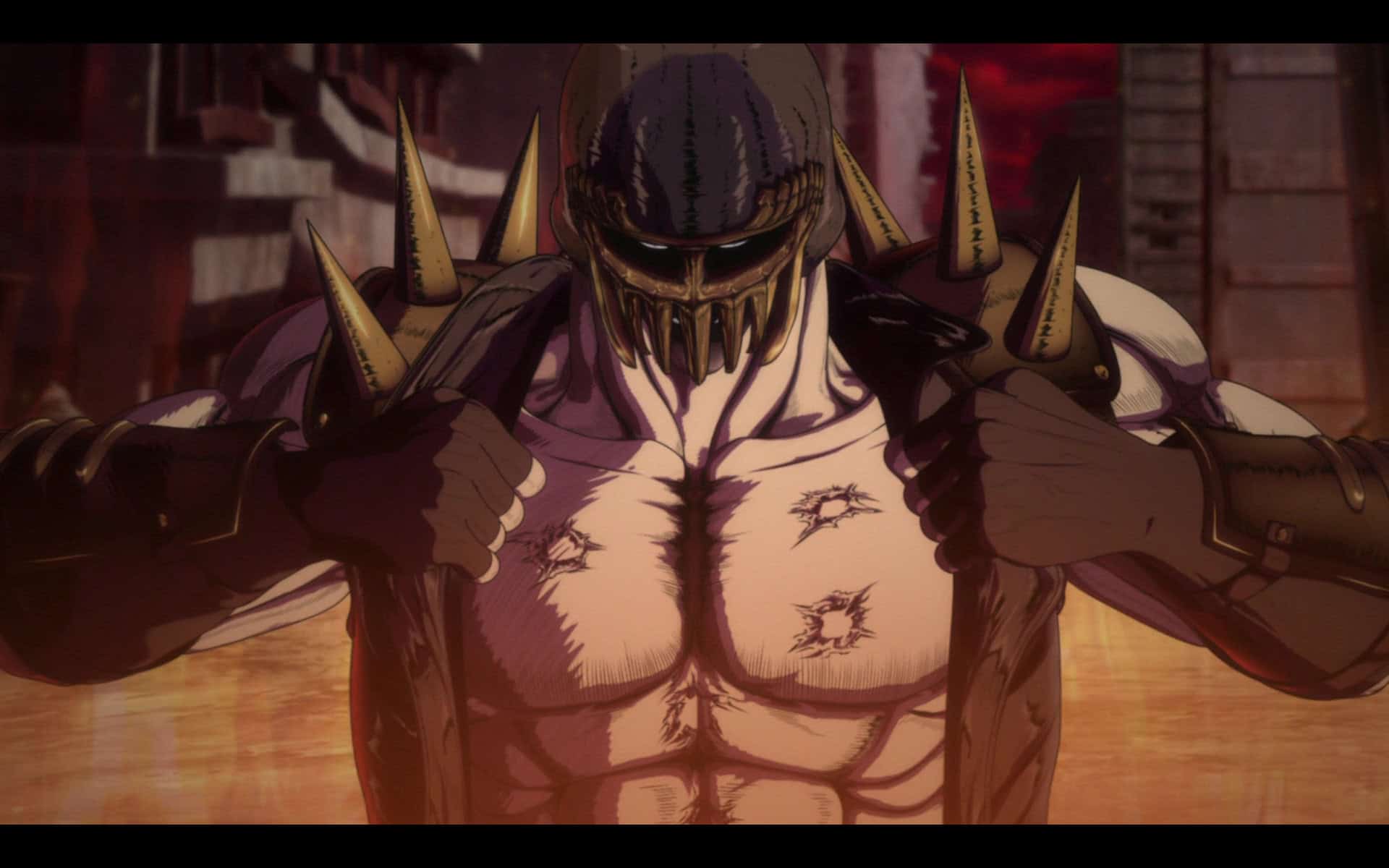
It is on the arrival of this iconic character that the season ends, introducing the one who pushed Shin to scar Kenshiro’s chest with his seven wounds. His entrance, carried by the voice of Takagi Wataru, a play of red lights, and a short final teaser, unambiguously designates the adversary who will open the next installment, expected for 2027. This first chapter thus closes on a note that is both bittersweet and laden with anticipation. The world of Hokuto no Ken has laid its foundations, and its greatest confrontations are yet to come.
Direction and character design
It is precisely on this front that the core debate surrounding the 2026 anime plays out, and it is also where the perspective offered by a retrospective assessment proves most valuable. The technical trajectory of this first block tells a story that no single episode taken in isolation could have summarized. Quite a rare occurrence worth highlighting: we now have three interviews given by director Maeda Hiroshi to MANTAN, The Television, and Magmix in late June 2026, in which he goes into detail about the artistic choices behind the series. These conversations allow us to compare our weekly observations with the production’s actual intentions. A detail that is far from trivial: this is his very first project as lead director, and his discovery of the work dates back to childhood, in a dentist’s waiting room, fascinated and terrified by the spurts of blood in a Weekly Shonen Jump.
The thorny question, that of the massive use of digital 3D, immediately finds its justification, and it deserves to be heard before any judgment is passed. Maeda explains that the dense linework of Hara’s recent decades, that profusion of lines, that thickness, becomes nearly unsustainable in pure 2D over the course of a series, both in terms of cost and quality management. The 3D model makes it possible to preserve the density inherent to the manga while allowing for numerous touch-ups that would be far too costly for an anime produced entirely in 2D. In other words, 3D is not a shortcut to cut corners on quality, but rather the means to maintain a density that 2D could not sustain. And it does not stand alone: 2D drawing is used shot by shot, for expressive close-ups and iconic moments. Maeda also highlights the presence of renowned animators, foremost among them Jun’ichi Hayama, a legendary figure in the animated adaptations of Hokuto no Ken.
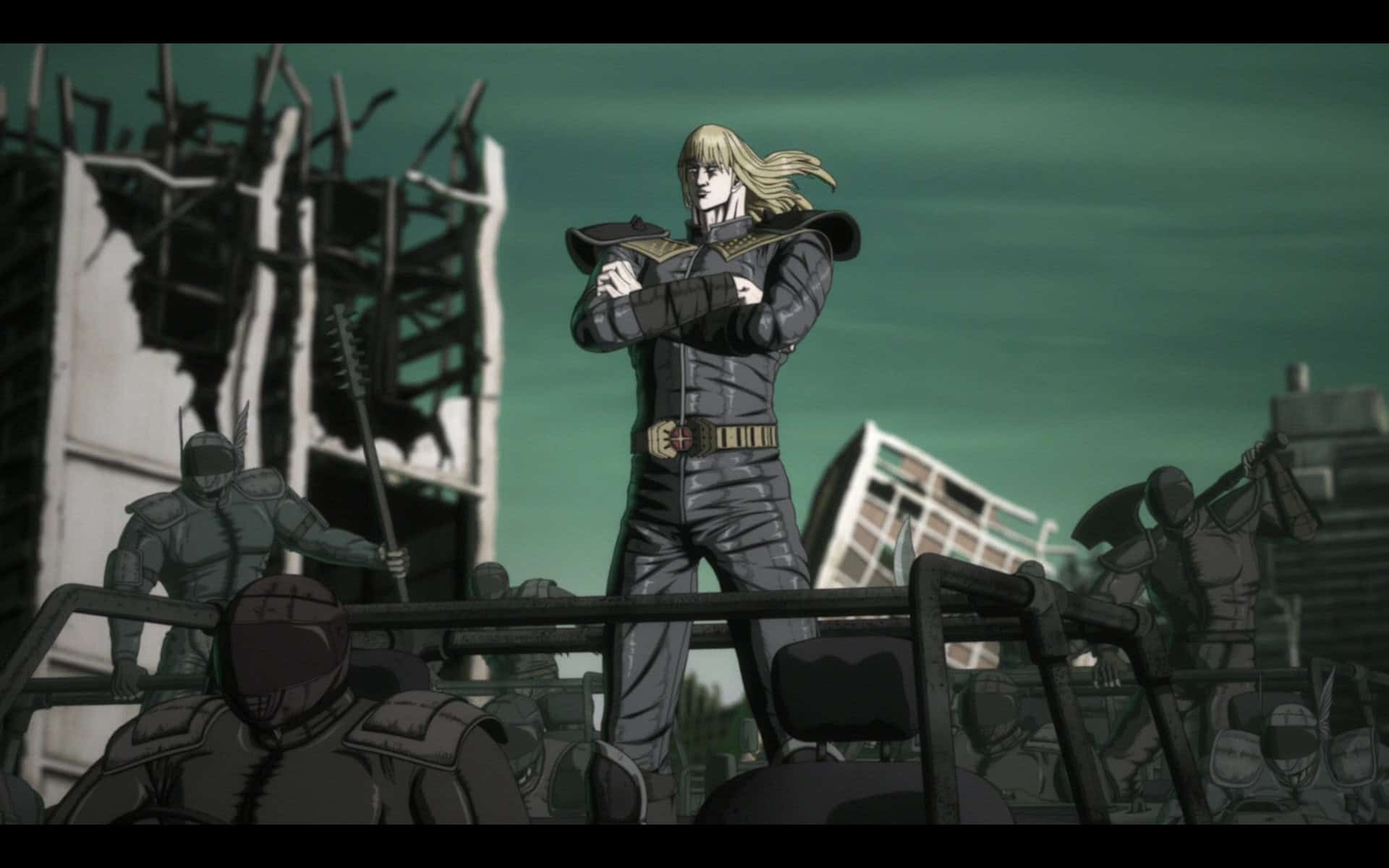
The first five episodes clearly illustrate the central problem. While the art direction of this post-apocalyptic world is fairly successful, the CGI runs into two recurring flaws: frozen facial animations completely devoid of emotion, and transitions so abrupt between 2D and 3D sequences that you sometimes feel like you are watching two different series alternating back and forth.
Maeda, for his part, does not deny the technique’s limitations. He acknowledges that close-up shots make the 3D rendering look harsher and that drawing must then compensate, the challenge being to blend the two approaches without the viewer noticing. It is precisely this blending that required relentless modeling work: what character designer Hisatsune Naoki conceived to reproduce Hara’s linework, the 3D modelers would rework tirelessly, adding a line here, a patch of black there, until achieving the intended look. Maeda actually takes real pride in this. That said, on our end, the inconsistency we pointed out each week is the price of this gamble: blending drawing and 3D without the boundary, sometimes too sharp, jumping out at the viewer.
The darkness that surprises in the early episodes also has an explanation. Maeda fully embraces this narrative choice: deliberately plunging the beginning into darkness, because as long as Kenshiro has not made his entrance, this world is nothing but a hopeless hell. Then, as his actions unfold, light gradually gains ground, leading to that sun-bathed ending. This mastery of light, inherited from his experience as a director of photography, permeates every shot. Maeda does not hesitate to plunge half, or even two-thirds, of faces into shadow, while outlining their contours with a thin rim of white light (the rim light) that makes silhouettes and expressions stand out.
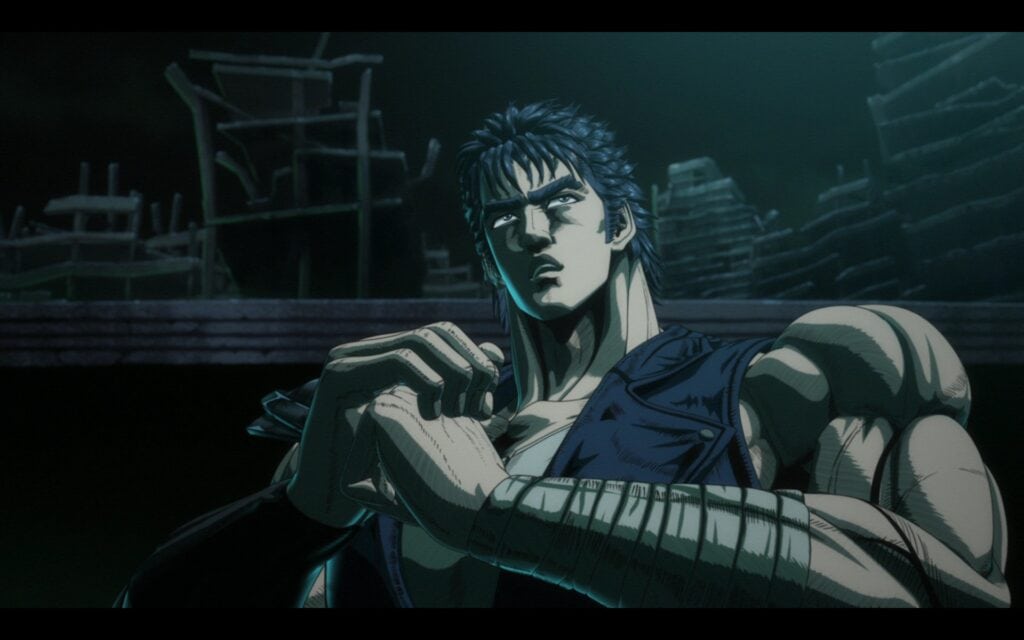
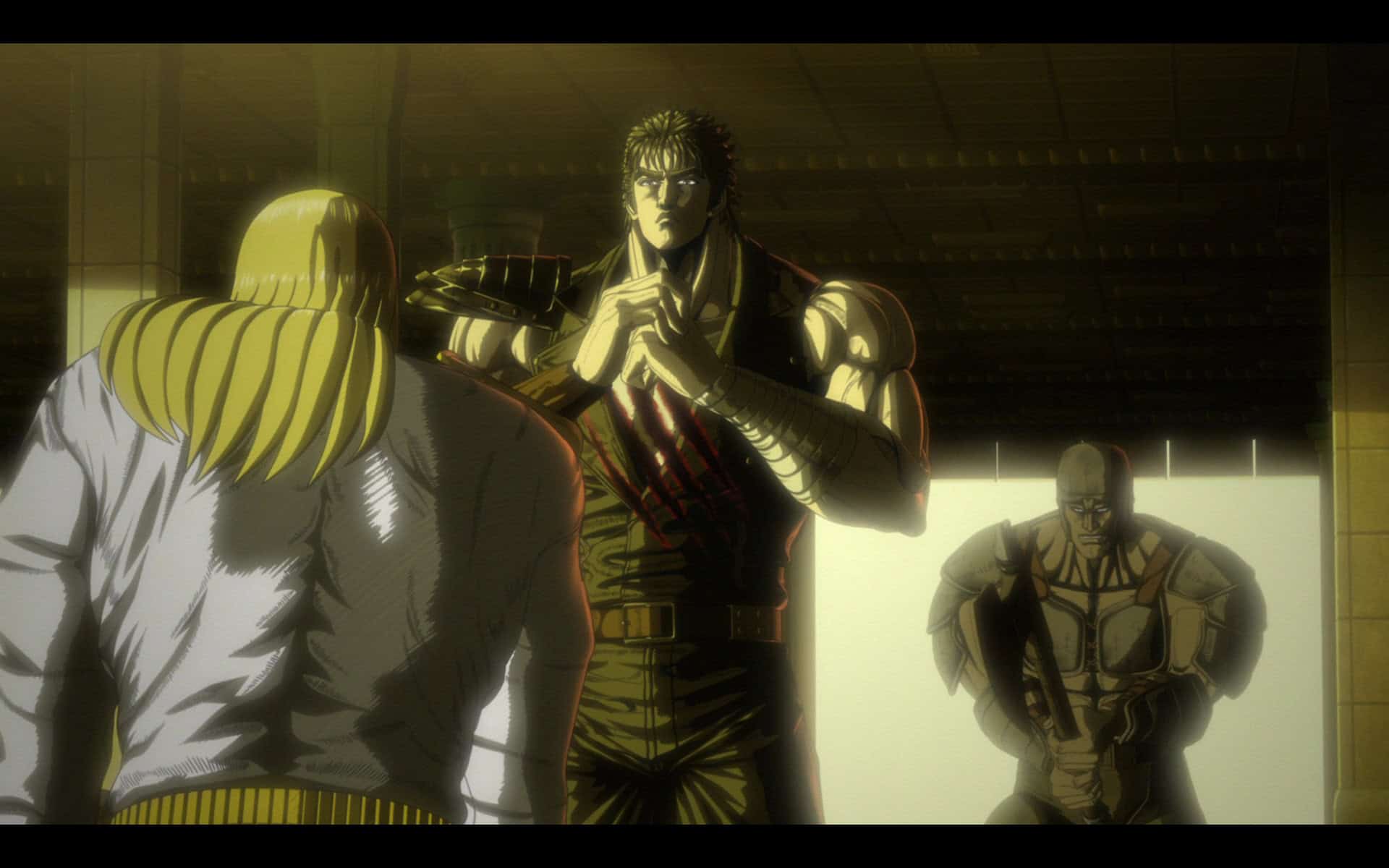
Color follows the same logic, guided by emotion: gold for the fight against Shin, green for the one against Heart, blue for scenes of fear, and so on. Maeda ties this creative choice to something Hara once told him: in this world at the end of humanity, the author reportedly said, ordinary certainties no longer apply and everyone carries something broken within them, which allows for colors freed from any pretense of realism. The intention is sound, but this aesthetic of shadow sometimes works against itself.
In the heat of certain fights, or during simple transition scenes, the image becomes so dark that it is hard to follow the action, and the concern for atmosphere ends up undermining readability. This excess of shadow is matched by its opposite: over the first five episodes, certain fights take place against entirely white, empty, and flat backgrounds that abruptly break immersion instead of supporting it.
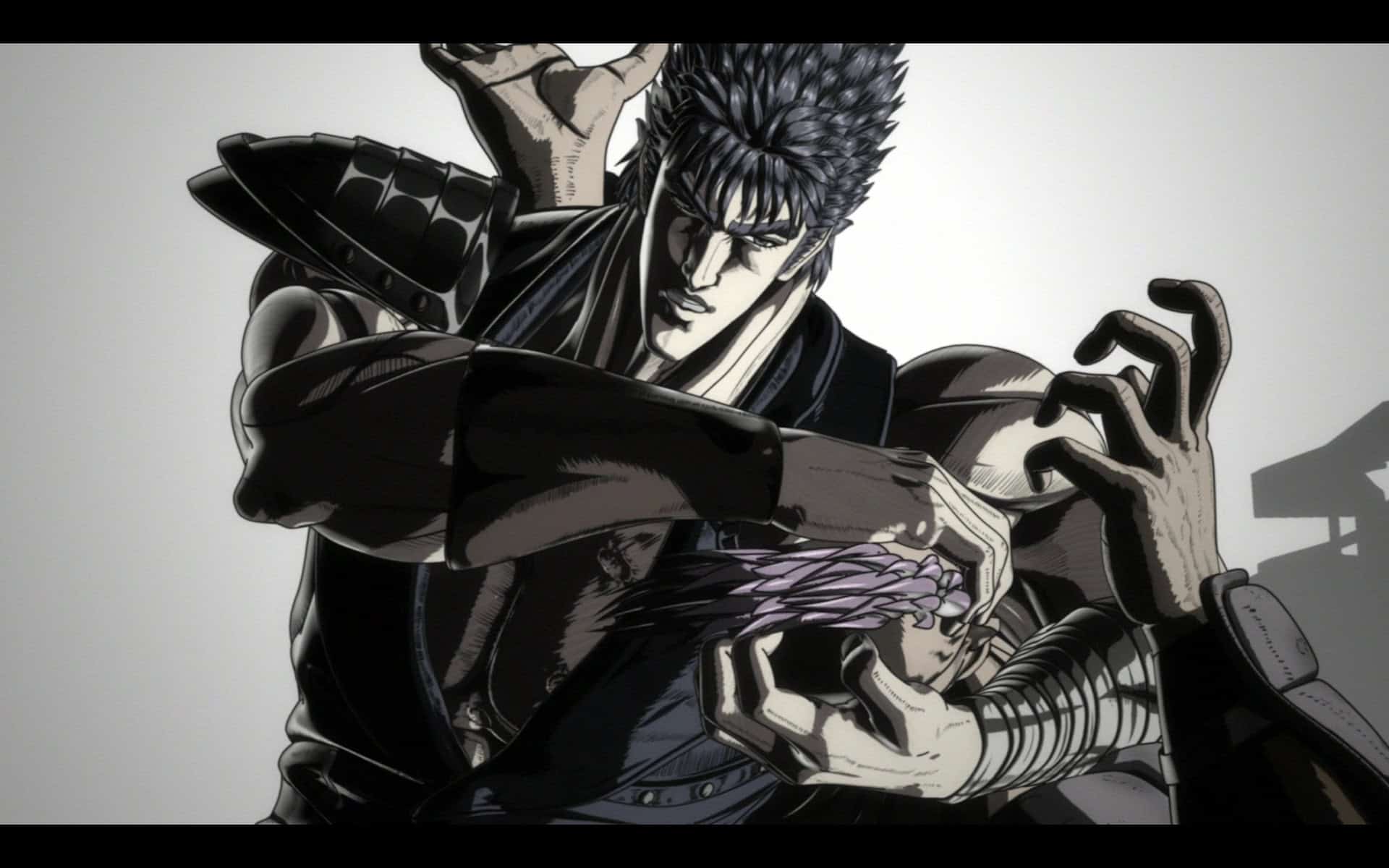
Ultimately, the visual rendering shows real progression over the course of the episodes, but it is neither constant nor linear. It is regularly hindered by persistent inconsistency, the price of an ambition that seeks to combine two very distinct animation techniques without giving up either one.
Sound and music, the sonic soul of Hokuto
While the visual aesthetics of this adaptation have sparked heated debates, its sound design deserves attention that weekly viewing tends to overlook. In Hokuto no Ken, sound is a character in its own right: the snap of pressure points, the death rattles, the screams of marauders are as much a part of the work’s identity as Tetsuo Hara’s silhouettes.

An interview with the sound director, Konuma Noriyoshi, published on Magmix on June 25, sheds light on this lesser-known aspect of the production. His philosophy can be summed up in one idea: the 1984 series had already provided a convincing sonic interpretation, and the goal was to reinterpret it without copying it, in the manner of a traditional art form whose conventions are respected without being confined by them. The treatment of the marauders is particularly interesting; Konuma links their cries, starting with the famous “hyahha,” to the legacy of Chiba Shigeru and the voice acting school of the 1980s, and entrusts them not to beginners but to seasoned actors like Fukushima Jun and Mamiya Yasuhiro, with instructions to play the madness and let a lost humanity show through beneath the caricature.
The original soundtrack deserves to be championed, and the composer Hayashi Yuki provides the keys. Known for brighter scores on Haikyu!! or My Hero Academia, one might have thought he was miscast. He explains that he approached the composition with a central question: how do you translate into music the feeling of the end of the world and the dystopia that permeates this universe? His answer was to make rock and metal the backbone of the soundtrack, elements he considers essential to the work. This heaviness is therefore not an unintended flaw but a fully embraced and theorized creative choice. But reducing this score to metal alone would be unfair; Hayashi deploys a remarkably nuanced instrumental palette, which we will explore in an upcoming feature dedicated to the franchise’s music.
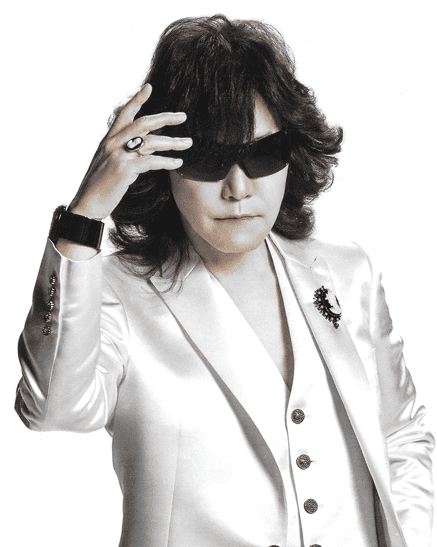
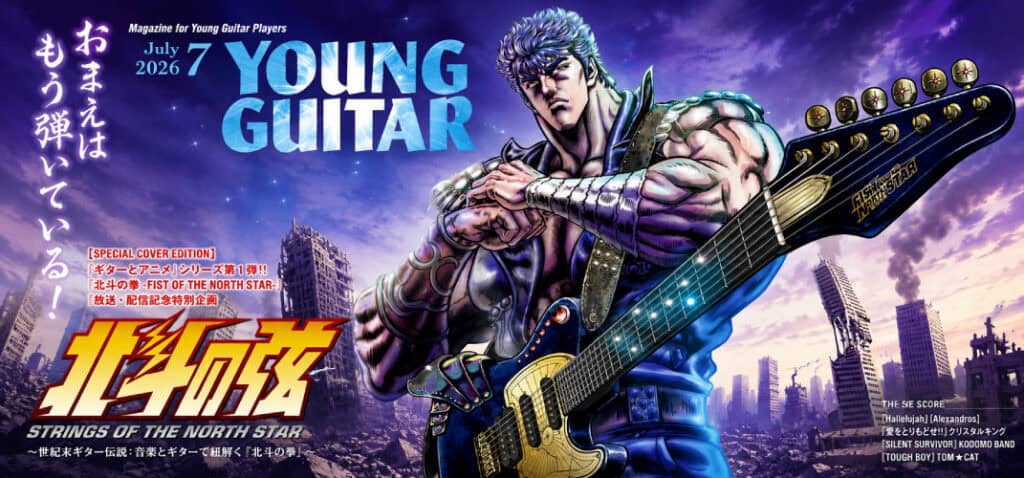
For the ending, the production entrusted Toshl, the voice of X Japan, with a cover of the legendary “Ai wo Torimodose!!” The magazine Young Guitar, which devotes a full feature to the franchise’s music in July 2026, describes the song as a hymn and symbol of the work. An interesting detail: Toshl reveals that his mixed voice, the technique that allows him to hit powerful high notes, came from imitating Kenshiro’s atatatata as a child. He learned to sing without knowing it, by imitating the hero. That same cry, incidentally, transcends generations. Forty years later, the director Maeda recounts hearing Takeuchi, the hero’s new voice, tirelessly practicing that same atatatata during breaks, everywhere, all the time, so total was his commitment to the role. One and the same cry, passed down from one generation to the next.
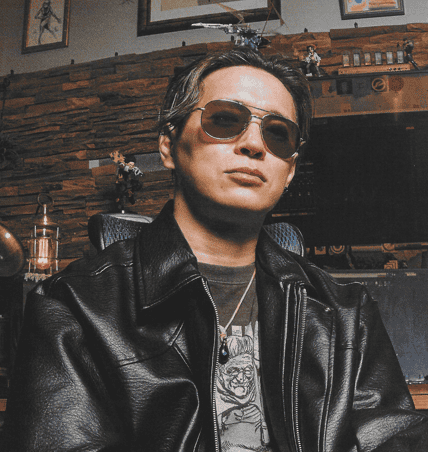
The opening was entrusted to the rock band [Alexandros], who perform “Hallelujah,” with lyrics and music by their vocalist Kawakami Yohei. The contrast between this modern rock opening and the heritage cover at the close sums up the balance the entire adaptation seeks to strike: one foot in the franchise’s legacy, one foot in the present era.

The voice cast, the season’s greatest achievement
If there is one point on which all verdicts converge, it is the Japanese voice acting. But when reading the official comments from each actor, a common thread emerges: almost all of them share a personal, longstanding connection with Hokuto no Ken, often forged in childhood. This is not a conventional cast; it is a reunion of fans.
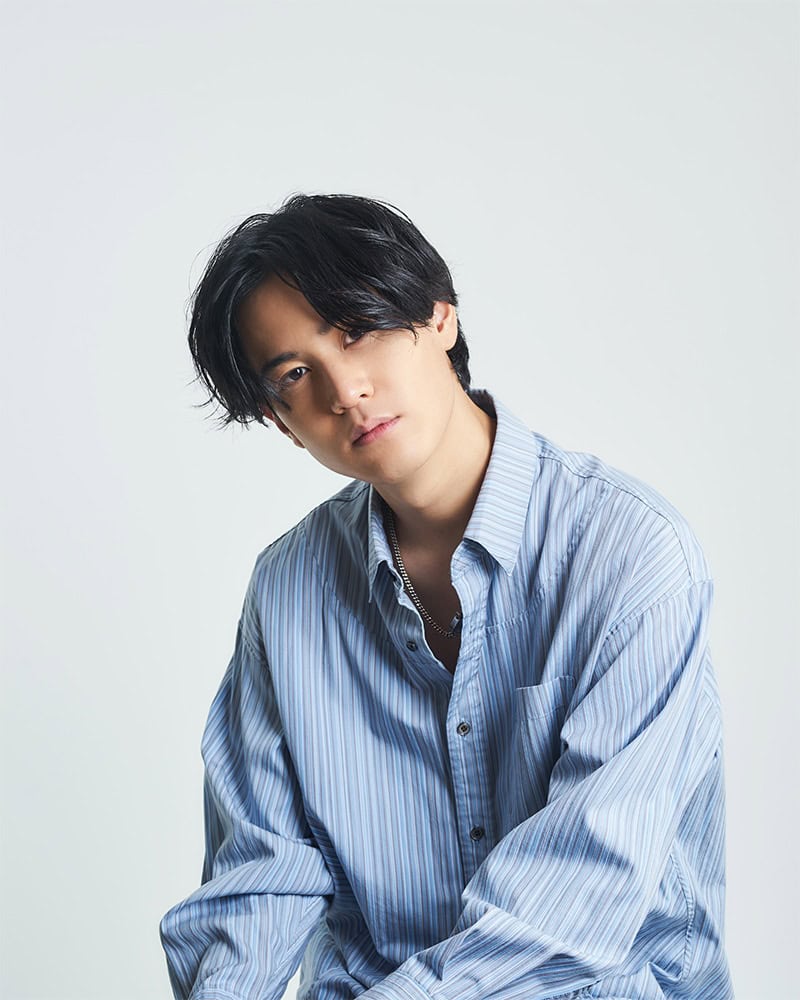
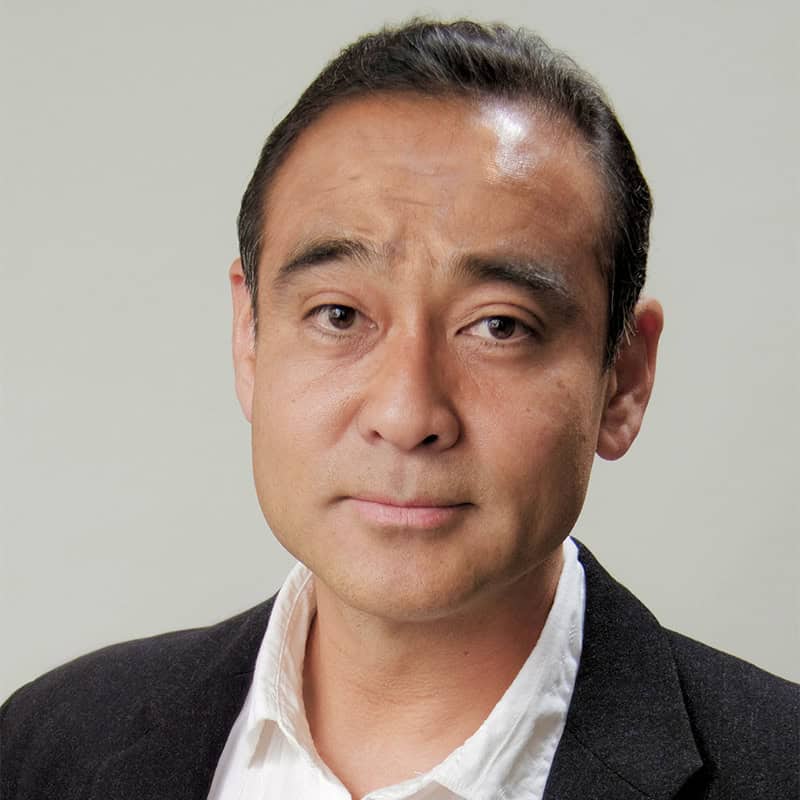
Takeuchi Shunsuke, the voice of Kenshiro, discovered the work in elementary school and offers an interpretive key that goes beyond his role: for him, Hokuto no Ken is above all a love story. His preparation commands respect and illustrates this spirit of carrying a legacy all on its own. He watched every past interpretation of Kenshiro, from anime to video games to pachinko and foreign dubs. Above all, Takeuchi highlights a lineage too often reduced to Bruce Lee alone. He explains that he also drew on the actor Matsuda Yusaku, one of Hara’s models for Kenshiro alongside Bruce Lee, whose early roles he studied closely enough to adopt his posture. His co-star Shimono Hiro, who had in mind the more expressive Kenshiro of Kamiya Akira, confirms that he can feel this lineage in the new Kenshiro, along with a strength born from his enigmatic silence, where the weight of every word carries all the more.
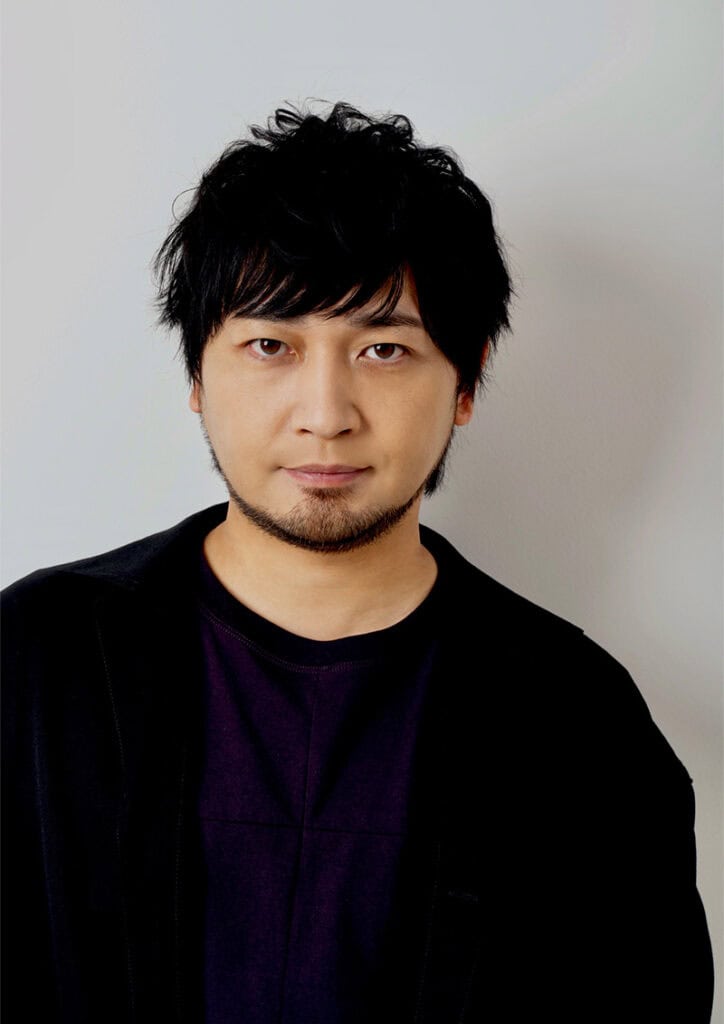
A consensus also emerges around one character, Rei, cited as a favorite by several cast members and by the director himself, which made Nakamura Yuichi’s performance all the more anticipated, and it has been praised episode after episode. The Jackal arc gives the cast its most memorable moments, with a pitch-perfect Matsuyama Takashi as a magnificently cowardly villain, and a Shirokuma Hiroshi who says he played Devil Rebirth by genuinely imagining himself as gigantic. The female cast is equally convincing, from Aoki Ruriko as Mamiya, whom she portrays as a leader who is both tough and loving, to Inagawa Eri, who lends Airi, Rei’s sister, a poignant fragility.
This care extends all the way to the bottom of the credits, to the roles of marauders and other punks. Fukushima Jun, who voices dozens of them, says he kept in mind advice from veterans of the original series: even a marauder has a life, and imagining it beyond his single line makes the performance richer. The fact that even these characters, destined to disappear in a matter of seconds, received such attention speaks volumes about the spirit of this voice cast.
Manga vs. 2026 anime, the gamble on faithfulness
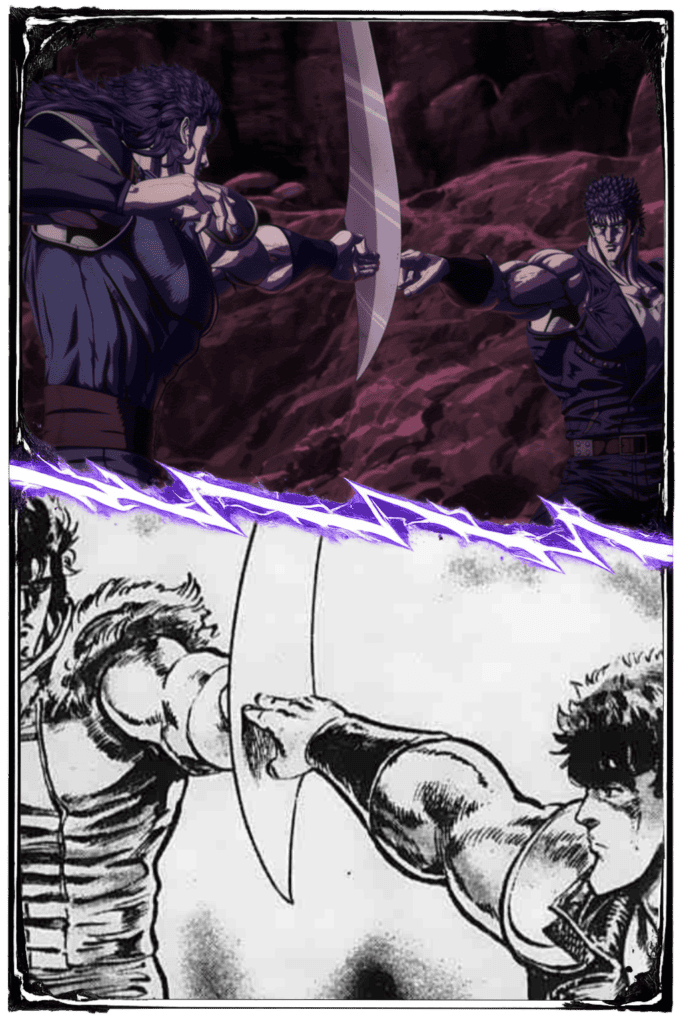
This has been the main selling point of this adaptation since its announcement, and what redeems it in the eyes of purists: faithfulness to the original manga. Over the entirety of this first part, the promise is kept with remarkable consistency. Yet the director reports a surprising directive from Tetsuo Hara himself: “you can ignore the original work, you can break it.” The author encouraged Maeda to aim for entertainment, on the condition that the message and the thread of the story be firmly respected.
The most commendable choice is the near-total absence of filler. The most striking example is Colonel, in episode 7, whose political flashback, removed in the 1984 anime, is restored here just as in the manga. The 2026 anime makes the opposite choice from its predecessor, returning to the source material where the most famous animated version had strayed from it. To be fair to the latter, however, airing simultaneously with the manga’s publication, the 1984 anime was constantly catching up to a story still being written, and had to pad with transitional episodes to avoid surpassing its source. The 2026 adaptation does not face this constraint; it draws from a work completed over forty years ago, which it can follow without the slightest delay. This faithfulness has a downside. On the Japanese side, some lament the disappearance of the multiple animation directors system, which, in the old series, varied the character design from one week to the next.
The worldwide reception, a very mixed welcome
From its release, this anime sparked very polarized reactions regarding its aesthetics, and, much like our weekly verdicts, worldwide opinion became more nuanced over the weeks. From one country to another, the same observation prevails: on one hand, the faithfulness to the original work and the choice of Japanese voice actors, on the other, the CGI and animation. The most striking warning came from the author himself. Even before the broadcast, Tetsuo Hara recommended that the audience not expect too much from the first episodes.

Japan is where the reception was warmest. On Filmarks, the rating settled around 3.5 out of 5, supported by a lasting consensus. Faithfulness to the manga and a convincing voice cast redeem what the CGI hinders. Several viewers praised the return of the famous pressure point sound effects and the presence of veterans like Chiba Shigeru as raiders, while Toshl’s reprise as the ending theme was unanimously acclaimed. One recurring reservation was the soundtrack, deemed too restrained, with some viewers preferring the dramatic intensity of the 1984 series.
At launch, English-language critics were harsh on the visuals. Anime News Network strongly criticized the facial animations, comparing the characters to puppets whenever they tried to express an emotion, and advised against the English dub, calling it disastrous. However, by mid-April, Screen Rant reversed course with a more nuanced assessment: much better than feared. The first 2025 teaser, considered catastrophic, had lowered expectations so much that the series, while not reaching the heights of 3D on the level of Beastars, offered pleasant surprises in its major action scenes.

In Italy, the tone was rather harsh. Fumettologica headlined on disappointment. For its part, Il Cineocchio gave a score of 5.5 out of 10, summing up the general opinion well: a correct and narratively faithful adaptation, yet too inconsistent in its form to convey the emotional epic of the classic. The partner site 199X Generazione Hokuto was considerably harsher, while claiming the clear-sightedness of a passionate fan rather than nostalgia. Its author points out that the true fan does not wish for an adaptation to fail, but rather hopes it will be good enough to make people forget the old one. He also rejects consumerist fanaticism, believing it is up to the production to prove itself on its own merits, and says he is nonetheless curious about the second act.
In France, the divide was particularly pronounced. The specialized press did not pull any punches. The site Unification France called the series too dark, too talkative, and graphically unsuccessful, while denouncing the French dub as one of the worst ever produced, to be avoided in favor of the original version. Meanwhile, the public was split on AlloCiné and on specialized sites. On one side, those disappointed by the 3D, deemed generic and soulless; on the other, longtime fans, relieved to finally experience the violence and dialogue coherence that 1980s censorship had denied them.
Our assessment of the first season
At the end of these fourteen episodes, the prevailing impression is that of a half-fulfilled gamble. What this new adaptation does best is its faithfulness: it returns to the manga without betraying it, restores what the 1984 anime had cut, and removes the filler episodes it had added. It recaptures the violence and gravity that period censorship had smoothed over. We appreciated the ambition of its direction when it hits the mark, the richness of its audio department, a Japanese voice cast fully committed down to the supporting roles, and that Toshl reprise that closes over forty years of history. Above all, the series improves visually and ends on its best episode.
What we regret can mostly be summed up in one word: inconsistency. The CGI, an acknowledged requirement for animating Hara’s art style, delivers the worst as well as the best, sometimes within the same episode, and those frozen faces or abrupt transitions remain the series’ Achilles’ heel. The character design itself lacks consistency, convincing for the strong figures but more questionable for Mamiya or very minor characters, such as the villagers. The lighting management also leaves us puzzled: an often overwhelming darkness that hinders readability, and, during the first five episodes, those white backgrounds that appear in the middle of combat and completely break the immersion. This is the price of a deliberate technical choice, and we hope the second block will manage to reduce these flaws.
There remains the central question for any action anime: combat animation. Here again, the assessment is uneven. In its best moments, the series delivers dynamic and fluid confrontations that bring Hara’s panels to life. This is the case with the Hokuto Hyakuretsu Ken in episode 1. But these successes remain the exception. Too often, the animation lacks fluidity, the camera stays static, and some fights struggle to convey their intensity. At times, the direction feels timid, certain shots lack scope, and readability is sometimes muddled in the heat of battle. The 3D promised the spectacle that traditional animation could not deliver; it only fulfills that promise intermittently.
What matters most remains: we found Kenshiro again. Imperfect but sincere, this adaptation keeps its promise of faithfulness, and the arrival of Jagi at the very end of the episode already sharpens anticipation for 2027.
Comments are closed.