

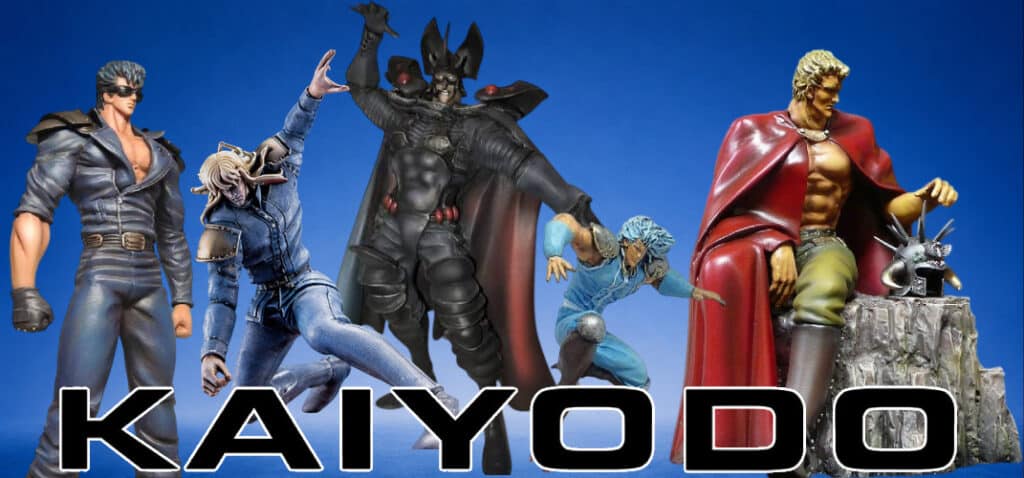
As every Friday, we revisit a line of Hokuto no Ken figures. This week, we go back to the mid-1990s, a time when the franchise wasn’t collected in blister-packed boxes, but in bags of parts to sand, glue, and paint.
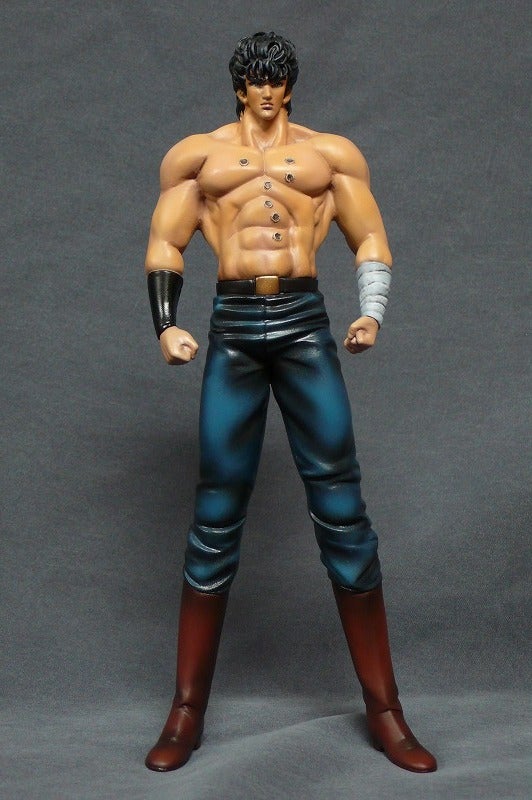
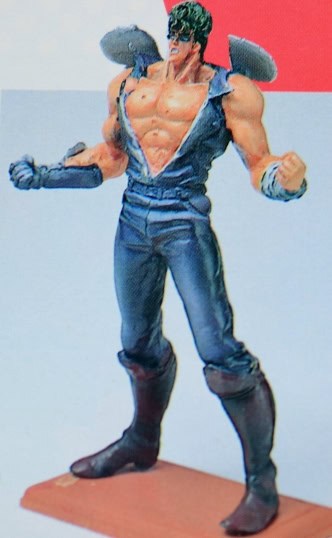
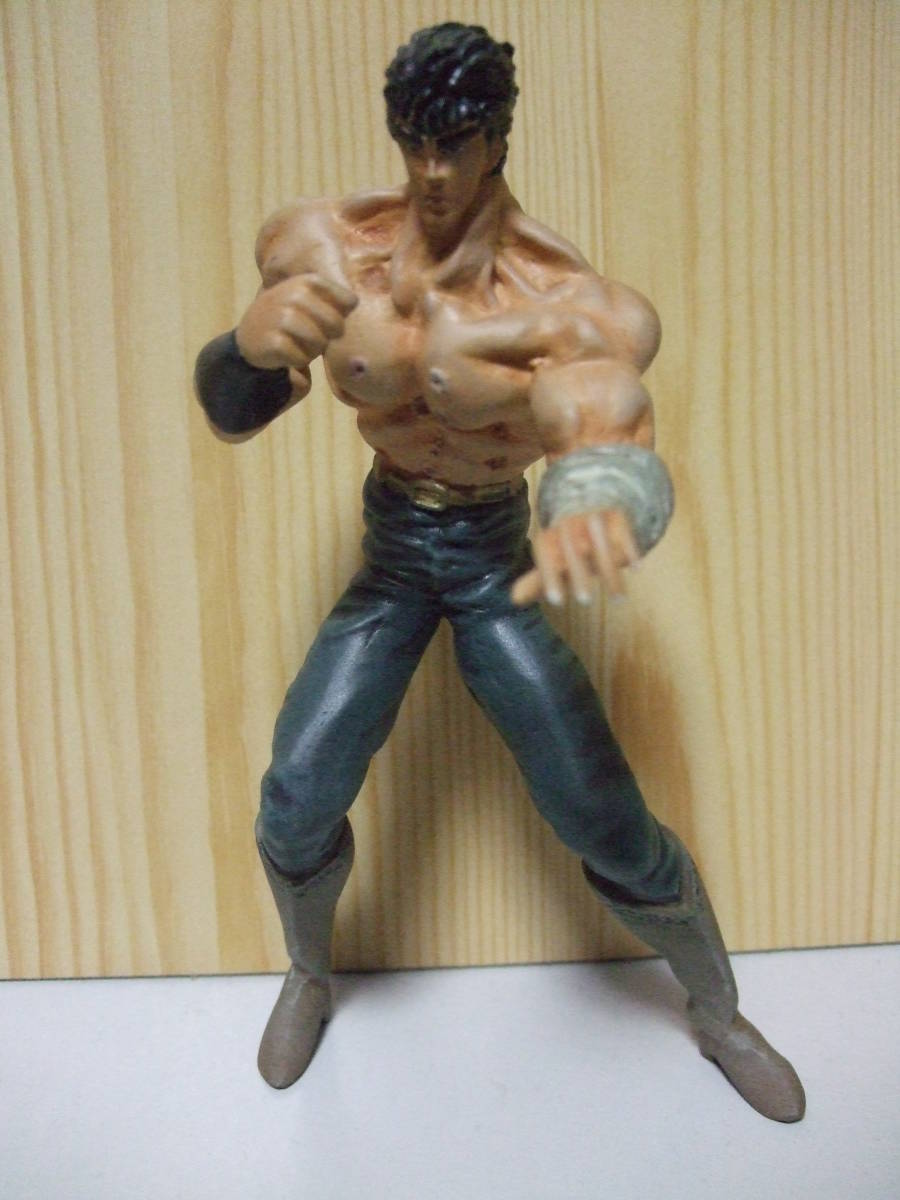
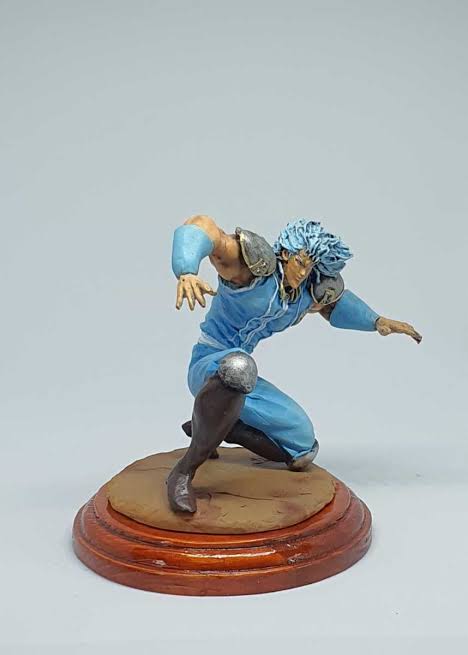
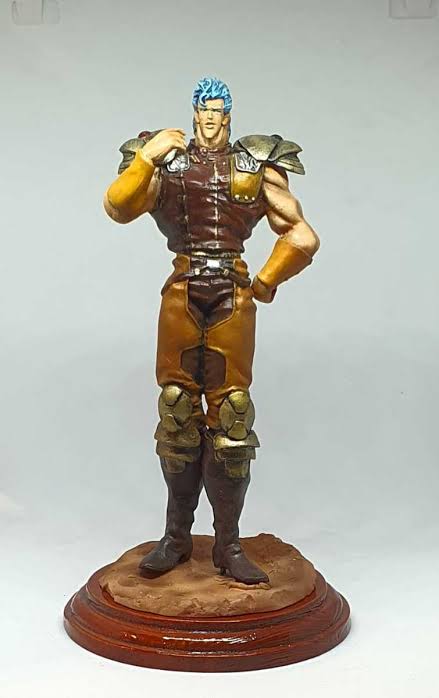
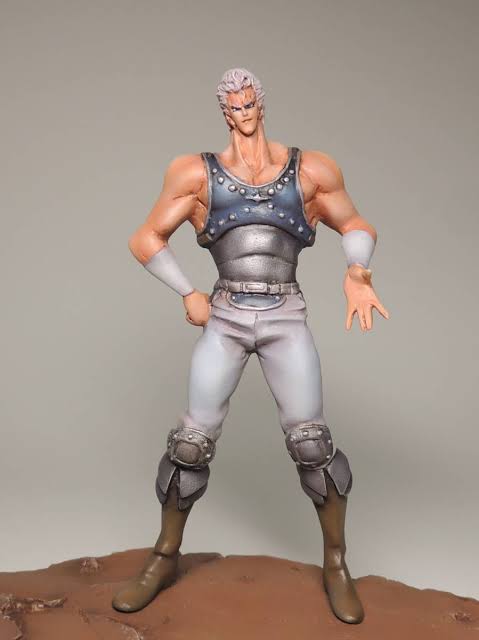
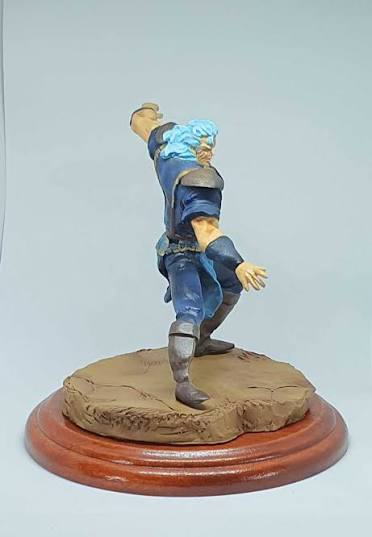
Before the XEBEC era and its action figures arrived, Kaiyodo dedicated an entire line of resin garage kits to Hokuto no Ken, some of which were signed by Katayama Hiroshi. These were kits to assemble and paint yourself, which Kaiyodo presented on their boxes as works of art, with the mention “Plastic Art by Hiroshi Katayama” printed in black on cream.
Katayama Hiroshi, recognized at nineteen thanks to Hokuto no Ken
The name Kaiyodo printed on its boxes was not that of an anonymous in-house sculptor. Spotted after one of his pieces appeared in a magazine, Katayama Hiroshi joined Kaiyodo straight out of high school and spent three years there, living on-site. During the day, he worked in the mass production workshop. From six in the evening until around two in the morning, he assisted the company’s star sculptors and crafted his own pieces.
It was at nineteen years old that the Hokuto no Ken figure he sculpted was released, the one that earned him recognition as a professional prototype artist. He would stay nine years at Kaiyodo before returning to his home region, where he spent ten years practicing an entirely different craft: making onigawara, those ornamental Sekishū tiles that crown traditional Japanese rooftops. He eventually reconnected with Kaiyodo and now works as a freelancer.
Kaiyodo still presents this sculptor today as an artist who has been shaping Hokuto no Ken characters since 1985, endowed with an innate talent that the brand readily compares to that of Juza of the Clouds, and capable of interpretations that no one else can replicate. One detail perfectly sums up his attachment to Hokuto no Ken: he personally creates even the paint samples for his figures, which is far from standard practice in the industry.
The 1/15 set
Part of the line comes in 1/15 scale, in box sets bringing together multiple characters. A first set gathers Kenshiro, Rei, Toki, Yuria, Shin, and Yuda, the latter transliterated as “JUDAS” on the box, in a romanization that was common at the time. Other sets round out the cast, notably bringing together Souther, Amiba, and Shu. Each figure measures around ten centimeters.
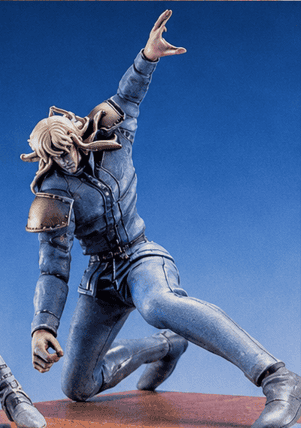
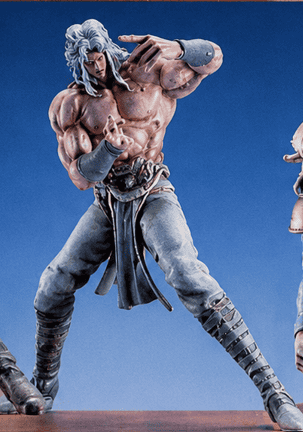
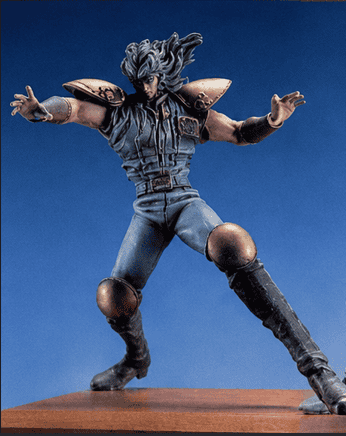
The 1/12 line and its arc-based versions
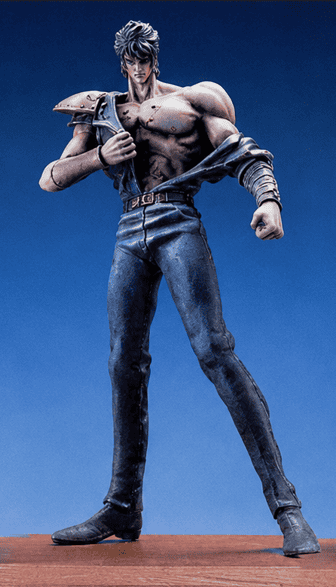
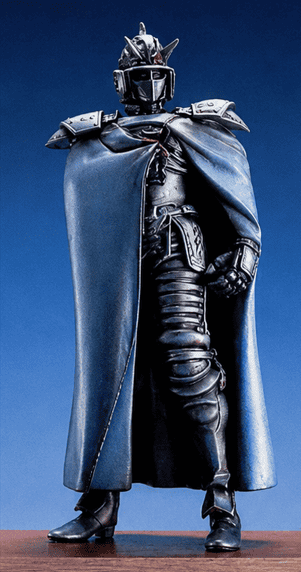
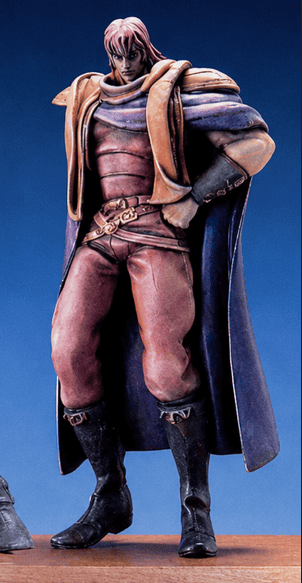
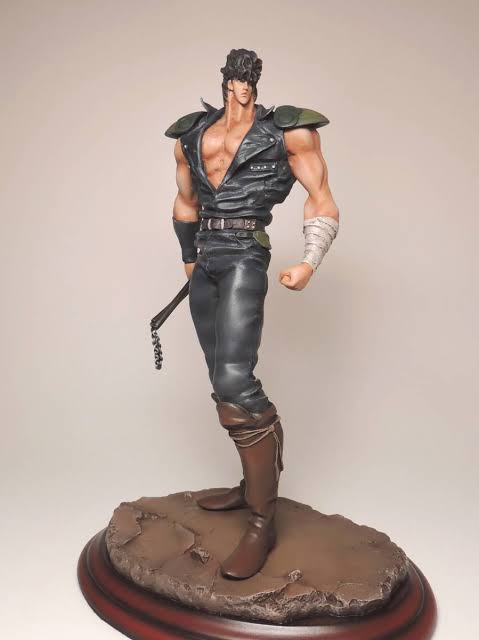
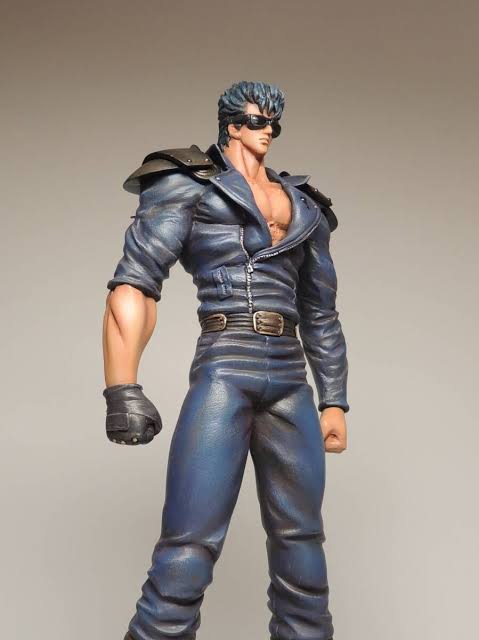
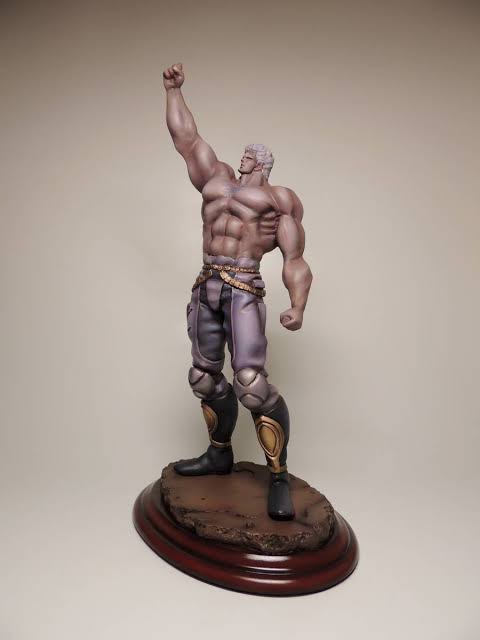
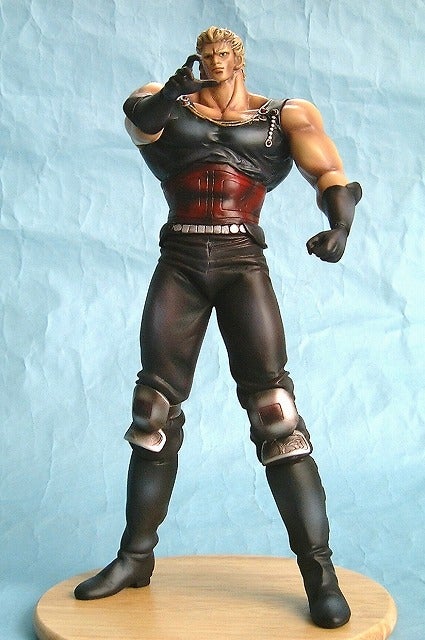
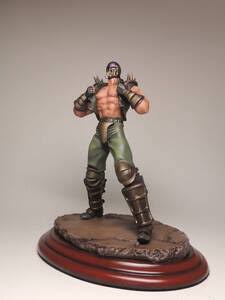
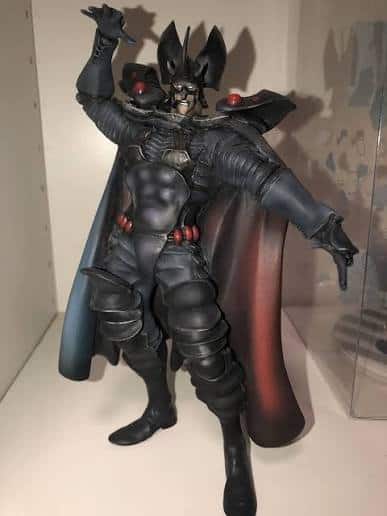
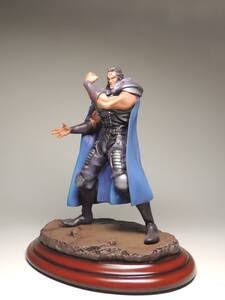
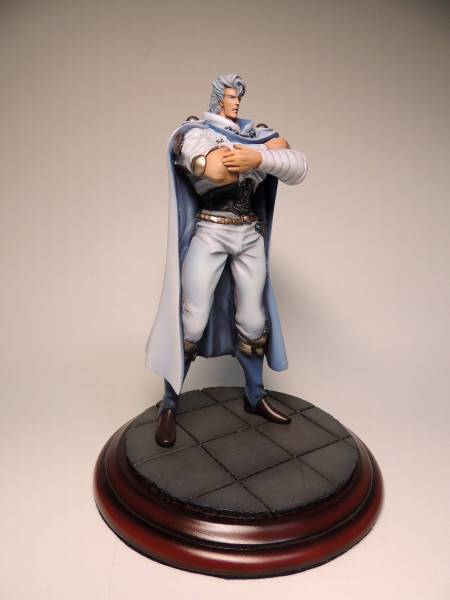
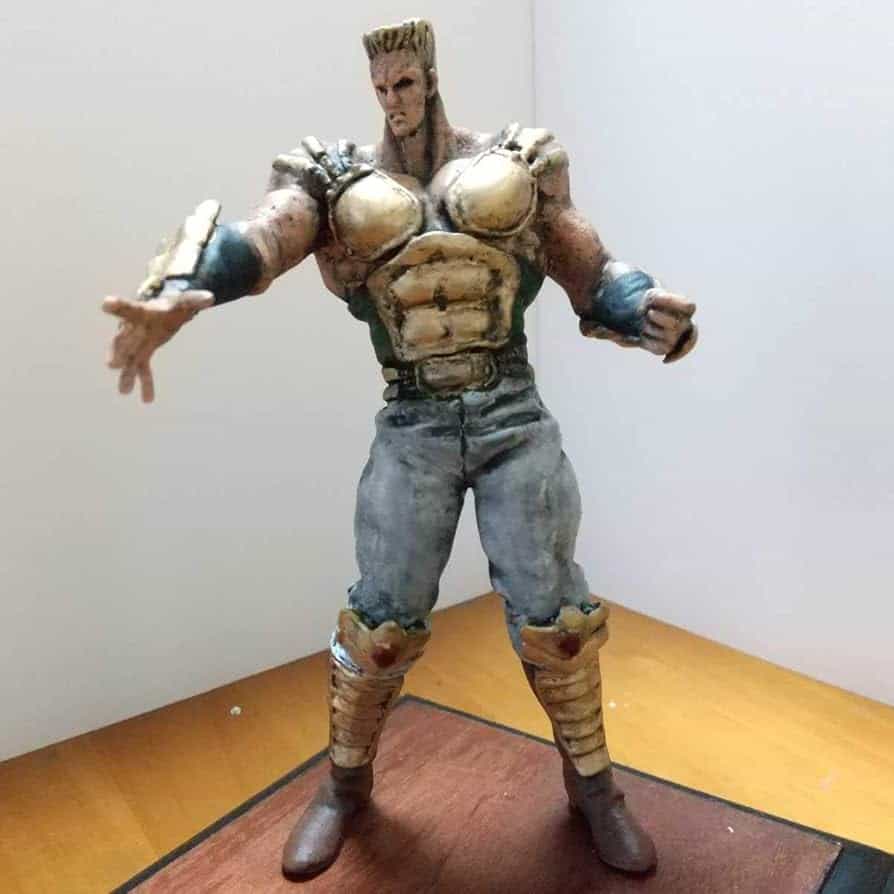
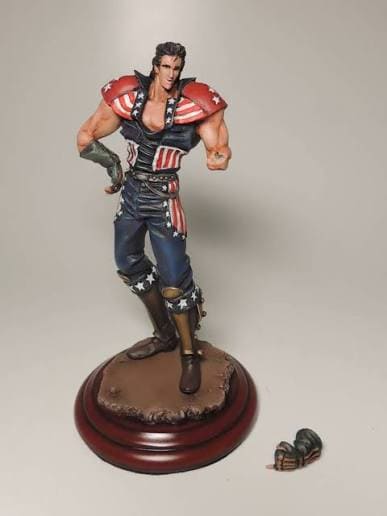
The heart of the collection is the 1/12 resin line, with its compact boxes featuring salmon-colored labels. Its uniqueness lies in its arc-based versions: Kenshiro exists in a Shura-hen version, with black leather outfit, silver shoulder pads, and sunglasses, as seen in the Land of Shura, and in a Tentei-hen version, versions drawn from the final arcs that almost no other manufacturer has ever revisited. Around him unfolds a cast rarely seen in figure form: Kaioh, Ryuga, Hyoh, Ein, Jagi, Falco, Shin, Shu, not to mention the major classics.
This is where the true appeal of this line lies for today’s collector. While modern manufacturers favor the series’ most popular characters, this line took the time to sculpt supporting roles and late-story figures, many of which have never, since then, received a single other figure.
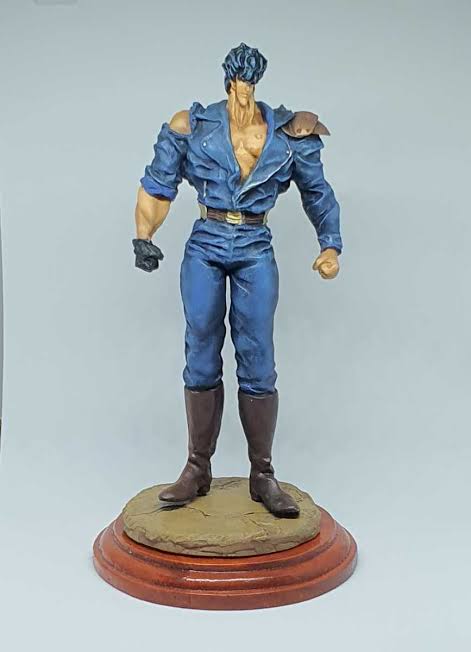
The Raoh & Kokuoh and the Kyukyoku Raoh
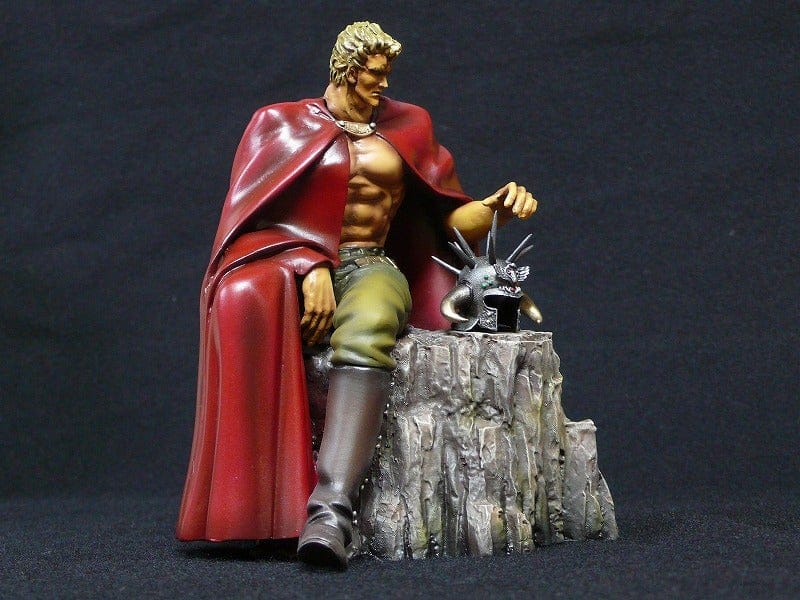
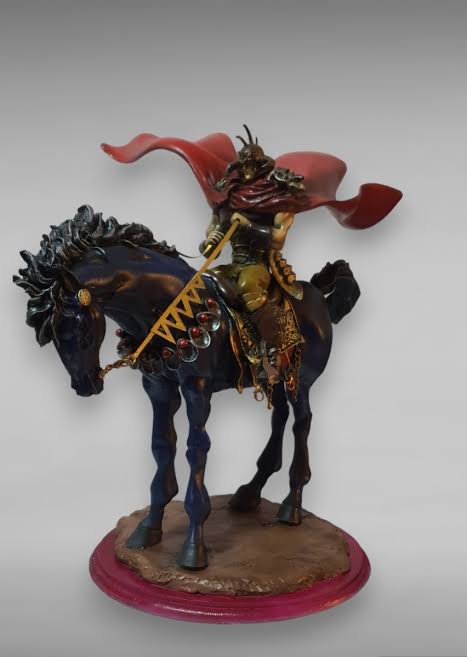
Two pieces dominate the line, both dedicated to Raoh. The first shows him mounted on his rearing steed Kokuoh, cape billowing in the wind, a Raoh & Kokuoh-Go in 1/12 scale that stands among the very first three-dimensional renderings of the sovereign on horseback, well before the 200X set from 2006 and SpiceSeed’s wooden version. The second, the Kyukyoku Raoh, the “Ultimate Raoh,” depicts him seated on his stone throne, helmet resting beside him, in a stripped-down cream box with no visuals whatsoever, reduced to typography alone: the collection’s display piece.
A line whose full scope remains unclear
Establishing a complete catalog of this production today is nearly a feat in itself. The line spanned multiple scales and several release waves, without Kaiyodo ever having published an accessible summary, and the pieces that resurface today do so randomly through sales. The selection presented here therefore makes no claim to exhaustiveness.
Finding them today
These resin kits circulate on Yahoo Auctions, Mercari, and at Suruga-ya, most often in unassembled form, sometimes as amateur builds of varying quality. It is worth noting that these kits frequently circulate as pieces reworked by modelers. A trained eye is therefore necessary to distinguish an original Kaiyodo kit from a custom.
The price depends less on the rarity of the character than on condition: a complete box with its instructions sells for considerably more than a started kit, and a piece assembled by an unknown hobbyist is often worth less than an unopened bag of resin. That said, for anyone looking for a Hyoh, a Ryuga, or a Land of Shura Kenshiro in three dimensions, these old kits remain, thirty years later, often the only option.