


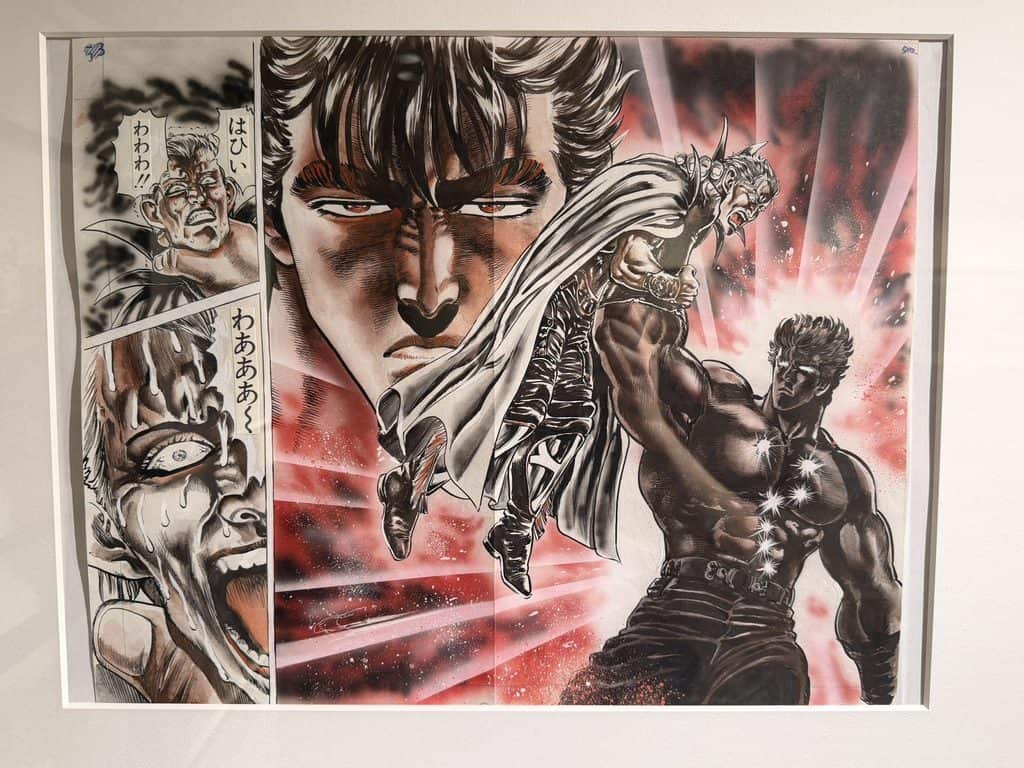
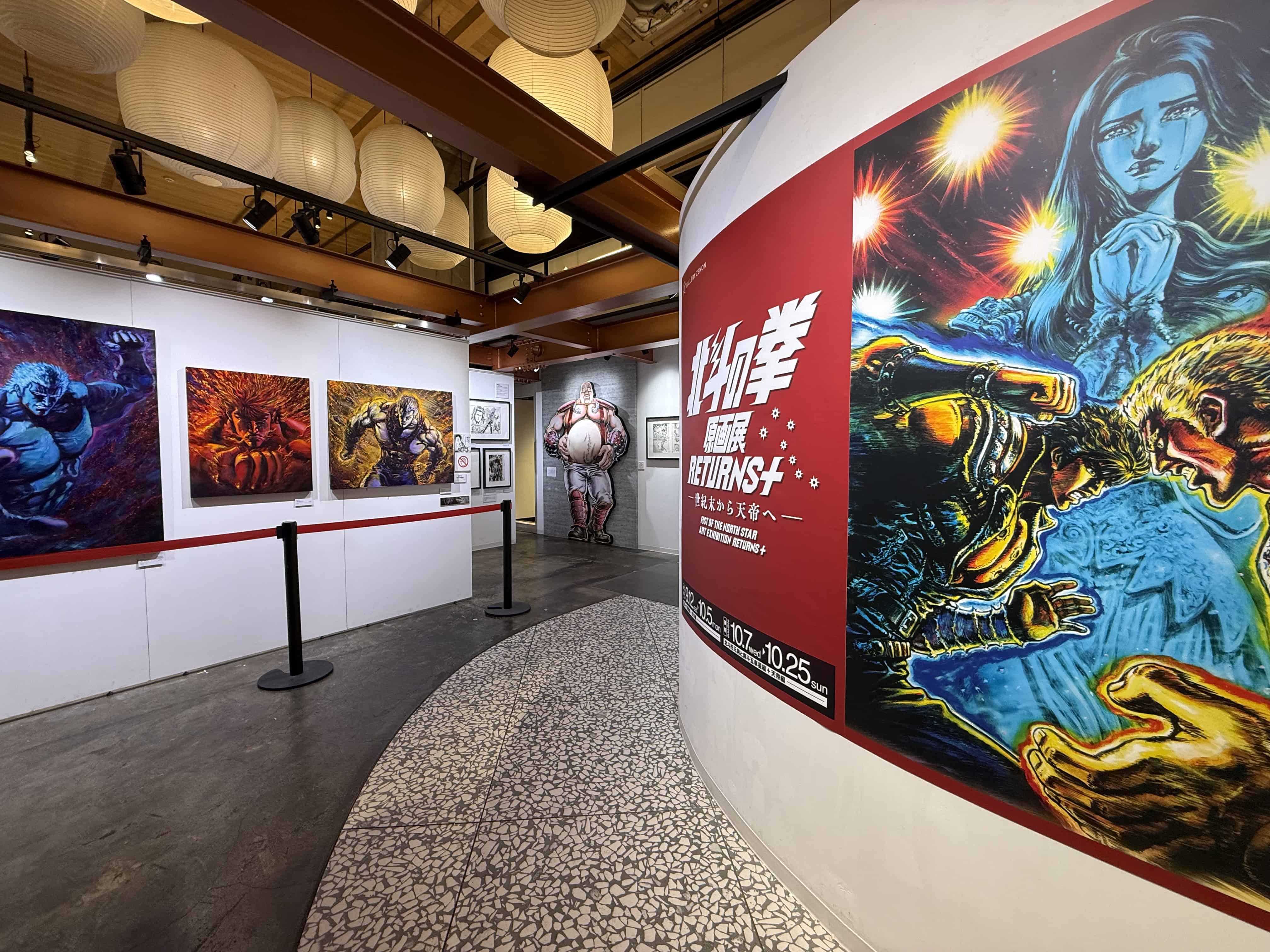
The great fortieth anniversary exhibition stopped at the ascension of Raoh. After four cities and eighteen months on tour, its original artwork has returned to Tokyo, and Hokuto no Ken Gengaten RETURNS+ picks the story up where it left off, with the Tentei arc never exhibited until now. More than 150 original pages by Tetsuo Hara are shown across two periods at GALLERY ZENON in Kichijoji, from September 12 to October 25, 2026, alongside statues, paintings, the throne of Seitei Souther and a themed café. Thanks to photos by @Warokami, a French-speaking visitor who was there, here is a full tour of the exhibition.
The original artwork, from Nanto to Hokuto
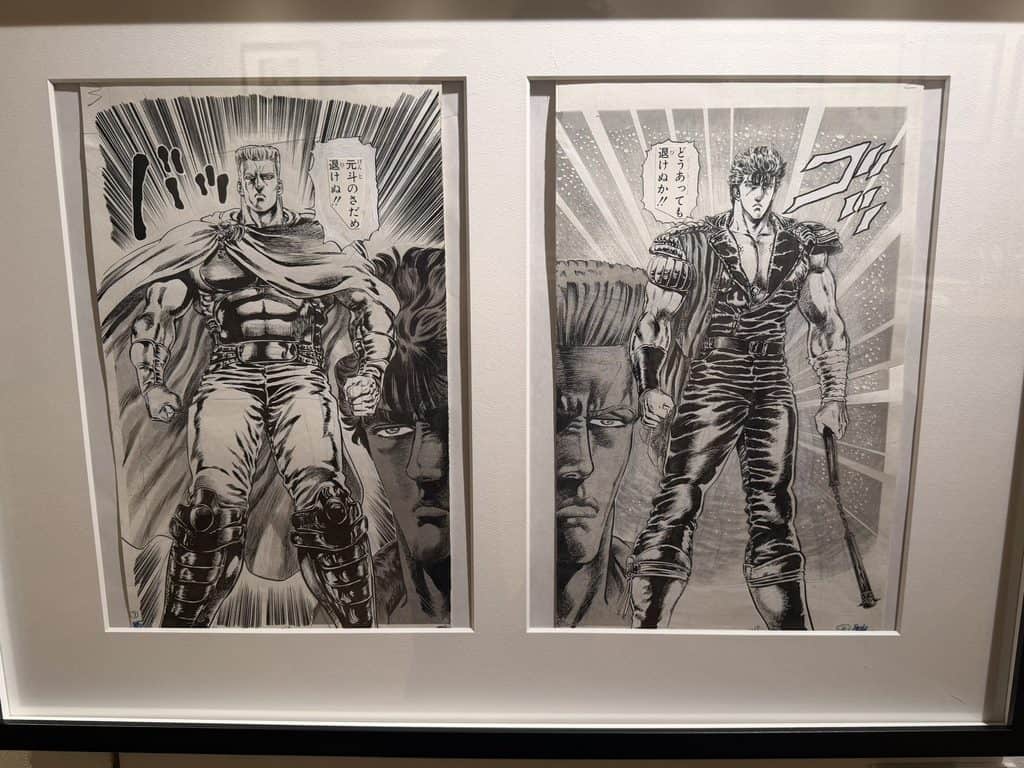
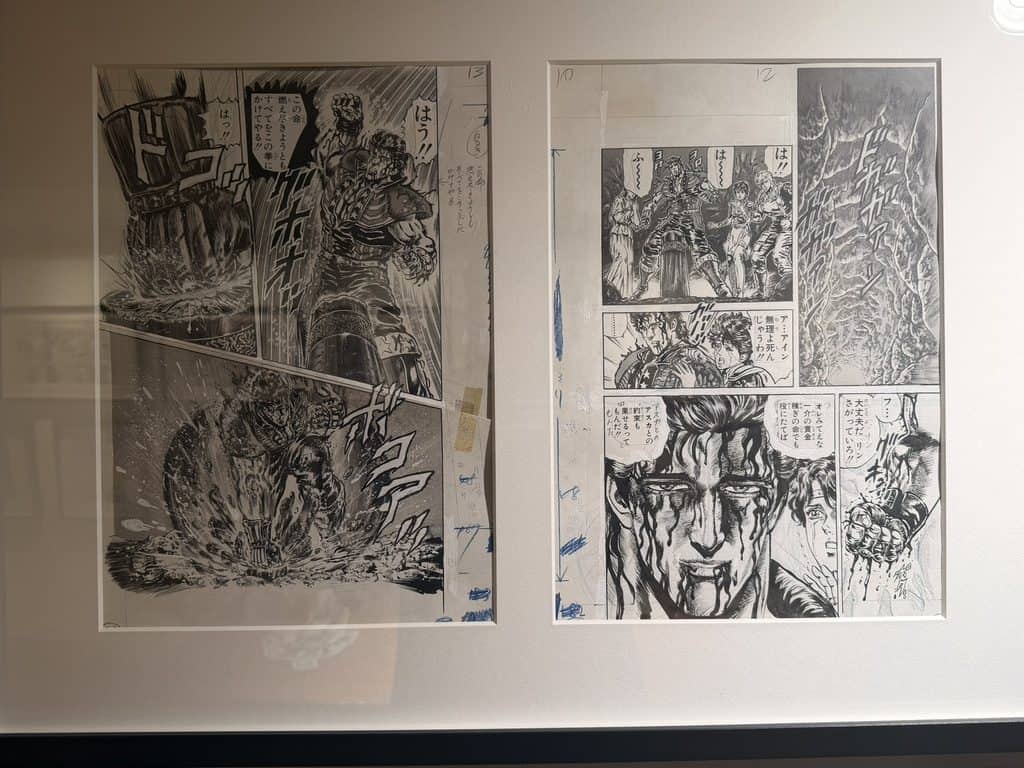
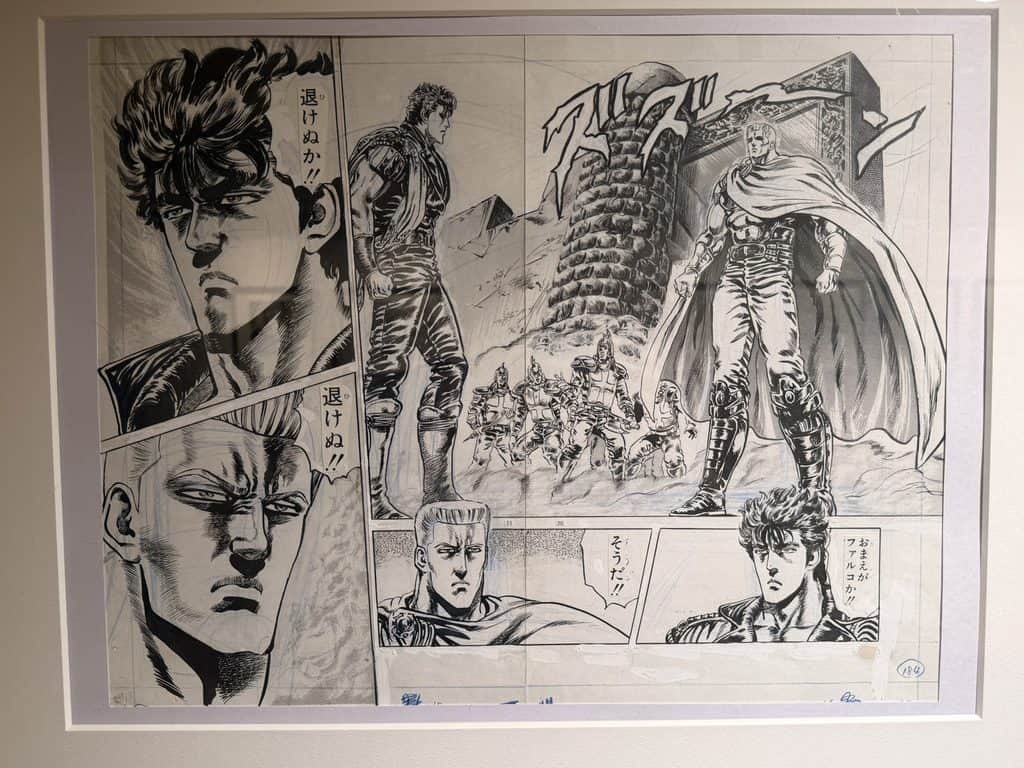
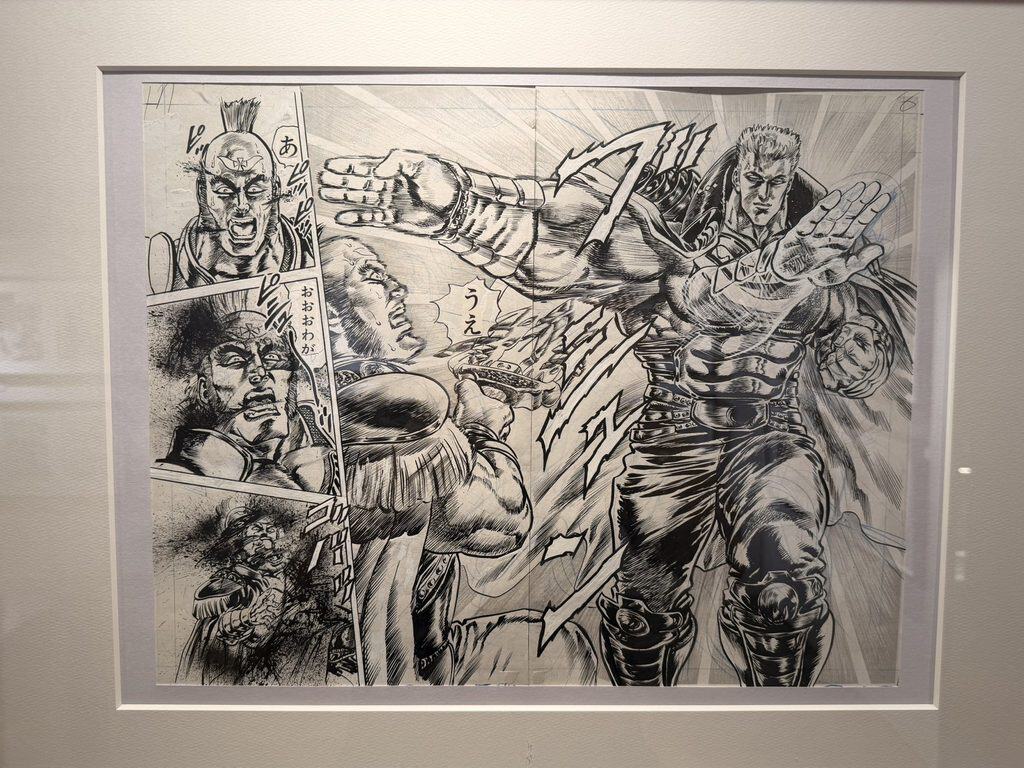
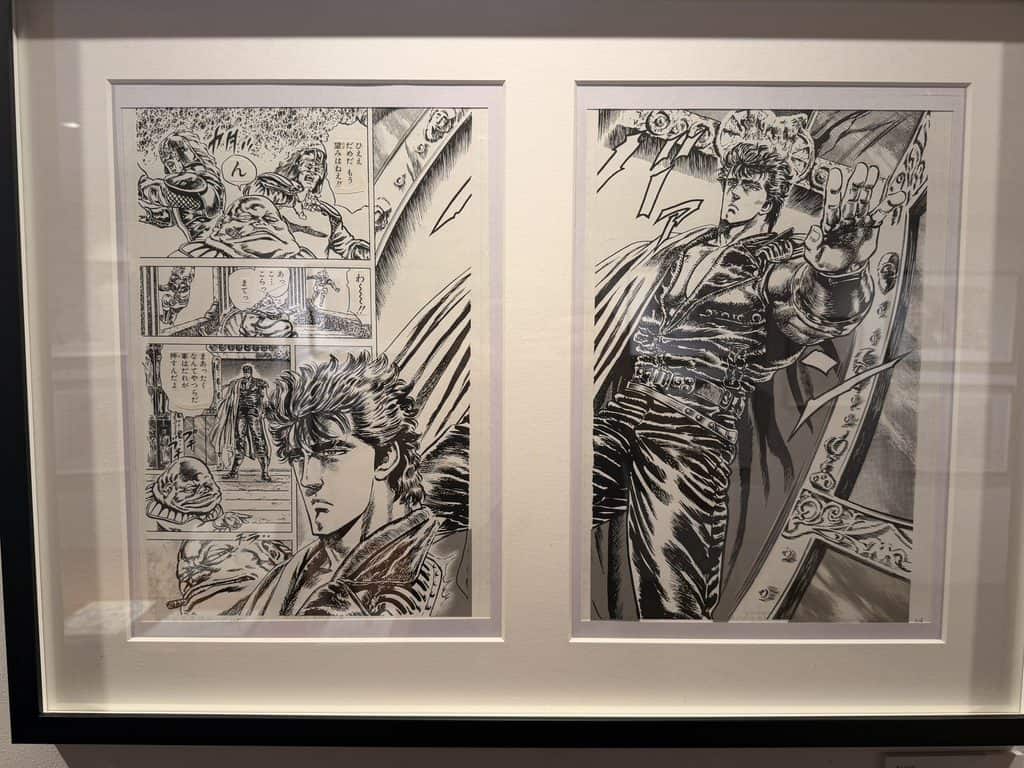
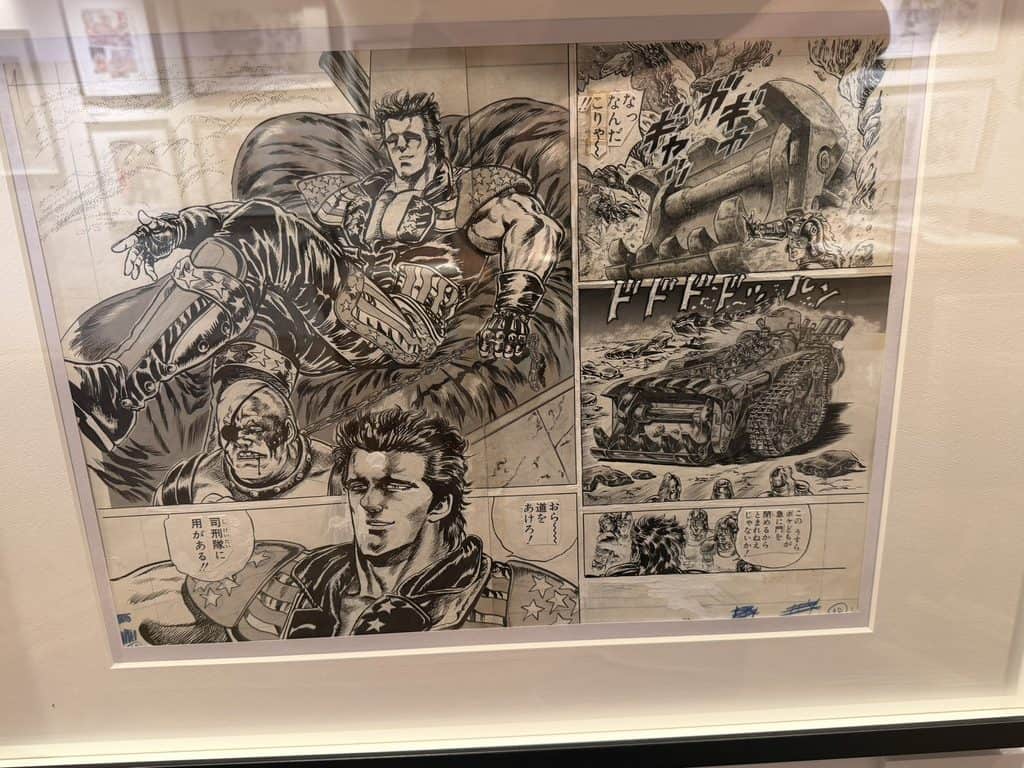
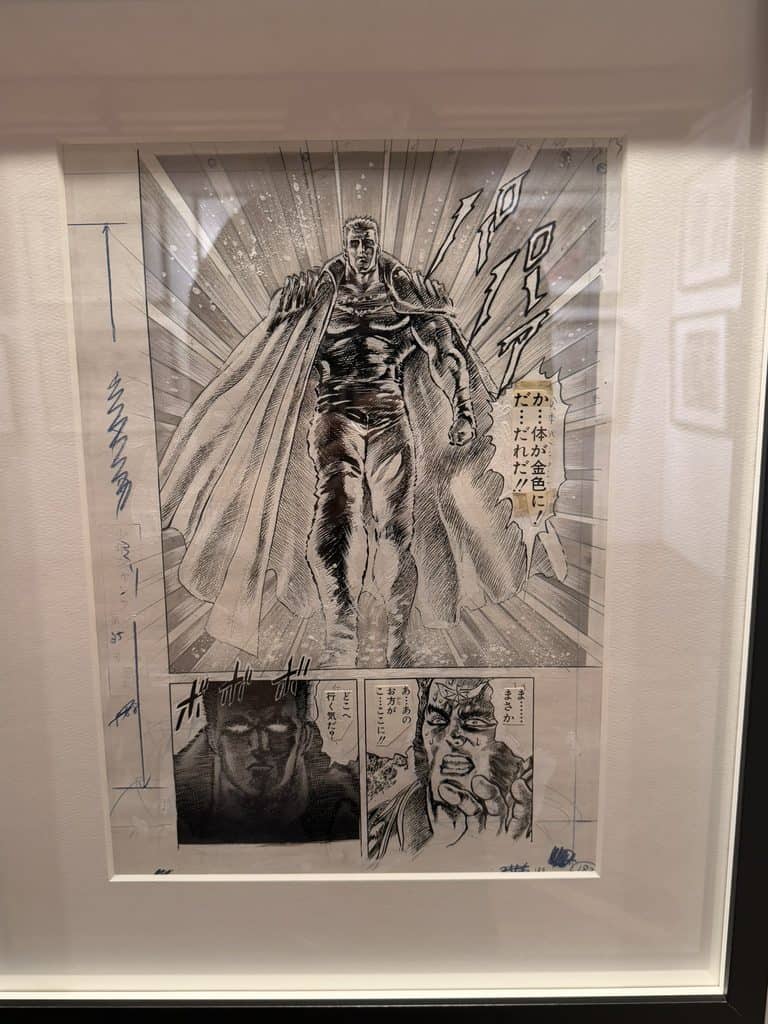
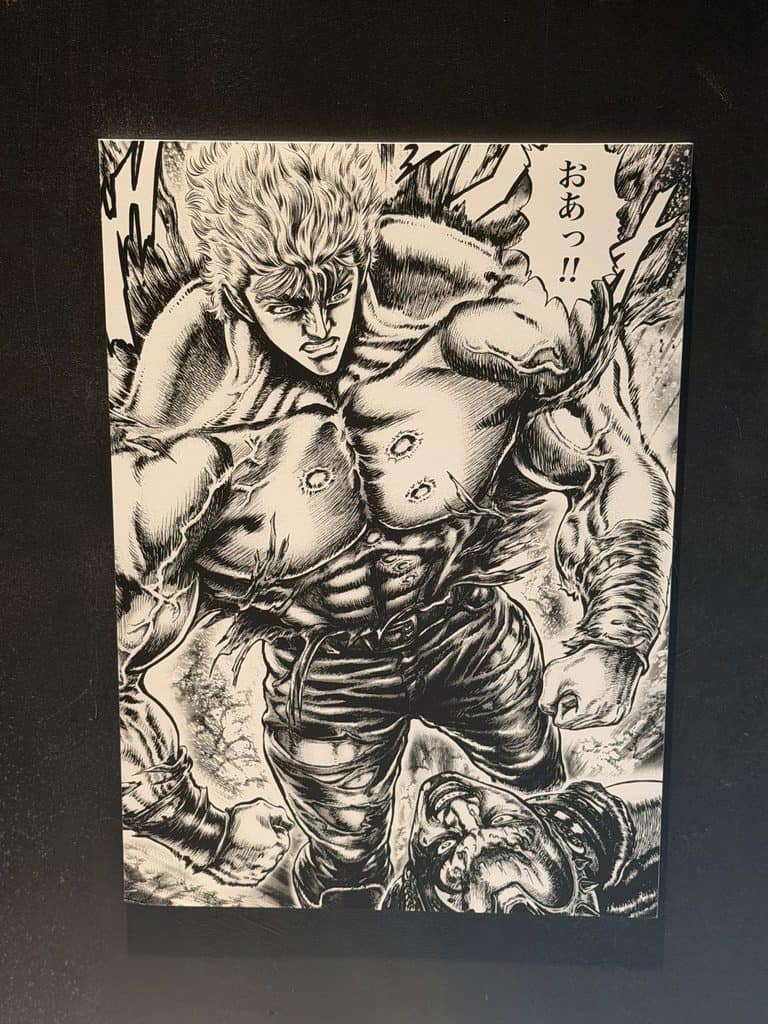
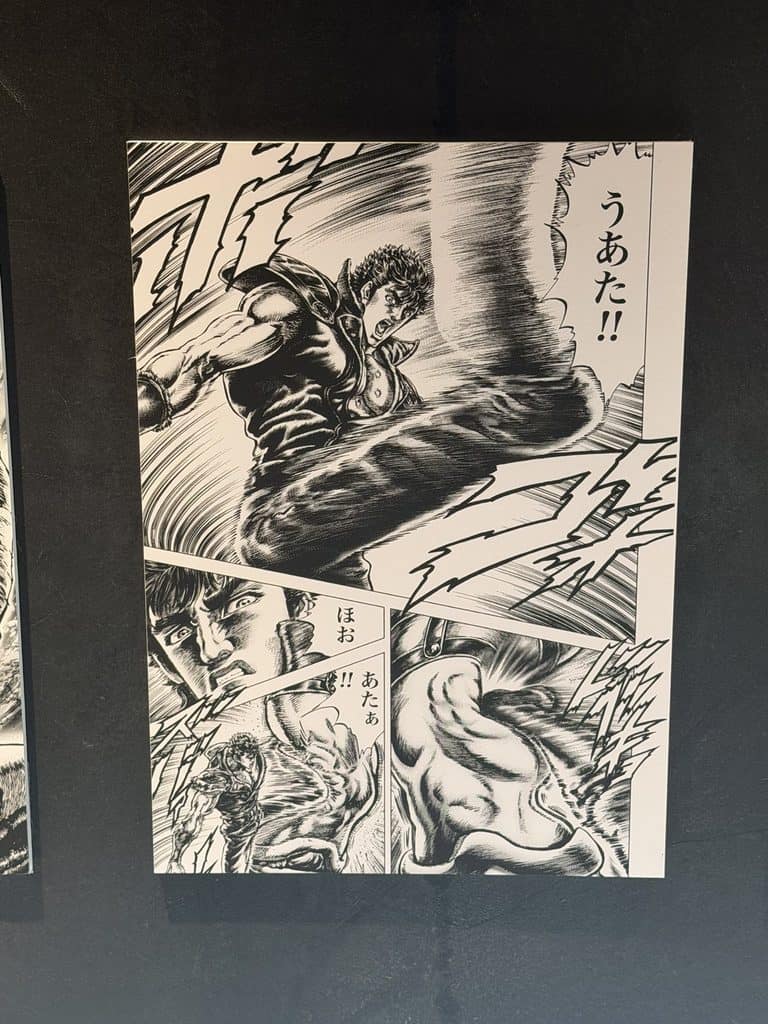
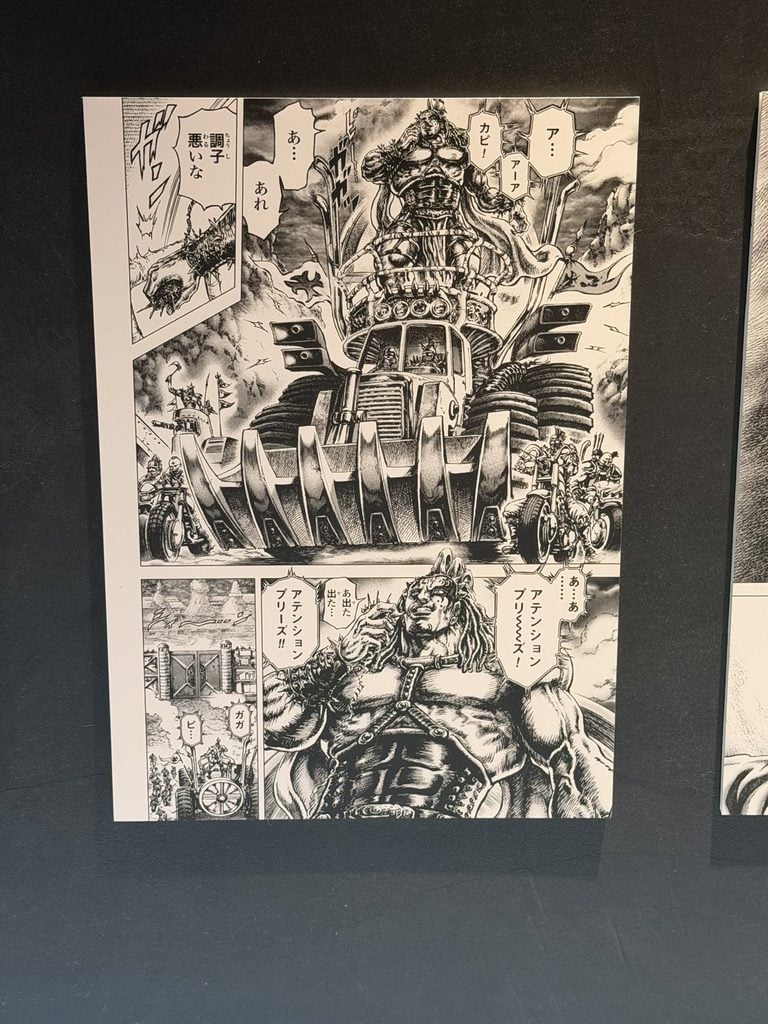
The fortieth anniversary exhibition showed four hundred pages drawn from the first 136 chapters of the manga. RETURNS+ keeps more than 150 across both periods. The first, through October 5, is given over to the arc of the Six Sacred Stars of Nanto, with Shin, Rei, Yuda, Shû and Souther. The second, from October 7 to 25, rehangs the walls for the Four Brothers of Hokuto and the Five Chariot Stars of Nanto, through to Jûza and the end of Raoh.
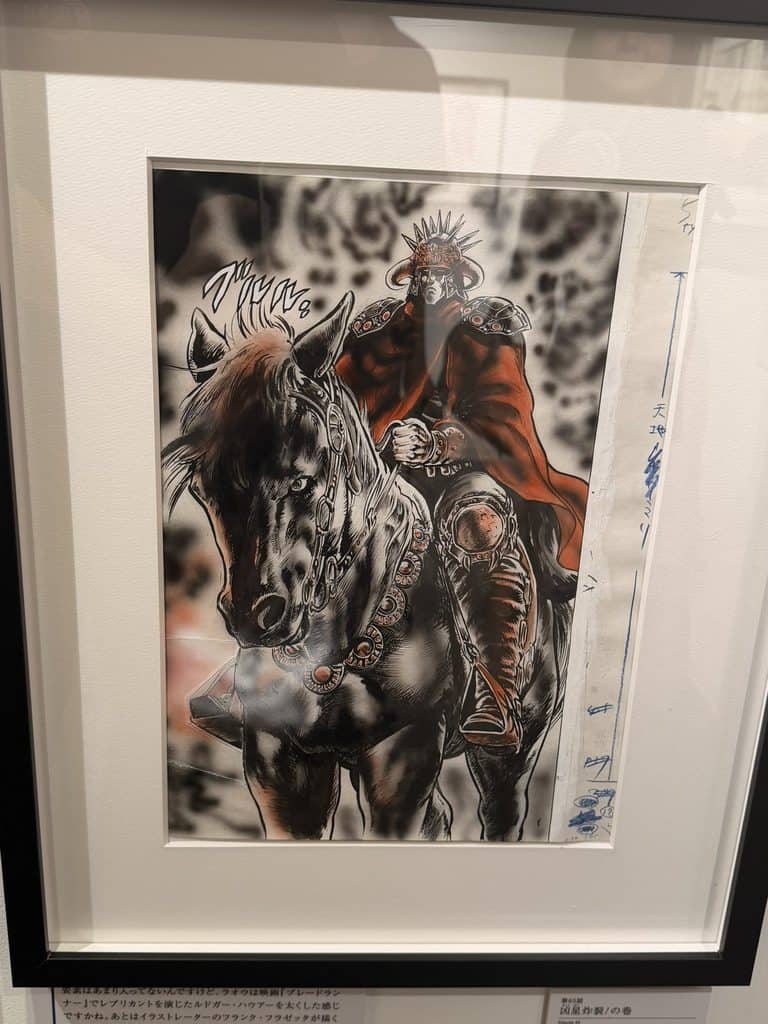
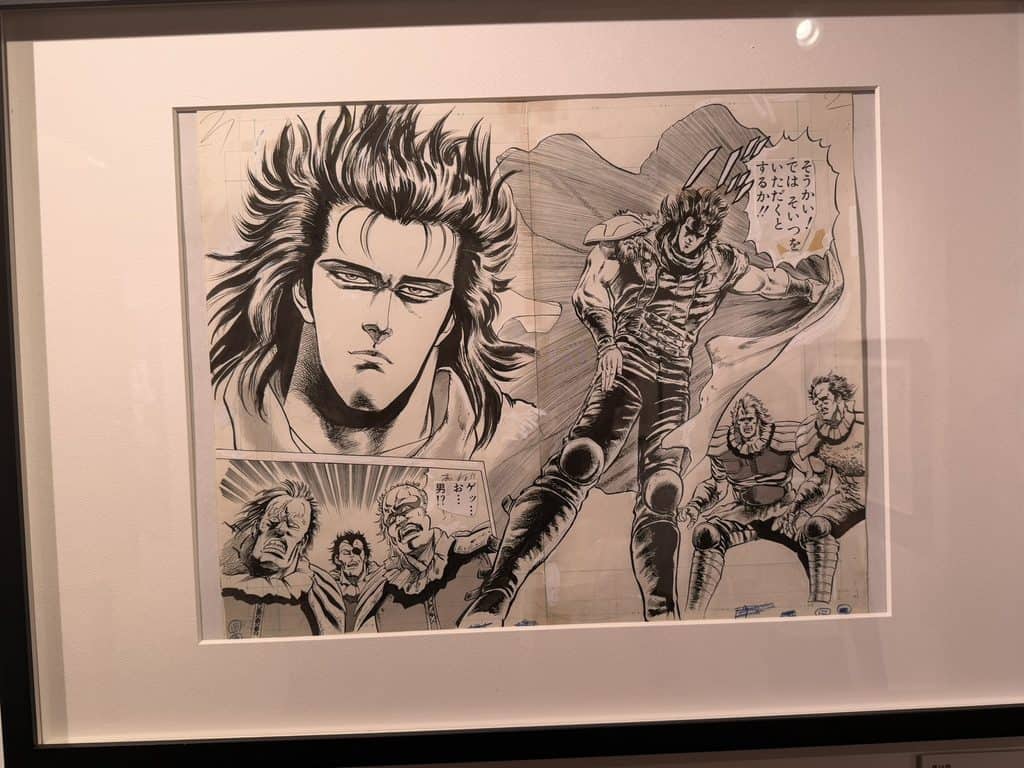
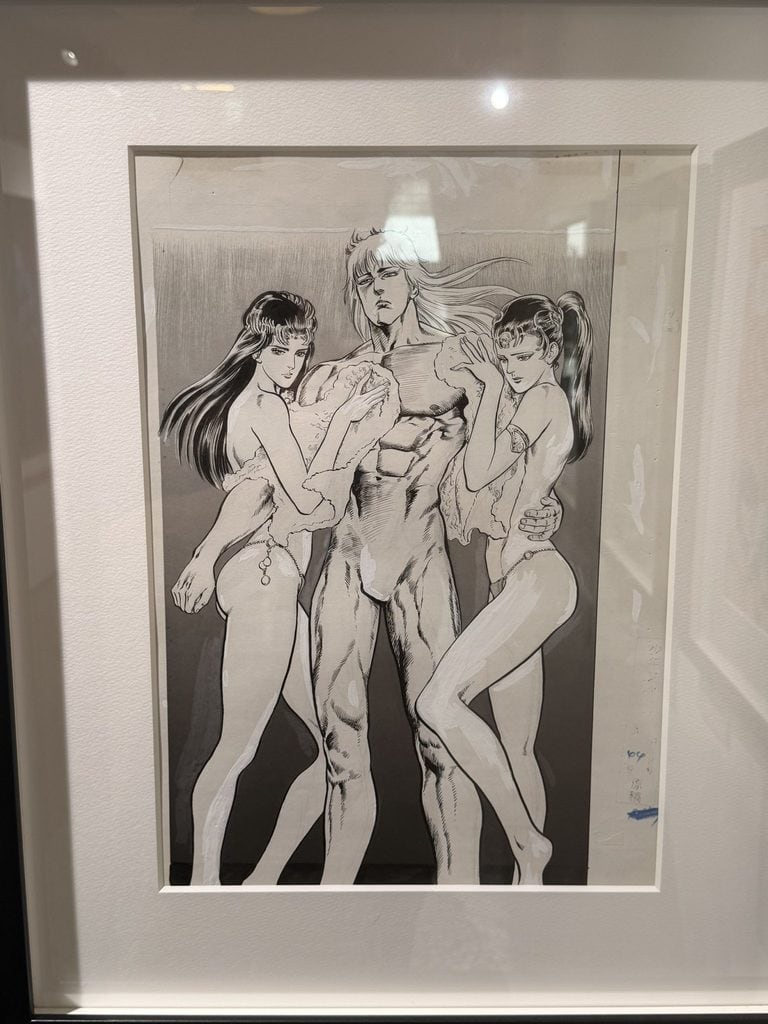
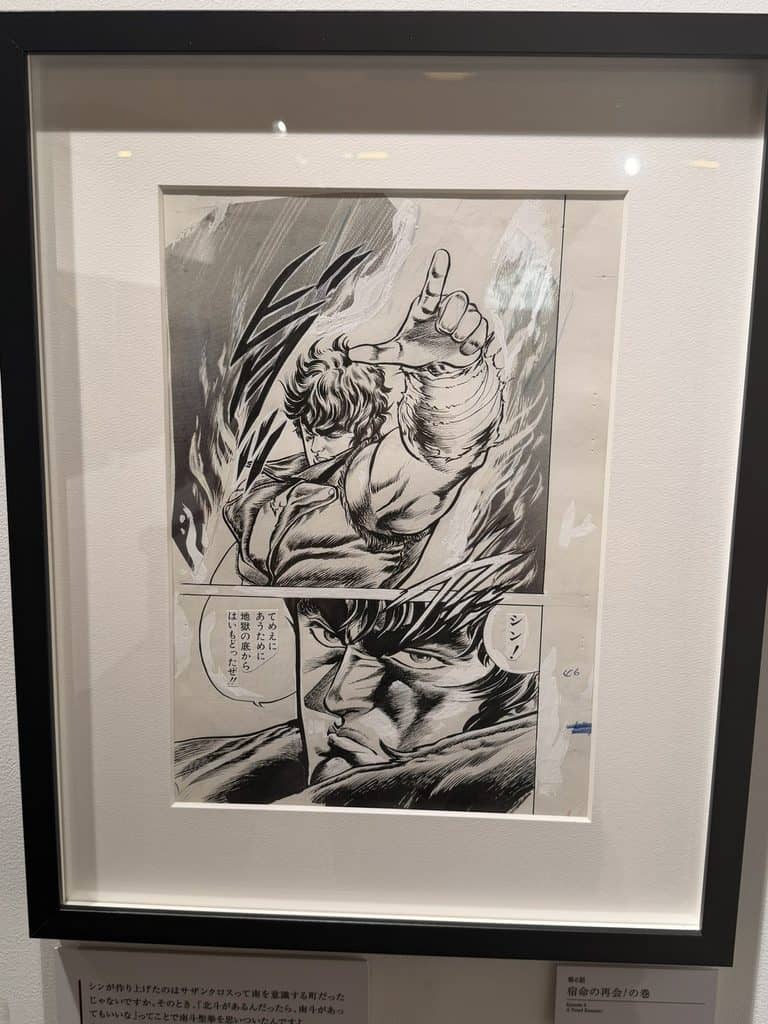
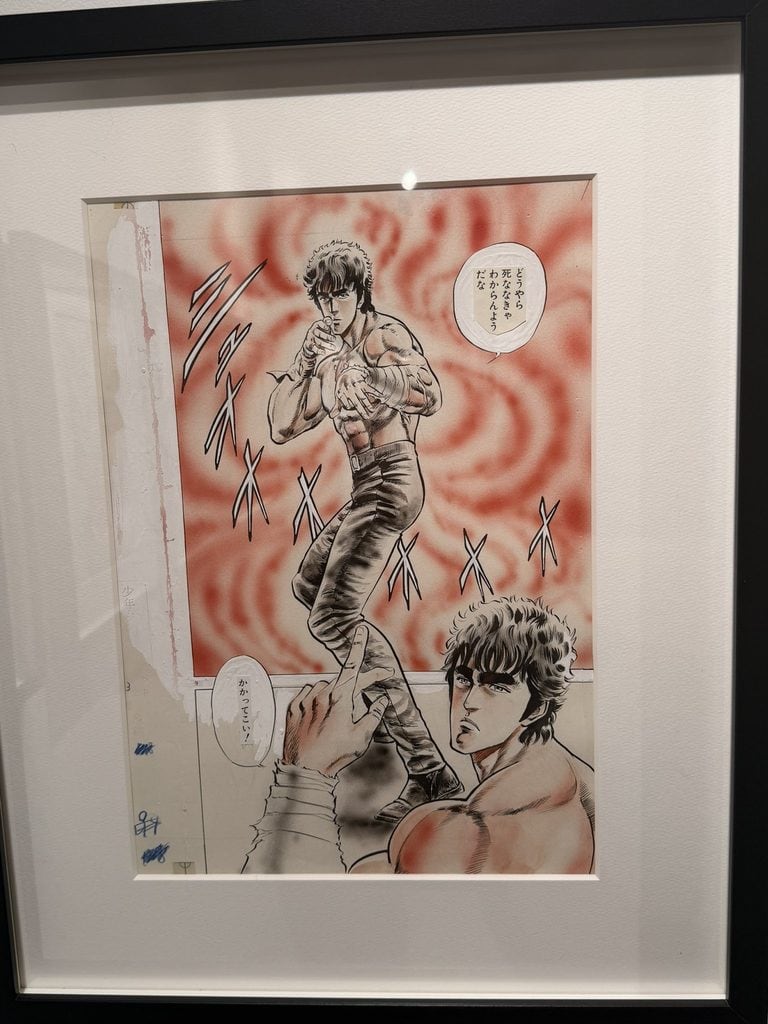
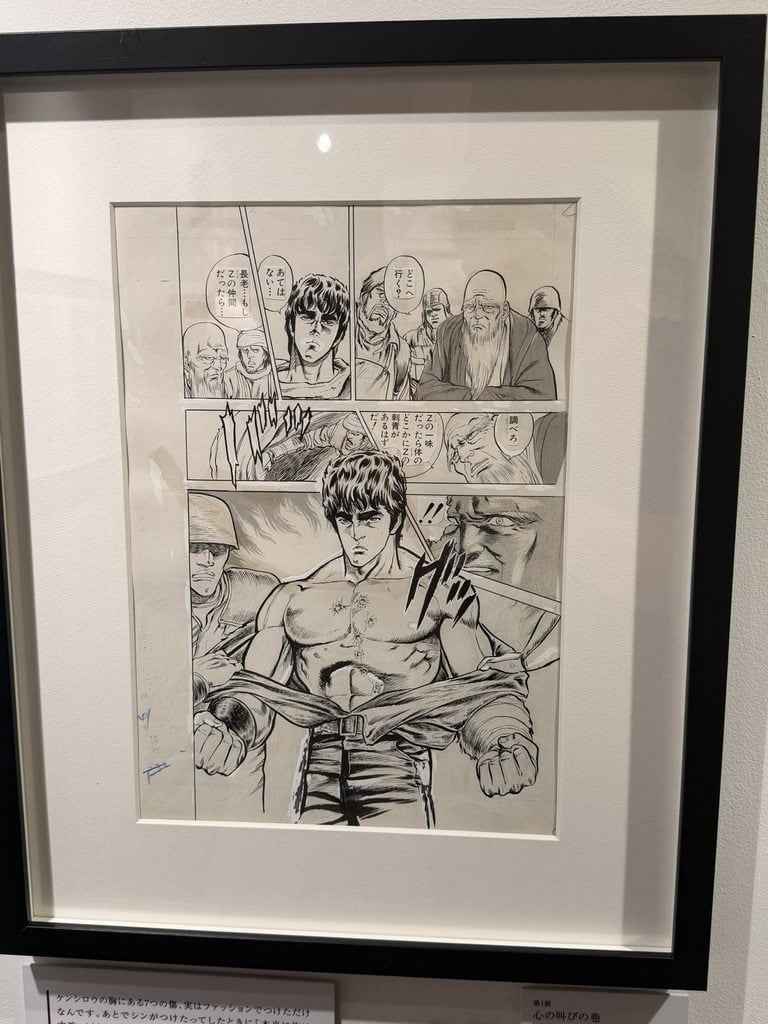
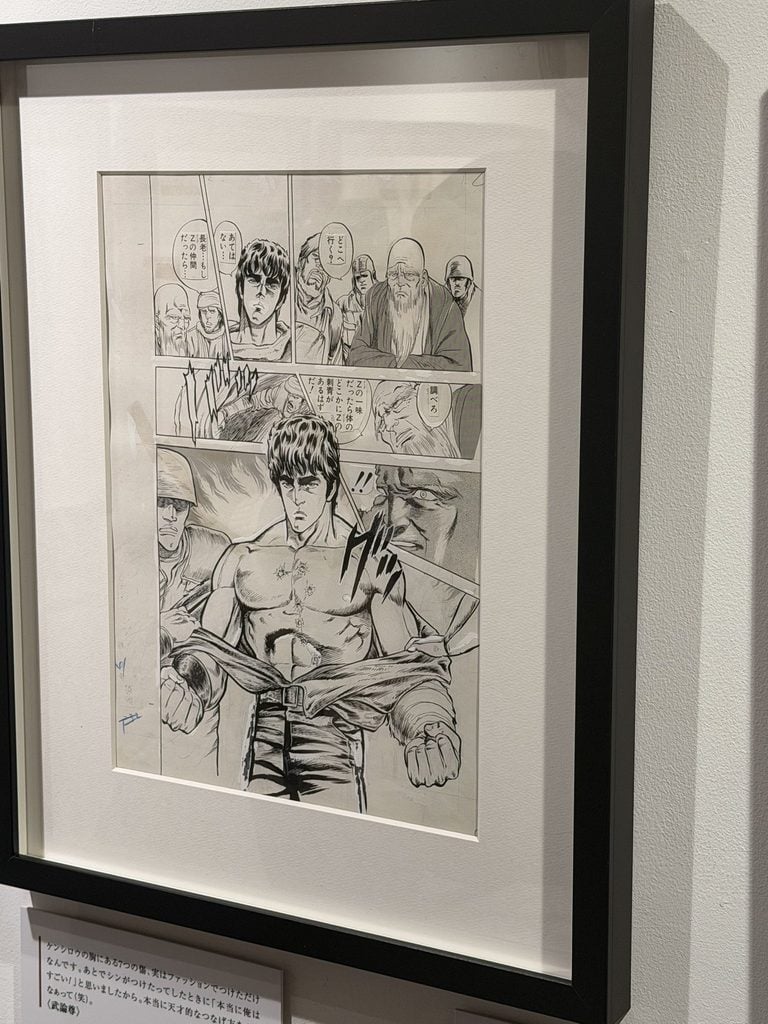
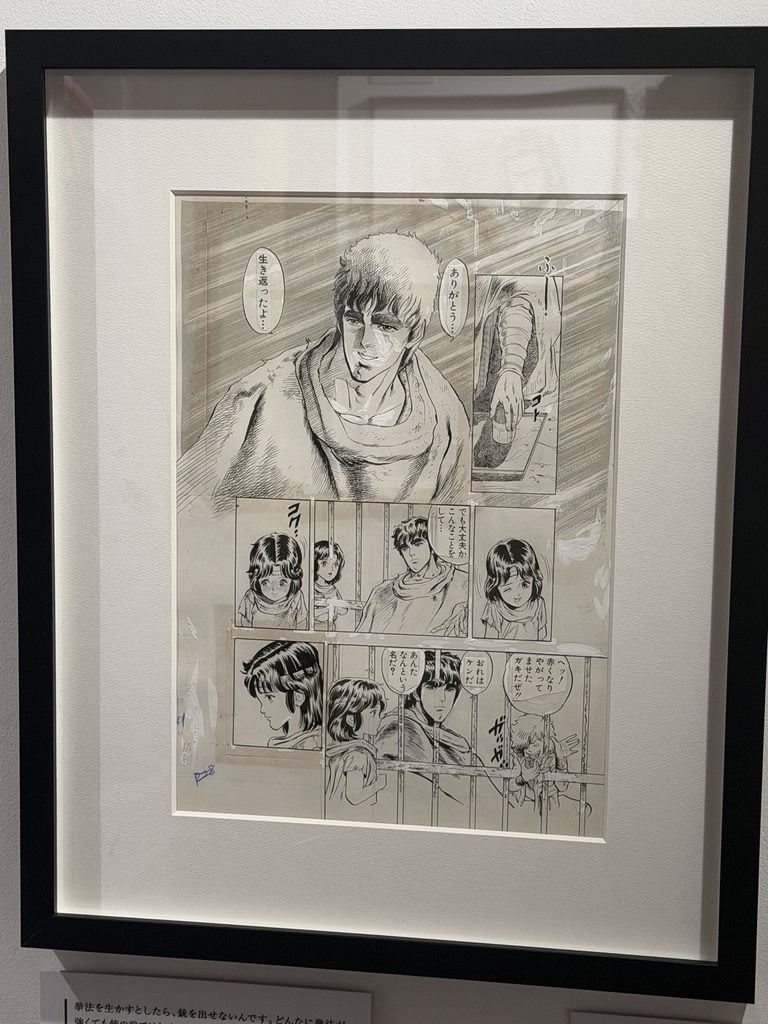
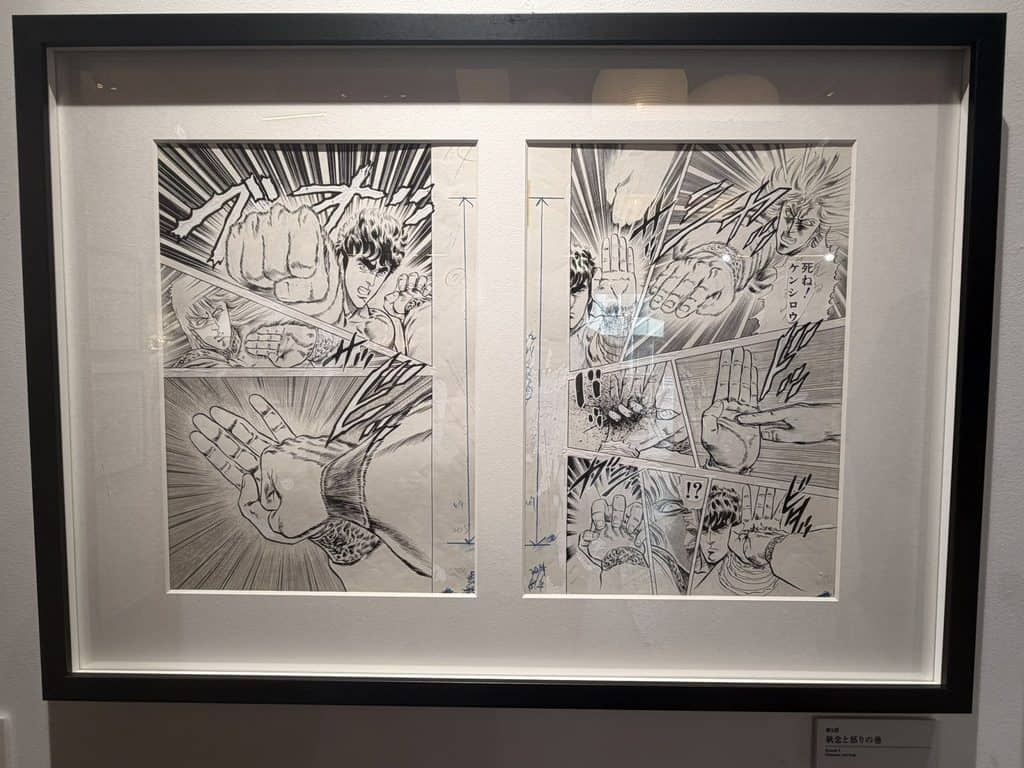
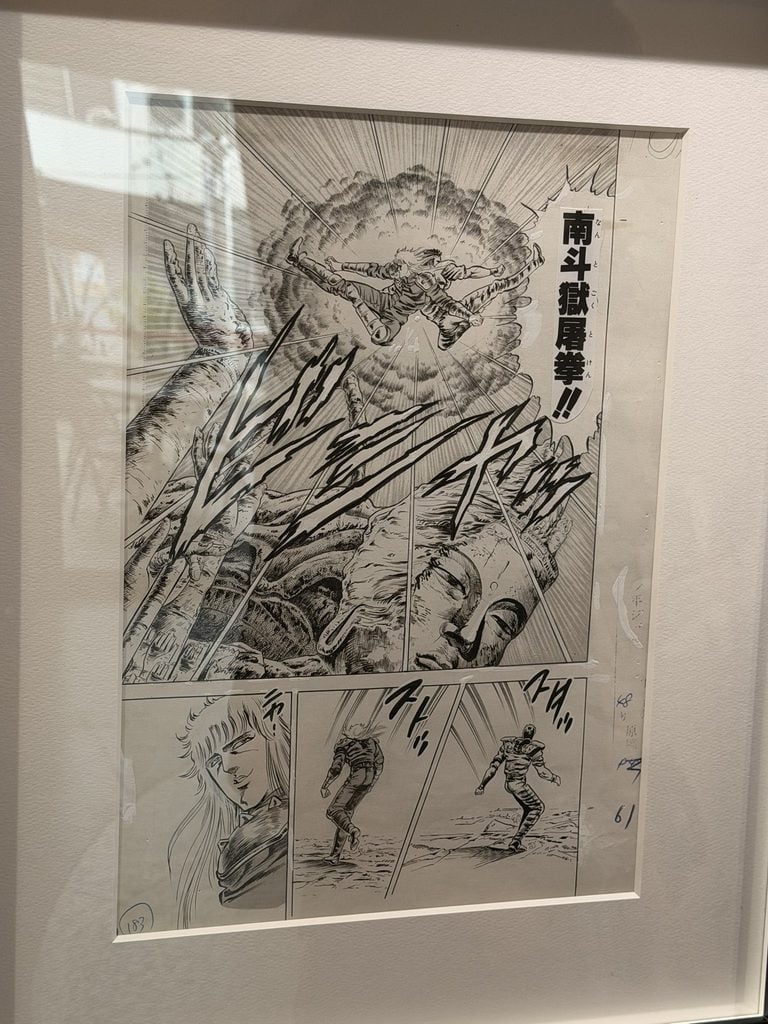
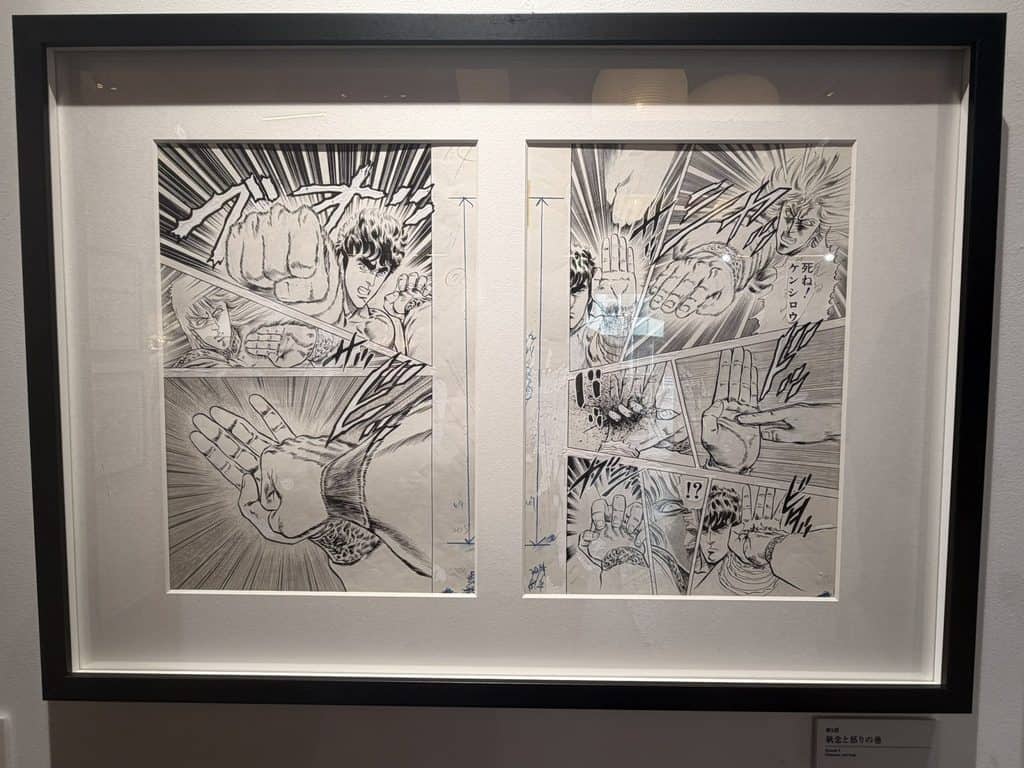
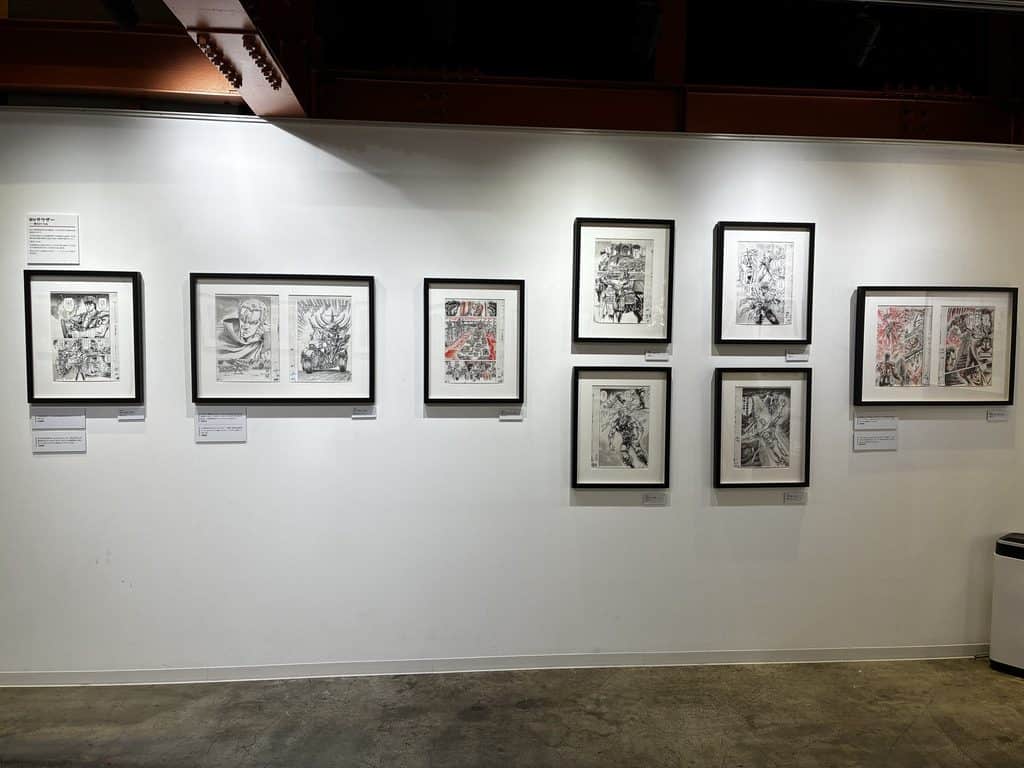
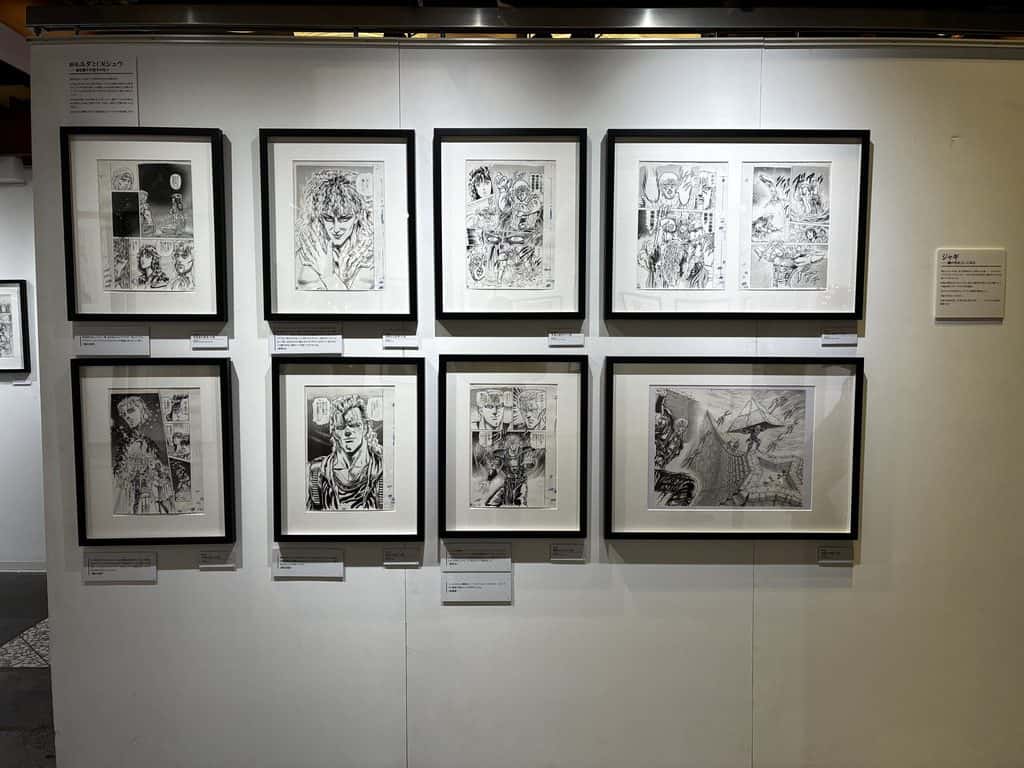
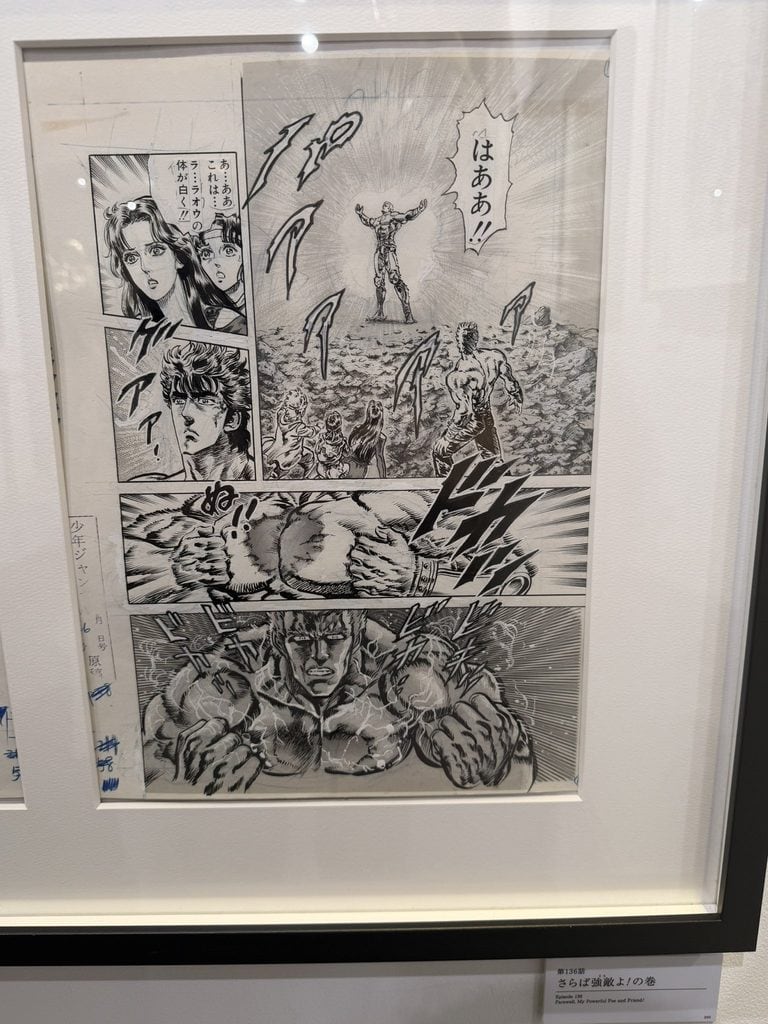
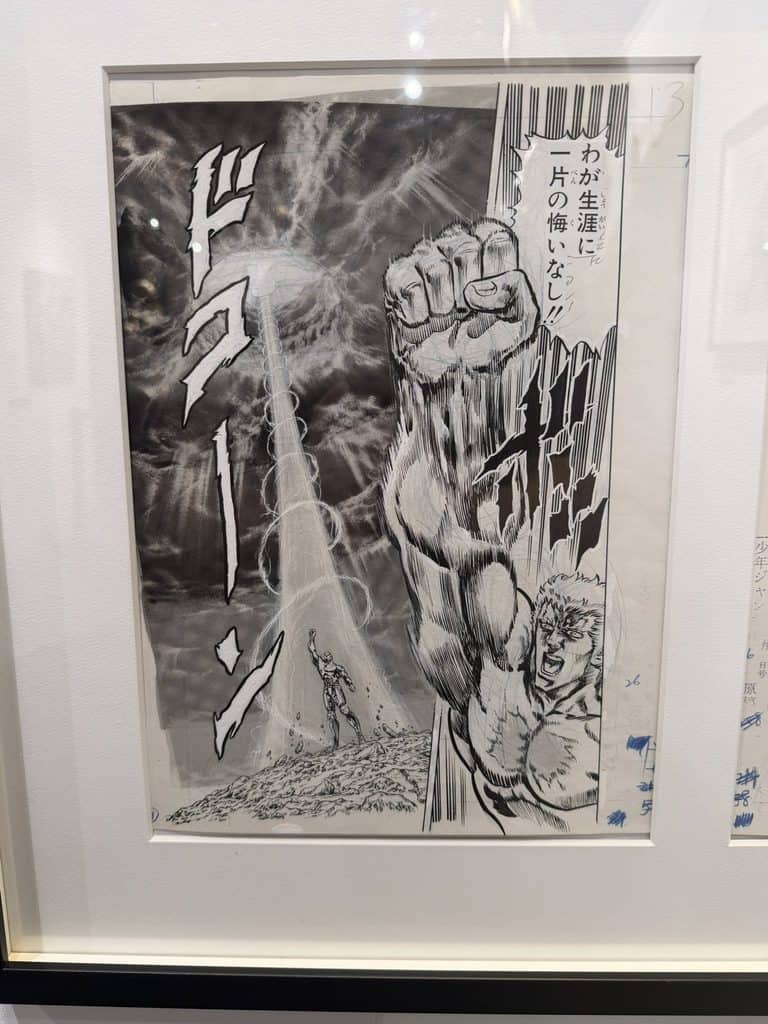
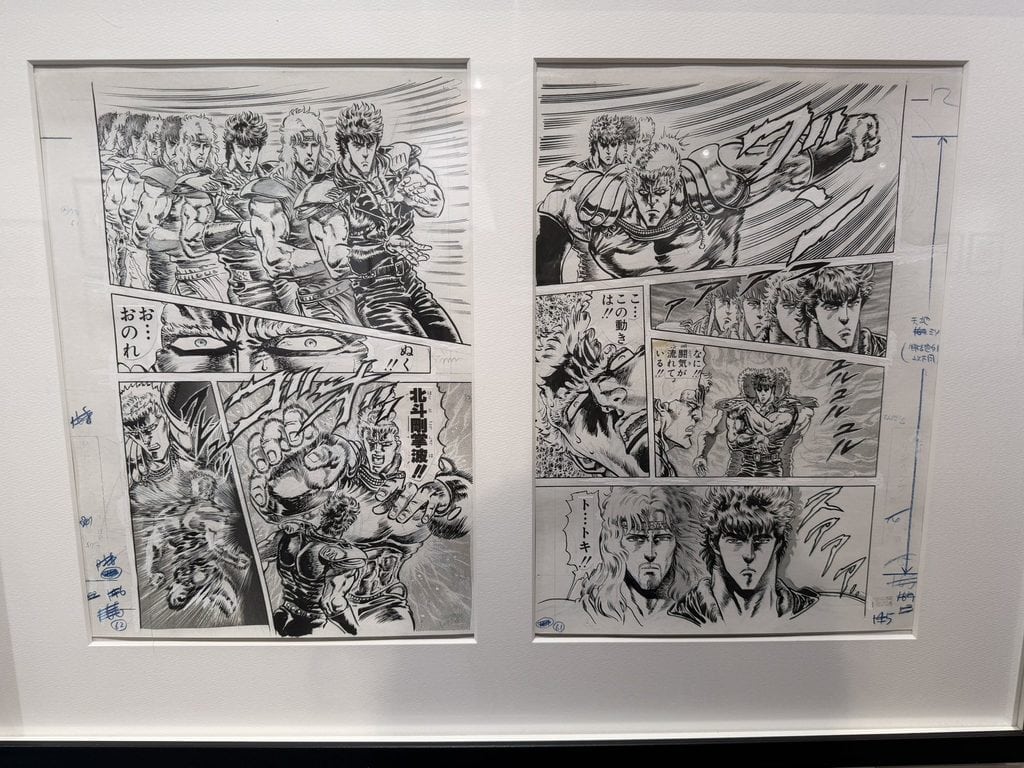
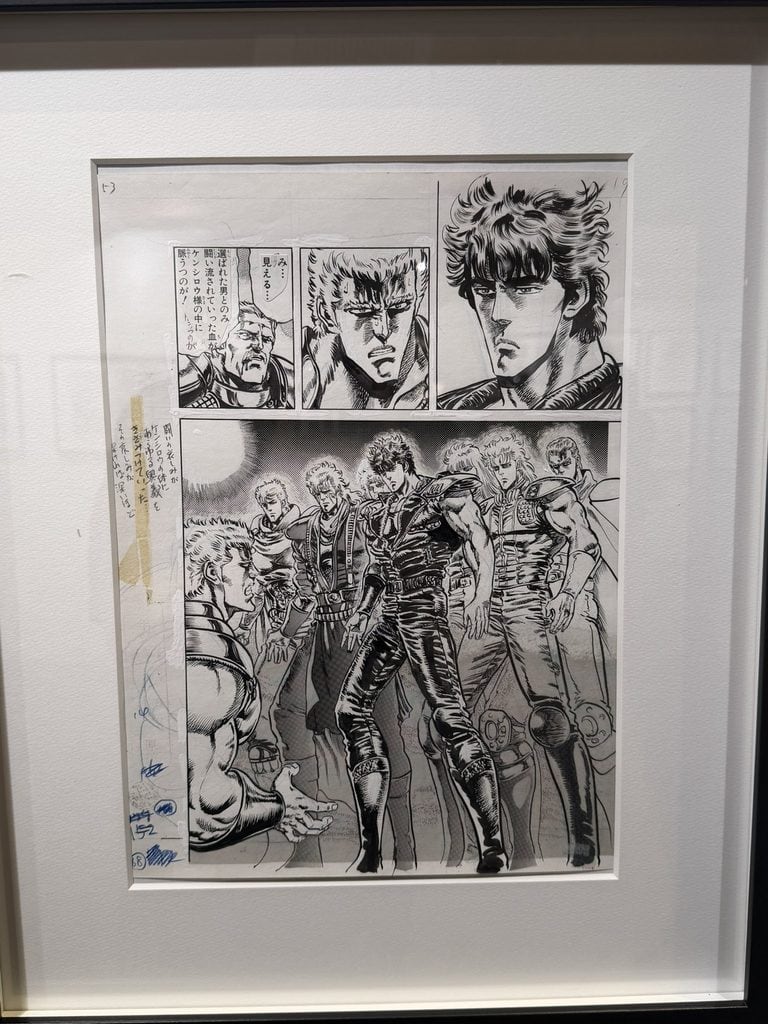
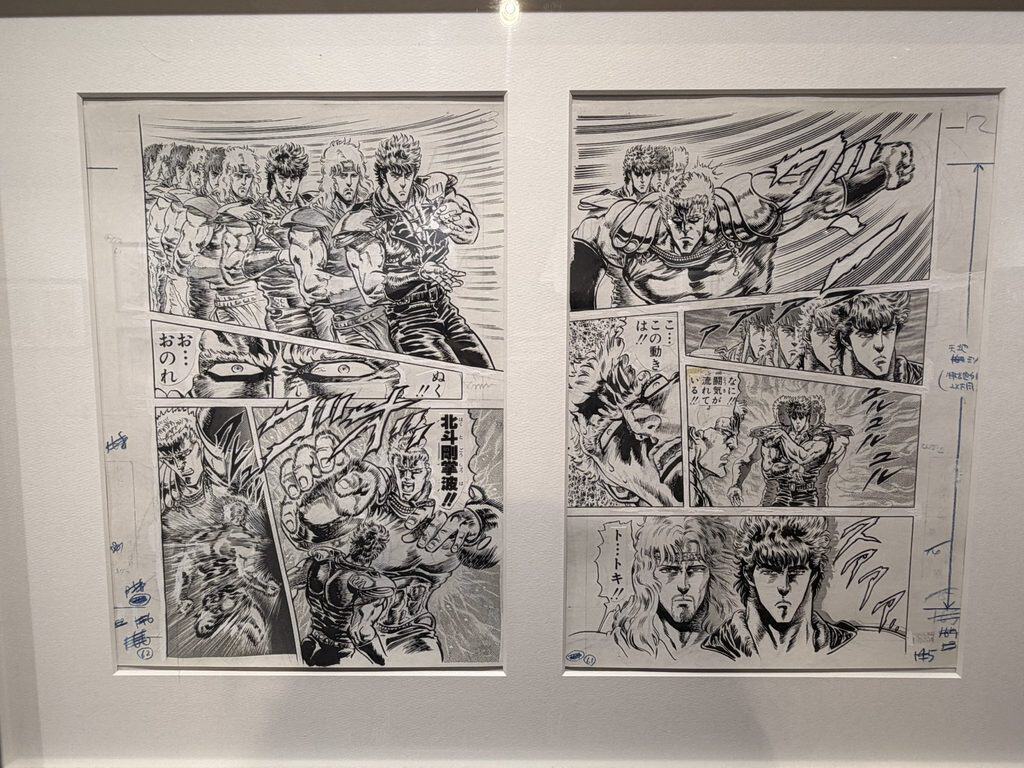
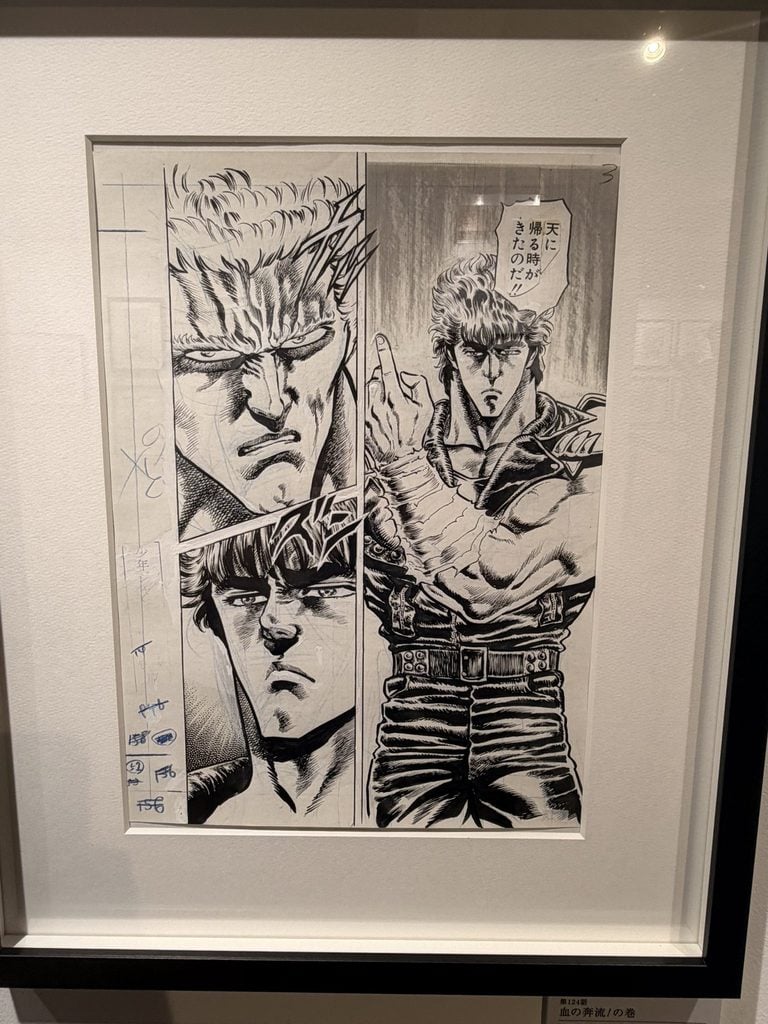
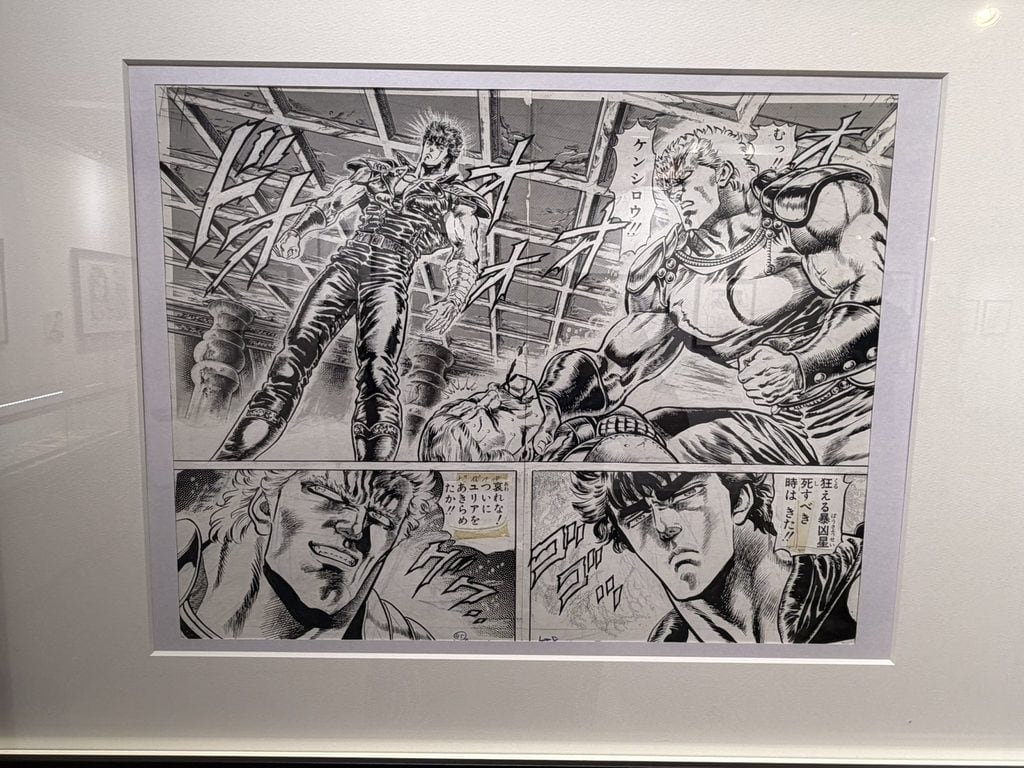
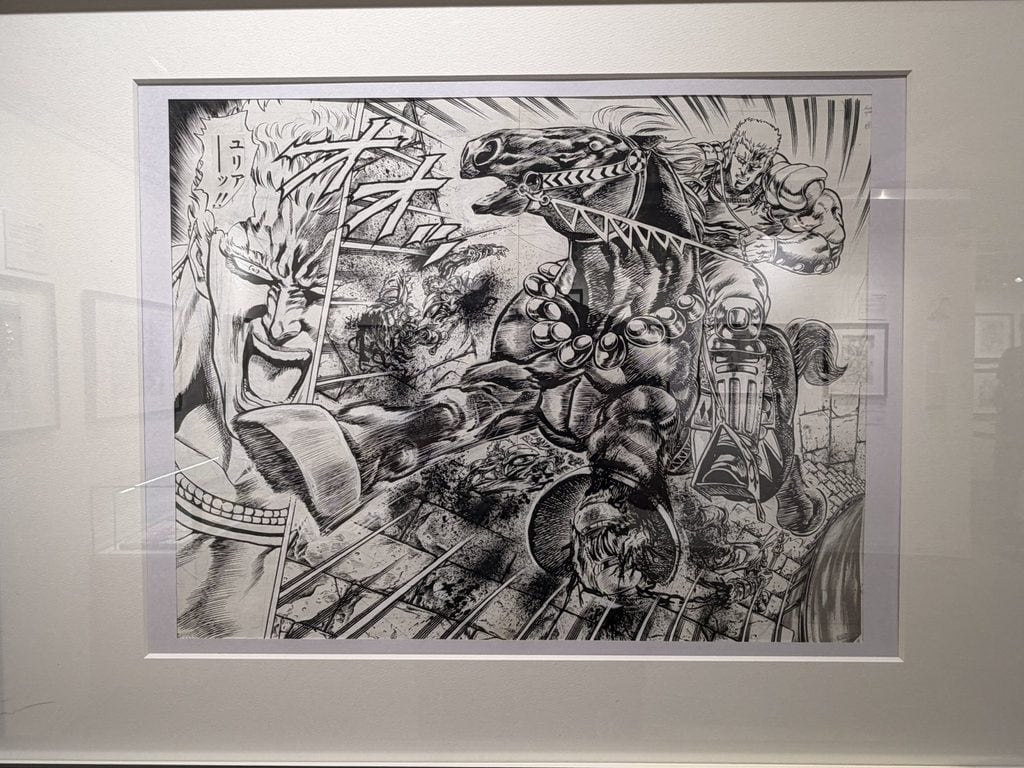
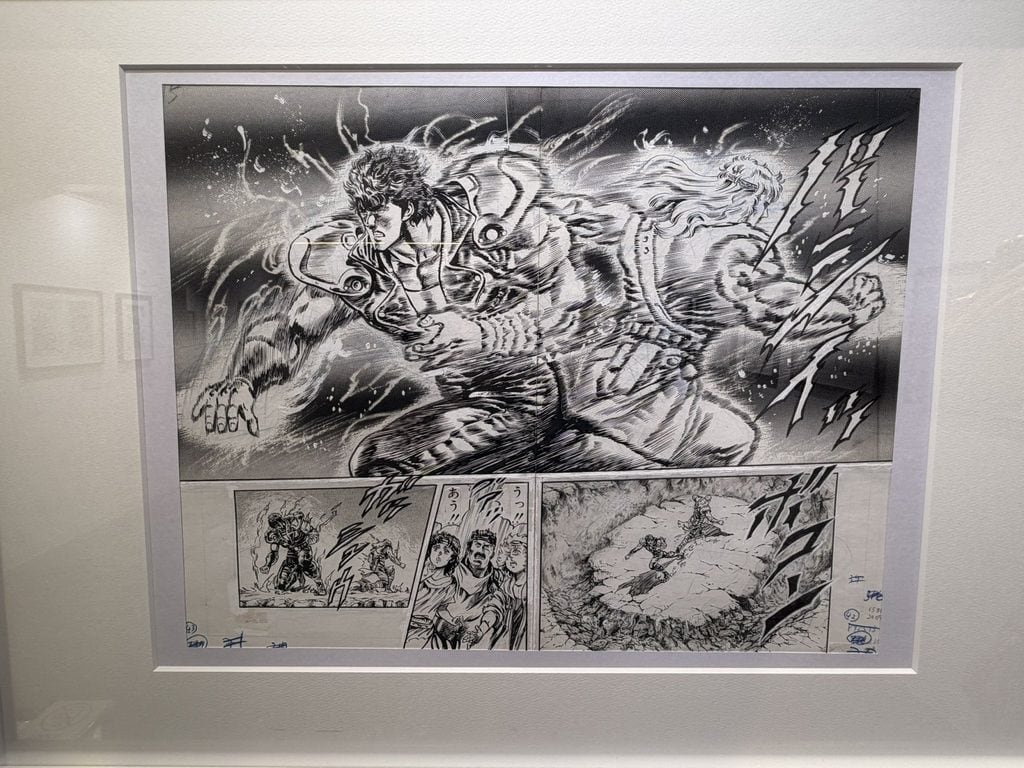
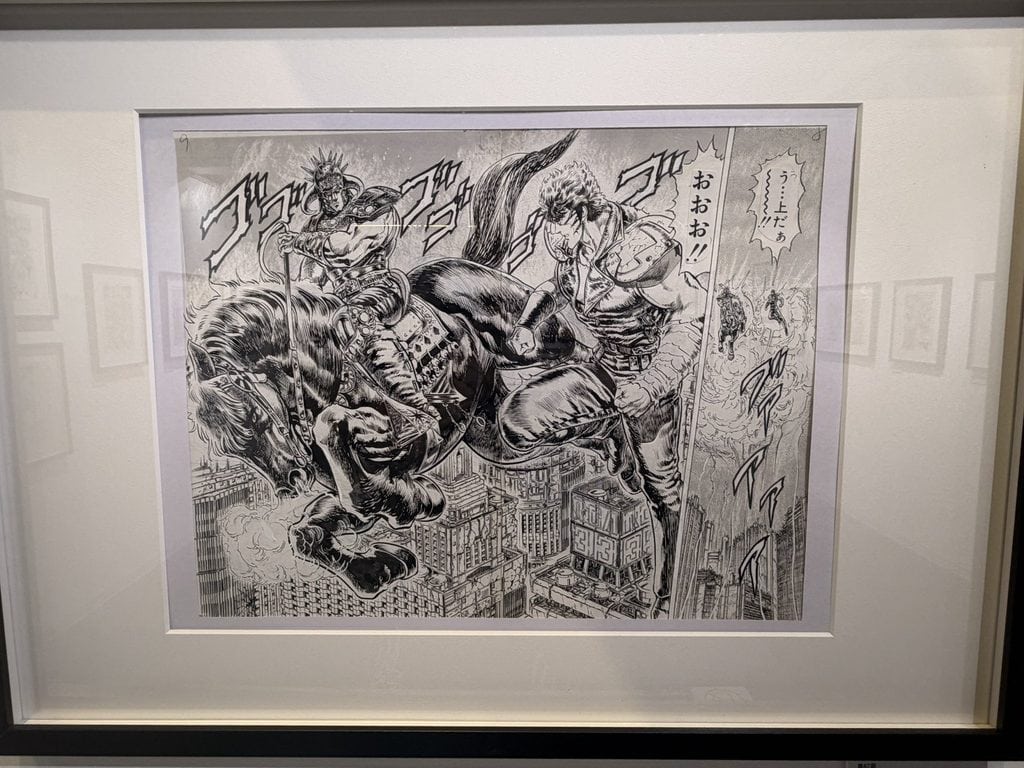
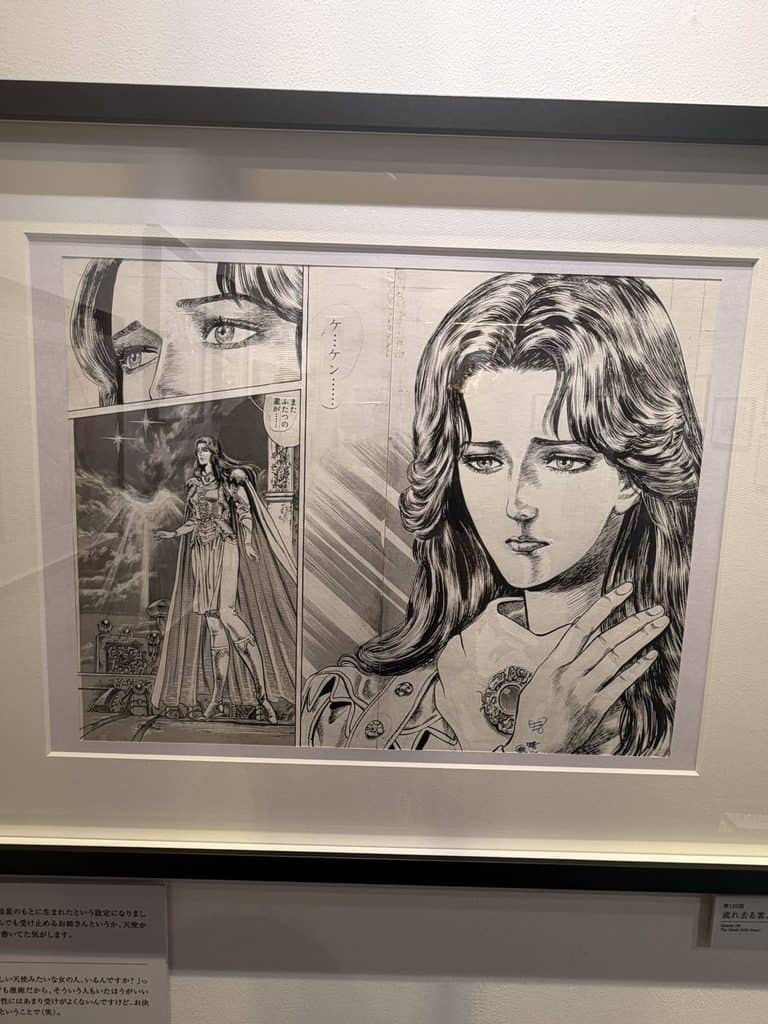
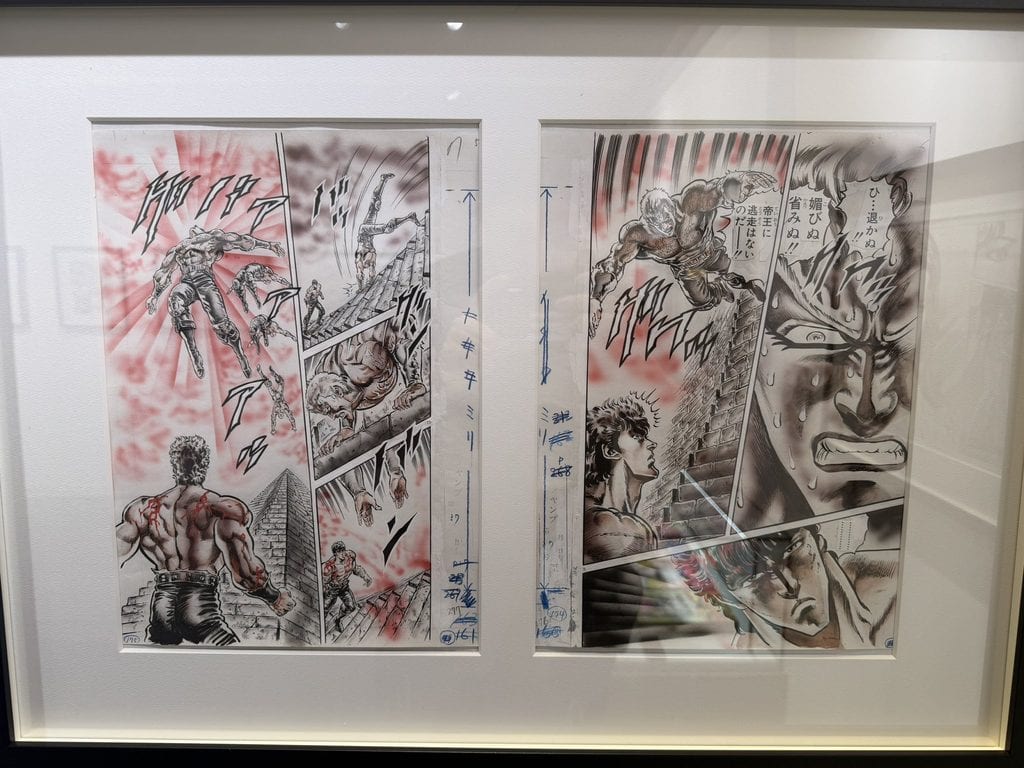
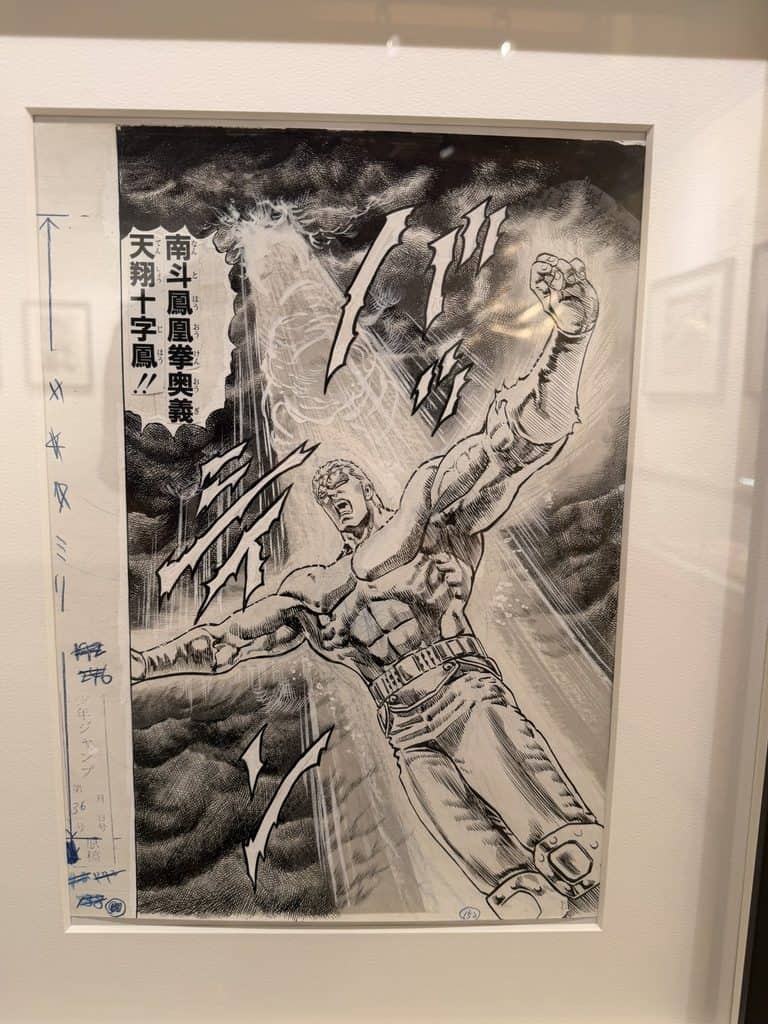
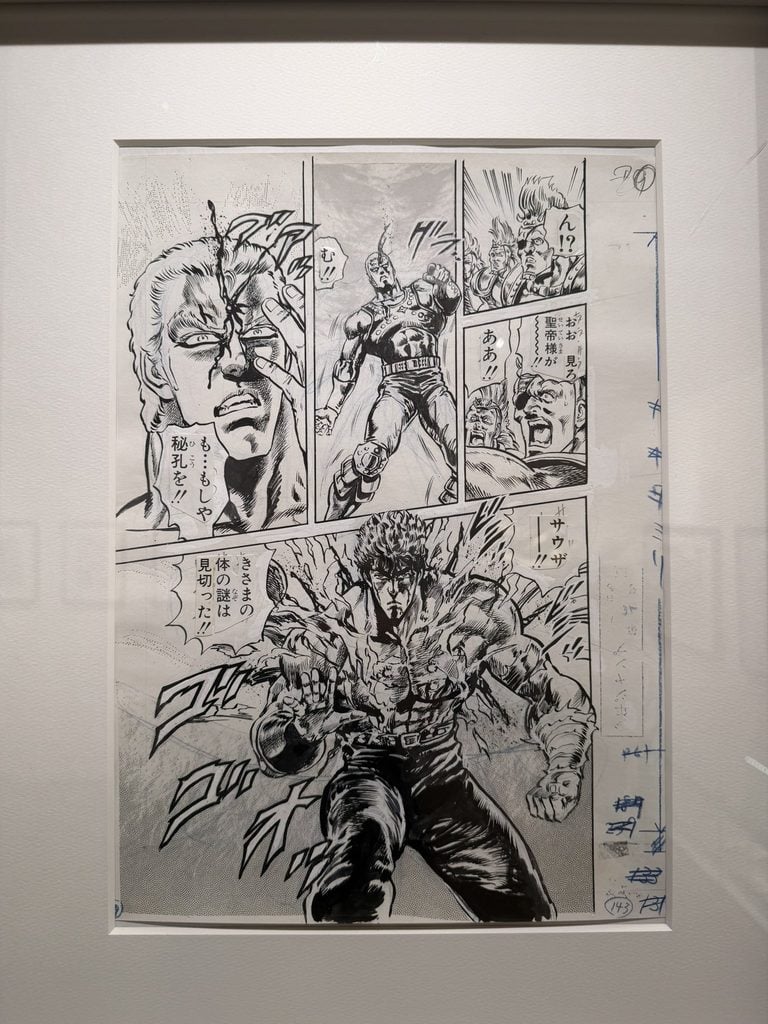
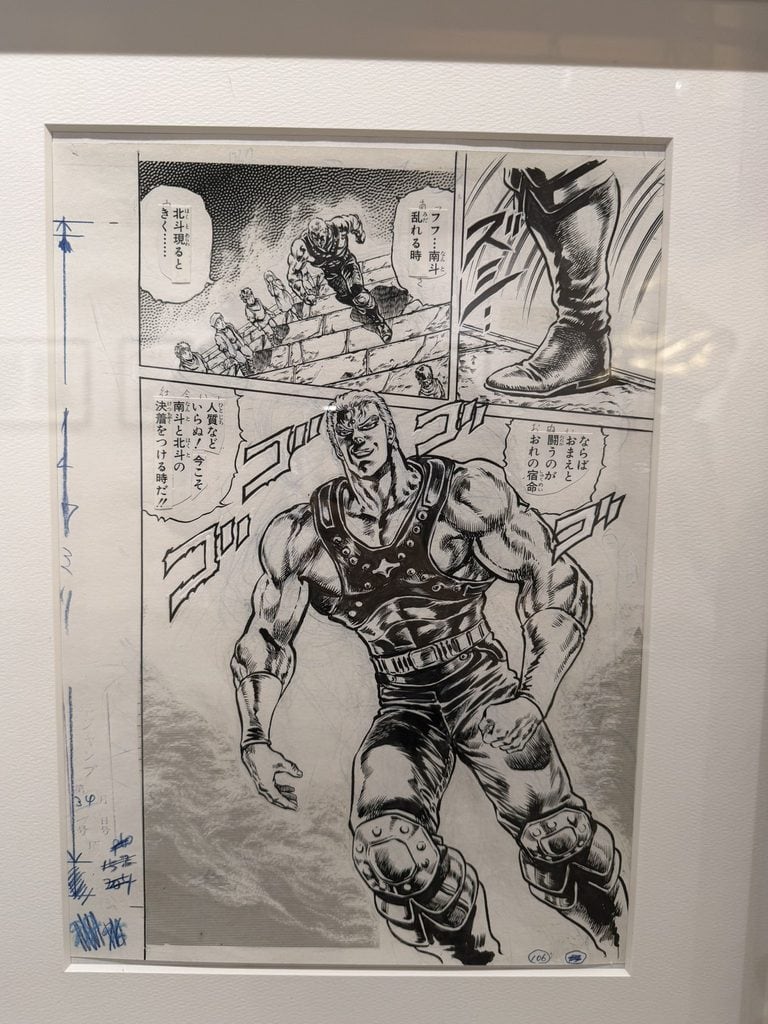
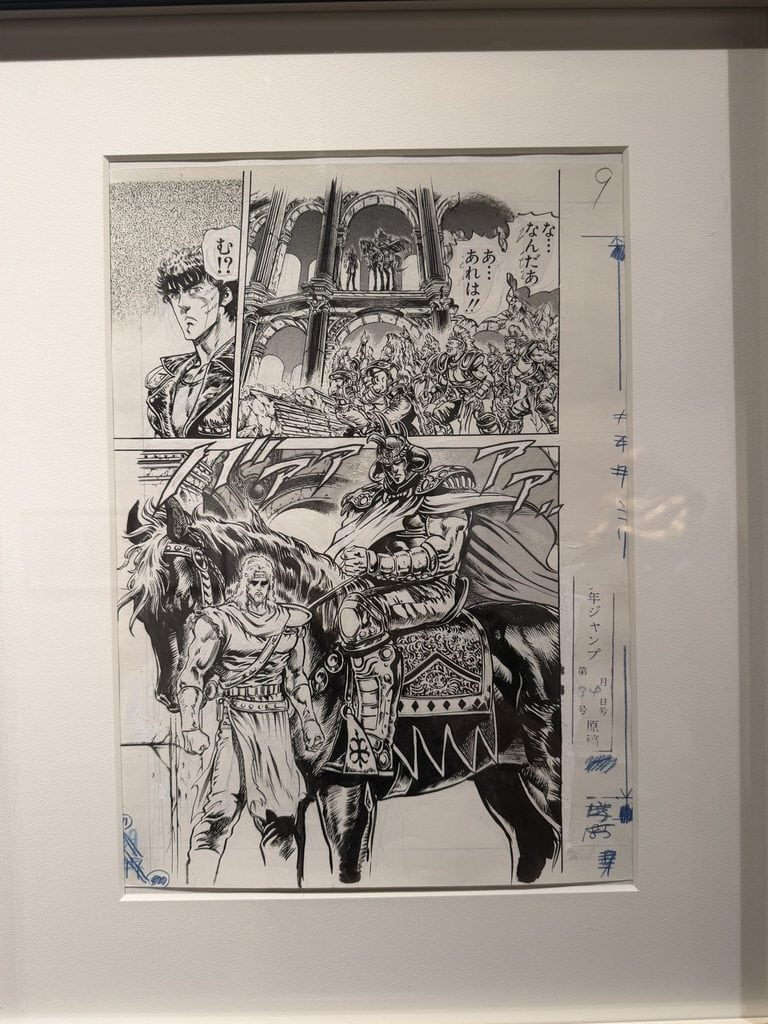
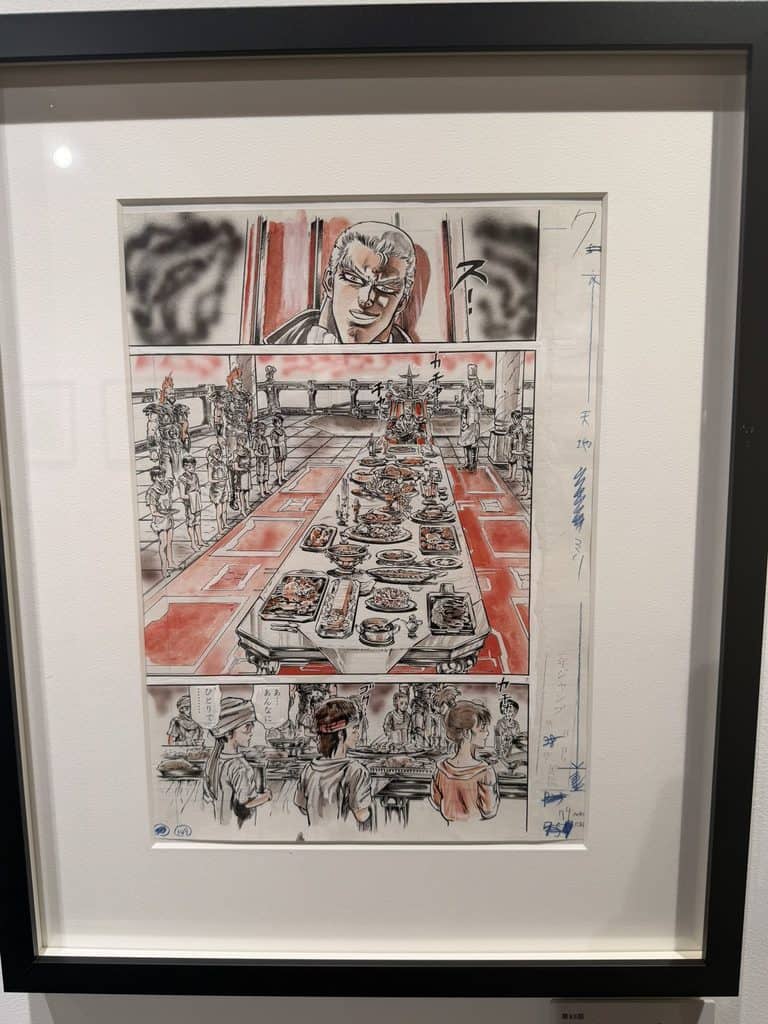
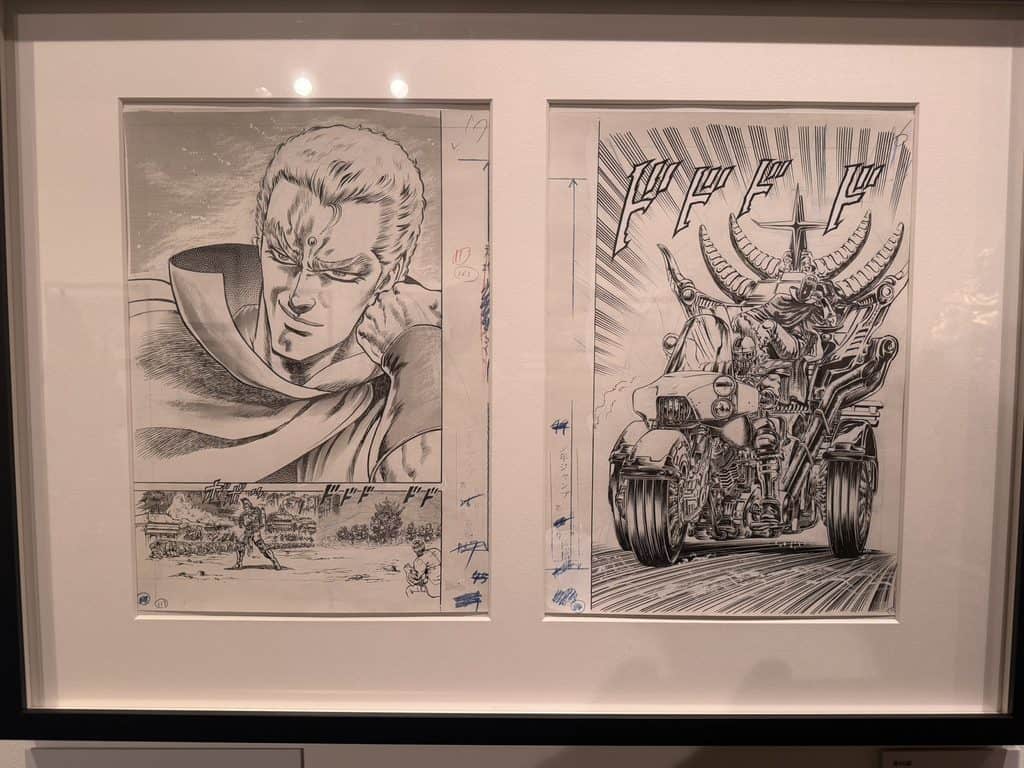
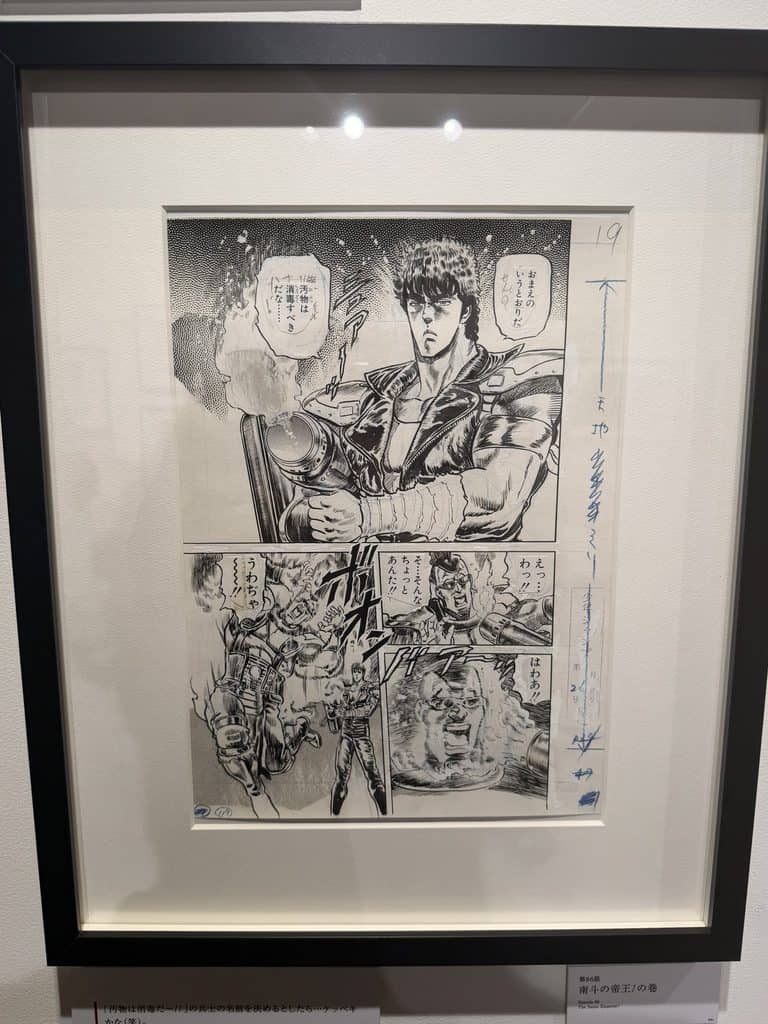
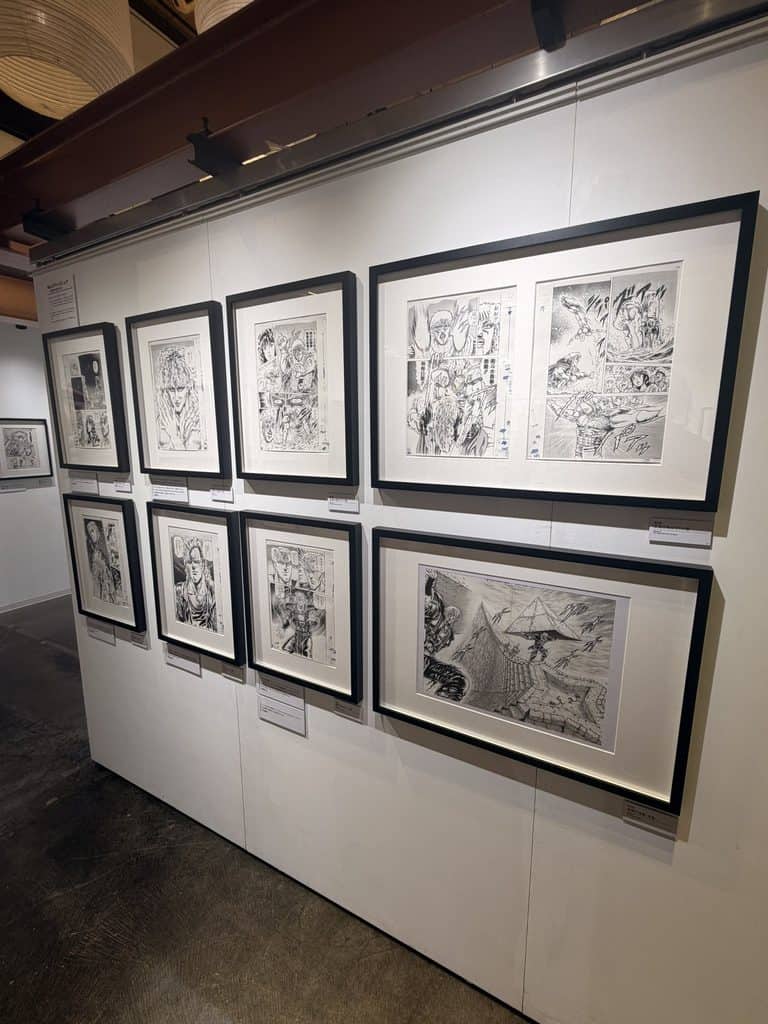
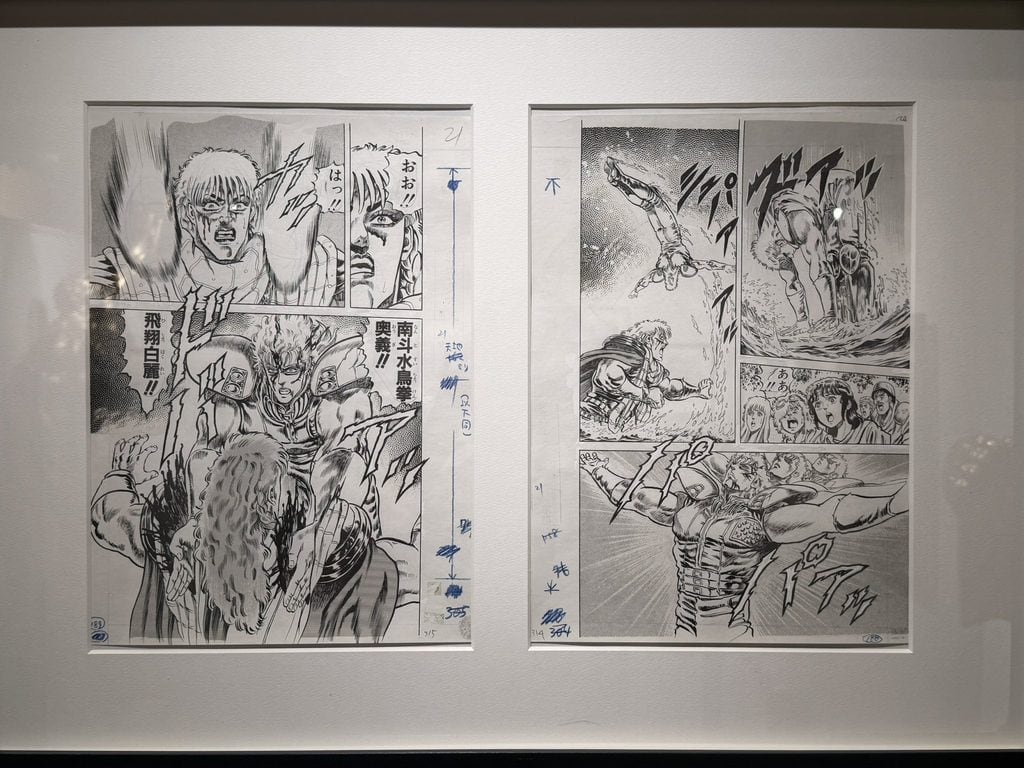
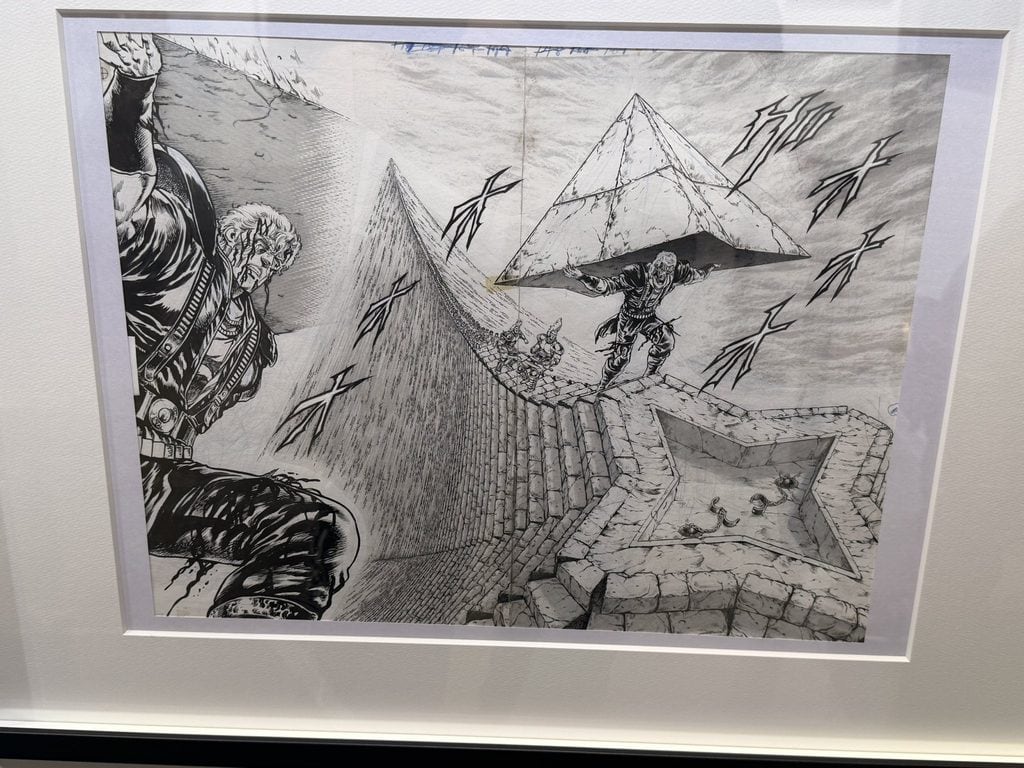
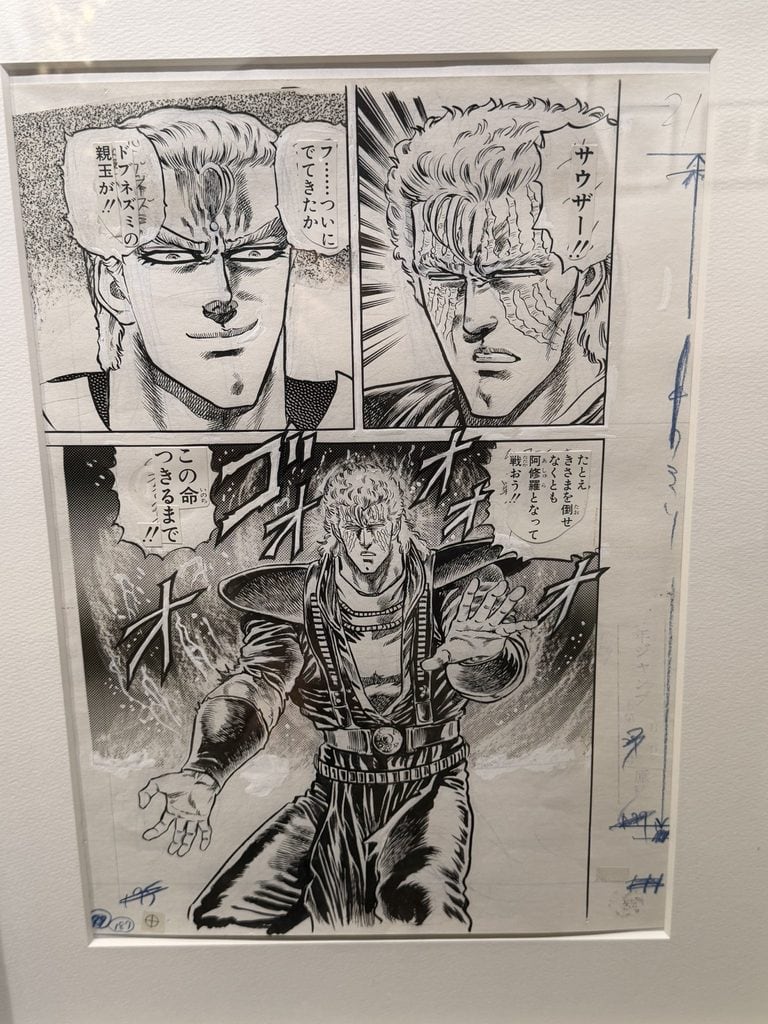
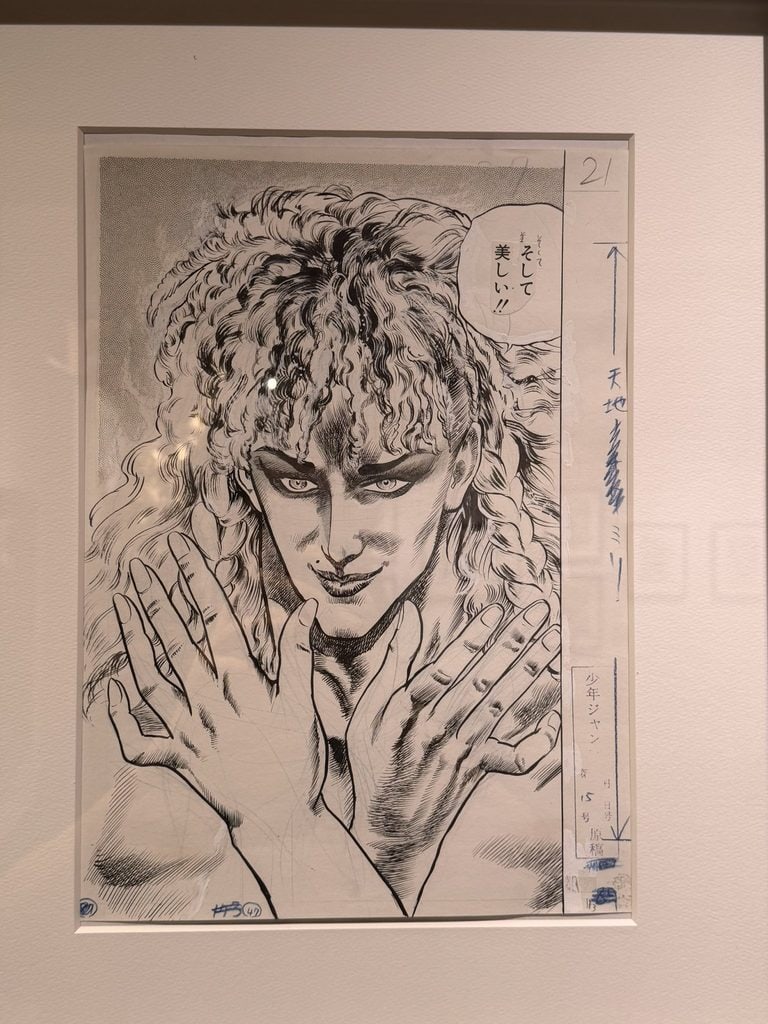
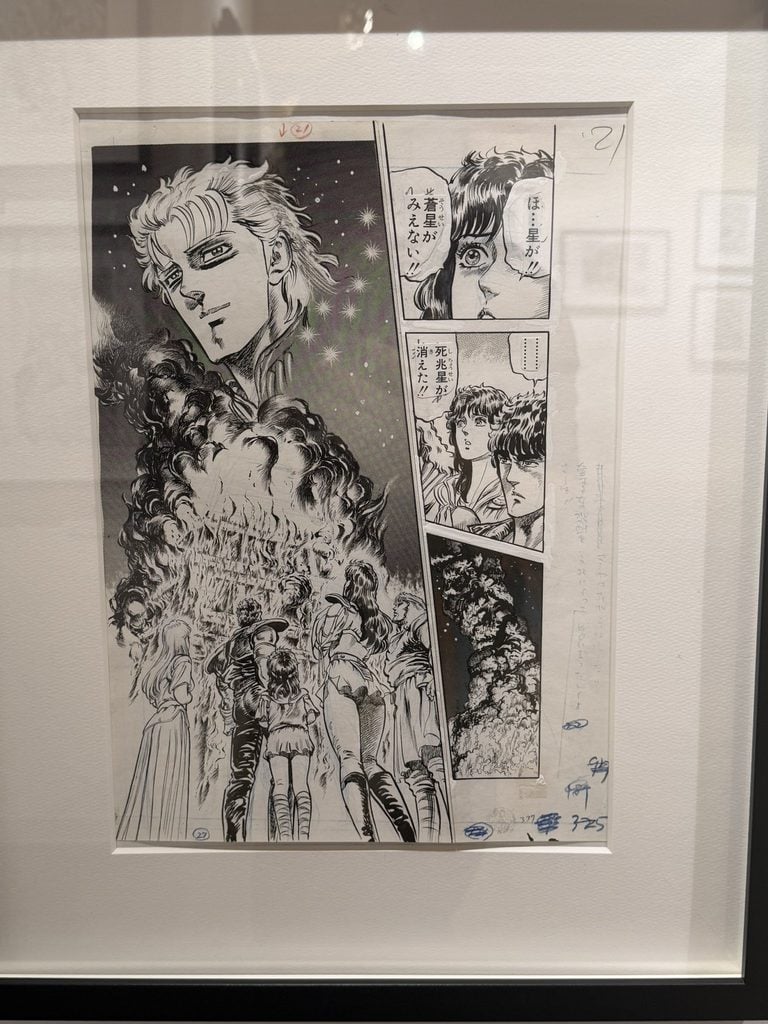
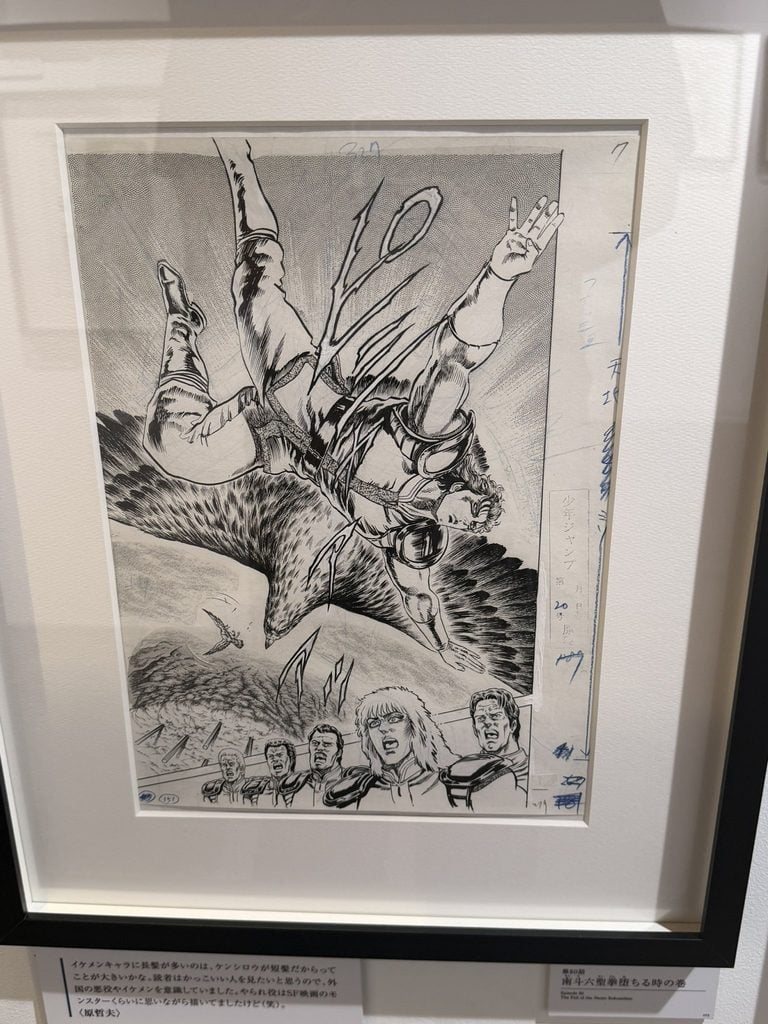
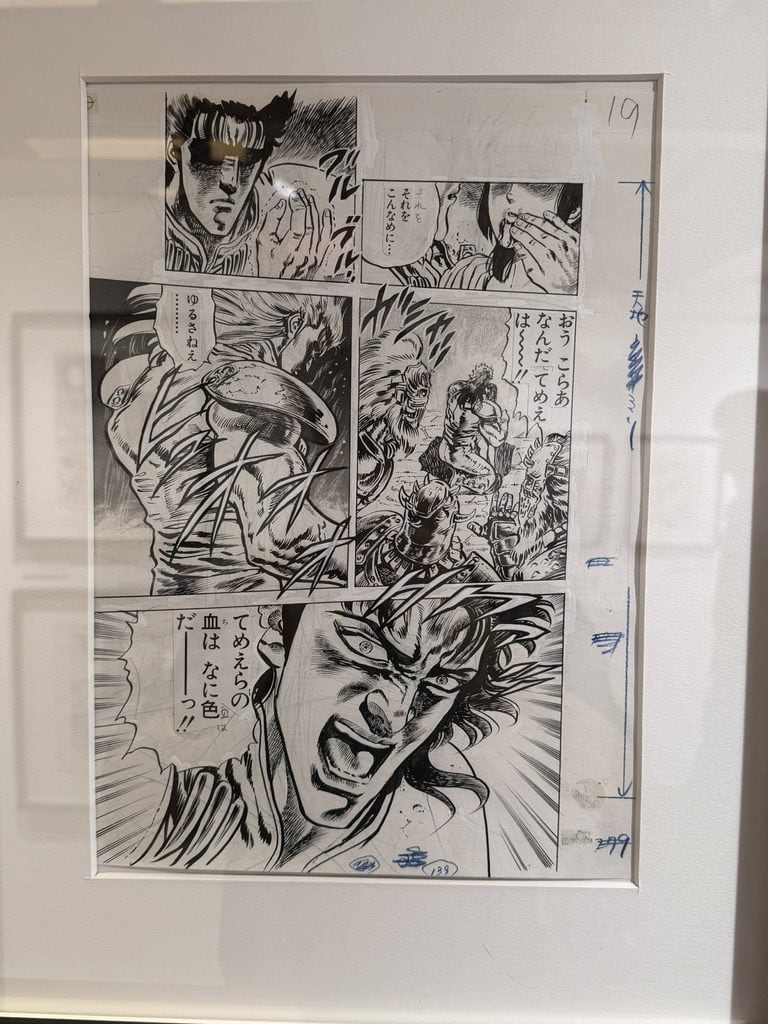
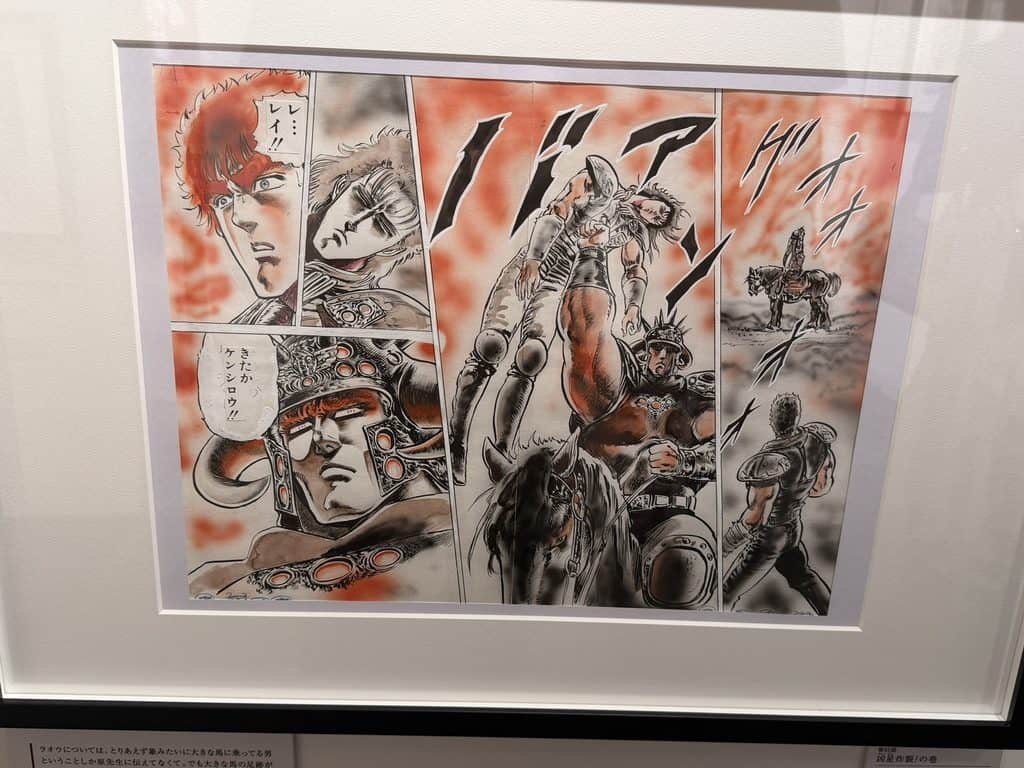
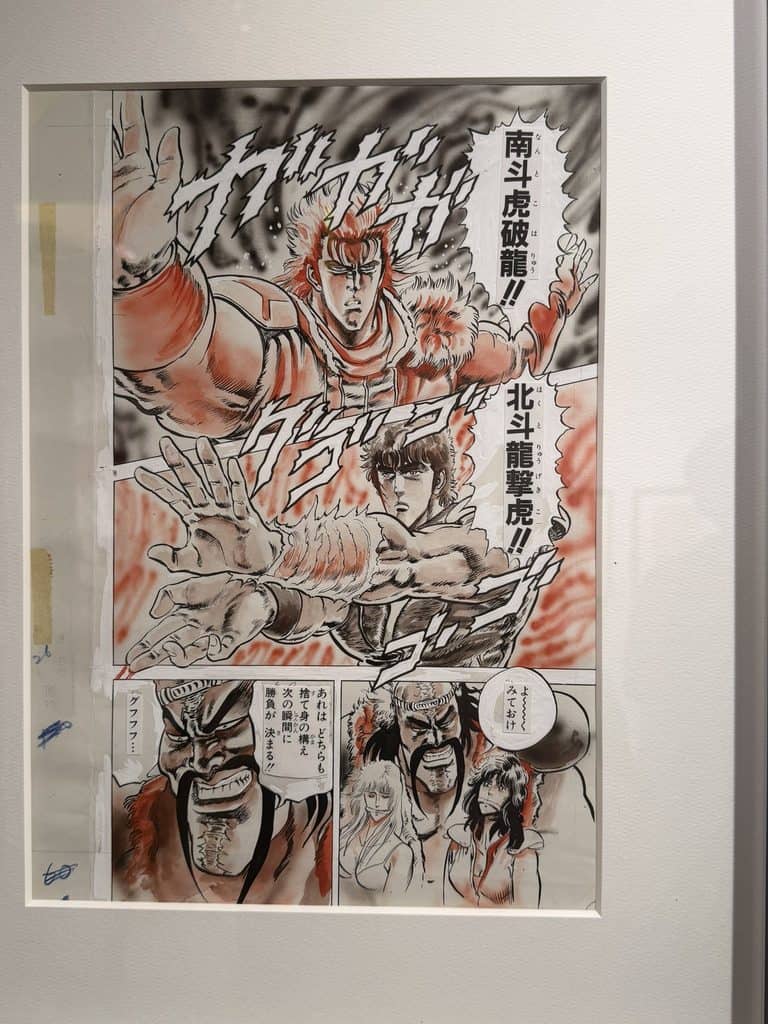
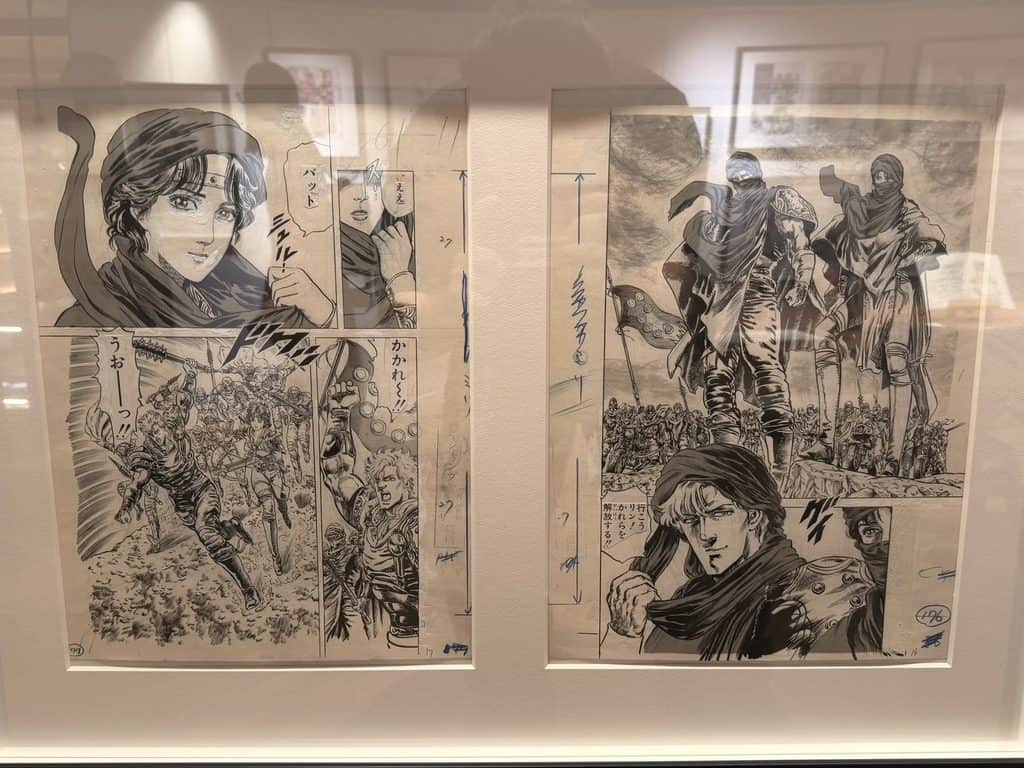
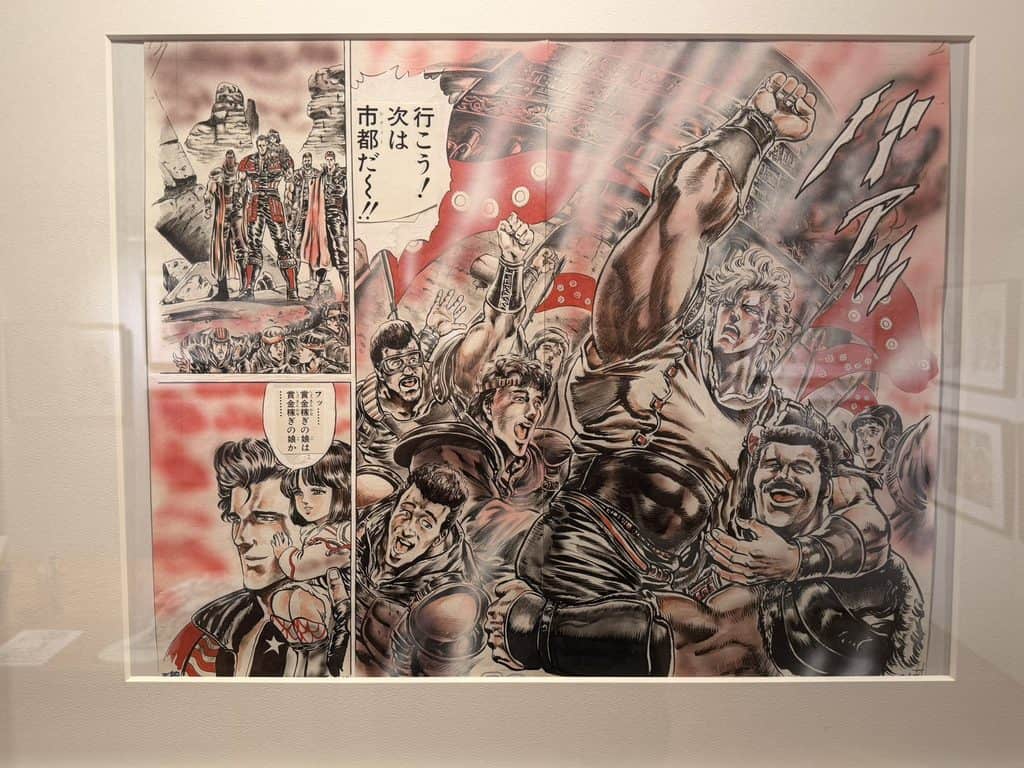
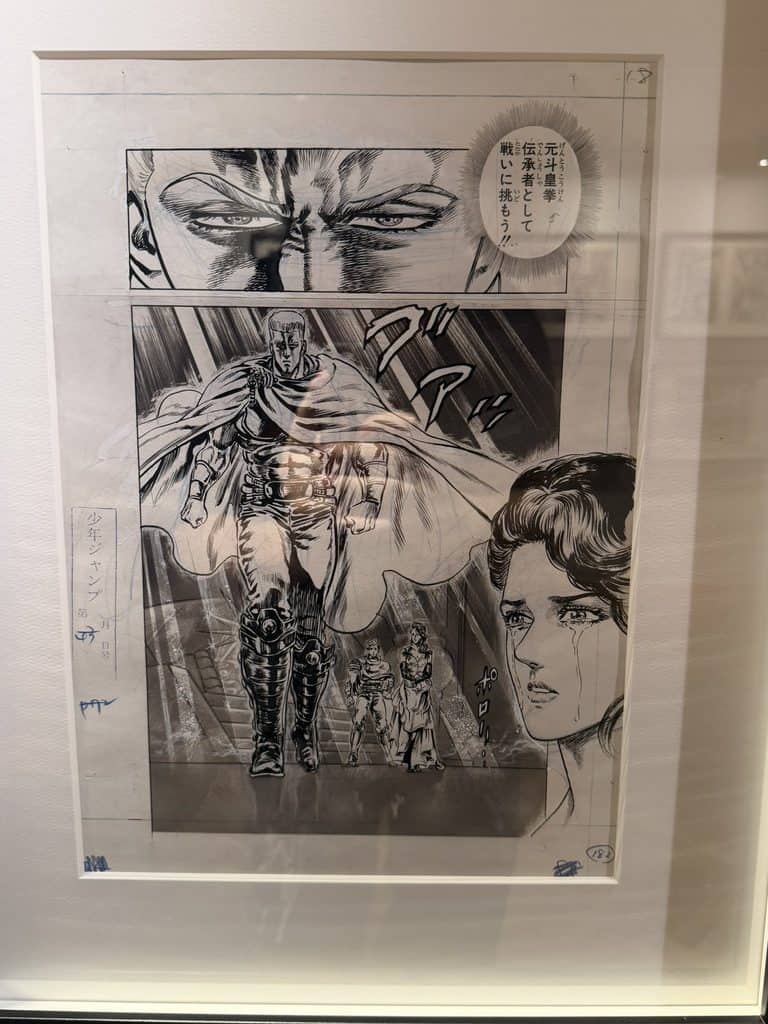
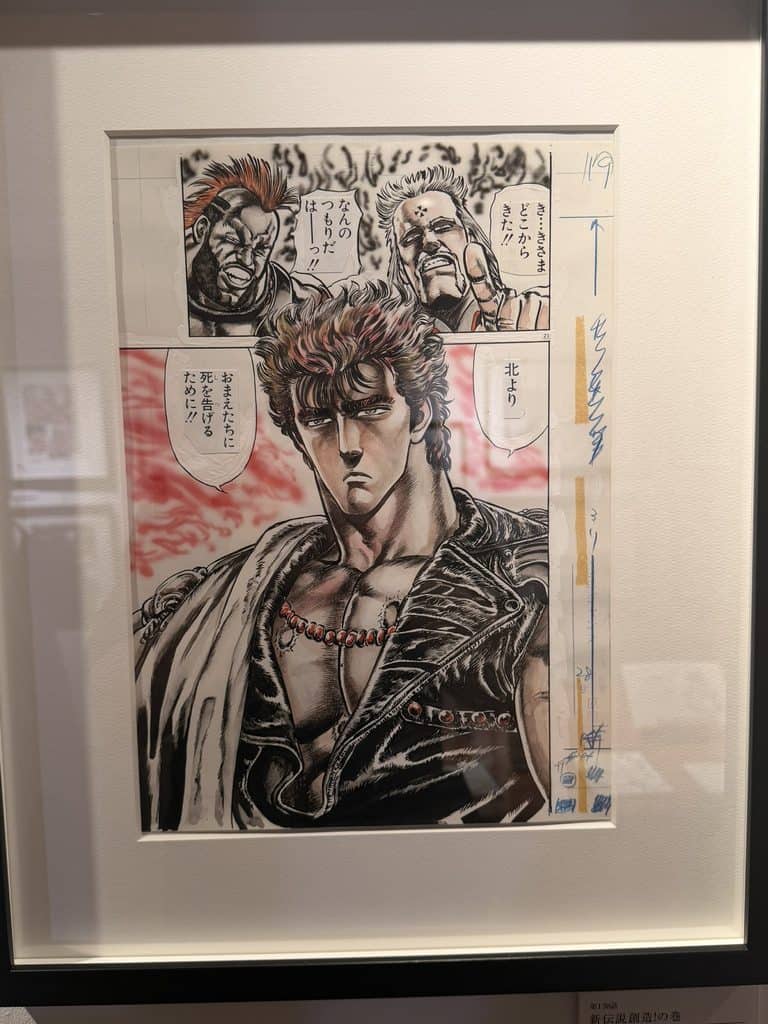
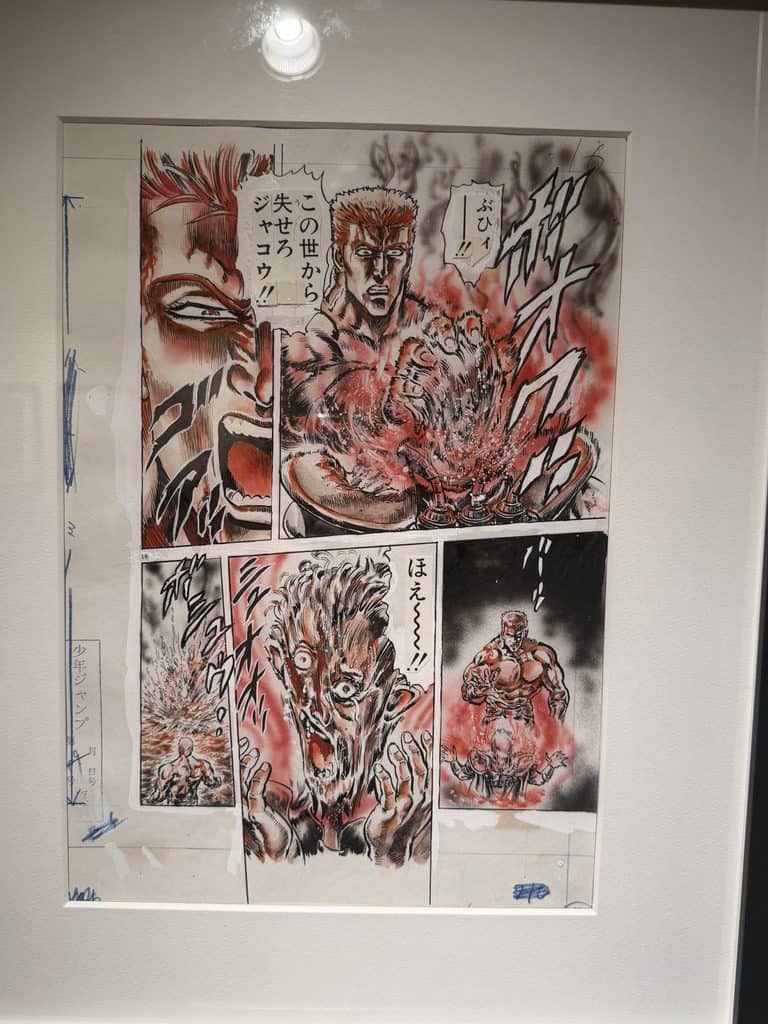
What a printed reproduction cannot convey is exactly what makes the trip worth it. Hara’s inked linework, the density of the hatching, the whites painted over corrections, the screentones laid by hand, the true scale of a magazine page. The gallery makes much of this encounter with the original, and it is what visitors come for.
The Tentei arc, exhibited for the first time
This is what the “plus” in the title stands for. The anniversary tour had stopped at the ascension of Raoh. RETURNS+ carries on with the Tentei arc, present in both periods: Falco and his Gento Koken, Ein the bounty hunter, Rin now grown, and the Empire that seized the world after Kenoh was gone. Coamix states that many never-before-seen originals are part of the selection.
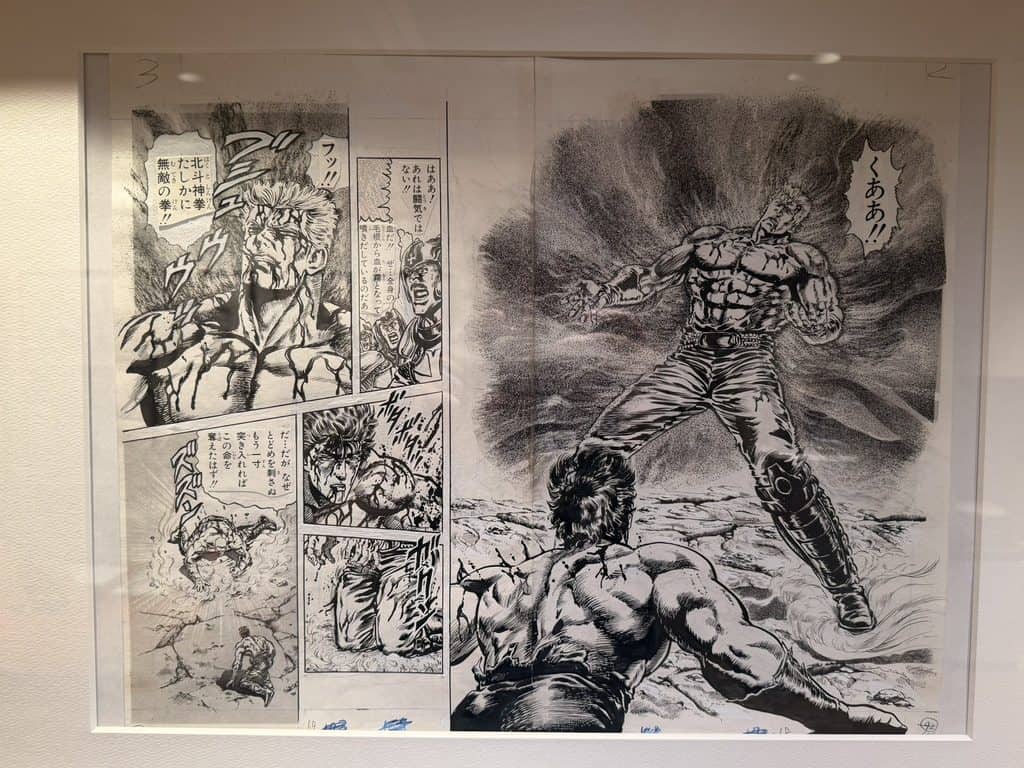
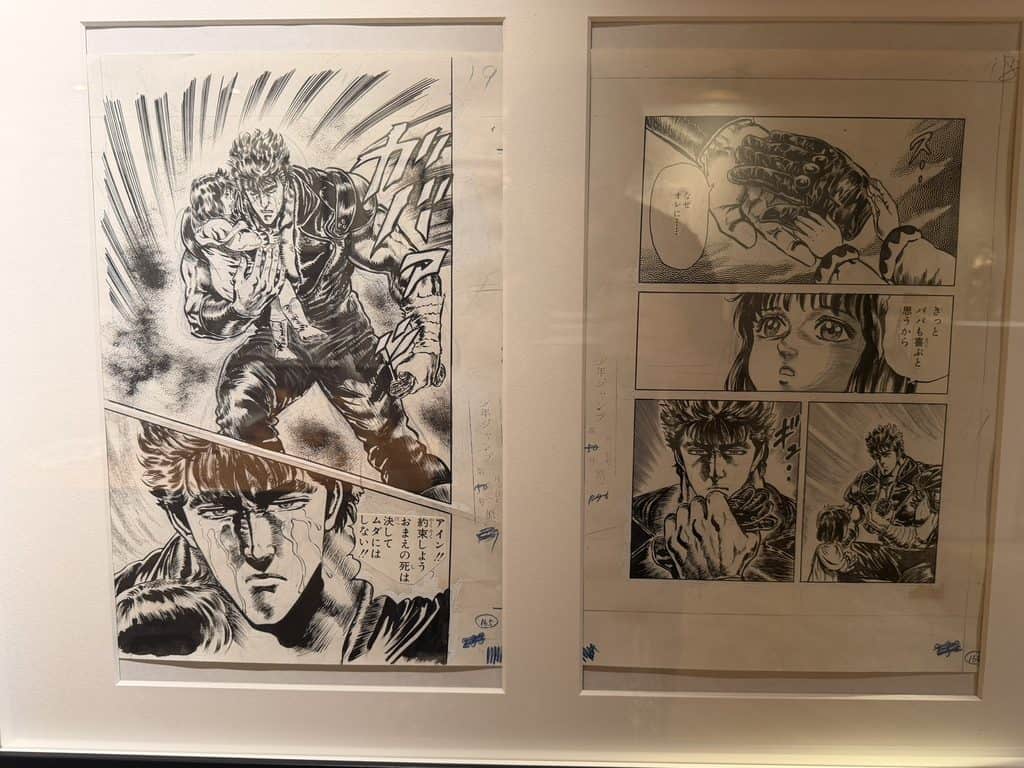

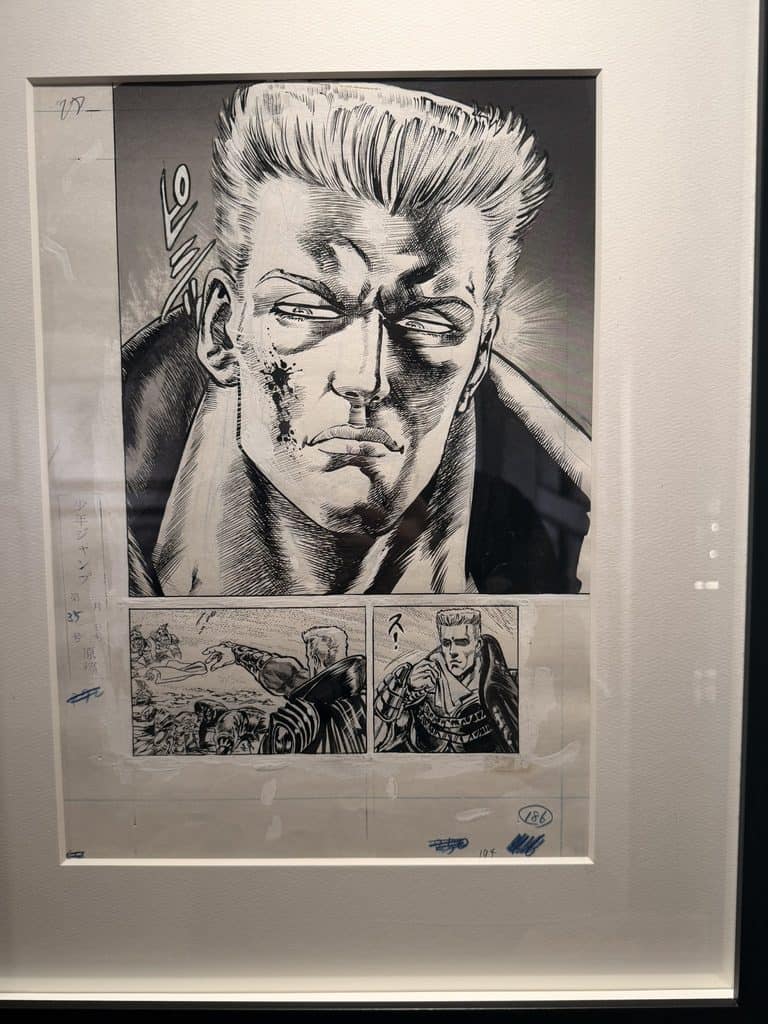
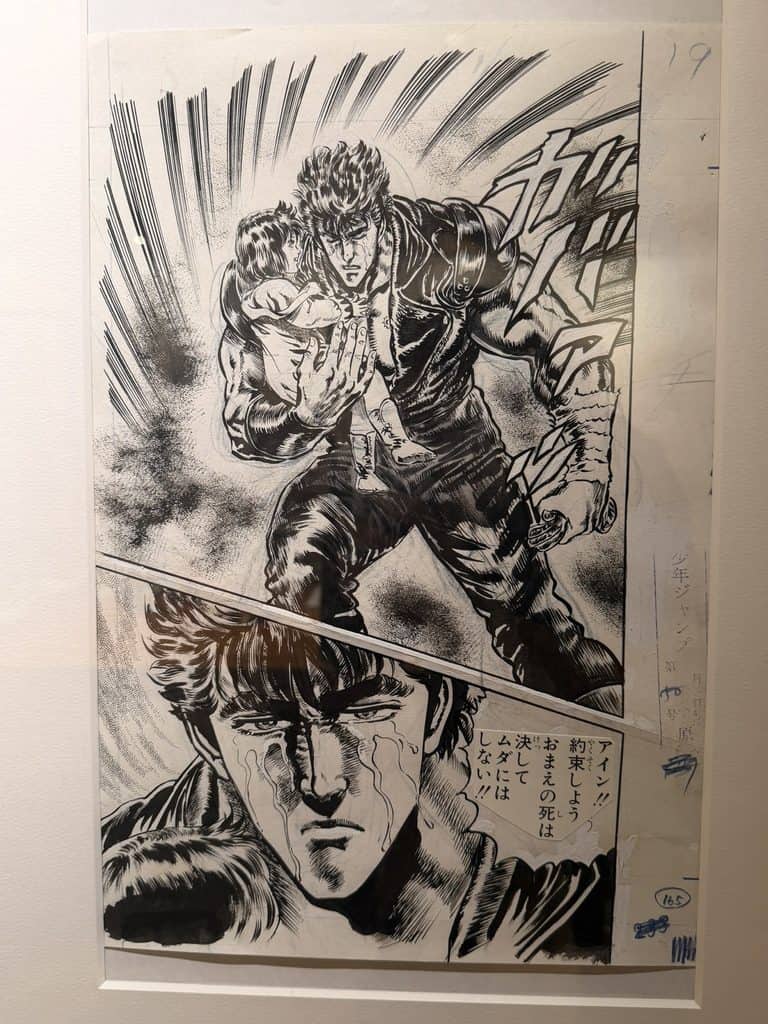
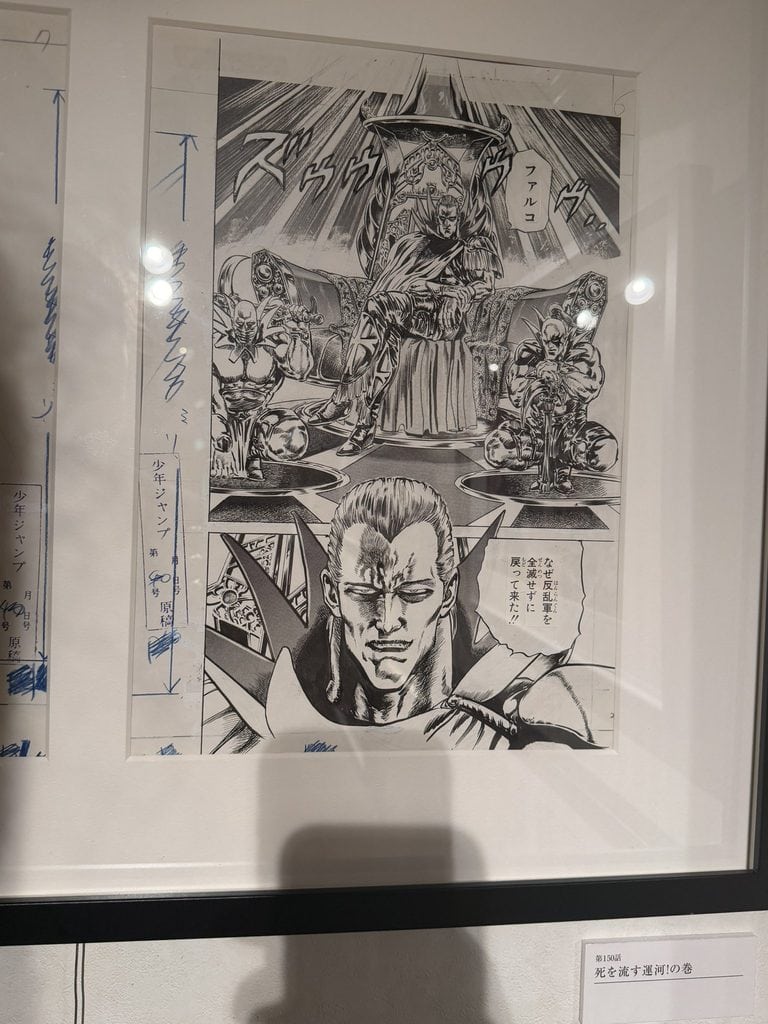
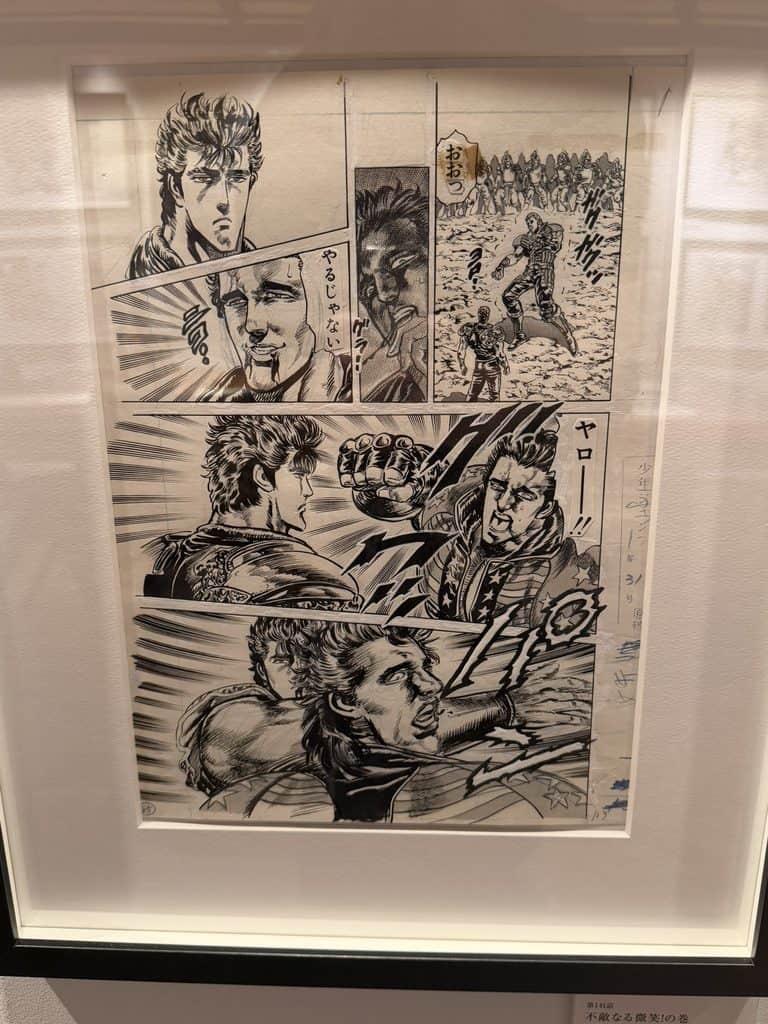
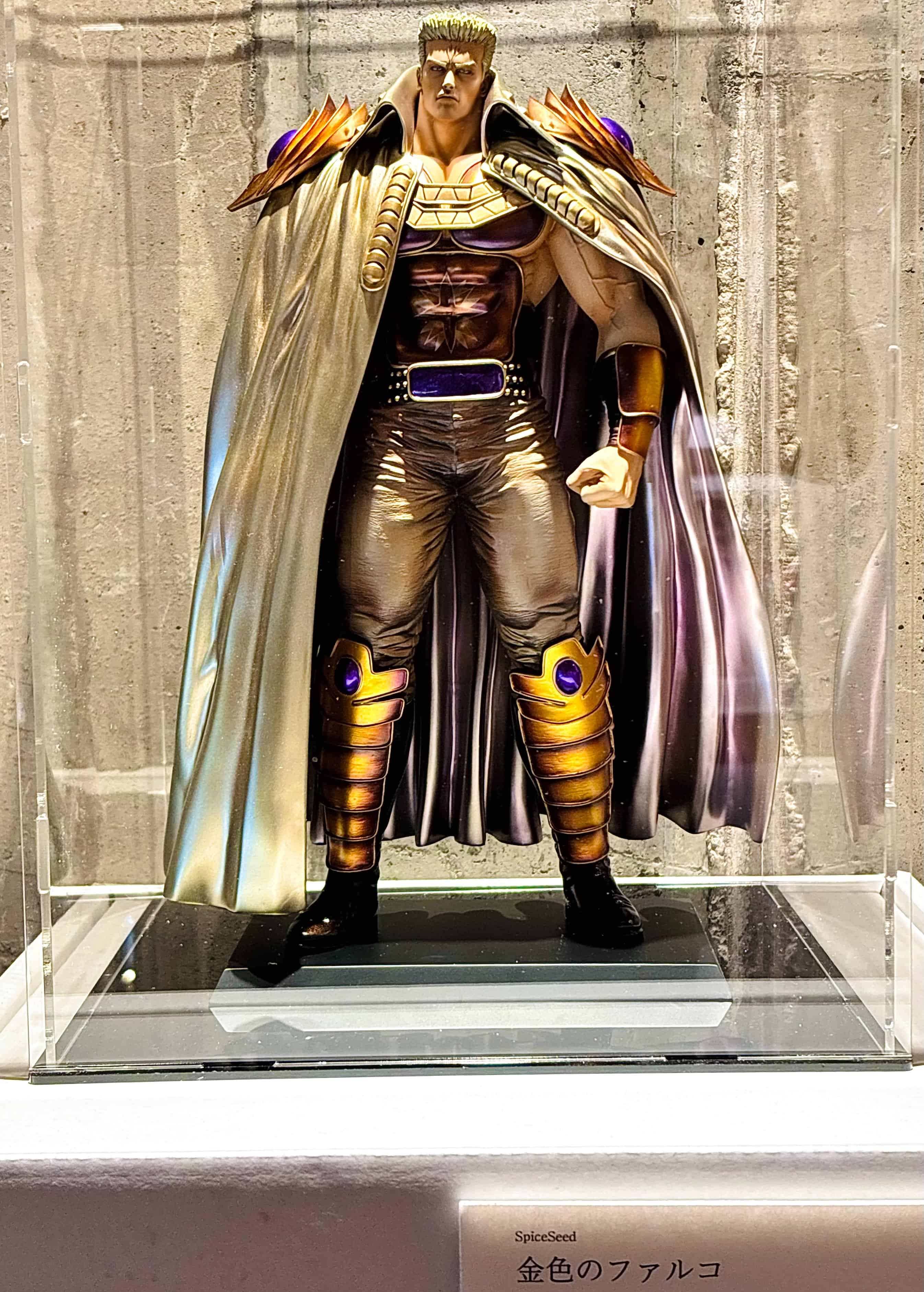
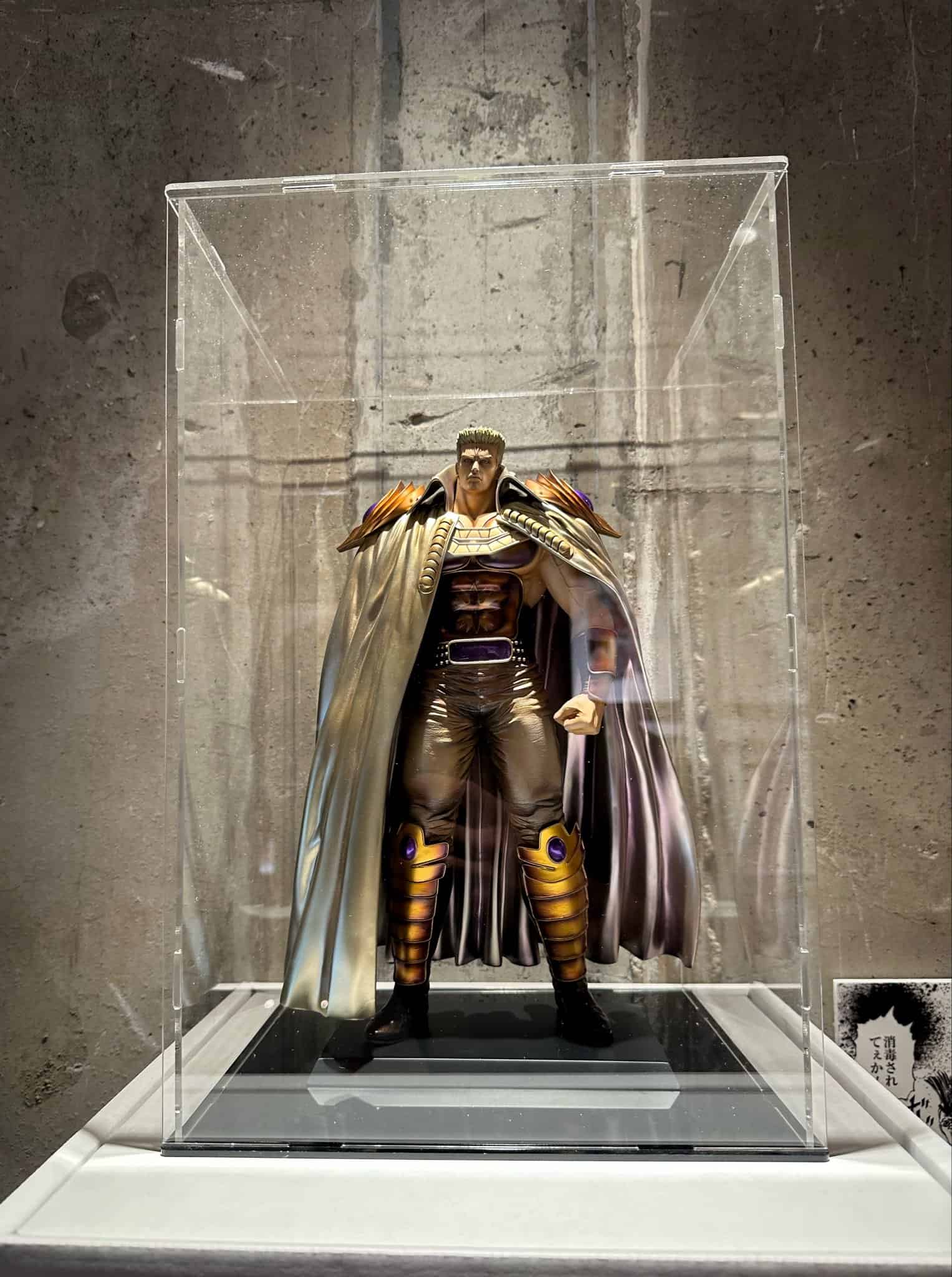
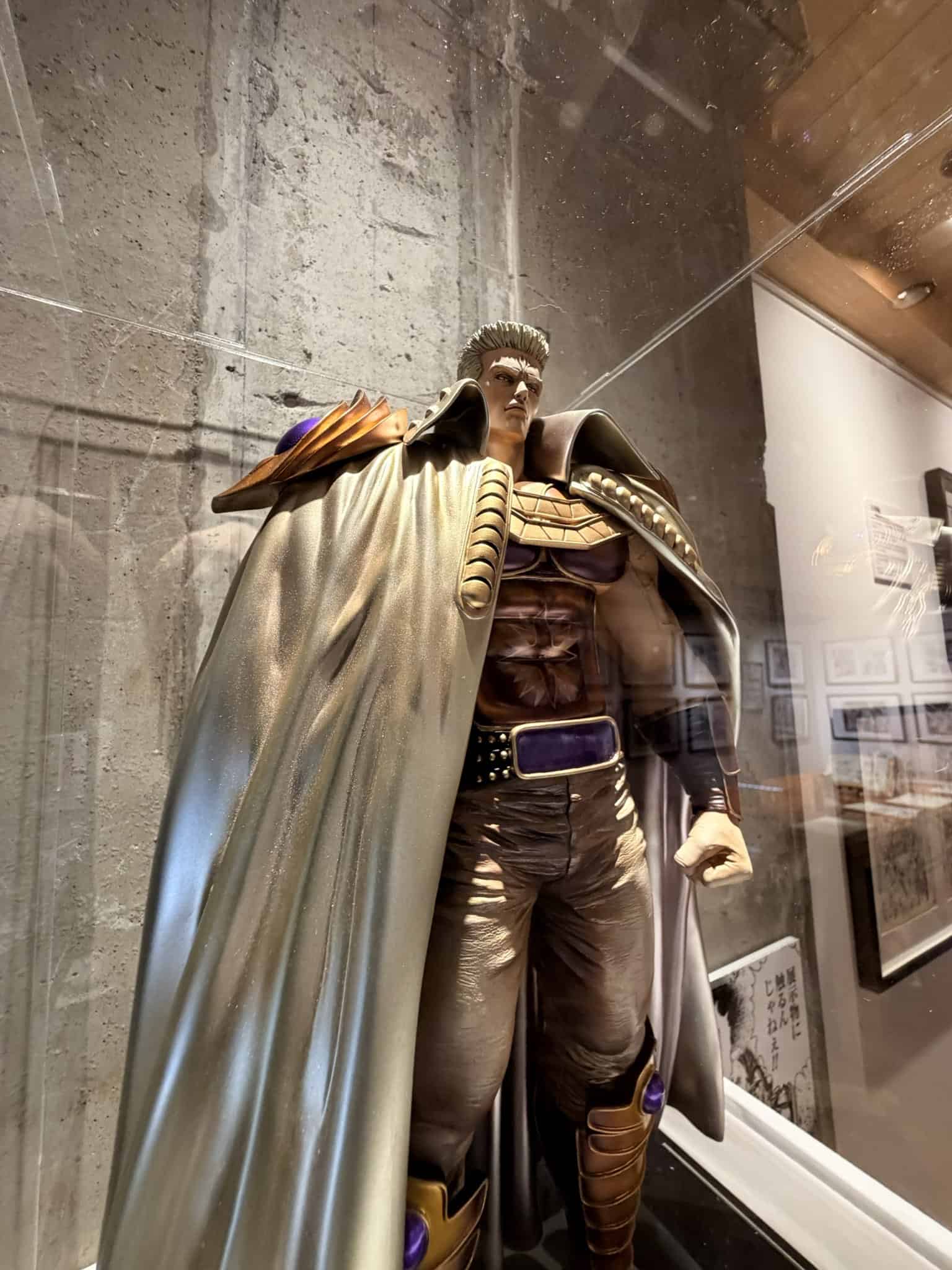
The SpiceSeed Falco statuette among the artwork
At the heart of the Tentei arc, a display case holds the 1/6 scale Falco statuette by SpiceSeed, unveiled as a world premiere in Akihabara in April and with pre-orders now said to be imminent. We went over the specifications a few days ago.
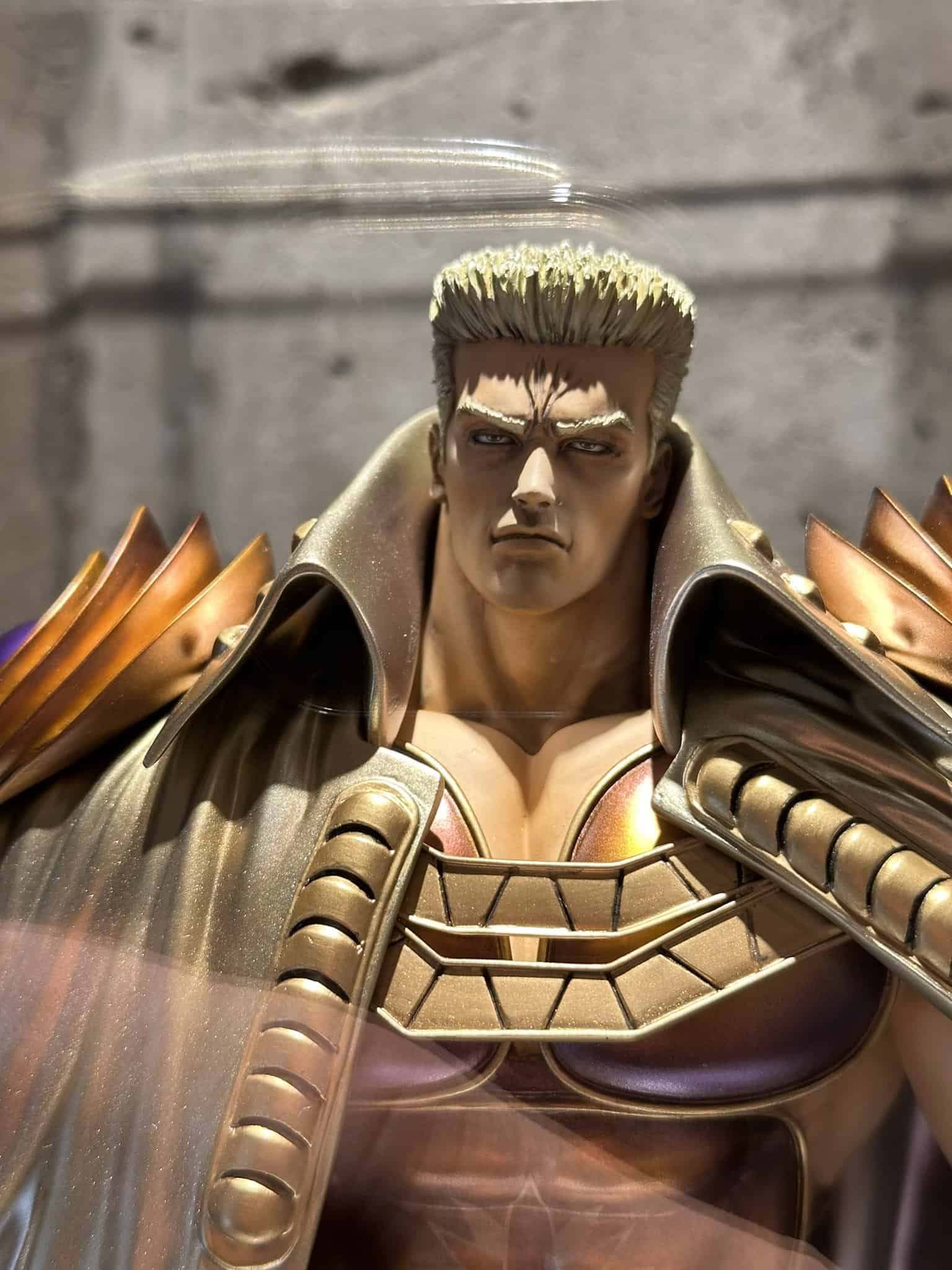
The Hokuto brothers as golden statues
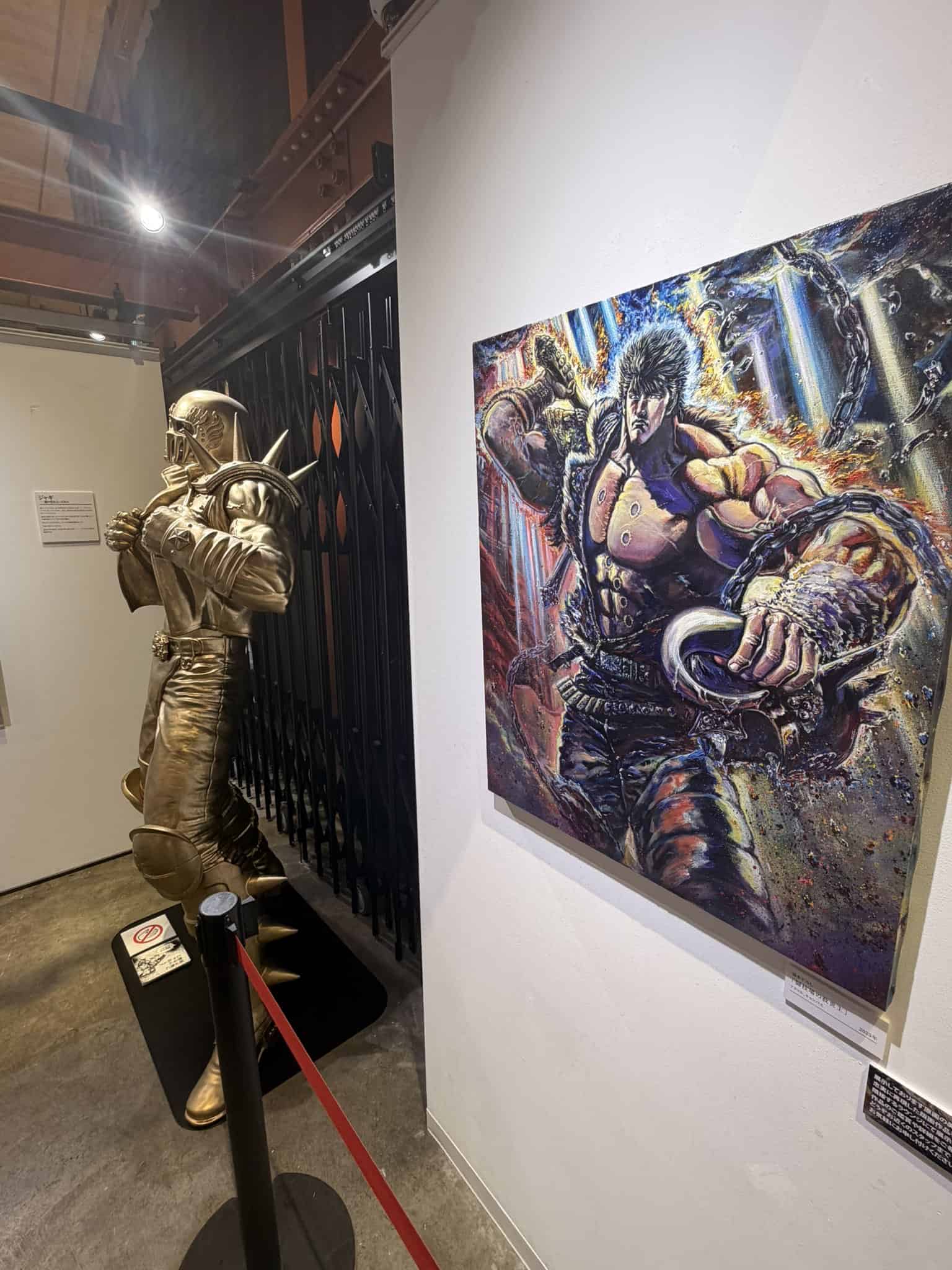
Not everything in the exhibition is a drawing. Raoh, Toki and Jagi stand as golden statues, brought back from the fortieth anniversary exhibition where they already lined the route. A report on Hara’s official site showed them at the time next to a signature by Buronson and a drawing by the mangaka’s own hand. They return to Kichijoji as landmarks along the way.


The paintings of Tetsuo Hara
Since 2023, Tetsuo Hara has been painting canvases that are not manga pages. Each is made for an exhibition, then issued as a numbered and signed art print, sold by Coamix through the gallery’s online shop. This exhibition brings six of them together.
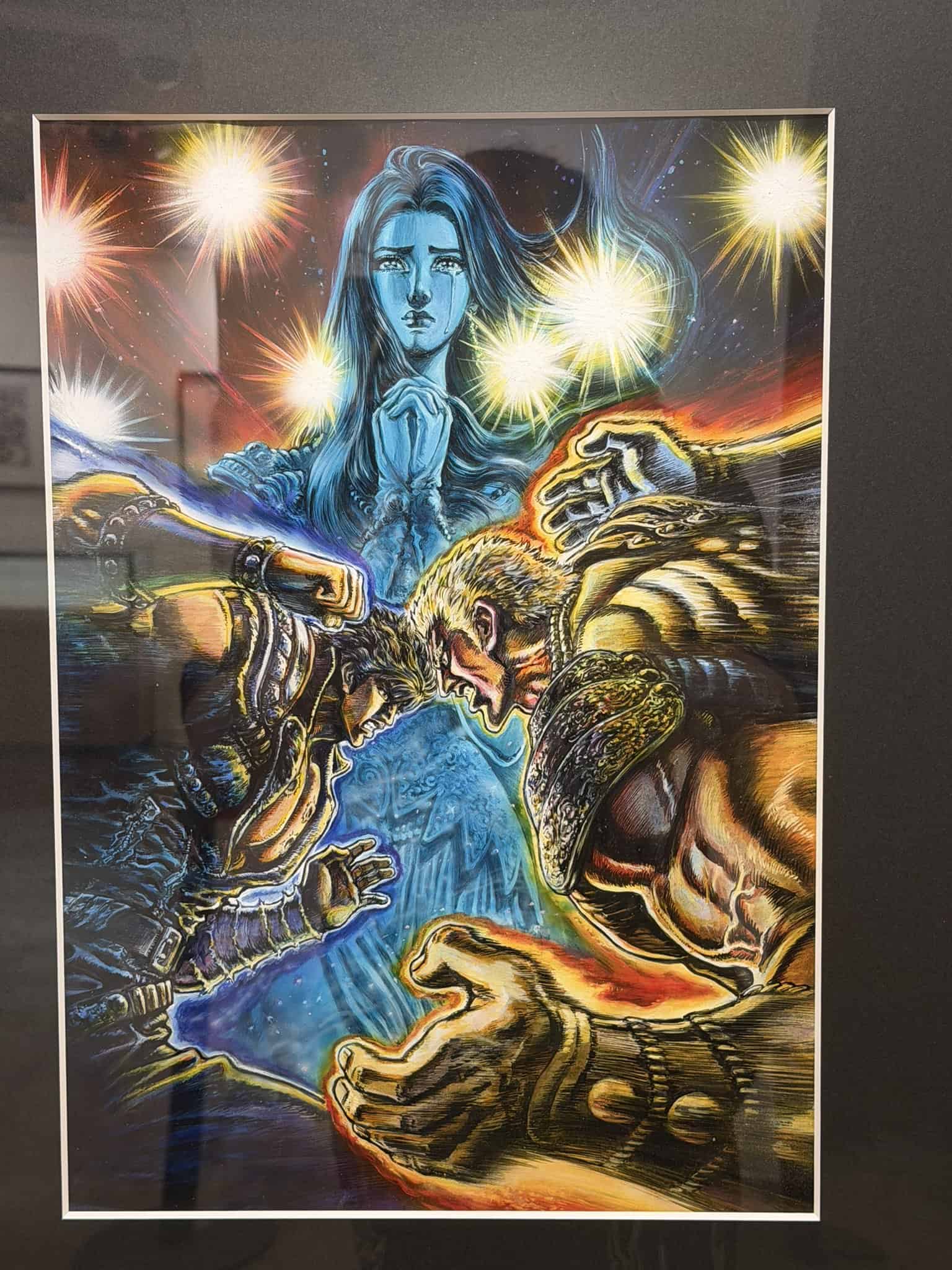
The fortieth anniversary visual
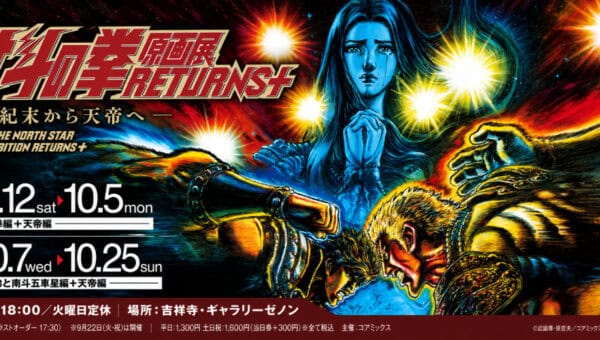
The wall label presents it as the main visual of the anniversary exhibition, painted in 2023. Kenshiro and Raoh about to throw their final blows, Yuria praying above them in blue light, beneath the seven stars. This is the image that carried the whole tour, from posters to catalogues. Its print, called Premium Master II, is the rarest in the catalogue: thirty signed copies, high-definition inkjet on unbleached cotton paper, in an Italian frame under anti-glare acrylic, 929 by 692 millimetres, 550,000 yen.
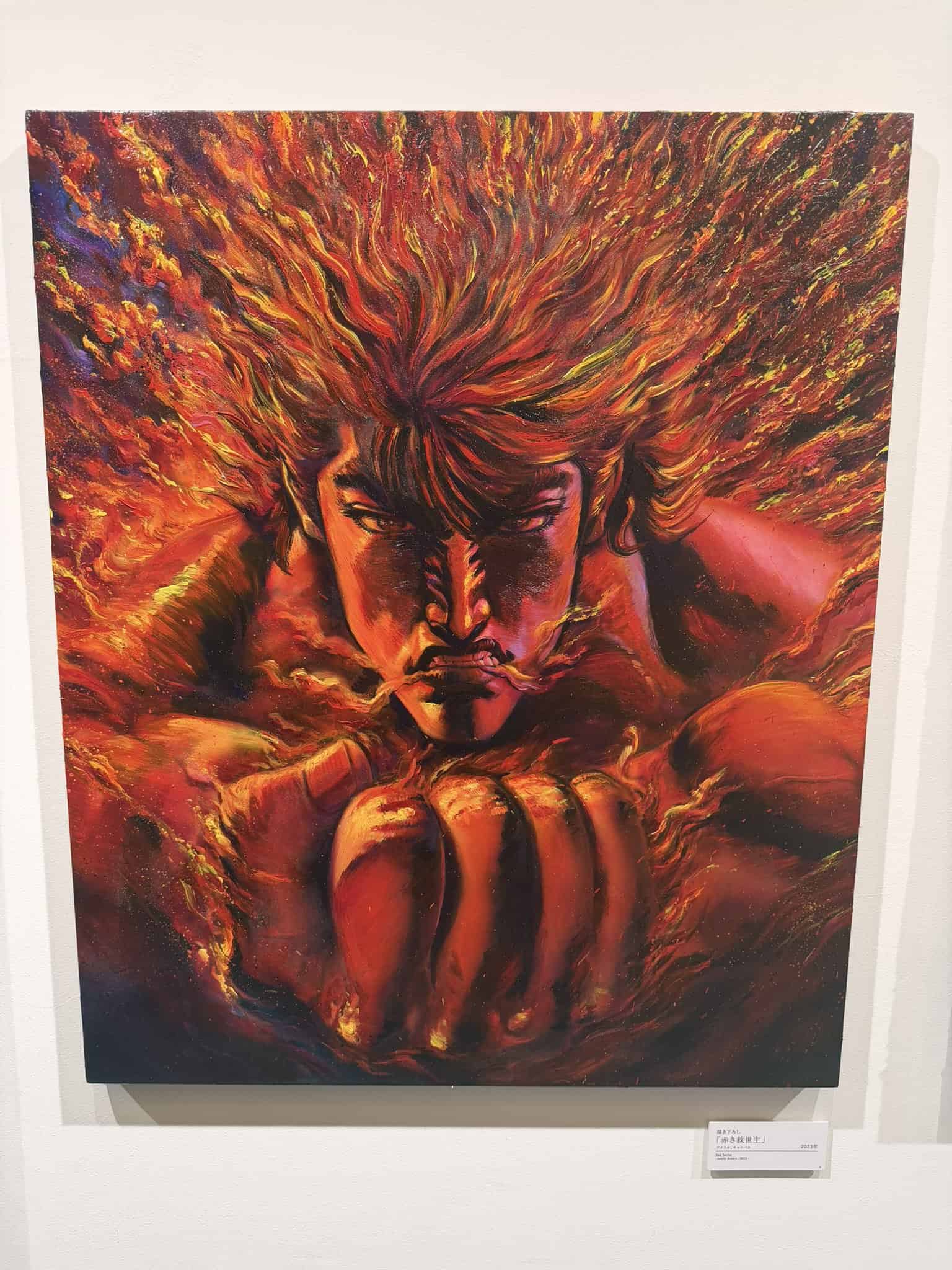
The Red Savior and the Blue Conqueror
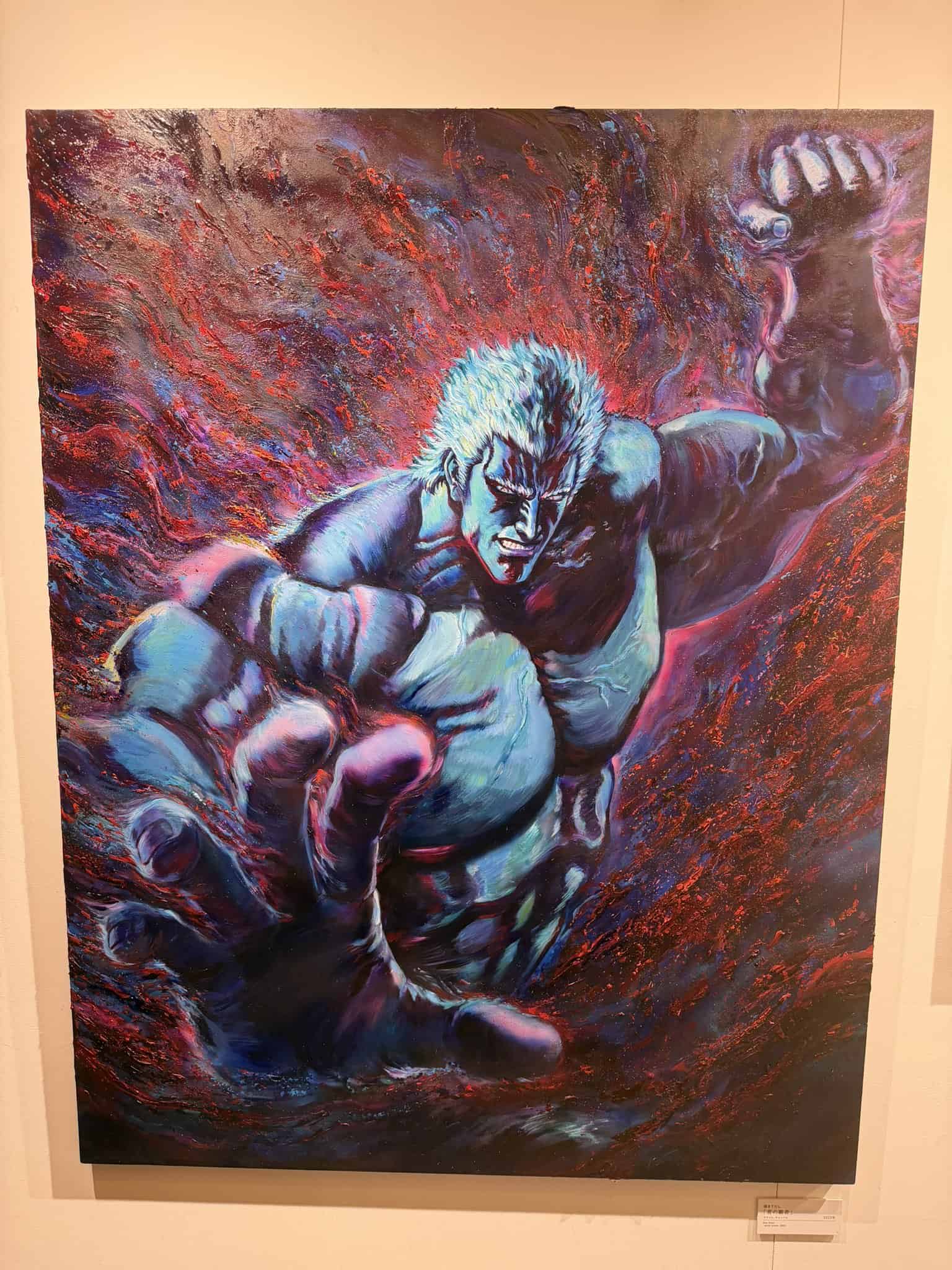
Kenshiro in red, Raoh in blue. Both canvases were painted in September 2023 for the major exhibition, and the product sheet tells their story in unusual detail: the moment the last brushstroke was laid down, they were carried to a major printer’s photography studio to record the exact state of the original. The print then reproduces the texture of the brushwork through a raised print on aluminium, with hand-applied resin to restore the sheen. The mount is not paper but black velvet, which swallows the light and leaves the image floating. Edition of one hundred signed copies, 547 by 445 millimetres framed, 770,000 yen each.
The Golden Seitei
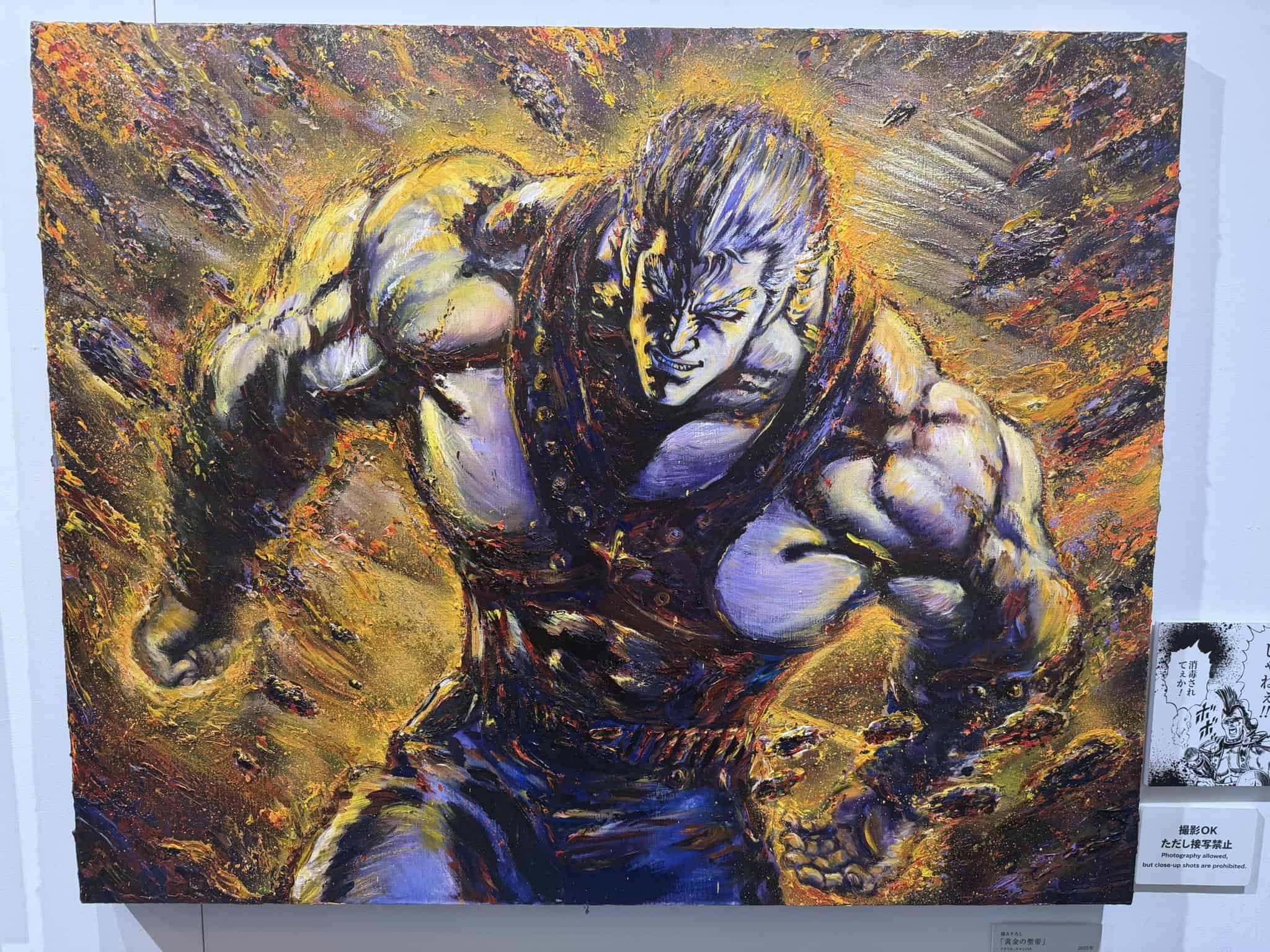
Souther completes the colour series. The canvas, in F20 format, was painted for the Fukuoka leg of the fortieth anniversary exhibition in March 2025, conceived as the sequel to the red and the blue. Same process, but on brass, so the metal itself gives the gold. Edition of one hundred signed copies, 446 by 535 millimetres, 770,000 yen.
The Savior of the Arena
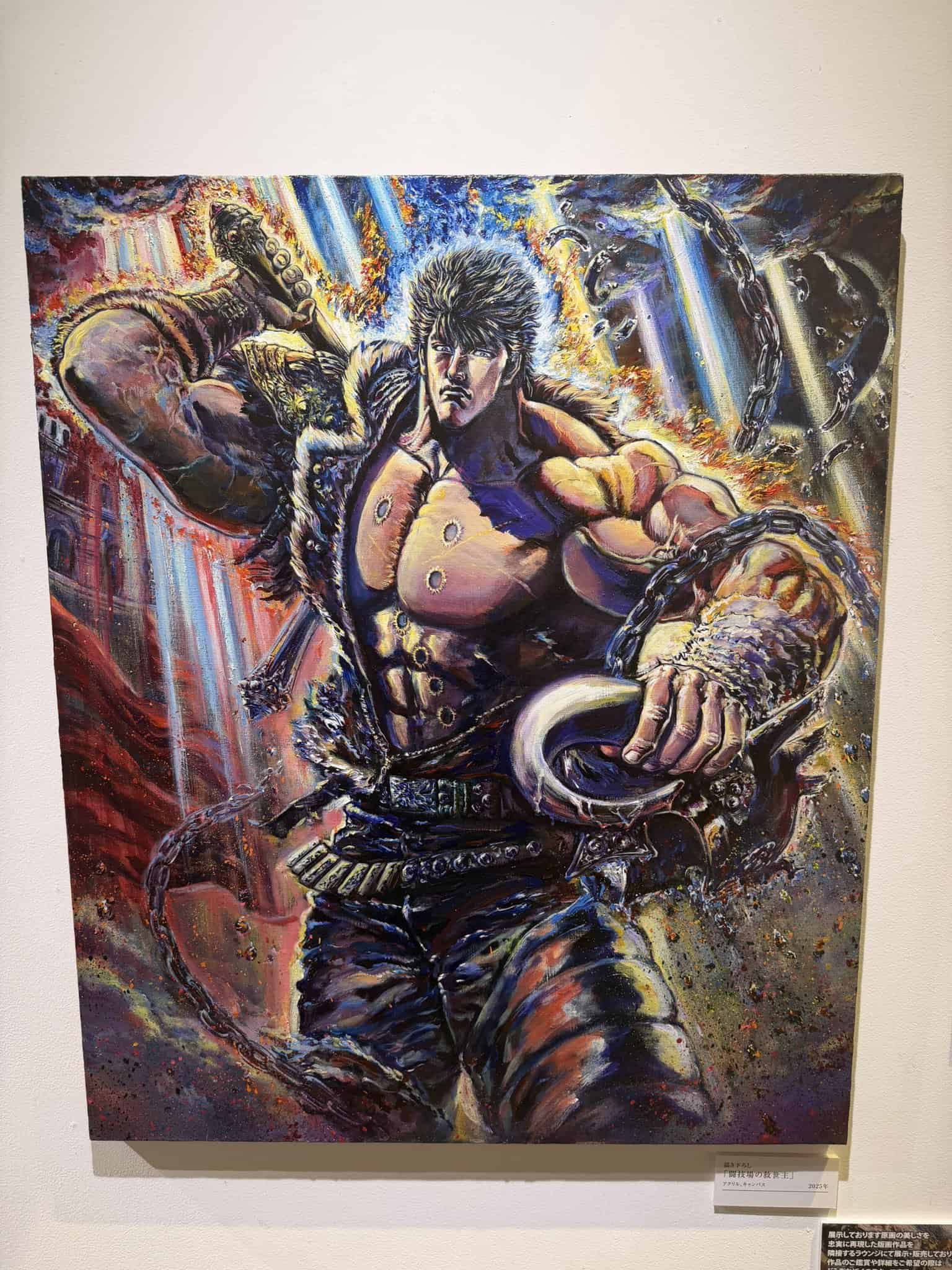
Invited to Lucca Comics & Games for the first time in early 2025, Hara decided he could not go to Italy without a new work, and spent three to four months on it. The canvas was shown from October 25 to November 2, 2025, in a Renaissance church in Lucca, alongside more than a hundred original pages, in what Coamix calls the mangaka’s first major solo exhibition anywhere in the world.
The print is a high-definition inkjet on unbleached cotton paper, in a frame imported from Italy, under anti-UV, anti-glare acrylic. Edition of fifty signed copies, 961 by 830 millimetres, 880,000 yen.
Souther in gold leaf
The sixth piece is something else entirely. Not a print but a work in genuine gold leaf, struck onto black cotton damask using the technique reserved for the drapery of Buddhist paintings, then mounted by hand by a kakemono mounter. We covered it in an article when it was announced. It is shown here for the first time, and orders for the edition of fifty signed copies are open on site. All prints ship within three to four months, within Japan only.
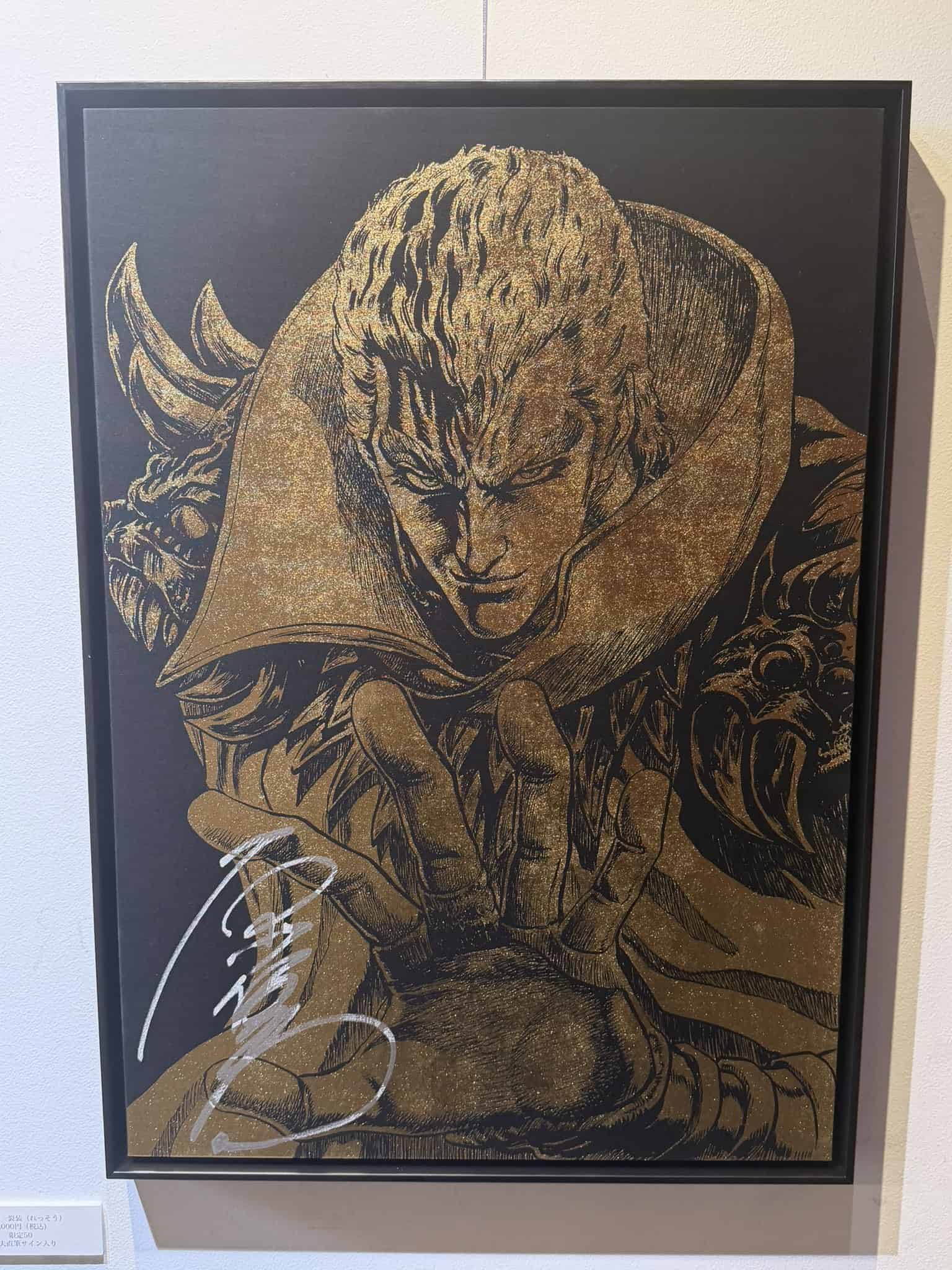
The throne of the Seitei, and the belly of Heart
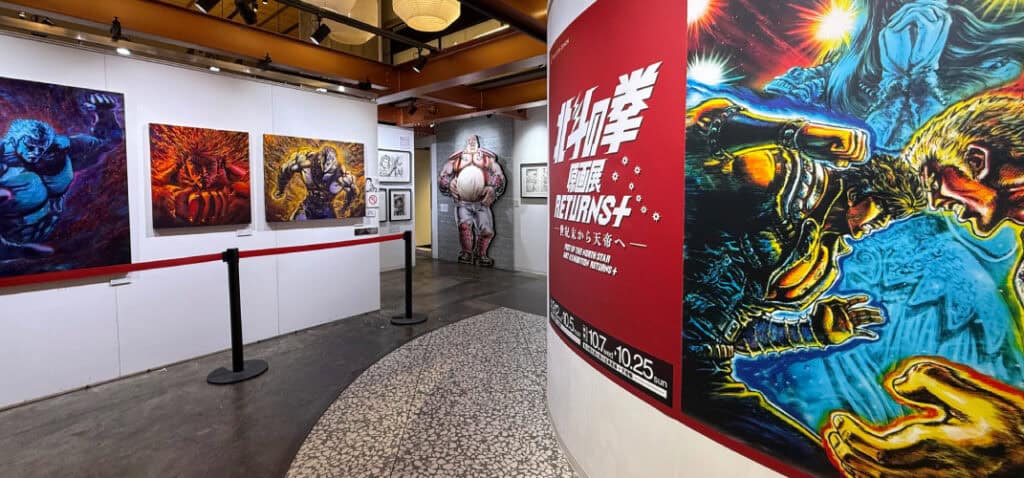
Two installations are back from the fortieth anniversary exhibition. The throne of Souther, funded at the time by a crowdfunding campaign, which visitors can sit on and photograph themselves in the pose of the sovereign of Nanto. And a Heart against a wall, his belly in relief, built to take visitors’ punches the way he once took Kenshiro’s without flinching.


“The men around Yuria”
A large panel maps out the relationships between the characters, under a title that says everything about the angle taken: “the men around Yuria.” The opening text introduces Yuria as the bearer of the destiny of the Star of the Benevolent Mother, the Jibosei of the Six Sacred Stars of Nanto, and the men who seek her love as men who fight to the death. She sits at the centre of the diagram, tied to Kenshiro by the word “lovers,” to Raoh, Shin and Jûza by “romantic feelings,” to Ryūga as brother and sister, and to the Five Chariots of Nanto by “protection.”
Around her, three blocks. The Hokuto Shinken gathers Ryūken, 63rd successor, Kenshiro, 64th, Toki, Raoh and Jagi, with Amiba off to the side, tied to Toki by the word “grudge.” The Nanto Seiken lines up Rei, Shin, Yuda, Souther and Shû, each with his star. The Five Chariots of Nanto, Huey, Shûren, Jûza, Rihaku and Fudô, each carry their element: wind, flame, cloud, sea, mountain. Mamiya, Rin and Bat round out Kenshiro’s side, with the words “trust” and “friendship.”
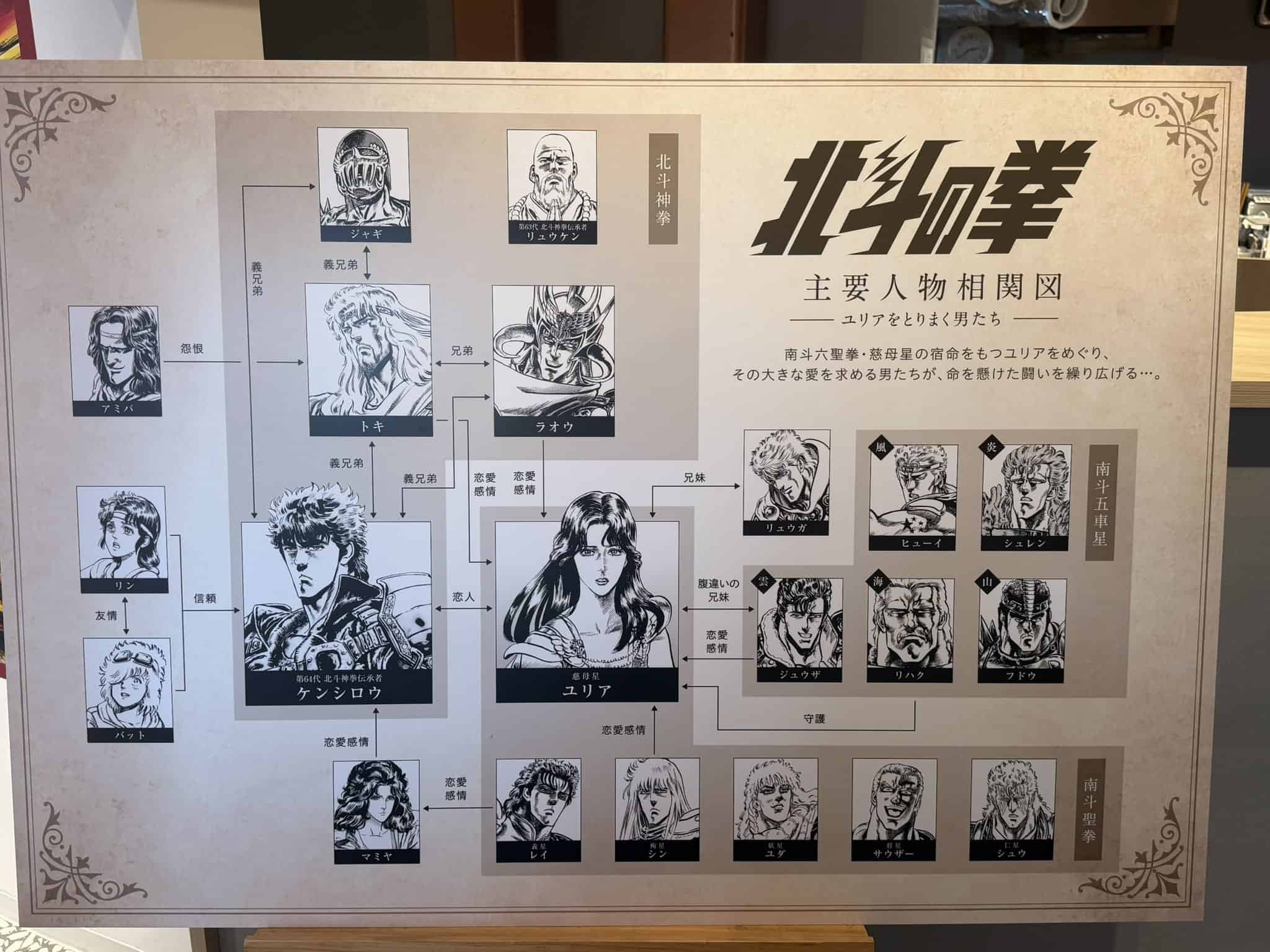
Putting Yuria at the centre rather than Kenshiro is no accident. It echoes the reading Coamix already gave of the fortieth anniversary exhibition, subtitled “take back love,” where the story was split into six chapters around that theme. The panel is its condensed form.
Issues of Weekly Shonen Jump from the period
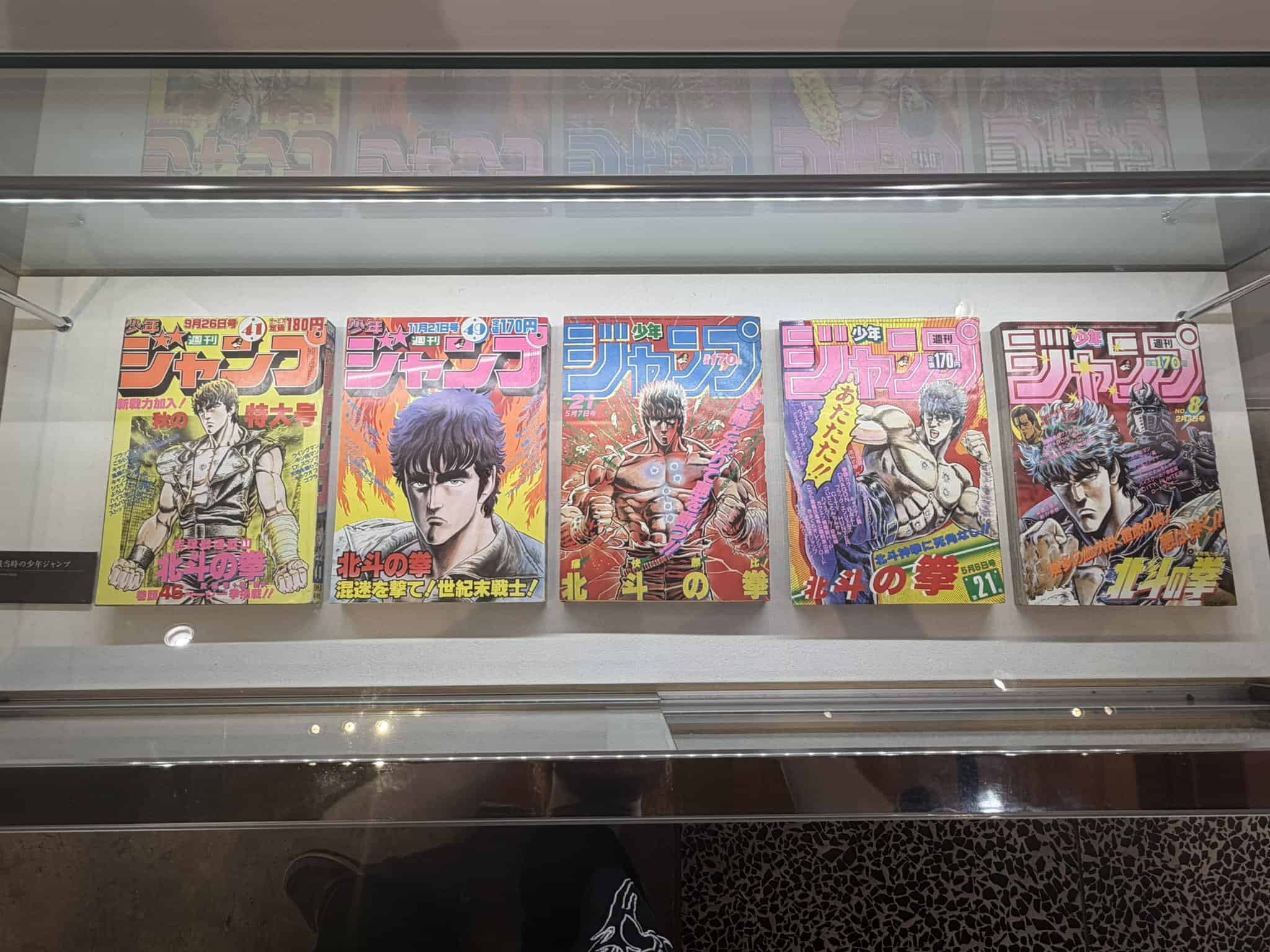
A display case holds copies of Weekly Shonen Jump from the years of serialisation, five issues with Kenshiro on the cover. The leftmost is issue 41, dated September 26, 1983, sold for 180 yen at the time, the one carrying the first chapter, with 46 pages of Hokuto no Ken opening the magazine. It has since become a collector’s item: one copy sold at auction for 300,000 yen on September 6, and the two before it went for between 83,000 and 113,000 yen in August.
The café, a themed menu per period
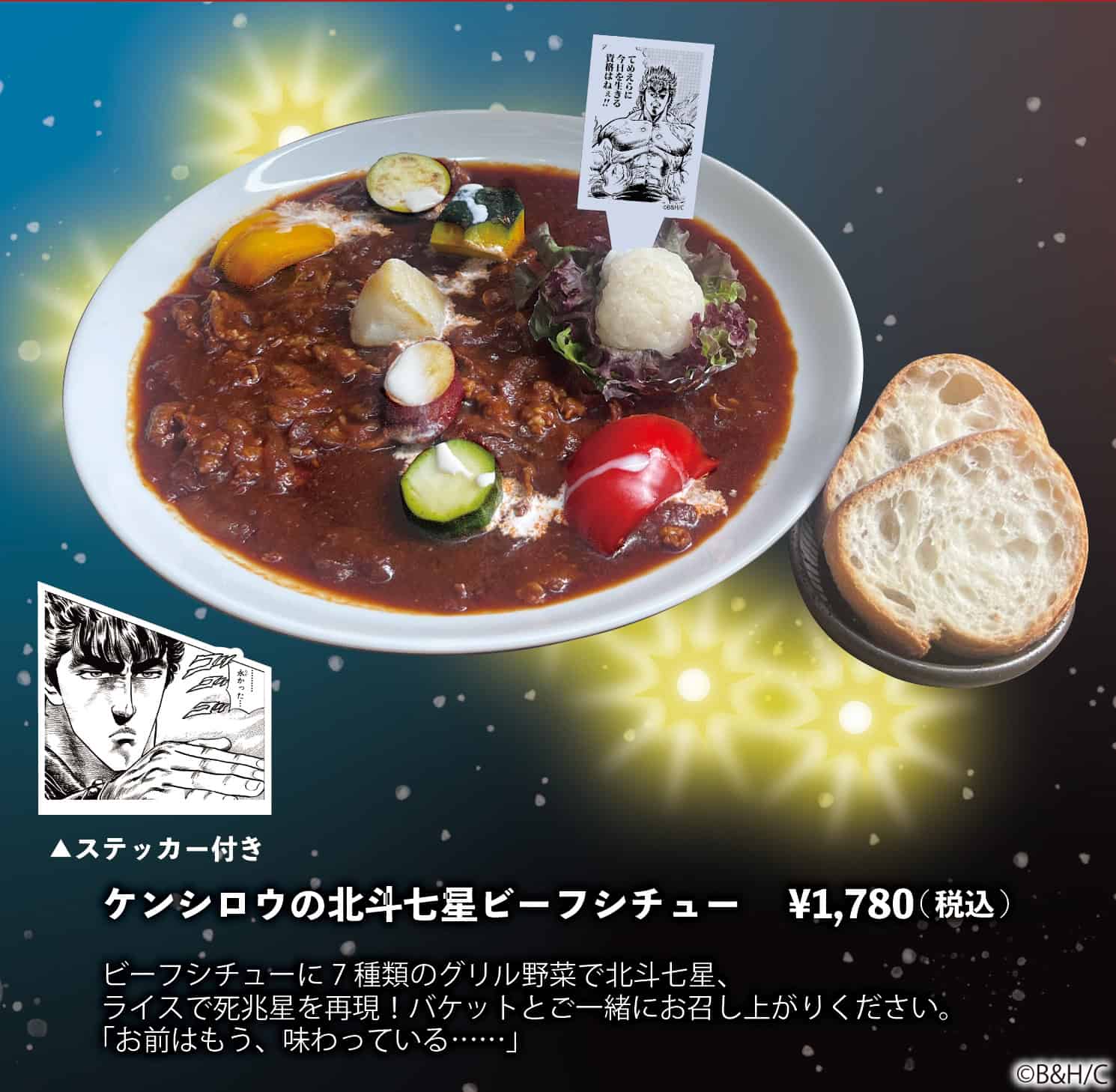
The café next to the gallery serves a themed menu, partly renewed for the second period. Every dish and drink comes with a sticker showing a panel of the character concerned. For the first period, through October 5:
- Kenshiro’s Seven Stars Beef Stew, 1,780 ¥. Seven grilled vegetables set out as the Big Dipper on the stew, a rice ball for the death star, baguette on the side.
- Raoh’s Ramen, 1,780 ¥. A chigé ramen topped with a raised fist cut from chicken. The name swaps the “fragment” of his dying line for a “cup,” the two sounding almost alike.
- Jagi’s Protein Drink, 1,280 ¥. Soy protein with cocoa and kinako, in a cup bearing his likeness that you take home.
- Luminous Drink of the Tentei, 1,280 ¥, 110 ¥ more with alcohol. A lemon and salt energy drink, Salty Dog style, in a salt-rimmed glass with a small cardboard Falco. The light-up coaster and the screen stay behind.
- “What colour is your blood”, 1,380 ¥, first period only. A deep blue butterfly pea tea float with ice cream and silver pearls, served with a lemon Calpis to pour yourself and change the colour.
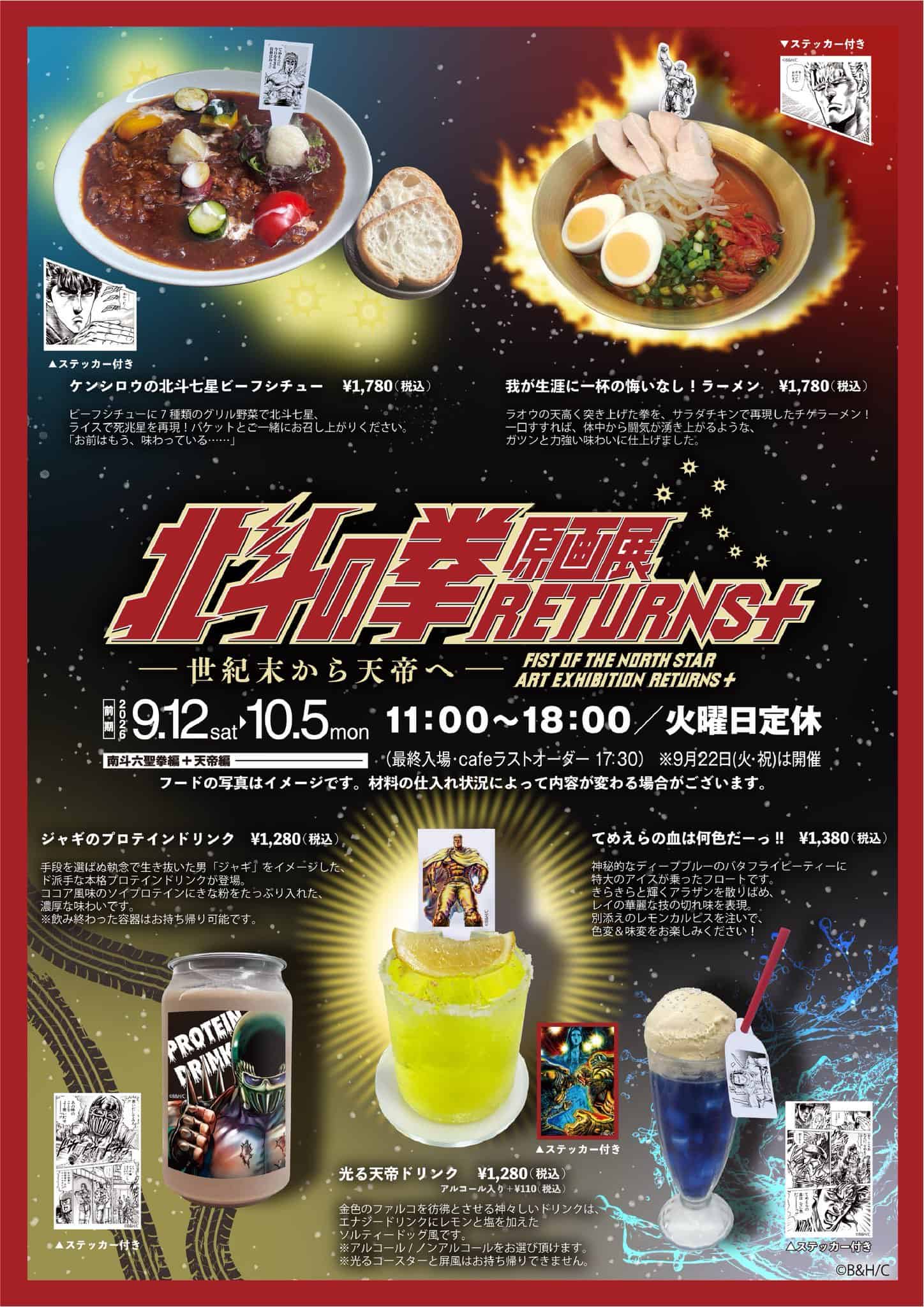
From October 7, Rei’s drink gives way to Yuda’s floral soda, 1,380 ¥, a sparkling rose and hibiscus infusion topped with an edible flower. Admission to the exhibition is required even to visit the café alone, where last orders are taken at 5:30 pm.
Practical information
- GALLERY ZENON, 2-11-1 Kichijoji Minami-cho, Musashino, Tokyo
- First period September 12 to October 5, second period October 7 to 25, 2026
- 11:00 am to 6:00 pm, last admission 5:30 pm. Closed Tuesdays, except September 22
- Advance tickets 1,300 ¥ on weekdays, 1,600 ¥ at weekends and on public holidays. 300 ¥ more at the door. Free for elementary school children and younger, with an adult
- Online ticketing via TicketMe. The exhibition shop is covered here
Anyone passing through Tokyo can pair it with the exhibition devoted to the anime at Anime Tokyo Station in Ikebukuro, free and open until November 8.
Sources: GALLERY ZENON, the exhibition’s official page and X account @GalleryZenon. Coamix press release. The gallery’s Manga Art shop for print specifications. Tetsuo Hara’s official site, report on the 2023 exhibition. Photos: @Warokami, taken on site and reproduced with his permission. © Buronson & Tetsuo Hara / Coamix 1983.