

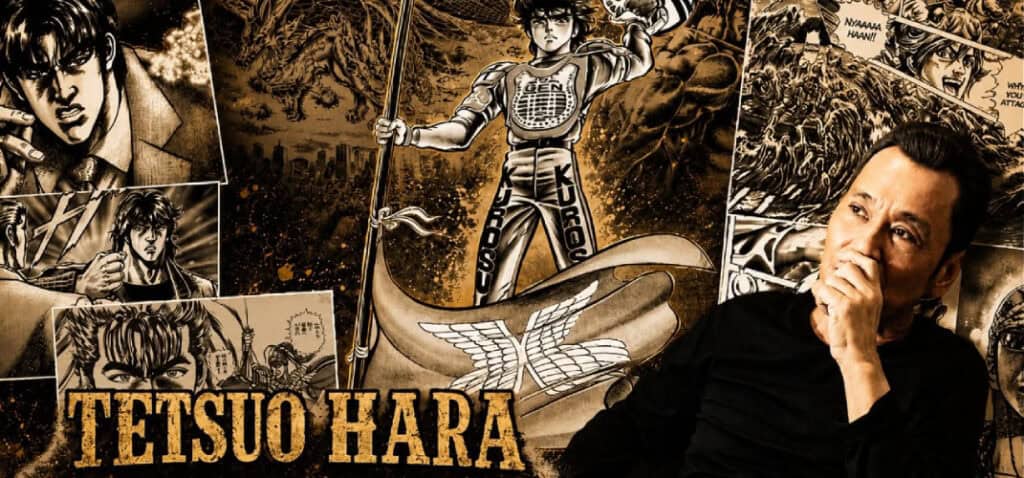
Tetsuo Hara celebrates his 65th birthday today. Born on September 2, 1961, in Shibuya and raised in Koshigaya, Saitama Prefecture, he has spent more than four decades establishing a style that Japanese manga has never stopped referencing since. All the more reason to revisit a career that this site details title by title.
A child forbidden from reading manga
Manga was not allowed in the Hara household. It was on the back of flyers found in the mailbox that he copied Tiger Mask in second grade. Two years later, convinced while watching Kamen Rider that the job consisted of inventing one monster per week, he trained by drawing one per day. In middle school, discovering the gekiga of Ryoichi Ikegami permanently set his direction.
The beginnings, 1982 and 1983
After Hongo High School, a year and a half as an assistant to Yoshihiro Takahashi, and the Gekiga Sonjuku of Kazuo Koike attended in parallel, he published Super Challenger in April 1982, a boxing story awarded the Fresh Jump Prize. Then came Mad Fighter in the debut issue of Fresh Jump, followed by Crash Hero, whose hero he reused for his first series, Tetsu no Donquijote. The series ended after ten installments, but its final chapter ranked ahead of Dr. Slump in the reader survey, a turning point he himself describes as his discovery of an audience.
Fist of the North Star, a genesis in two stages
The decision was made while he was still drawing Donquijote. Hara had been saying since middle school that he wanted to create a kung-fu manga, and it was Nobuhiko Horie who brought him the idea of pressure points that make bodies explode. The result first appeared under his name alone, as two standalone stories published in Fresh Jump in April and June 1983, set in contemporary Japan, with a hero named Kasumi Kenshiro. The iconic line was already there. Both took first place in the reader survey.
It was for the transition to a weekly format that Buronson joined the project and the setting shifted to the post-apocalyptic world we know today. Hokuto no Ken launched in the Weekly Shonen Jump issue dated September 26, 1983, released on the 13th, and ran for five years and 245 chapters.
The Shueisha years after Fist of the North Star
The following decade was one of diversification. CYBER Blue ventured into science fiction as early as 1988, before Hana no Keiji in 1990 opened a historical vein he would never truly leave: Kagemusha Tokugawa Ieyasu, Takeki Ryusei, the only series he authored entirely on his own, SAKON, and then Aterui II Sei. In the meantime, Hydra and Nakabo Rintaro took him into other territory, and he illustrated the novel Jubaku no Machi written by Buronson.
Coamix and the blue sky
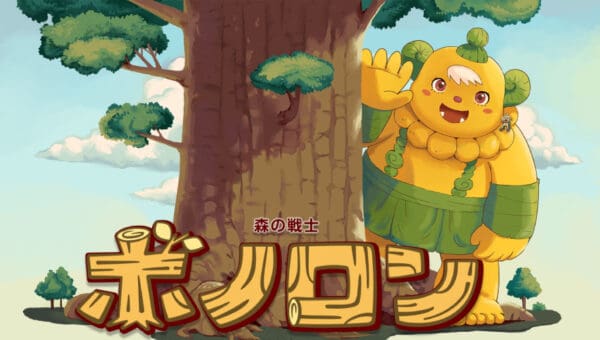
In 2000, he left Shueisha with Horie to found Coamix, alongside Tsukasa Hojo and Ryuji Tsugihara, taking the rights to Hokuto no Ken with them. The inaugural issue of Weekly Comic Bunch, on May 29, 2001, opened with Souten no Ken, which ran until 2010 over twenty-two volumes and received its own anime adaptation. Then came Ikusa no Ko, twenty volumes dedicated to the young Nobunaga between 2010 and 2022, and Bonolon, the free picture book for young children that he has been designing and producing since 2005.
To learn more
The site dedicates three complementary sections to Tetsuo Hara: his biographical profile, which traces this career in detail and sources each stage, the chronology of his works, year by year, and the section gathering all of his titles, from the most well-known to the most obscure.
Happy birthday, master.